You’ve seen the photos: a plush bed under fairy lights, crisp white linen, a wood stove glowing in the corner. But glamping listings can be generous with photography and stingy with details, and travelers regularly arrive to find an air bed on a cold platform instead of the hotel-style sleep they booked. The bed, linen and heating can vary wildly from one tent to the next, even within the same price range.
This guide walks you through a proper glamping bed setup, from the standard frame-and-mattress combination to the premium extras worth paying for. We’ll cover the bed types and mattress quality to look for, what linen and bedding should be provided, and the heating options that matter most on chilly nights. You’ll also learn how to verify comfort before you pay, and what to pack for a warm night’s sleep. By the end, you’ll know exactly which questions to ask a host before booking.
What a Glamping Bed Setup Usually Includes
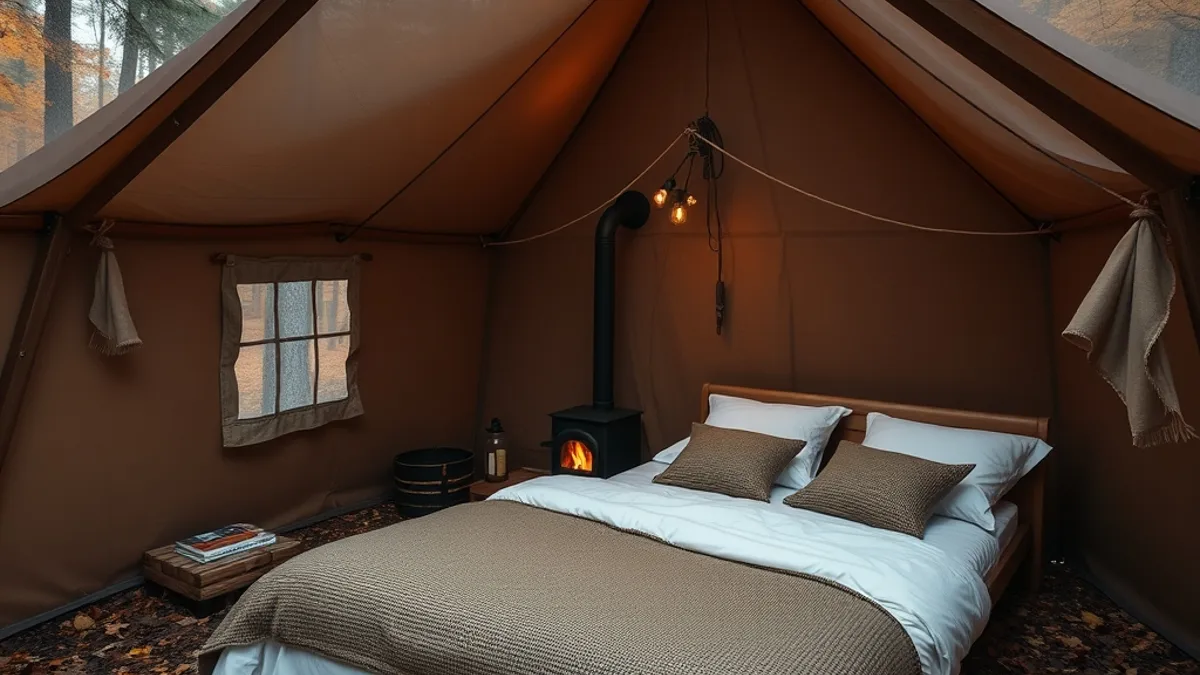
A standard glamping bed setup starts with the basics that separate a real tent-hotel hybrid from camping with extra steps. Expect a raised bed frame or wooden platform, an actual mattress rather than a rolled camping mat, and proper bedding on top: a duvet or layered blankets plus pillows. That combination is the minimum you should accept at any site calling itself glamping.
From there, the level of comfort depends on what you’re paying. Premium tents go well beyond the bed itself, adding furniture and facilities that make the space feel like a small hotel room under canvas.
What premium tents typically add
At the higher end, you’ll usually find bedside tables and reading lamps on either side of the bed, storage trunks or wardrobes for your clothes, and sometimes a small seating area. The biggest differentiator is the washroom: some premium units have an ensuite toilet and shower, while others point you to a shared washroom block a short walk away. Neither is wrong, but it changes the experience, so check which one you’re booking.
Where budget glamping differs
Budget sites can still be excellent value, but the bed setup often reveals the trade-offs. Some use futons on low platforms or thinner mattresses closer to the ground, which can feel colder and less supportive. Listing photos are your best friend here: look closely at the bed height, the thickness of the mattress and whether there’s a proper duvet. If the photos only show the tent exterior, ask the host for interior shots before you commit.
Bed Types and Mattress Quality to Look For
Bed size is the first thing to check, and it’s where premium tents and smaller units diverge most. In premium glamping tents, queen beds (160 cm) and king beds (180 cm) are typical, giving you genuine hotel-style sleeping space. Smaller units, such as bell tents or cabins for two, more commonly offer a double. If you’re tall or used to sleeping spread out, confirm the exact size rather than assuming “double bed” means anything generous.
The mattress matters just as much as its dimensions. A proper glamping bed setup should include a real sprung or memory-foam mattress, the same kind of construction you’d find in a guesthouse. Air beds and thin futons are red flags, even when a listing uses the word “glamping” prominently. A good example of what to expect is this glamping review from Lake Powell, where the bed setup is described in detail alongside the overall comfort of the stay.
Finally, look at how the bed sits within the tent. Frames on raised platforms do more than look tidy.
- Insulation from the floor: A raised frame keeps your mattress off the canvas or deck surface, which can drop noticeably in temperature overnight, especially in spring and autumn.
- Protection from moisture: Ground moisture and condensation collect at floor level, so a platform bed keeps your bedding drier in humid or rainy conditions.
- Stability and airflow: A solid platform stops the mattress from shifting during the night and allows air to circulate underneath, which helps prevent that damp, musty smell in older tents.
Linen, Bedding and What Should Be Provided
Linen quality is one of the clearest signals of how seriously a glamping site takes comfort. At quality sites, expect 100% cotton or linen bedding with a thread count of 300 or higher. That might sound like a hotel detail, but it makes a real difference in a tent, where temperature swings are bigger and cheap synthetic sheets can feel clammy against your skin. If a listing doesn’t mention the bedding material, that silence is itself information.
What should be included
Bed linen and a duvet are the baseline, but the extras vary. Towels are included at most established sites, yet some budget operations charge for them or skip them entirely. Extra blankets and duvet covers fall into the same gray area: premium tents usually supply both, while smaller sites may expect you to request them. Before booking, confirm exactly what comes with the tent and what costs extra, so you’re not paying surprise fees on arrival.
Linen changes on longer stays
Most glamping operators change linen between guests, and some eco-focused sites use duvet covers only, washing the covers rather than the full duvet between stays. That’s fine for a night or two, but if you’re staying longer, ask what happens after that. For stays beyond two or three nights, check whether the site offers a linen change and whether it’s included or arranged on request. Some slower-paced sites, like those featured in this guide to lake glamping in the Masurian region, build linen service into longer stays, which is worth seeking out if fresh bedding matters to you.
Heating Options: Stoves, Electric and Propane
Nothing ruins a tent holiday faster than shivering through the night, so the heating source deserves as much attention as the mattress. The classic choice, and the one most people picture when they imagine a cozy safari tent, is a wood-burning stove. These small cast-iron units sit on a fireproof base with a chimney running through the canvas, and they radiate a dry, steady warmth that electric heaters struggle to match. Stove-heated tents are most common from October to March, when operators know guests will genuinely need them.
Not every site relies on wood, though. The right option for you depends on the site’s setup, how cold you run at night, and whether you want to stoke a fire at 2 a.m. Before booking, ask three things: what heats the tent, whether fuel is provided, and how the unit is ventilated. Here is a quick breakdown of what to expect from each type:
- Wood-burning stoves give the most atmospheric heat, and many hosts light the stove before you arrive so the tent is warm on check-in; you will usually need to reload logs every few hours to keep it going overnight.
- Electric heaters work well at sites with full hookups, and they often come with thermostats or timers, so you can set a temperature and forget about it until morning.
- Propane units warm a tent faster than almost anything else, but they release moisture and consume oxygen, so a properly ventilated canvas and a carbon monoxide alarm are essential safety checks.
- Fuel policies vary widely: some sites include a starter bundle of firewood in the rate, others sell logs and kindling on site, and a few expect you to bring your own, so confirm this before you pack.
How to Verify Comfort Before You Book
Photos can flatter a tent, and listing descriptions rarely mention the drafty corner or the sagging mattress. The good news is that a few targeted checks before you pay will tell you almost everything you need to know. Treat it like a mini due-diligence exercise rather than an afterthought. A great example of a site that gets these details right is this glamping review from Combe Martin in the United Kingdom, which shows exactly what a well-set-up tent looks like in practice. Notice how the review describes the actual sleeping experience, not just the views and the décor, because that is the level of detail you want before committing to a booking.
- Read recent reviews with a filter in mind. Search reviews for words like “cold,” “mattress,” “damp” and “blankets.” A single complaint from three years ago matters less than a pattern of cold-night comments from last season. Pay attention to how the operator responds to those comments, too, since a helpful reply suggests problems get fixed.
- Message the host directly. Ask three specific questions: the actual bed size and type, whether linen and towels are included in the rate, and what heats the tent. Vague answers are themselves useful information. If a host sends photos of the actual unit rather than stock images, that is usually a good sign.
- Book early for cold-season trips. Heated tents in shoulder and winter seasons are the most sought-after units on any site, so aim to reserve 2 to 3 months ahead to get your pick. Weekend dates go fastest, so midweek stays give you more choice if your schedule allows.
- Budget realistically for peak dates. Peak-season glamping rates commonly range from about $150 to $400 per night, so compare what is included at each price point before assuming the cheapest option is a bargain. A slightly higher rate that covers bedding, firewood and towels can work out cheaper overall than one where everything is an add-on.
Ten minutes of messaging can save you a miserable night, and hosts generally answer these questions happily because it shows you are a serious guest. If a host dodges questions about heating or linen, that hesitation tells you more than any photo gallery ever will. Most glamping operators change linen between guests, though some eco-sites use duvet covers only, so it never hurts to confirm the arrangement in writing before you arrive.
Seasonal Packing Extras for a Warm Night’s Sleep
Even the best-heated tent has one weak spot: canvas. Fabric walls lose heat quickly, and the temperature drop between midnight and dawn can be surprisingly sharp, especially in a stove-heated tent where the fire has burned down overnight. The fix is not more blankets from the host but smarter packing on your end.
What to wear to bed
Pack thermal sleepwear and a pair of slippers even when the listing promises heating. Thick socks matter more than you would expect, since feet are the first place you feel a cold floor or drafty canvas edge. A lightweight beanie for sleeping also helps on genuinely frosty nights, and it takes up almost no space in your bag.
Small extras that make a big difference
A hot water bottle is the classic stove-tent companion: fill it when you stoke the fire before bed, tuck it under the duvet, and your sleeping spot stays warm for hours. Many sites keep a few on hand for guests, so ask when you book rather than assuming you need to buy one. If linen turns out lighter than expected, a silk or fleece sleeping bag liner adds a real layer of warmth without taking up luggage space, and it doubles as a hygiene barrier on lower-thread-count bedding. Toss in an extra pair of warm socks and you are covered for nearly any autumn or winter tent night.
The Bottom Line on Glamping Bed Setup
Glamping promises hotel-style comfort in a tent, but the reality is that bed, linen and heating quality vary widely from one site to the next. The good news is that a proper setup is easy to recognize: a real mattress on a raised frame, quality cotton or linen bedding, and a clearly stated heating source, whether that is a wood-burning stove, an electric heater or a propane unit.
Before you pay, verify the details that matter. Confirm the bed size and mattress type, ask exactly what linen is included, and check how the tent is heated and whether fuel costs extra. A quick message to the host prevents cold, uncomfortable surprises, and with those checks done, glamping can genuinely deliver a hotel-quality night’s sleep under canvas. If this guide helped you plan your trip, leave a comment or share it with a fellow traveler.