Picture this: you have found a beautiful villa, the photos show a sparkling pool, and you arrive in April ready for morning swims. Then you dip a toe and the water is freezing. This happens to travelers constantly, because an unheated pool outside high summer is often simply too cold to enjoy. The fix is straightforward: book a villa with a private heated pool, and know exactly what to check before you pay.
This guide walks you through the whole process. We explain why heating matters more than the pool itself, how different heating systems work, and which destinations and seasons make heated water worthwhile. You will also find the layout details that matter for families, the exact questions to ask before booking, the best time to reserve, and a final checklist that separates genuinely warm pools from clever marketing wording.
Why Heating Matters More Than the Pool Itself
Two villas can look identical in photos: same stone terrace, same sun loungers, same inviting blue water. The difference that decides whether you actually swim is usually invisible in a listing, and it comes down to one word: heated. An unheated outdoor pool in the Mediterranean typically sits at 22-26°C in summer, which sounds fine until you realize how quickly that changes at the edges of the season.
In April and October, an unheated pool can drop below 18°C. At that temperature, most adults hesitate to get in, and children last about five minutes before their lips turn blue. You end up paying for a pool you only look at, which is a frustrating way to spend a villa budget.
What a heated pool actually gives you
When heating is specified at booking and the water is guaranteed to hold 26-30°C, the math changes completely. Instead of three comfortable summer months, you get eight or more, depending on the destination and the heating system. That means morning laps in April, evening swims after a day of sightseeing in October, and warm water during a half-term break.
This is why heating is the single biggest difference between villas that look identical in photos. When you compare two similar properties, the one with a properly specified and guaranteed heated pool is almost always the better choice for anything outside peak summer. The next section explains how to tell a real heated pool from a vague listing phrase.
Check How the Pool Is Heated
The word “heated” in a listing tells you almost nothing on its own. What matters is the heating method, the temperature the system can actually hold, and who pays for it. Villas use three main approaches, and each behaves differently depending on the season and the pool’s design.
Heat pumps are the standard for outdoor villas. They draw warmth from the surrounding air and hold water at a steady 26-28°C, but they work slower during cold snaps, so expect gentler progress on chilly mornings. Solar heating costs nothing to run, yet it is unreliable outside June to September, when clouds and cool nights cut its output dramatically. Heat exchangers are the third option, and they suit indoor or covered pools best, where heat loss through the surface is already reduced.
What to confirm before you book
- Ask for the pool’s guaranteed temperature in writing, not just the word “heated” in the listing, so you have something concrete if the water arrives cold.
- Confirm whether heating is included in the nightly rate or charged separately, because running a heat pump typically adds €30-70 per day, which adds up fast over a two-week stay.
- If heating is charged separately, ask whether you pay per day of actual use or for the full stay, since some owners switch the system on at check-in regardless.
- For solar-heated pools, ask what backup system exists for cloudy days, because a villa relying on sun alone in May may struggle to reach a swimmable temperature.
A short email exchange covering these points takes minutes and is the difference between warm swims and a refund request. Owners who answer clearly and specifically are usually the ones whose pools genuinely deliver.
Match the Season and Destination to a Heated Pool
Pool heating earns its money roughly from October to April in Mediterranean climates. In high summer, the sun does the work for free, so paying for a heated pool in July adds little value. But in the shoulder months and winter, heating is what turns a decorative pond into the centerpiece of your holiday.
Destinations like Mallorca and the Canary Islands are where this matters most. In Mallorca, spring and autumn weeks are glorious for hiking, eating outdoors and exploring, yet unheated pools sit well below swimmable temperatures. If you want a warm pool alongside those shoulder-season trips, browse villas close to Mallorca’s sandy southern and eastern bays, where heated stock books up early for Easter and half-term.
Winter swimming in the Canary Islands
The Canary Islands are the standout choice for winter sun in Europe. With mild air temperatures through December and January, a pool specified at 26°C makes outdoor swimming genuinely realistic in midwinter, not just a brave dip for the photo. If a Christmas or New Year break with daily swims is the goal, a heated pool in the Canaries is the most reliable way to get it.
Alpine and northern destinations play by different rules. There, outdoor pools are unusable for most of the year, so the villas that deliver warm swims rely on indoor or covered heated pools, often with glass walls or retractable roofs. If your trip is a ski holiday or a northern autumn escape, prioritize these enclosed options rather than hoping for a warm outdoor dip.
One honest caveat: if you are traveling in July or August, an unheated pool may suffice, and heated availability matters far less for peak-summer trips. Save the heated-pool requirements and the extra cost for the months when they genuinely change your holiday.
Pool Layout and Family-Friendly Details to Verify
A heated pool only works well if the pool itself is designed for the way your group will use it. Families with children under 8 should look for a shallow entry ledge or wide, gentle steps rather than a ladder, and a pool area that is fenced or self-closing gated so little ones cannot wander in unsupervised. Ask the owner directly whether the fence meets local safety standards, since photos rarely show the gate mechanism clearly.
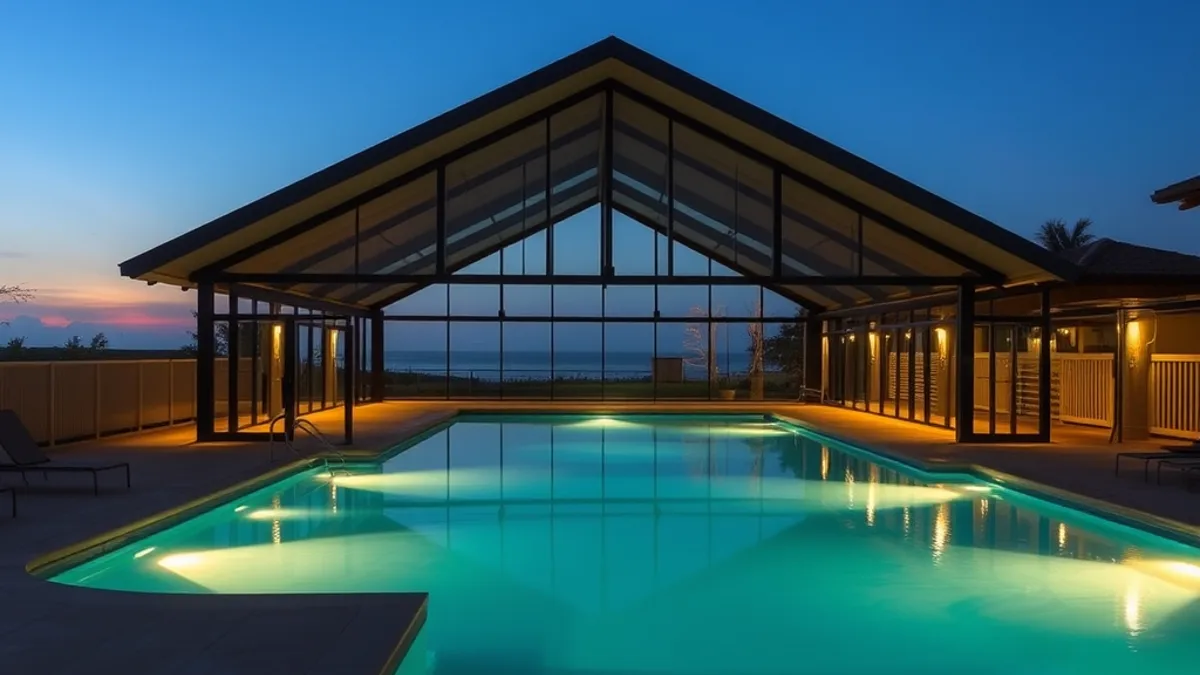
From October to April, a covered or enclosed pool annexe is a genuine advantage. It lets you swim in rain and wind without leaving the water freezing, and it also helps the heating system hold its temperature with less effort. In Mediterranean destinations like Mallorca, an open-air heated pool in a January storm is far less useful than the same pool under a roof.
Be honest about size too. Around 8×4 meters suits a family, while plunge pools under 5 meters suit couples only. Before you book, work through these details:
- Overnight behavior: confirm whether the pool stays warm overnight or the heating switches off on a timer, which can mean a cold morning swim.
- Heating hours: ask when the system runs each day, since a pool heated only in afternoons may not reach its stated temperature by morning.
- Heated towel rails: a small detail that matters enormously when you climb out of a covered pool in winter.
- Poolside transits and toys: for families with children under 8, check there is safe, non-slip access around the pool and space for floaties or steps-in toys.
Questions to Ask Before You Book
Once a villa looks right on paper, a few direct questions will separate genuinely warm pools from marketing language. Ask these before you pay the deposit, not after, and get every answer in writing so there is no dispute on arrival. A good owner or manager will answer quickly and precisely; vague or evasive replies are their own warning sign. It also helps to keep all confirmations in one email thread, so you have a single record to refer to if anything is questioned at check-in.
- Confirm the temperature and method in writing. Ask for the exact guaranteed water temperature and the heating method, such as a heat pump. The word “heated” alone in a listing means very little.
- Clarify who pays for heating. Ask whether the cost is included in the rate or charged separately, and whether there is a cap or a flat fee per week. Running costs can noticeably change your total budget, so pin this down early.
- Ask about warm-up time. Find out how many days before arrival the heating is switched on after a vacant period, because a heat pump can take several days to bring a cold pool up to temperature.
- Read reviews with a filter. Search recent guest reviews specifically for mentions of pool temperature rather than general praise, and note how recent they are.
If you want to see how a well-documented villa stay reads in practice, this honest villa review from San Juan del Sur, Nicaragua shows the kind of specific detail worth looking for. Owners who volunteer this level of information before booking are usually the ones who deliver on arrival.
When and How to Book Your Heated-Pool Villa
Timing matters more with heated-pool villas than with ordinary rentals, because genuinely warm pools are a smaller share of the market. For Easter, Christmas and school-holiday weeks, book 4-6 months ahead. These are exactly the weeks when families who cannot travel in term time all compete for the same handful of villas with verified heating, and they sell out first.
Best value: the shoulder seasons
If your dates are flexible, shoulder-season weeks in October and April offer the best value on heated stock. Demand is lower, so rates drop, yet pool heating is most valuable in exactly this window in Mediterranean climates, when unheated water can sit below 18°C. You pay less and get the feature that matters most.
Reading the listing carefully
Prioritize listings that state the temperature and heating costs explicitly over vague wording like “pool heating available”. A listing that says the pool is held at a specific temperature and tells you what heating costs, or confirms it is included, has already done half your vetting for you. Vague phrasing usually means the pool is heated only on request, only in summer, or not really heated at all. When two villas look similar in photos, this difference in the description is often the most reliable signal of which one will actually deliver warm swims.
The Warm Swim Checklist
The problem this article set out to solve is simple: too many travelers book a villa with a beautiful pool, arrive outside high summer, and find the water unusable for swimming. The fix is to treat heating as the deciding factor, not the pool’s size or the photos. A guaranteed 26-30°C temperature, a stated heating method and clear heating costs are what separate real heated pools from marketing.
Match the destination and season to your trip, verify the layout works for your group, and book 4-6 months ahead for Easter, Christmas and school-holiday weeks when genuinely heated villas sell out first. Work through the checklist above and a villa with a private heated pool will deliver warm swims in any month you travel. If this helped you plan your trip, leave a comment or share the article with a fellow traveler.