Glamping sounds like the perfect family escape: a proper bed, a roof over your head, and nature right outside the door. But add a baby or toddler to the mix, and the wrong tent, site or season can turn that dream trip into a sleepless ordeal. The good news is that glamping with babies and toddlers can genuinely work well, as long as you know what to look for before you book.
This guide walks you through the essentials, from why glamping suits families with little ones in the first place, to choosing between accommodation types and the site facilities that matter most with a baby in tow. We’ll cover picking the right season and location, smart booking questions to ask, and packing and routine tips for a smooth stay, so your first family glamping trip ends with happy memories instead of a very tired toddler.
Why Glamping With Babies and Toddlers Works
The Comfort Factor Changes Everything
Anyone who has tried tent camping with a baby knows the hardest parts: a thin air mattress, a 5 a.m. chill creeping through the fabric, and a squat crawl to the zipper every time the baby stirs. Glamping removes most of that friction. You get real beds with proper mattresses, solid floors instead of cold ground, and heating that keeps the unit at a comfortable temperature through the night. When your toddler sleeps well, everyone does.
Heating deserves a special mention. Even in summer, nights can turn cool enough to disturb a baby’s sleep, and a drafty tent is a far bigger problem than a drafty bedroom at home. A properly heated unit means you can dress your child in their usual sleepwear rather than layering them like an expedition hiker.
Private Bathrooms Are a Game Changer
Not all glamping units come with them, but private bathroom units genuinely transform the experience. Night feeds and 2 a.m. nappy changes happen without walking across a dark campsite, fumbling with a flashlight while holding a baby. You simply switch on a light a few steps from the bed. That convenience alone is why many parents book units with en-suite facilities for their first trip.
Enclosed Decks Keep Toddlers Contained
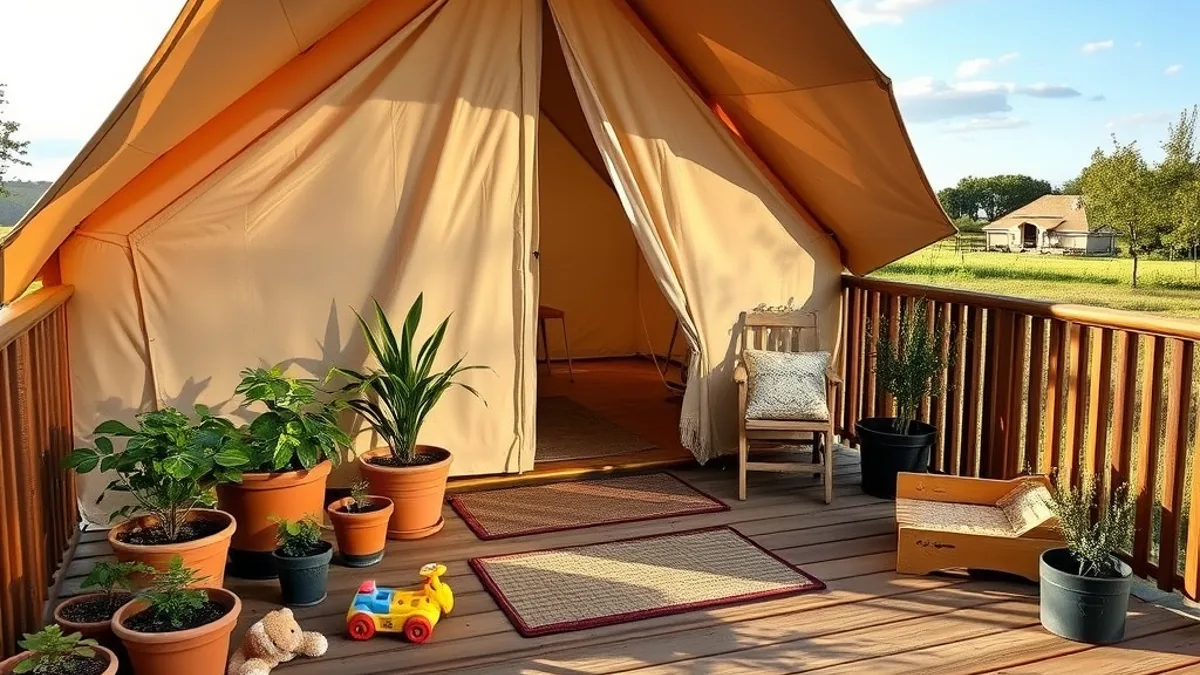
Fenced or enclosed decks are another quiet advantage. A toddler can potter around with toys in a defined space while you keep an eye on them from a camping chair, coffee in hand. It buys you a rare moment of relaxation without constant chasing, and it’s a safer setup than an open campsite with paths, fire pits and other campers’ gear everywhere.
Choosing the Right Accommodation Type
Not all glamping units are created equal when you are traveling with a baby. The single biggest factor is floor space: you need room for a travel cot, a bag of gear, and ideally a small patch of floor where a toddler can sit and play without climbing over you. Safari tents and yurts that sleep 4-6 people generally offer this kind of layout, with separate sleeping areas or enough open floor that a cot does not dominate the room.
Small bell tents and camping pods are a different story. In a two-person bell tent, a travel cot effectively fills the space between the bed and the door, leaving nowhere to stand, change a nappy, or unpack. Pods tend to be even tighter, often built around a fixed bed with minimal walking room. If a listing does not state the floor dimensions, email the site and ask whether a cot plus luggage fits comfortably.
Electricity is the next priority. A socket at the bedside means you can run a bottle warmer overnight, charge a baby monitor, and plug in a white-noise machine without hunting for a shared power point. Some upscale tented resorts handle this well — you can see how it works in practice in this Under Canvas Lake Powell review, where the tent setup balances canvas living with practical comforts.
Finally, match the unit type to your baby’s age and the weather. A solid cabin or bungalow is the gentlest introduction, especially for a first trip, because you get walls, a door and predictable temperatures. Open-sided tents are lovely in warm months but become a gamble with a baby once nights turn cool.
- Safari tents with interior dividers: a separate sleeping screen lets you read or pack while the baby naps, without whispering in the dark.
- Yurts with circular layouts: the round shape usually leaves a usable center floor, and the felt covering buffers noise better than thin canvas.
- Units with covered decks: a roofed veranda gives you a dry, shaded spot for stroller naps or early-morning feeds outside the sleeping area.
- Cabins with proper doors and windows: blackout comes free, and a toddler who wakes at dawn stays contained rather than wandering into a field at sunrise.
Site Facilities That Matter Most With Little Ones
When you’re traveling with a baby or toddler, the difference between a relaxing break and a logistical nightmare often comes down to what the site provides. Some glamping operators list cots, high chairs and baby baths as standard equipment in the booking details, while others charge per item or ask you to bring your own. Read the equipment list carefully before you book, because renting a cot on arrival can be expensive and availability is never certain. A good example of a site that gets this right is this family-friendly glamping spot in Combe Martin, where the little extras are built into the stay rather than bolted on.
A kitchenette under your own roof changes everything with a small child. You can sterilise bottles at midnight, prepare breakfast at your toddler’s pace and store milk and snacks in a fridge without trekking to a communal block. Even a basic two-burner hob, sink and small fridge covers most needs for a short trip.
On-site laundry is another feature that sounds like a luxury until you need it. Between nappy blowouts, spilled meals and muddy falls, spare outfits disappear fast, and washing a few items on site beats packing triple the clothes. Look for at least one guest washing machine, and check whether you need coins, tokens or an app to run it.
Finally, think about the daily movement around the site itself. The less carrying, herding and shuttling you do, the better the trip feels for everyone.
- Shaded play areas: sandpits, ride-on toys or play frames under cover let toddlers burn energy without sun exposure, and give you a seat nearby instead of standing in full sun.
- Gentle, even terrain: flat, mown paths make buggy pushes and wobbly walkers safer, while steep or rutted ground turns every trip to the bathroom into an expedition.
- Parking close to the tent: being able to unload cots, bags and food boxes a few steps from your unit saves multiple heavy trips, especially in rain.
- Level, hard-standing ground near the deck: this keeps prams from sinking and gives you a clean spot for portable high chairs or a picnic blanket.
Picking the Season and Location
Timing makes a bigger difference with a baby than with any other travel companion. The sweet spot in most temperate regions runs from late May to early September, when average lows sit in the 16-22°C range that toddlers sleep best in. Colder nights mean extra layers, disrupted sleep and a lot more work for you.
If you want a gentler version of summer, look at the shoulder weeks in June and early September. Temperatures are milder, sites are thinner on crowds, and you often get the same facilities without the peak-season rush around the playground and laundry room.
Location matters just as much as the calendar. For a first trip, aim for a site under a 2-hour drive from home — a meltdown on the way there should never turn into a marathon. Before committing, check the site’s setting too. A lakeside spot in a wetland can mean heavy mosquito evenings, while a mountain pass location can bring wind that rattles the tent all night. If you like the idea of water without the bugs, a calmer option is Masurian lake glamping for slow travel, which shows how lake settings can work well for families.
Booking Smart: Timing and Questions to Ask
Booking a family glamping trip is less about finding a deal and more about asking the right questions before you pay. Family-sized units are limited in number at most sites, so the good ones disappear early, especially once school holiday dates open up. A short phone call or email before you pay can save you from arriving to discover the cot is a foam pad on the floor or the nearest toilet is a five-minute walk away. Work through these steps in order and you’ll avoid most of the common disappointments.
- Reserve early. Book family-sized glamping units 3-6 months ahead for summer dates, because they sell out well before standard two-person tents. If you’re flexible on dates, ask which weeks still have family units open.
- Decide on the bathroom trade-off. Private-bathroom units typically cost 30-60% more than shared-facility options. With a baby doing night feeds, that premium often pays for itself — but weigh it against your budget honestly.
- Interrogate the cot. Ask directly whether the cot is a proper cot with a firm mattress or just a floor mattress. A floor mattress is not safe or comfortable for many babies and toddlers, and it changes what you need to bring. Also confirm the cot is included in the unit’s price rather than rented as an extra.
- Measure the walk to the toilets. If the unit has no private bathroom, ask how far the nearest toilets are and whether the path is lit. A 2 a.m. dash across an unlit field with a toddler is nobody’s idea of a break.
- Check the cancellation terms. Toddler illness is the most common reason family plans change, so confirm what happens if you cancel a few days before arrival and whether dates can be moved.
Once you’ve worked through the list, put everything in writing — a confirmation email summarising the cot, bathroom distance and cancellation terms protects you if staff change or memories differ. It also gives you something concrete to refer to at check-in if anything doesn’t match what you were told. Then you can look forward to the trip instead of worrying about the details.
Packing and Routine Tips for a Smooth Stay
Packing for glamping with a toddler feels like moving house, and the honest answer is that you should budget for roughly double the gear. A 3-night toddler trip usually needs 1-2 extra bags beyond what you’d take as a couple. The good news: glamping means you don’t need camping kit, so the extra bags go to spare clothes, food and comfort items instead of stoves and sleeping bags.
Sleep is the part most worth engineering. Toddlers settle far more easily when bedtime feels familiar, so bring the same cues they get at home. A few targeted items make a tent feel like their bedroom rather than a strange place.
- The same cot sheet from home — the smell and feel of it does more than any new gadget.
- Blackout clips or portable blackout blinds, since glamping tents rarely have proper curtains and summer evenings stay bright long past bedtime.
- Your usual white-noise machine or app on a charged device, which also masks noise from neighboring tents.
- A small familiar toy or comforter that lives in the travel bag, so it’s always where your toddler expects it.
During the day, resist the urge to over-schedule. Plan one morning activity and keep the afternoon quiet so naps stay on schedule — a well-napped toddler is the difference between a pleasant evening and a difficult one. Clothing-wise, pack in layers: even in summer, many glamping locations see day-to-night temperature swings of around 10 degrees, so a warm sleeper and a light cardigan earn their space in the bag.
The Takeaway for Your First Family Glamping Trip
Glamping sounds like an easy family escape, but with a baby or toddler in tow the wrong tent, site or season can turn a dream trip into a sleepless ordeal. The good news is that it works beautifully when the unit, facilities, season and routine all line up. Get those four things right and you get the best of both worlds: a real outdoor adventure for the grown-ups and a comfortable, predictable setup for the little ones.
Space, warmth, a real cot and a short drive matter far more than scenery or luxury touches, so book early, ask the right questions and keep the first trip simple. If it goes well, you can always go bigger next time. If this helped you plan your first family glamping trip, share your own tips or questions in the comments below.