You’ve been picturing it for weeks: a beachfront suite, a cold drink, and nothing on the agenda but the ocean. Then doubt creeps in. You know the Caribbean’s storm season overlaps with some of the best resort deals of the year, and you’re not sure whether booking a caribbean resorts hurricane season trip is a smart gamble or a recipe for a washed-out vacation. The worry is understandable, but it often stops travelers from trips that would have gone off without a hitch.
This guide walks you through the whole picture. We’ll cover when hurricane season actually runs, what it really means for resort operations, and how lower-risk islands like Aruba, Bonaire and Curaçao can change your odds. You’ll also find practical booking tips, from flexible rates and hurricane guarantees to insurance and backup plans, plus an honest look at whether the savings are worth it. By the end, you’ll be able to book with confidence instead of crossing your fingers.
When Is Hurricane Season in the Caribbean?
The Atlantic hurricane season officially runs from June 1 through November 30. Those dates are set by meteorologists based on decades of storm history, and they apply across the Caribbean basin. If your trip falls anywhere in that window, you’re technically traveling during hurricane season, even if the sky is blue and the sea is calm the entire time.
When the risk is highest
Storm activity doesn’t spread evenly across those six months. The peak stretches from mid-August to late October, with the statistical peak landing around September 10. That’s when ocean water is warmest and atmospheric conditions are most favorable for storms to form and strengthen. If you want to minimize the odds of disruption, this is the stretch to approach with the most caution.
Why June and July are different
June and July sit inside the official season, but they carry much lower risk than the fall months. Early-season storms do happen, yet they’re far less frequent and often less intense than the systems that develop in late summer. For many travelers, these shoulder months offer a comfortable middle ground: resort prices and crowds are lighter than in winter high season, while the chance of a hurricane disrupting your stay stays relatively small. If you have fixed vacation dates, knowing where your trip falls within the season is the first step in planning around the risk.
What Hurricane Season Really Means for Caribbean Resorts
Here’s the detail that surprises most travelers: a named storm usually affects a given resort for only a few days. Hurricanes pass, and resorts that aren’t severely damaged typically reopen quickly. The bigger disruption often comes from the logistics around the storm. Flight cancellations, airport closures and airlines repositioning their planes can stretch a direct hit into a delay of a week or more, especially if you’re trying to get home from a small island with limited daily flights.
The upside: lower rates and added value
Because demand drops in the fall, resorts often run lower rates and added-value offers from September through November. That can mean discounted nightly prices, free nights, resort credits or upgraded rooms for the same money you’d pay in February. If you’re flexible and willing to accept some weather risk, this is when your budget stretches furthest at properties that are packed during high season.
Even without a storm, expect some rain
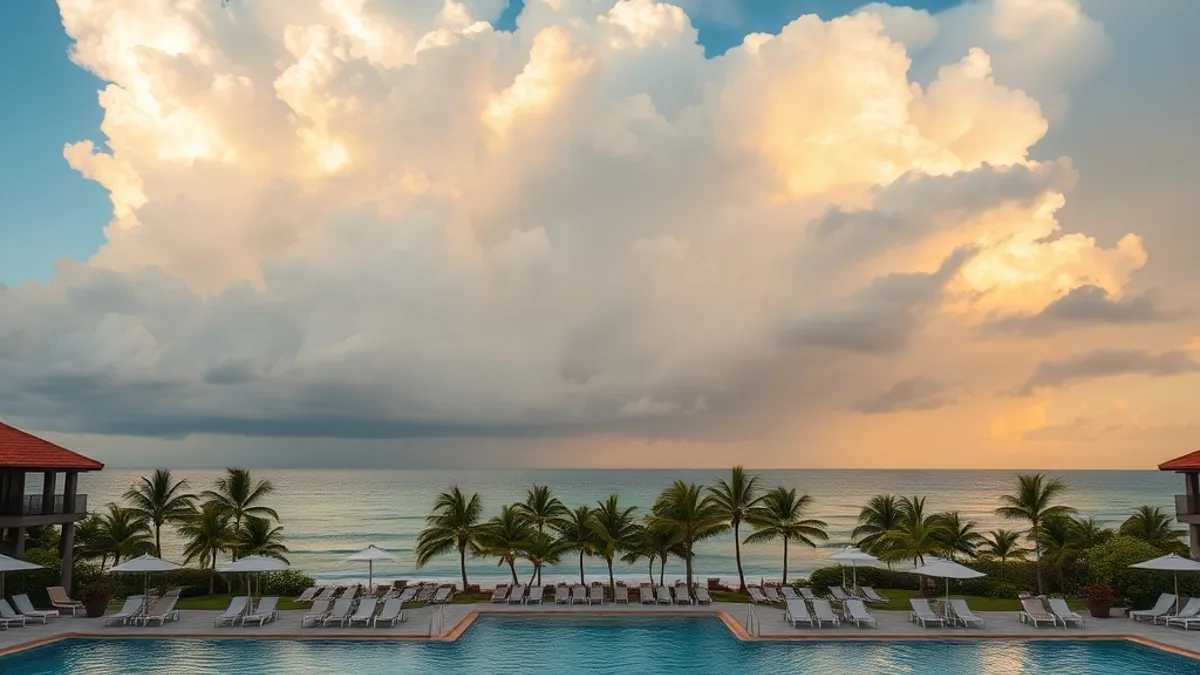
You don’t need a hurricane to lose a beach day. Rain showers and rough seas are common in the Caribbean during the fall months, even when no storm is anywhere near. Tropical downpours can roll through in the afternoon, and choppy water can close water sports for a day or two. The practical takeaway: build a few washed-out beach days into your expectations. Travelers who plan indoor backups, spa time and flexible excursions tend to enjoy storm-season trips far more than those who expect flawless sunshine every day.
Choosing Lower-Risk Islands and Dates
Your single biggest lever for reducing hurricane risk is geography. The southern Caribbean islands of Aruba, Bonaire and Curaçao sit outside the main hurricane belt, the corridor where most Atlantic storms track. These islands see far fewer direct hits than destinations further north, which is why they’ve built reputations as reliable year-round beach spots. They’re not completely immune to tropical weather, but the odds shift dramatically in your favor.
Pick your dates wisely
If you’d rather adjust your calendar than your destination, timing matters too. Shifting a trip to June, early July or late November keeps you technically in season while avoiding the August-October peak. Early-season and late-season dates historically see far less storm activity, so you can still enjoy lower shoulder-season pricing with reduced disruption risk.
Set on peak dates? Go south
Travelers locked into peak-season dates, whether for school breaks or work schedules, can still reduce their exposure by picking islands further south. A September trip to the Leeward or Greater Antilles carries meaningfully more storm risk than the same week in Aruba or Curaçao. You’re trading some destination variety for peace of mind, and for many travelers that’s a trade worth making. Before you book, look at where an island sits in the basin and check how it has historically fared during storm season, rather than relying on a single weather app forecast made months in advance.
Booking Tips: Flexible Rates and Hurricane Guarantees
Hurricane season travel doesn’t have to be a gamble if you build flexibility into your booking from the start. The way you structure your resort reservation and flights matters more than the destination itself, because a storm that never touches your island can still upend a rigid itinerary. The goal is simple: make sure that if plans change, your money doesn’t disappear with them. Here are three steps that can save you both money and stress if a storm threatens your trip.
- Choose refundable or free-cancellation rates. These rates typically cost 10-20% more per night than non-refundable deals, but that premium buys you the ability to cancel without penalty if a storm appears on the forecast. On a week-long stay, the difference is often far less than what you’d lose on a locked-in rate, and it lets you shift dates rather than cancel outright.
- Ask about a hurricane guarantee before you book. Many resorts offer policies such as free rebooking or a refund if a storm forces closure, but terms vary widely between properties. Some cover only the resort stay, others extend to prepaid meals or activities. Call or email the resort directly and get the details in writing before you pay.
- Pick flights with flexible change policies. The cheapest non-changeable fare can become the most expensive mistake of your trip when airlines issue weather waivers. A slightly higher fare with free changes lets you move your dates quickly instead of waiting in a rebooking queue.
Taking these steps before you pay a deposit means you can watch the forecast with calm instead of panic. Pair them with travel insurance that includes hurricane coverage, and you have two layers of protection working together. Flexibility is the single best protection you can buy for a fall Caribbean trip, and it costs far less than a canceled vacation.
Insurance and Backup Plans for Storm Season
Even the most flexible booking can leave gaps that only insurance will cover, especially when a storm disrupts flights across an entire region. A resort might rebook you, but it won’t refund the prepaid excursion you missed or the extra hotel nights in a hub city while you wait for a seat home. A solid policy turns a stressful cancellation into a paperwork exercise rather than a financial hit. Here’s what to look for and when to buy it.
Travel insurance that includes hurricane and trip-interruption coverage typically costs 4-8% of your total trip price. For a resort vacation with prepaid nights, non-refundable excursions and a long-haul flight, that cost is usually modest compared to what you stand to lose if a named storm closes the airport for several days. Compare quotes from a few providers, since coverage for weather events varies more between policies than price does.
- Buy early to unlock pre-existing-condition waivers. Most insurers require you to purchase the policy within a limited window after your first trip payment, often measured in days rather than weeks. Missing that window can cost you coverage you assumed you had.
- Check what “trip interruption” actually pays. Some policies cover a hotel room and meals if you’re stranded mid-trip, while others only reimburse unused prepaid costs. Read the coverage details, not just the headline price.
- Confirm the policy covers delays, not just cancellations. Storms often strand travelers who are already at the resort, and delay coverage for meals and accommodation can matter more than a refund.
- Build a backup plan before you travel. Keep a short list of alternate resorts and flights so you can rebook within hours instead of days if a storm closes in. Knowing your options ahead of time is free, and it’s the fastest way to salvage a disrupted trip.
Insurance and a backup plan work together: the policy covers your costs, and the list of alternatives covers your time. Set both up when you book, then enjoy the lower shoulder-season rates without the anxiety.
Is Booking Caribbean Resorts in Hurricane Season Worth It?
So is it worth booking a Caribbean resort between June and November? For many travelers, the answer is yes, but only if you go in with clear expectations. The savings during September, October and November can be substantial, with resorts cutting rates and adding perks to fill rooms. The trade-off is a genuinely higher chance that rain, rough seas or a storm will disrupt part of your stay.
Who gets the best value
Risk-tolerant travelers with flexible schedules tend to come out ahead in the shoulder months. If you can shift your dates by a few days, work remotely for a stretch, or simply accept a couple of washed-out beach days in exchange for a lower nightly rate, the math often works in your favor. The key is knowing your trip can survive a change of plans without costing you extra money or stress.
Who should adjust the plan
If your vacation window is fixed, non-refundable, or tied to a special occasion, the odds matter more than the discounts. In that case, aim for June or July, which sit inside the official season but see far less storm activity than the fall months. The southern Caribbean is another smart route: islands like Aruba, Bonaire and Curaçao lie outside the main hurricane belt and get far fewer direct hits, even during active months.
The honest answer is that hurricane season offers real value for travelers who can absorb some uncertainty, and a manageable risk for those who plan around it. Match your destination and dates to your tolerance for change, and you can enjoy resort season pricing without sleepless nights watching the tropical forecast.
Wrapping Up Your Hurricane Season Resort Plans
Hurricane season doesn’t have to keep you from that Caribbean resort stay. The season runs June 1 to November 30, with peak risk from mid-August to late October, but plenty of travelers book in-season trips every year and enjoy them without serious disruption. The difference comes down to planning.
Smart bookings rely on refundable rates, hurricane guarantees and travel insurance, which typically costs 4-8% of your trip price. If you want to lower the odds further, look at the southern Caribbean islands outside the main hurricane belt or aim for the quieter June-July stretch of the season. Weigh the savings against how much disruption you can comfortably handle, and in-season resort stays become a realistic option with real peace of mind. Have you booked a Caribbean resort during hurricane season? Share your experience in the comments or pass this article along to a fellow traveler.