If you have ever searched for a safari tent or a geodesic dome and ended up with five browser tabs open, each showing a different price for what looks like the same unit, you already know the problem. Glamping platforms and general booking sites often list the same properties with different fees, cancellation windows and photo quality, and it is genuinely hard to know which one deserves your money.
This guide walks you through the comparison step by step. We will look at what each type of site actually offers, how service fees and off-season pricing change the total you pay, which search filters matter most for a tent stay, and how to read listings for red flags like thin photo galleries or stale reviews. We will also cover cancellation terms and booking lead times, explain when a specialist platform beats a general booking site, and finish with a quick checklist you can use before your next glamping trip.
What Glamping Platforms and Booking Sites Actually Offer
Not all sites that show a canvas tent are built the same way, and understanding the differences is the first step to a better booking. Specialist glamping platforms exist for exactly this stay type: they curate tents, domes and treehouses, and their search tools are designed around the questions glamping guests actually ask. Amenity filters cover things like wood stoves and private bathrooms, and listings tend to include photos of the unit itself rather than a generic forest backdrop.
General booking sites work differently. Glamping appears there as a small category inside millions of hotels and apartments, so how much you find depends heavily on your region. A popular destination may have dozens of options, while a rural area might show only a handful, some of them barely maintained listings.
The third option: booking direct with owners
Direct-to-owner sites and social media listings sit outside both of these worlds. You can sometimes find a lower price this way, since no platform takes a commission, but the trade-off is fewer protections. Payment terms, cancellation rules and dispute support all depend entirely on the owner, so it pays to ask questions in writing before sending any money. Whichever route you choose, the sections below will help you compare them on price, filters, listings and booking terms.
Comparing Fees and Total Price Across Glamping Platforms
The single biggest mistake glamping travelers make is comparing listed rates instead of final checkout prices. Service fees on major booking sites commonly add 10 to 15 percent to the stay total, which on a four-night booking can mean a noticeable difference between platforms showing the “same” nightly rate. Always run your search all the way to the payment screen before deciding which site is cheaper.
Specialist platforms handle fees differently from one another. Some build their fee into the price shown in search results, so the number you see is the number you pay. Others reveal their charges only at checkout, which makes them look cheaper in search than they really are. This is why a side-by-side comparison of displayed prices is nearly useless; the checkout total is the only honest number. For a real example of how a specialist stay can look on the ground, see this review of a lakeside glamping resort in Castel Volturno, Italy.
Timing matters just as much as fees. Off-season rates can drop 30 to 50 percent below peak summer prices, so a platform that looks expensive for a July weekend might be a bargain in October. Check the same dates on every platform before judging value, and consider whether shifting your trip by a few weeks saves more than any fee difference.
- Check per-person versus per-unit pricing: some platforms price a tent per guest and add extra fees for additional travelers, which can quietly double the cost for a couple booking a two-person dome.
- Watch for pet and linen add-ons: glamping properties often charge separately for bedding bundles, firewood or a dog stay, and these extras may only appear in the itemized checkout breakdown.
- Compare cleaning fees across unit types: a large family tent can carry a much higher cleaning fee than a small dome on the same property, so sort candidates by total price rather than nightly rate.
Search Filters That Matter for Glamping
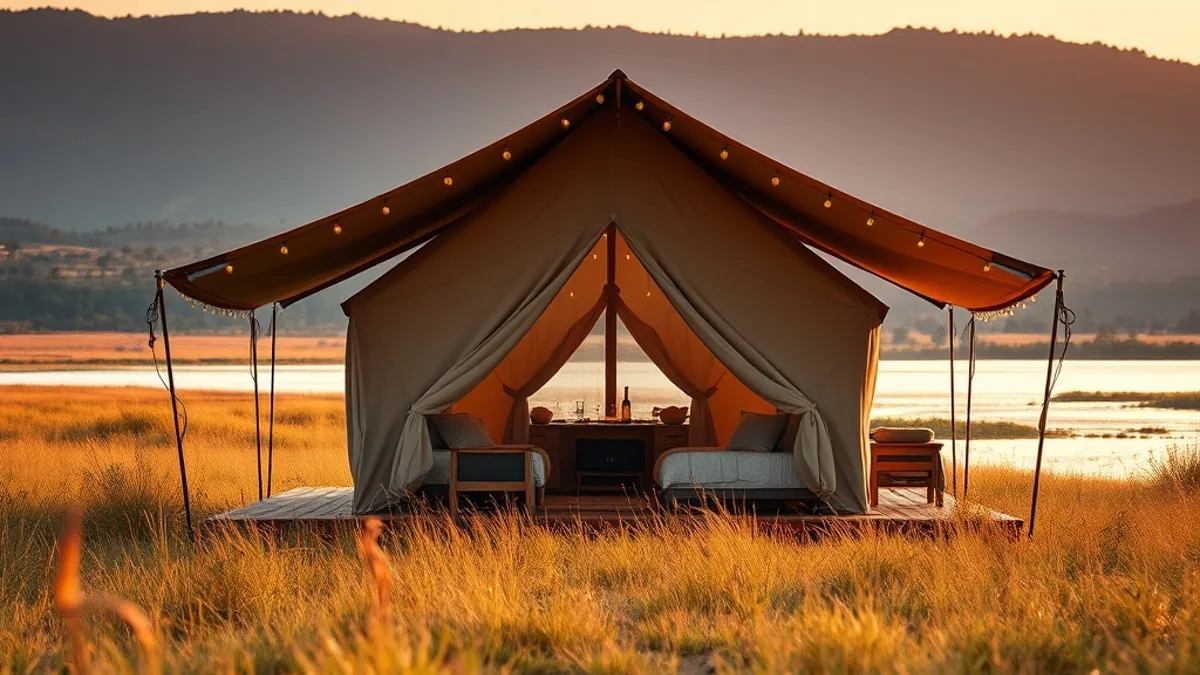
Glamping-specific filters are where specialist platforms earn their keep, and knowing which ones to use will save you hours of scrolling. Start with stay type: a safari tent, a dome, a yurt and an A-frame cabin are very different experiences in terms of space, insulation and how close you are to the ground. A good platform lets you filter directly by these shapes instead of lumping everything under “unique stays.”
Then get specific about comfort. A private bathroom is the difference between a hotel-like stay and a campsite with a shared washblock, and it is not always obvious from the headline description. Heating matters even in summer at altitude, and kitchen access determines whether you are cooking your own meals or driving out for every dinner.
Season is the other half of the equation. Most European and North American glamping runs May to September, so a listing that looks available in March may either be closed or genuinely cold-weather equipped. Confirm insulation details, such as a wood stove or insulated canvas, wherever cold-season stays are offered.
- Use map radius and drive-time filters: many glamping sites are rural, and the nearest town or restaurant may be 30 to 60 minutes away, so a straight-line distance filter alone can be misleading.
- Filter by power hookup if you need it: some tents offer full electricity and USB charging while others run on solar or candles only, which matters if you are working remotely or bringing medical devices.
- Look for a hot tub or sauna filter: on specialist platforms these are often searchable amenities, and they are a good indicator of how “comfort-first” a property is outside the peak season.
Reading Listings: Photos, Reviews and Red Flags
Photos tell you more about a glamping listing than any description ever will. Start by counting how many pictures show the actual unit you will sleep in, not the surrounding landscape. A listing with a dozen sunset shots but only three images of the tent interior is hiding something. As a rule of thumb, fewer than 8 photos of the unit itself is a warning sign. You want to see the bed, the flooring, the bathroom or kitchen area, and the heating setup from more than one angle.
Reviews deserve the same scrutiny. In glamping, the most common complaints are remarkably consistent: cleanliness, heating and noise. A canvas tent that looks charming in photos can be cold at night, damp underfoot, or close enough to a road that you hear every passing car. Prioritize reviews that mention these three things specifically, especially from guests who stayed in a season similar to yours. A glowing summer review tells you little about a September visit.
Cross-check before you commit
Finally, search for the same property on a second platform. Compare the review dates on each listing: if one site shows a steady stream of recent reviews and the other stops two years ago, you may be looking at a stale or copied listing. Reading a detailed account of a well-run site, such as this Under Canvas Lake Powell review, also helps you calibrate what a genuinely good glamping operation looks like before you judge others.
Cancellation Terms and Booking Lead Times
Cancellation terms matter more in glamping than in hotels, because weather can genuinely ruin a tent stay and remote sites often have strict policies. Free cancellation windows typically range from 7 to 30 days before check-in, but the exact cutoff varies by platform and by individual host. Never rely on marketing copy that says “flexible cancellation” in the headline. Confirm the exact last cancellation date at checkout, where the real policy is displayed, and screenshot it for your records.
Timing your booking deserves just as much attention. Peak-season demand in most of Europe and North America falls between May and September, and summer weekends at popular sites sell out early. Booking 2 to 3 months ahead is usually necessary if you have a specific weekend in mind. Midweek dates and shoulder-season stays offer more flexibility, but the best units at sought-after sites still go first. If your dates are fixed and you are eyeing a high-demand region, treat the booking window as non-negotiable rather than something to squeeze in later.
- Check whether the platform holds your payment until after check-in. This gives you leverage if the unit does not match the listing, since your money has not yet reached the host.
- Be wary of hosts who ask for the full amount upfront by bank transfer or payment app outside the platform. This removes every protection the booking site offers and is a common pattern in scams.
- Note whether the cancellation window is measured in calendar days or business days before check-in. A “7-day” policy that excludes weekends can leave you cancelling much earlier than you expected.
- Look at whether the policy refunds 100 percent or only a partial amount within the free window. Some listings advertise free cancellation but retain the service fee even when the accommodation cost is refunded.
When a Specialist Platform Beats a General Booking Site
Specialist glamping platforms earn their place when the stay itself is the point of the trip. With typical budgets running from $100 to $400 per night, their service fees are easier to accept because you get something in return: vetted listings, hosts who actually understand canvas and wood stoves, and support staff who can answer questions about heating, insulation and access roads. If you are booking a remote dome for a three-night anniversary stay, that depth of knowledge is worth paying for.
General booking sites, on the other hand, shine in two situations. The first is last-minute, city-adjacent glamping, where a tent 30 minutes from downtown appears alongside hotel rooms and you can compare them instantly. The second is itinerary consolidation: if your trip already includes hotel nights, adding a glamping stay to the same account keeps your reservations, payment records and cancellation dates in one place instead of scattered across separate sites.
Test before you commit
The smartest approach is a low-stakes experiment. Book one short stay on a specialist platform and one on a general site before you commit to a long, high-season trip. Compare how each platform handles filters, checkout fees, communication with the host and cancellation changes. A quiet lakeside trip, like the kind described in this Masurian lake glamping guide for slow travel, is exactly the type of multi-night booking where the right platform choice pays off, so run your test before the stakes are high.
Your Quick Glamping Platform Checklist
So which platform should you trust? The answer comes from comparison, not loyalty. Check the final checkout price, including the 10 to 15 percent service fees, on at least two platforms for the same tent and dates. Then verify that the filters work, the photos show the actual unit, the cancellation window falls within the typical 7 to 30 days, and you can still book 2 to 3 months ahead for a May to September trip.
Finally, match the platform type to your trip. A specialist glamping site usually earns its cut on remote, high-season stays where vetting and support matter most. A general booking site makes sense for flexible or last-minute plans, especially when you want a tent alongside hotel nights in one itinerary. Run one booking through each before committing to a long summer trip, and if this helped you compare, leave a comment or share the article.