Planning a glamping trip for a group sounds easy until you try to book it. Someone finds a great safari tent, someone else books a bell tent on the far side of the site, and before long your crew is scattered, overpaying, and arguing over who paid what. The real problem is that most people don’t know how to book multiple tents together under one reservation, which is exactly what glamping for groups requires.
This guide walks you through the whole process. You’ll learn why booking as a group beats reserving tents separately, how to find sites that can actually accommodate your whole crew, and when to book for the best rates. We’ll also cover how to split deposits fairly, the questions to ask a site before you confirm, and real examples of group stays that got it right. By the end, you’ll have a clear plan for keeping everyone together under canvas.
Why Glamping for Groups Works Better Than Separate Bookings
Booking tents one by one is the fastest way to end up with your group spread across a campground. When you reserve under a single group booking, the site can pitch your tents together on adjacent pitches, so you wake up next to each other instead of texting across the field. That single detail changes the whole feel of the trip.
Group rates and shared perks
There’s a financial upside too. Group bookings of 8-12 tents often unlock discounts of 10-15% compared to booking each tent individually, and sites frequently throw in extras like access to shared fire pits or a dedicated dining area. Ask about these perks when you inquire, because some sites only offer them if you mention you’re booking as a group.
One point of contact
Perhaps the biggest benefit is logistical. With one reservation, one person is the site’s point of contact, and that means one person handles changes, weather issues, and arrival logistics. Nobody has to coordinate six separate confirmations or chase down who was supposed to call about a late arrival. If a storm rolls in or a tent needs to be swapped, the organizer deals with the site directly while everyone else just enjoys the trip. It removes most of the coordination chaos that sinks group travel plans.
Choosing Sites That Can Actually Host Your Whole Crew
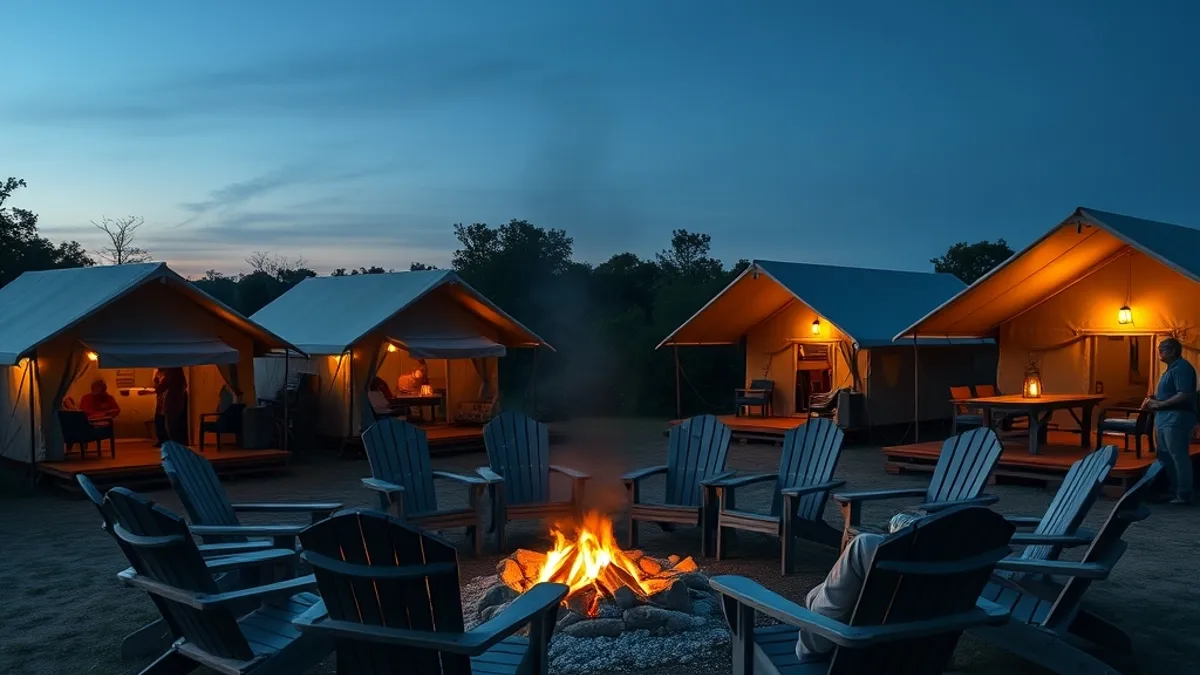
Not every glamping site can handle a large party, so start by looking for places built with groups in mind. The best option is often a glamping village: a cluster of 4-6 tents arranged around a common kitchen or lounge. This setup works well for groups of 8-16 people because everyone has their own sleeping space but shares a natural gathering spot. You can see how this works at scale in larger resorts, like the lakefront setup described in this Under Canvas Lake Powell review.
Tent capacity matters more than tent count. Bell tents usually sleep 2-4 people, while safari tents handle 4-6, so match tent type to your headcount before you reserve. A group of twelve might need four safari tents or six bell tents, and the price difference between those two options can be significant.
Before falling in love with a site, verify that it allows group reservations at all. Many sites cap bookings at 8-12 tents per reservation, and some ban parties or large gatherings entirely. A quick email saves you from a painful cancellation later.
Beyond capacity, use this checklist when comparing sites:
- Shared bathrooms — check how many facilities exist per tent cluster, because a single bathroom block for twelve people creates morning bottlenecks nobody wants on vacation.
- Covered communal space — a barn, pavilion or large lounge gives the group somewhere to cook and hang out when rain rolls in, which happens more often than you’d hope.
- On-site activities — look for sites with kayaks, hiking trails or games on the property so a rainy afternoon doesn’t leave everyone staring at each other with nothing to do.
Timing Your Booking: Lead Times and Seasonal Pricing
Timing is everything with group glamping, because the tents that fit the most people are the ones that disappear first. For trips in June, July or August, reserve 4-6 months ahead. Popular group sites sell out their largest safari tents and family units long before the smaller bell tents go, so waiting until spring often means your group gets the leftovers — or nothing at all. Booking early also gives you first pick of tent placement, which matters when you want everyone clustered together rather than scattered across the site.
Shoulder season savings
If your group has flexible schedules, shift the trip to shoulder season. May and the September-October window typically offer rates 20-30% lower than peak summer pricing, and availability is far easier to find. You can often book a shoulder-season group stay with just a couple of months’ notice, and sites are more willing to negotiate on extras like catered meals or private campfires when they have empty tents to fill. For inspiration on what a slower-season lake trip looks like, see this Masurian lake glamping guide.
What to budget per tent
Expect per-tent prices of roughly $120-$400 per night, depending on region, tent type and season. A basic bell tent in a rural area sits at the low end, while a furnished safari tent with a private bathroom in a popular region sits at the high end. Multiply that by your tent count and you’ll quickly see why booking early and shifting to shoulder season matter — on a large group reservation, those moves can save your crew thousands of dollars over a weekend. Keep in mind that most sites also require a deposit at booking, so have the funds ready before you commit to dates.
How to Split Costs and Deposits Fairly
Money is where group trips usually fall apart, and glamping is no exception. Most glamping sites require a 30-50% group deposit at booking, which means the organizer can end up floating hundreds of dollars for weeks. The fix is simple: collect money from everyone before you reserve, not after. If anyone hesitates to pay upfront, treat that as an early warning about their commitment to the trip.
The easiest way to handle this is a group payment app or a shared pot, so one organizer fronts the deposit and everyone else reimburses in fixed shares. Set a firm deadline for reimbursement, ideally within a week of booking, and keep a simple running tally of who has paid. It feels bureaucratic until the first person forgets, and then it feels like a lifesaver.
When your tents vary in size and price, split costs by tent rather than by person. A couple in a small bell tent should pay less than a family of five in a large safari tent, and people generally accept that logic without argument.
- Ask the site for the deposit deadline in writing, because some require the full balance 30 days before arrival while others collect the remainder at check-in.
- Confirm the cancellation window, typically 14-30 days before arrival, and note whether refunds come back to the original payer or as site credit.
- Agree in advance on what happens if someone drops out: their share is either absorbed by the remaining group, refunded only if a replacement joins, or lost entirely.
- Keep a small buffer in the shared pot for extras like firewood bundles or a late checkout fee, so you are not chasing people for $8 at the end of the trip.
If you want to see how a well-run multi-tent booking looks in practice, this review of a lakeside glamping stay in Castel Volturno, Italy shows what a coordinated group setup can feel like on the ground.
Questions to Ask the Site Before You Confirm
Once you have a shortlist, treat the booking call as an interview. The site knows its own quirks; you just have to ask the right questions before money changes hands. The biggest one is layout: ask whether your tents will be pitched together or spread across the site, and if togetherness matters to your group, request adjacent pitches in writing. A verbal promise from a friendly receptionist will not survive a busy weekend.
Check-in logistics deserve their own conversation. A group arriving with four or five cars, coolers and duffel bags is a very different operation from a couple with one suitcase, and some sites simply are not set up for it. Ask about parking capacity, whether cars can be brought near the tents for unloading, and whether the site can handle staggered arrival times if your group is traveling from different places.
Group extras can turn a good stay into a memorable one, but they almost always cost extra, so get the details early.
- Ask whether a private campfire area can be reserved for your group, and whether firewood is included or sold on site.
- If you want catered meals, ask for sample menus and per-person costs, plus how far in advance they need a final headcount for dietary requirements.
- Check whether guided activities like kayaking, wine tasting or foraging walks are run by the site or by outside operators, since that affects who you pay and who you chase if plans change.
- Clarify quiet hours and whether the site hosts other large groups the same weekend, because a neighboring bachelor party can change the mood of your trip.
Finally, ask for everything in a single confirmation email. If adjacent pitches, arrival plans and agreed extras are in writing, you have something to point to when the site is busy and things get shuffled.
Real Group Glamping Stays to Learn From
The best way to plan a group glamping trip is to borrow from ones that already work. You do not need to reinvent the format; you just need to notice what different types of sites do well and match those strengths to your crew.
Big sites that handle groups at scale
Lakefront tent resorts in the United States show how multi-tent bookings work when everything is designed for volume. These properties typically run shared fire pits, group activity calendars and communal dining options, which means the site itself does much of the organizing your group would otherwise handle. If your crew includes teenagers who need things to do and adults who want to sit still, this model takes the pressure off the organizer. The trade-off is less privacy and a more scheduled feel, so weigh that against how independent your group likes to be.
Smaller sites and the farmstay model
Portuguese glamping in Terras de Bouro demonstrates the opposite approach: smaller sites that cluster a handful of tents around a communal terrace, where the group naturally gathers without anyone planning it. This setup suits groups of 8-16 people who want togetherness without a program. Meanwhile, Italian farmstay campgrounds like those in Tuscany combine tent pitches with agriturismo dining, which is a strong model for mixed-age groups. Grandparents get a proper cooked dinner, kids get space to run around, and everyone meets in the middle at the long table.
Notice the pattern across all three: the best group stays are the ones where the site’s layout does the social engineering for you. Look for that before you look at amenities.
Wrapping Up Your Group Glamping Plan
Group glamping trips fall apart when nobody knows how to book several tents together, and the result is usually a split party or an overpaid invoice. The fix comes down to three moves: reserve 4-6 months ahead for a summer trip, choose a site built to host 8-12 tents under one reservation, and collect everyone’s share of the deposit before you book. Do those things and your tents stay on adjacent pitches instead of scattered across the site.
Pair that with fair cost-splitting by tent and the right questions asked up front, and your whole crew stays together under canvas without the usual coordination chaos. Have you booked a big glamping trip with friends or family? Share your experience or your questions in the comments below, or pass this article along to whoever is organizing your next trip.