Choosing between Cornwall and Devon for a coastal glamping trip is a genuinely tricky call. Both counties promise sea views from your tent deck, sandy beaches within walking distance and enough fish and chips to last a week. But they differ in coastline character, travel time, price and the kind of holiday they suit best, and the Cornwall vs Devon glamping question deserves a proper answer before you hand over a deposit.
This guide compares the two coast to coast: which shoreline suits your style, where to base yourself in each county, what type of tent or cabin to pick, when to book and what you’ll realistically pay, how to get there, and what to do beyond the campfire. By the end, you’ll know whether a clifftop safari tent above a surf beach or a yurt beside a sheltered estuary is the right call for your next break.
Cornwall vs Devon Glamping: Which Coast Suits You?
The first question to ask is what kind of coastline you want to wake up to. Cornwall’s north coast is all Atlantic drama: big skies, rolling surf and beaches like Fistral and Polzeath that draw surfers year-round. Clifftop glamping sites here put you within a short walk of the waves, and the seascapes are about as dramatic as England gets.
Devon, by contrast, gives you two coastlines in one county. The rugged north around Woolacombe faces the same Atlantic swells, while the calmer south coast offers sheltered estuaries like Salcombe, where the water is gentler and the pace slower. With around 350 miles of coast, Devon edges Cornwall’s roughly 300 miles on sheer length, and much of that extra mileage is sailing water and coves rather than crashing surf.
So which county is yours?
Choose Cornwall if you want dramatic seascapes, surf culture and a clifftop pitch with the wind in the canvas. Choose Devon if gentler, family-friendly beaches and river towns appeal more, especially if you’re traveling with young children or mixing beach days with pottering around harbors. Neither is the better county; they simply suit different trips, and the rest of this guide will help you match the details to your plans.
Where to Base Yourself in Each County
Where you base yourself shapes the whole trip, because both counties are bigger and slower to cross than they look on a map. In Cornwall, the Lizard Peninsula and the Roseland Peninsula are the answer if you want clifftop sites without the summer crowds of St Ives. Both offer that same exposed, sea-battered scenery, with small coves and fishing villages that feel a world away from the county’s busiest hotspots.
Devon splits neatly in two. North Devon around Croyde and Woolacombe combines proper surf beaches with meadow campsites tucked a short walk inland, so you get sea air without the salt-blown canvas. South Devon’s Salcombe and Dartmouth area is the pick for estuary-side glamping, where sailing boats drift past and the coast path follows the water’s edge. For a taste of what this part of the county does well, this review of a glamping site in Combe Martin, North Devon gives a feel for the region’s mix of coast and countryside.
Cornwall’s Padstow and Rock area, meanwhile, works brilliantly for food-focused trips, with beach access along the Camel Estuary and some of the county’s best-known kitchens within a short drive.
- Lizard Peninsula: home to the most southerly point of mainland Britain, with serpentinite rock formations and hidden coves like Kynance to explore from your tent.
- Roseland Peninsula: quieter still, with the subtropical gardens and church at St Just-in-Roseland making an easy half-day outing.
- North Devon meadows: sites set back from the coast often have space, play areas and sunset views over the dunes, ideal for mixed-age groups.
- Camel Estuary: the Camel Trail cycle path follows the water toward Wadebridge, so you can bike to lunch and skip the parking.
Stay Types: Tents, Yurts and Cabins Compared
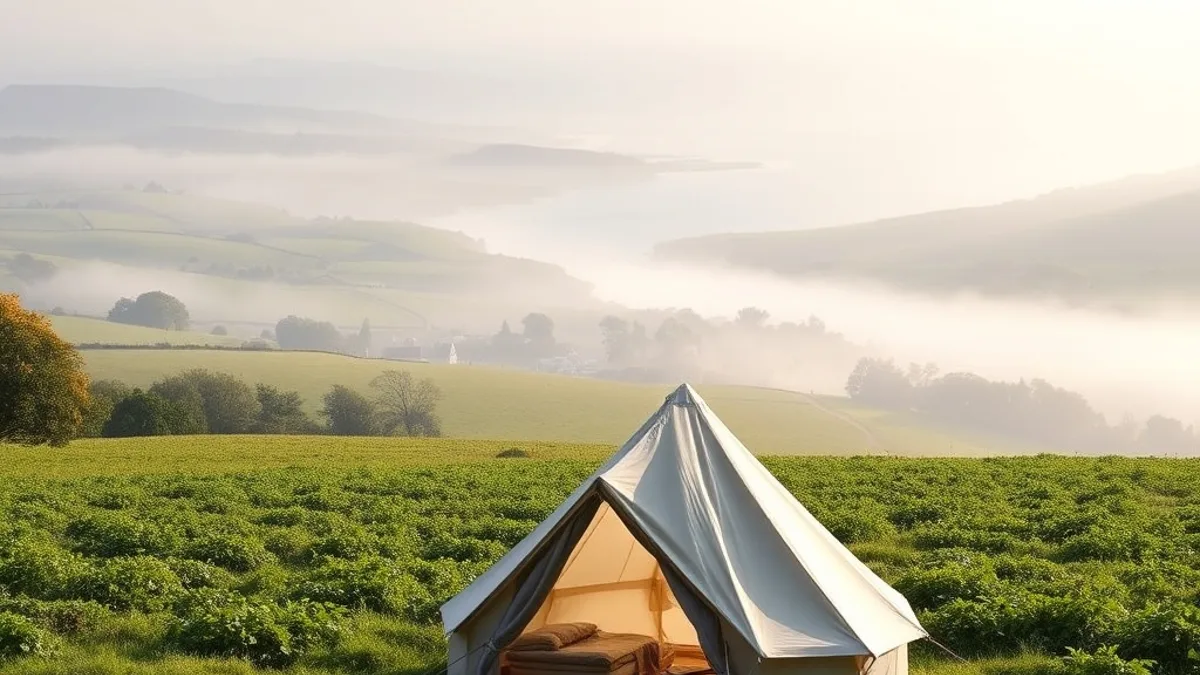
Once you’ve picked a coast, the type of stay matters just as much as the location. Safari tents dominate Cornwall’s clifftop sites, and it’s easy to see why: their solid wooden frames and canvas sides handle Atlantic weather well, and most come with sea-view decks and wood burners so you can watch the sunset without leaving your veranda.
Devon leans toward yurts and cabins set in sheltered fields, many with private hot tubs. The round shape of a yurt holds heat surprisingly well, and being tucked behind hedgerows takes the edge off the breeze. If you’re weighing up how a luxury tent actually feels on the ground, this review of a glamping stay at Laghi Nabi in Italy shows the kind of comforts the better safari-style setups now offer.
Budget options and shoulder-season picks
Bell tents are the budget option in both counties, typically running £80–£120 per night in shoulder months. They’re simpler, usually without heating, so they suit fair-weather trips rather than early spring.
One practical tip: if you’re traveling in April, May or October, look for insulated or heated units, because nights can drop below 10°C even when days feel mild. A wood burner or proper insulation makes the difference between a cozy evening and a shivery one, and most sites list heating details clearly in their unit descriptions.
When to Book and What You’ll Pay
Glamping prices in Cornwall and Devon follow a fairly predictable seasonal pattern, and knowing it can save you a surprising amount. Peak-season safari tents and sea-view yurts typically sit at the top of the price range, while the shoulder months drop noticeably for similar units. That difference alone can turn a long weekend into a four-night stay for the same budget, so it pays to check rates across several months before committing to dates.
Timing your booking matters as much as timing your trip. The most sought-after sites, especially those with ocean views, fill up fast for the summer school holidays, so plan well ahead rather than hoping for a late cancellation. Many operators release their diaries early in the year, and the best-positioned units tend to be claimed first.
- School-holiday weekends are the hardest dates to secure. For stays between late July and late August, booking 6–9 months ahead is the safe window; popular clifftop and sea-view units can be gone before the year even starts.
- May, June and September offer the best overall value. Prices are lower, the weather is usually mild enough for outdoor decks and evening barbecues, and beaches and coastal paths are noticeably quieter than in August.
- Check the season dates for each individual site. Most glamping sites operate April to October, but a small number offer year-round heated cabins, which can be a good route to a winter coastal break at a quieter time.
- Midweek stays stretch your budget further. If your dates are flexible, arriving on a Sunday or Monday often means better availability and softer rates than a Friday-to-Sunday slot, even in peak season.
Getting There and Getting Around
Devon is the easier county to reach for a short break. Driving from London takes roughly 4.5–5.5 hours, while Cornwall typically adds another half hour to an hour, at around 5–6 hours. That difference sounds small until you factor in a Friday evening departure, when summer traffic can add an hour or more either way.
Both counties funnel traffic through the same corridors: the A303 and the M5 carry most of the summer flow, and delays on either can ripple across the whole weekend. If you can travel outside Friday afternoons, you’ll usually arrive far less frazzled.
Arriving by train
Trains reach Exeter, Plymouth and Truro, which covers Devon and central Cornwall reasonably well. The catch is the last leg: most glamping sites sit in rural spots with no bus connection, so you’ll need a taxi or car hire for the final stretch. Check transfer costs before you book, as they can add up over a weekend.
Getting around once you’re there
Cornwall’s sites tend to be more spread out than Devon’s, so plan on 30–60 minute drives between your base, beaches and towns. In Devon, especially on the north coast around Croyde and Woolacombe, several sites sit within a short walk or drive of the sand, which makes car-free days much easier.
Beyond the Tent: Coastal Activities by County
Glamping is only half the trip; what you do from your tent matters just as much. Cornwall and Devon split neatly along their coastlines, so match your base to the activities you actually want, not just the prettiest view. Think about how you’ll spend a typical day before you book: a family who wants calm water for paddling and crab-catching will be happier in Devon, while a group chasing waves and long clifftop hikes should head for Cornwall’s Atlantic side. It’s also worth checking what each site offers on-site, since some have equipment hire, woodland trails or farm animals that keep children entertained on rest days.
Cornwall is the surf county. Lessons run at Fistral and Polzeath, both backed by proper surf-town infrastructure, and the county’s stretch of the South West Coast Path includes some of the route’s toughest and most dramatic clifftop walking. Devon answers with variety: its south coast suits kayaking, sailing and estuary cruises from Salcombe and Dartmouth, while the north coast offers gentler waves and flat, family-friendly cycling. Whichever county you pick, pack layers and a windproof jacket, and check tide times locally before planning beach days or coastal walks.
- Beginner surfers should look at Croyde in North Devon. The beach breaks there are forgiving, and several surf schools operate through the season, making it a gentler first wave than Cornwall’s bigger Atlantic beaches.
- The Tarka Trail is a flat, traffic-free cycling route. It’s ideal for families with younger children, with bike hire available at points along the path and café stops within easy reach.
- Estuary trips work in most weather. Kayaking and boat cruises from Salcombe and Dartmouth stay calm when open beaches are wind-blown, giving you a reliable backup option on blustery days.
- Coastal-path character differs by county. Both have sections to walk, but Cornwall’s is longer and more dramatic, while Devon’s is gentler and greener, better suited to relaxed family walks than full-day clifftop hikes.
The Verdict for Your Coastal Glamping Trip
So which county wins? If dramatic Atlantic coastline, surf and clifftop safari tents top your list, Cornwall is the stronger pick, at the cost of slightly higher prices and a longer drive. Devon suits shorter trips, families and anyone drawn to sheltered south-coast estuaries, with easier access from London for a long weekend.
Whichever you choose, timing matters most. A shoulder-season booking in May, June or September gives you the best balance of price and quiet in either county. If you’re torn, let us know in the comments or share this article with your travel partner.