Every family has heard the story, or lived it: you book a room labeled “family room,” arrive exhausted after a long flight, and discover two thin mattresses crammed into a space clearly built for two adults. The kids end up sleeping diagonally, the luggage blocks the door, and your vacation starts with an argument at the front desk. The problem is that family rooms in hotels are one of the most loosely defined categories in travel, and the label on a booking site often tells you almost nothing about what you will actually get.
This guide walks you through exactly what to check before you pay. We cover what genuinely counts as a family room, how to verify bed configurations and square meters, when connecting rooms make more sense, the bathroom and safety details that matter with kids, the booking timing and pricing traps that catch families out, and the specific questions worth emailing the hotel before you confirm. A few minutes of checking can save you a week of discomfort.
What Counts as a Family Room in Hotels
A true family room is designed to sleep four to five people, usually with one double bed plus two singles, or a double plus a sofa bed. That is the core definition, and it matters because standard rooms typically max out at two or three guests. If a room officially sleeps four, the hotel has built the layout, bedding and fire safety capacity around that number, not just squeezed in an extra mattress.
Size is the second marker. Family rooms generally range from 25-40 square meters, noticeably larger than the 15-20 square meters you get in a typical standard room. That extra space is what allows four people, their luggage and a bit of breathing room to coexist without daily friction.
The labels that should make you suspicious
Watch for vague marketing language like “family friendly” or “can accommodate families.” These phrases describe the hotel, not the room. A family friendly hotel may simply mean there is a pool and kids are welcome, while the room you booked still sleeps two. The same applies to photos: a shot of a spacious suite may belong to a category you did not book.
The reliable check is the stated maximum occupancy on the specific room type you are selecting, shown in the rate details or room description. Confirm that number before booking, because exceeding it can mean a second booking or refusal at check-in. Marketing copy is written to attract clicks; occupancy figures are what the front desk will actually enforce.
Room Size, Beds and Sleeping Arrangements to Verify
Bed configuration is where most family room disappointments happen, so confirm the exact setup in writing before you pay. The common layouts are two double beds, a double paired with two single beds, or a double with a sofa bed. “Sleeps four” can mean any of these, and they are not equivalent when you have two teenagers who will not share a bed.
Sofa beds deserve special scrutiny. Ask whether the sofa bed contains a real mattress or is a pull-out suitable only for small children. A flimsy fold-out that sags in the middle is fine for a five-year-old and miserable for an adult or teen.
- Cots: request one in advance rather than at check-in, since supply is limited; where cots are not free, expect around $10-40 per night depending on the hotel and destination.
- Rollaway beds: these are often treated as an extra occupant, which can push you over the room’s maximum occupancy, so ask whether adding one changes the allowed headcount.
- Children’s rates: kids under 6 commonly stay free when sharing existing beds, while ages 6-12 often pay around 50% of the adult rate, which can quietly change which room type is cheapest.
- Bed sizes: a “double” in some regions is closer to a small full bed, so ask for actual dimensions if two adults plan to share one.
Get the answers in an email rather than a phone call. A written confirmation of the bed configuration is what you can point to at check-in if the room does not match what you expected.
Connecting Rooms vs Family Rooms: Space and Cost
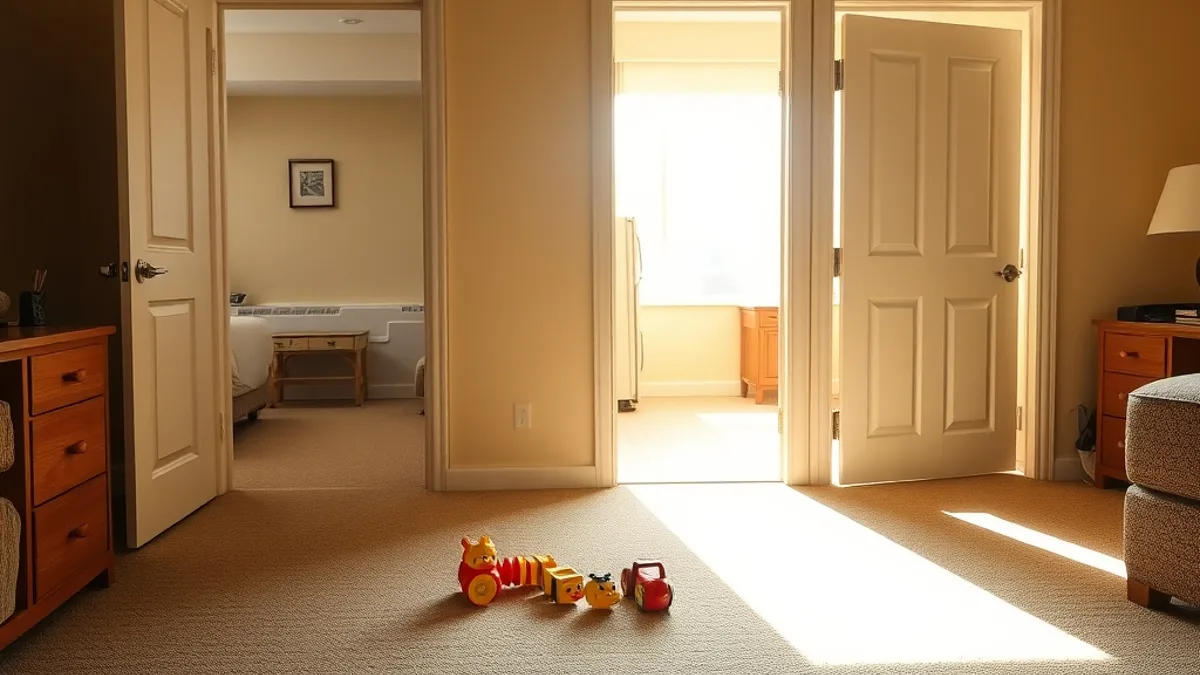
Connecting rooms are the alternative worth pricing before you commit to a family room. Two connected rooms give you 40-60 square meters of total space and, crucially, two bathrooms. That layout works especially well with teenagers who want privacy, or with babies and toddlers who need an early bedtime while parents stay up in the other room with the light on.
What connecting rooms cost
The trade-off is price. Connecting rooms typically cost 1.5-2x the price of a single family room, so you are paying a meaningful premium for the extra space and second bathroom. Whether that premium is worth it depends on trip length: on a one-night stopover the family room is usually fine, but on a week-long stay the extra bathroom alone can justify the difference for a family of four or five.
The request that is never guaranteed
Here is the part that catches families out: connecting rooms must be requested, and they are never guaranteed until you are standing at the desk with the door unlocked between them. Hotels often cannot promise the specific pair of rooms in advance, but you can improve your odds. Book both rooms on a single reservation rather than two separate bookings, since hotels prioritize keeping one reservation together. Ask for written confirmation that connecting rooms have been noted on your booking, and call the hotel directly a few days before arrival to remind them.
Be careful with terminology when you book. Adjoining rooms are simply side by side with no door between them, which is not a substitute if you need interior access, especially with young children. Say the word “connecting” explicitly and confirm there is a door between the two rooms, because front desk staff and booking agents sometimes use the two terms interchangeably.
Bathrooms, Safety and Practical Details
If your family room sleeps four or more people but has a single bathroom, mornings will be your biggest headache. One shower, one toilet and one sink shared by parents and kids means queues before breakfast, arguments over hot water and rushed departures for tours or flights. The best layouts give you two full bathrooms, but a separate toilet with its own sink is often enough to keep things moving. If the listing only shows one bathroom, ask how the space is arranged: a family of four getting ready in a single small bathroom can add twenty minutes to every morning of your trip.
Safety details matter just as much as layout, especially with toddlers who open doors, climb furniture and test every switch. Photos rarely show these features, and booking sites almost never list them, so you will need to ask the hotel directly. Send a short email covering the points below before you pay, not after.
- Balcony locks – ask whether the balcony door locks out of a child’s reach or has a secondary latch at the top, not just a simple turn handle at toddler height.
- Window restrictors – openings that lock at a few centimeters are standard in some countries and absent in others, so confirm what the windows actually allow.
- Kettle placement – a kettle on a low counter within reach of a climbing child is a real burn risk; request it be stored high or removed during your stay.
- Room location – ask for a quiet floor away from elevators, ice machines and pool areas, where doors slamming and corridor noise wake light sleepers.
- Blackout curtains – essential for naps and early bedtimes in summer, when it stays light well past bedtime in many destinations.
- A real fridge – you need space for milk, snacks and medication, and mini-fridges are not universal in family rooms, so verify one exists and that it can hold a bottle upright.
None of these details are guaranteed just because a room is labeled for families, and front desk staff at check-in usually cannot fix them. A two-minute email covering this list costs you almost nothing, saves far more trouble than it takes, and gives you something in writing to reference if the room falls short when you arrive.
Booking Timing and Price Traps for Family Rooms
Family rooms are usually the first room type to sell out at most hotels, simply because properties have so few of them. A hotel might operate forty standard rooms and only six family rooms, so peak school-holiday dates disappear months in advance. For trips in June-August and mid-December to early January, aim to book 3-6 months ahead. Last-minute deals on family rooms are rare for exactly this reason.
Watch how the rate is calculated
Some booking sites and hotels price rooms per adult rather than per room. A rate that looks reasonable for two adults can double once you add two children to the search. Always run the search with your full party size from the start, and check whether children’s rates apply. As a rough guide, kids under 6 commonly stay free when sharing their parents’ beds, while those aged 6-12 are often charged around 50% of the adult rate, but this varies by property.
Compare against two standard rooms
Before committing, price the family room against two standard rooms at the same hotel. The pair is sometimes cheaper, and you gain a second bathroom, which families with older kids often value more than sharing one big room. The math goes both ways, so run both searches.
Finally, screenshot the occupancy, bed configuration and total price at the moment you book. If the room you’re shown at check-in doesn’t match, that screenshot is your proof and usually ends the argument quickly.
Questions to Email the Hotel Before You Pay
Photos and room labels tell you less than you’d hope, so a short email to the hotel before you pay is the cheapest insurance you can buy. Booking sites compress room details into a few bullet points, and front-desk staff on the phone often give vague or overly optimistic answers. A written reply, by contrast, is specific, dated and something you can refer back to. Hotels that answer detailed questions clearly and promptly are usually the ones that run a tight operation and get the details right at check-in. Send one concise message covering the points below rather than a string of separate emails, and keep every reply.
- Ask for exact bed sizes and configurations. Don’t settle for “sleeps four” – request whether it’s two doubles, a double plus singles, or a sofa bed, and match the answer to your children’s ages and sleeping habits.
- Confirm cot or rollaway availability and cost. Ask whether one is free or charged, and whether you need to reserve it in advance, since availability can be limited even when the room itself is booked.
- Get connecting rooms in writing. If your plan involves connecting rooms, ask the hotel to confirm both rooms on one reservation with the interior door. Verbal assurances and “we’ll try” notes don’t hold up when you arrive with tired kids.
- Request a quiet, high-floor room away from elevators and pool areas. Also ask whether the family rooms have been renovated recently – family rooms are often the oldest stock in a hotel and the last to be refreshed.
Keep every reply in one email thread and bring it with you, either printed or saved offline on your phone. If anything differs at check-in – a missing cot, a different bed setup, rooms on separate floors – a calm reference to the hotel’s own written confirmation resolves almost every dispute on the spot. Front desk staff deal with hundreds of guests a week; a screenshot of their own email cuts through the noise faster than any argument. If the hotel hesitates to answer in writing, treat that itself as useful information about how your stay will go.
The Bottom Line on Choosing a Family Room
That disappointment at the front desk — two thin mattresses squeezed into a room that was never meant to sleep four — is almost always preventable. Family rooms in hotels work best when you verify occupancy, bed configuration and square meters before you pay, rather than trusting a label like “family friendly” that describes the marketing, not the room.
Once you know what to check, the decision gets simple. Weigh a 25-40 square meter family room against connecting rooms at 1.5-2x the price, and pick what fits your children’s ages and sleep schedule. Then book 3-6 months before peak holidays and confirm every detail in writing — that combination prevents most check-in surprises. If this guide saved you from a cramped room, share it with another traveling family or leave a comment below.