You want to wake up over the Adriatic without paying resort prices, but figuring out which stretch of the Croatian coast actually delivers sea-view glamping is harder than it looks. “Sea view” on a booking site can mean anything from a full panorama to a sliver of blue between pine trees, and the best region for you depends on whether you chase sunsets, island views or quiet bays.
This guide to Croatian coast glamping breaks the coastline into its three main regions: Istria’s sunset shores, Kvarner’s mild islands and Dalmatia’s south-facing views from Split to Dubrovnik. You’ll also find how to choose a stay type with a genuinely sea-facing unit, when to book for peak versus shoulder season, and a final planning summary to pull it all together before you commit.
Why the Croatian Coast Suits Glamping
Croatia has an unusual advantage for waterside glamping: sheer length. The mainland coastline stretches over 1,700 km, and with more than 1,000 islands scattered along it, the shore is never far away. That geography means many glamping shelters genuinely sit within sight of the sea, rather than a twenty-minute drive from it. On a compact coast like this, a tent on a terrace can look straight down at pebble coves and fishing harbors.
A season long enough for real comfort
The coastal glamping season runs roughly May to early October, with peak July-August. That’s long enough for camps to invest in full-service safari tents, cabins and lodges with proper bathrooms, kitchens and furnished terraces, instead of the basic pitches you’d expect at a bare-bones campground. You get hotel-style comfort in a small footprint right at the water’s edge.
Glamping also fills an awkward gap in Croatian travel. In August, pebble beaches pack shoulder to shoulder and accommodation prices spike. In the shoulder months, the coast empties and rates drop, but you still get warm seas and open sites. A well-placed glamping unit lets you enjoy that calmer coast with the sea in front of you the whole time.
Istria: Sunsets and Olive Groves on the West Coast
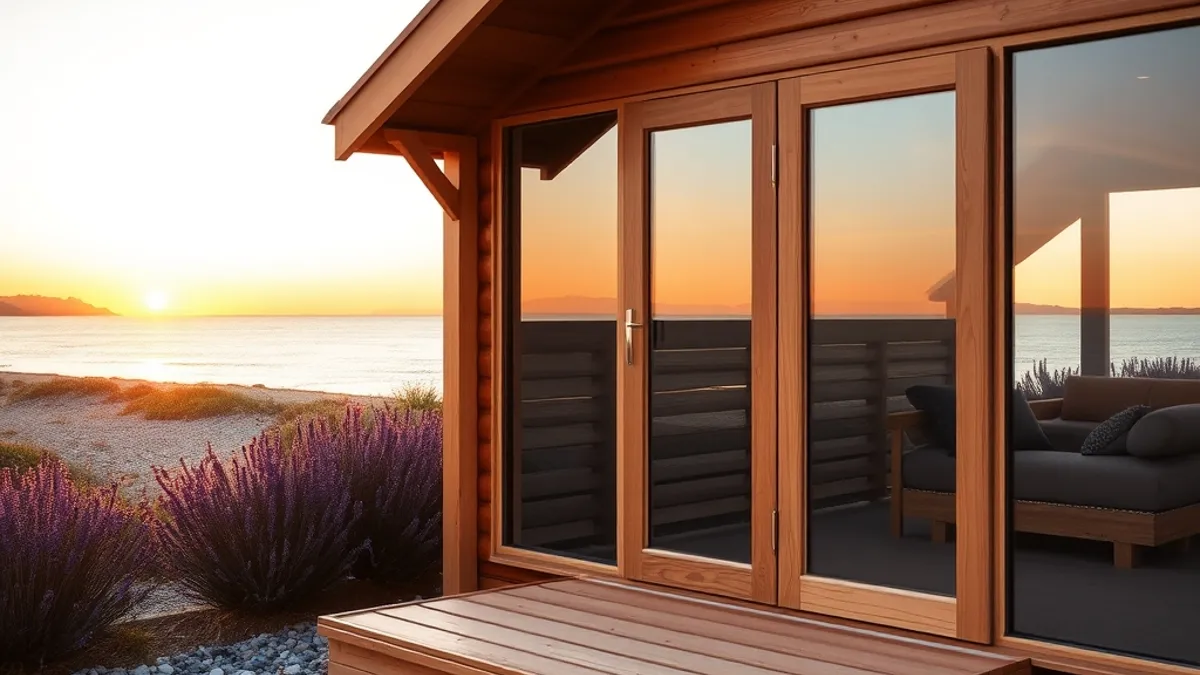
Istria’s west coast is Croatia’s sunset coast. Because the shoreline near Rovinj and Poreč faces west, your terrace can sit front-row to the sun dropping straight into the Adriatic, no island in the way. If watching the light change with a glass of local wine is your idea of a good evening, this is the stretch of coast for you.
Olive groves meet the sea
What makes Istria different from the southern coast is the inland-meets-coast setting. Glamping sites here often sit among olive groves and vineyards rather than on open shoreline, with pebble coves a short drive away. You get rolling, fragrant countryside around your tent and the water close enough for a morning swim, plus easy access to the region’s konobas and hilltop towns.
Timing matters more here than location. May-June and September work especially well: sea-view units are cheaper, the water is warm enough for swimming, and towns like Rovinj are calmer than in high summer. In August, expect the same crowds and premium prices you’d find anywhere on the Adriatic, without much extra space to compensate.
Kvarner: Islands and Mild Shoulder Seasons
Kvarner is the island region closest to everything. Krk, Cres and Lošinj combine island glamping with short ferry or bridge access from the mainland, so you can have an island address without a complicated travel day. Krk is connected by bridge, while Cres and Lošinj rely on ferry links, so check current schedules with the operator before you plan arrival times.
A climate that stretches the season
Lošinj has one of the mildest climates on the Croatian coast, which extends comfortable stays into late September and early October. While other regions start winding down, Lošinj’s sheltered bays and green pine-covered shoreline still make sense for a late-season tent or cabin. Pack a warm layer for evenings, but daytime conditions usually stay pleasant well past the summer peak.
Kvarner suits travelers who want sea views plus walking trails and quieter bays rather than beach clubs. The islands here are hilly, fragrant with herbs and pine, and laced with coastal paths where you can walk from cove to cove. If you’re comparing regions for a slower, nature-first trip, this is the one that trades nightlife for solitude. For a sense of how full-service glamping feels on the Adriatic, see this review of a glamping resort on the Italian coast for a useful comparison point.
Dalmatia: Island Views from Split to Dubrovnik
Dalmatia is where the Croatian coast turns south, and that orientation matters for glamping. Sites near Zadar, Šibenik and Split, and on the Pelješac peninsula, typically look out toward the islands of Hvar, Brač and Korčula. On a clear evening you can watch ferries trace the horizon between the mainland and the islands, and the water in front of your tent often holds that deep Adriatic blue well into autumn.
Beach access from your terrace
What sets Dalmatian glamping apart is how close the water usually sits. Most coastal sites here put pebble beaches and clear, swimmable water just steps from your unit, so the sea view carries through the whole day rather than being a morning-only backdrop. You can swim before breakfast, dry off on your terrace and watch the light shift over the islands without ever getting in a car.
The trade-off is demand. This stretch of coast is the country’s headline destination, and July and August bring the highest prices and thinnest availability anywhere on the Adriatic, especially around Dubrovnik. If you want a sea-view unit anywhere near the southern sites in peak season, plan well ahead and treat any last-minute search as a gamble rather than a strategy.
Choosing a Stay Type with a Real Sea View
Once you have picked a region, the type of unit you book decides how much of the Adriatic you actually see. Safari tents and glass-fronted cabins behave very differently across the season, and the difference matters more on the coast than almost anywhere else. A tent that feels magical in July can feel exposed in May, while a cabin that seems less romantic in photos often turns out to be the more comfortable choice outside peak summer. The same logic applies to lake destinations too, which is why it helps to read how this plays out in a slow-travel glamping guide to the Masurian Lakes before comparing stay types.
Safari tents on raised wooden terraces usually deliver the widest panoramas. The elevation lifts you above the shoreline vegetation, so you get open views across the water rather than a framed slice of it. You also tend to get more airflow, which matters during warm August nights when canvas breathes better than a sealed cabin wall. The compromise is privacy: neighboring tents and shared walkways sit closer than they do around cabins, and canvas walls let in more sound from the site, from early-morning coffee runs to kids heading for the beach.
- Cabins and lodges with full glass fronts keep the view usable in shoulder season, when mornings and evenings turn cool enough that you would rather watch the sea from indoors.
- Many cabins add heating, which makes cooler May or October nights comfortable instead of something you simply endure between swims.
- Site maps and recent guest photos are your best verification tools, because “sea view” on a booking page can mean a sliver between pines rather than an open horizon.
- Message the site directly and ask for the unit’s exact orientation and its position relative to other buildings before you pay the deposit.
Timing and Booking Strategy
On the Croatian coast, timing shapes both your budget and your view. Sea-view units are the first to sell out and the last to drop in price, so working backward from your travel dates is the single most useful booking habit here.
How far ahead to book
For July and August, book your sea-view unit 4-6 months ahead. Peak-season inventory is limited and the best-oriented tents and cabins go first. For May, June or September, 2-3 months is generally enough, though popular sites still reward early planning.
Price gaps between seasons are wide. Shoulder-season nights in May-June or September typically run €90-€250, while the same units in peak August often cost €200-€400 or more. Shifting your trip by a few weeks can cut your nightly rate roughly in half.
Why September wins
If you have flexibility, September is the sweet spot on the Adriatic. The sea sits around 22-24°C, still warm enough for daily swims, while the peak crowds have gone home. Rates sit well below August levels, sites feel calmer, and the light over the water in late afternoon is some of the best of the whole season.
Planning Your Adriatic Glamping Trip
Sea-view glamping along the Croatian coast is less about finding one perfect spot and more about matching a region to how you travel. Istria delivers sunset coves framed by olive groves, Kvarner pairs island views with quieter bays and mild shoulder seasons, and Dalmatia looks south toward Hvar, Brač and Korčula from pebble beaches and clear water. Each suits a different travel style, from sunset seekers to island-hopping bases.
Timing does the rest. May-June and September offer the best mix of price, weather and open sites, with September’s warm sea a genuine sweet spot, while peak August demands booking 4-6 months ahead. Whichever region and month you choose, match your stay type to the season and verify each unit’s true sea-facing orientation before you commit. Have you slept above the Adriatic in a tent or cabin? Share your experience or questions in the comments below.