You’ve found the perfect hotel, but there’s a problem: the standard rooms are fine, while the suites and view rooms cost 50-150% more — a price difference you simply refuse to pay. The good news is that a hotel room upgrade doesn’t have to come from your wallet. Hotels move guests into better rooms all the time, for free or at a steep discount, and the difference usually comes down to how, when and where you book.
This guide walks you through the whole process. We’ll cover why booking direct and timing your stay matters, how loyalty status and special occasions tilt the odds in your favor, and exactly how to ask at check-in without feeling awkward. You’ll also learn how to score paid upgrades through deals, bids and last-minute app offers, which types of hotels say yes most often, and what to settle for when the answer is no. None of it requires tricks or haggling skills — just a bit of planning and good manners.
Book Direct and Time Your Stay Right
Before you think about asking for anything at the front desk, your upgrade odds are largely decided at the booking stage. The single most effective move is to reserve directly on the hotel’s website or by phone. When you book through a third-party site, your reservation often arrives at the hotel with limited details and no easy way for staff to identify you. Book direct, and your name sits in the hotel’s own system, where front desk agents and managers can see it — and flag it for an upgrade if a better room is sitting empty.
Timing matters as much as the booking channel
Hotels can only upgrade you into a room that’s actually vacant, so travel when occupancy is lowest. For most city hotels, low season runs roughly November to March, when suites and premium categories sit empty and managers are happy to fill them with pleasant guests rather than leave them unsold. Within any given week, midweek stays also beat weekends: Tuesday-Thursday check-ins run at well below weekend occupancy levels, giving the front desk far more room to maneuver.
One warning: skip the cheapest prepaid, non-refundable rate. It may look like a bargain, but it gives staff no flexibility to move you. A slightly more expensive flexible rate keeps the door open for a free or discounted upgrade later — and that flexibility can easily be worth more than the few dollars you saved.
Use Loyalty Status and Special Occasions
Loyalty programs are the most reliable upgrade shortcut that costs nothing to join. Nearly every major chain offers a free membership, and you don’t need top-tier status to benefit. Members with mid-tier status get complimentary upgrades at many chains simply as a check-in perk, because the hotel prioritizes guests it recognizes over anonymous bookings. Signing up takes a few minutes online, and you can add your membership number to the reservation right away.
Special occasions work in a similar way: they give staff a concrete, human reason to say yes. Mention a birthday, anniversary or honeymoon when you book, and make sure it’s noted in the reservation itself — not just said in passing months later. A note in the booking is visible to whoever checks you in, which is exactly where you want it.
Finally, think about which room category you book. A mid-category room beats the base room every time, because the gap between your room and a suite is one the staff can realistically bridge. Moving a guest from the cheapest room to the best suite is a big jump; moving them from a mid-category room is an easy one.
- Add your loyalty number to every reservation — some chains track how often you stay and weigh that history when assigning rooms, so even frequent one-night stays count in your favor over time.
- Keep the occasion note short and specific — “25th wedding anniversary” gives staff something to work with, while a vague “special trip” is easy to overlook when rooms are being assigned.
- Check which mid-category room you book — some chains let you pick a room type within a category, and choosing one adjacent to a premium category (like a club room) shortens the upgrade gap even further.
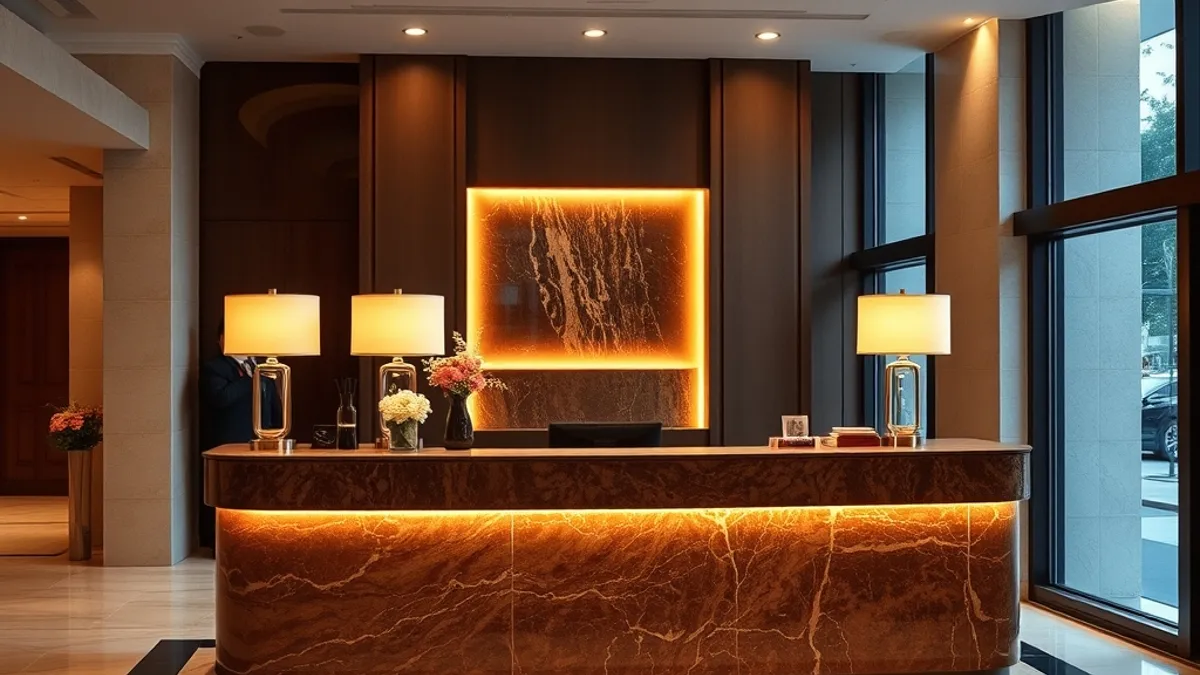
How to Ask for a Hotel Room Upgrade at Check-In
By the time you reach the front desk, most of the groundwork is done — the booking channel, the room category, the loyalty status are all locked in. What remains is the ask itself, and timing plus delivery matter more than most travelers expect. Front desk agents assign rooms all day long, and they know exactly which rooms are open, which suites are unsold, and how much flexibility they have tonight. A friendly, well-timed request genuinely changes what they can offer, while a pushy one usually gets a flat no. Here’s how to run the ask so it lands well.
- Arrive between 3 and 5 pm. Housekeeping has finished preparing the day’s rooms by then, so the full inventory is visible to the agent — and you’ve beaten the evening rush, when the lobby fills up and staff have less time to be creative. An agent under pressure defaults to the standard room; an agent with a quiet lobby can consider a better move.
- Ask politely and briefly. One sentence is enough: something like “Is there any chance of a room with a better view tonight?” A friendly request succeeds in roughly 1 in 5 attempts when occupancy is under 80%, which are far better odds than most travelers realize — and it costs you nothing to try.
- Stay flexible about what you accept. A suite is the dream, but a higher floor, a better view or a corner room all count as a win — and agents are far more likely to say yes to a smaller move they can make on the spot. Say you’re happy with whatever they can do; that openness often works in your favor.
- Never demand or complain. Front desk staff upgrade guests they like, not guests who argue. A smile and a thank-you cost nothing and often decide the outcome more than anything else you say. If the answer is no, accept it gracefully — you can still ask about late checkout or breakfast as a consolation.
If the agent hesitates, don’t push — take whatever they offer graciously and thank them either way. The same staff will often be there on your next visit, and a good impression compounds over time, especially if you’re a loyalty member the hotel recognizes. A guest who was easy to deal with once is exactly the guest an agent thinks of first the next time a suite sits empty.
Upgrade Through Deals, Bids and Last-Minute Offers
One of the easiest ways to land a bigger room is to let the hotel sell you one — at a discount. Many hotels send email offers 24 to 48 hours before arrival, offering paid upgrades at 30-60% below the normal suite rate. These emails often land in your promotions folder, so check your inbox the day before you travel instead of assuming silence means no deal.
Use the hotel’s app to your advantage
Most major chains have apps that do more than show your reservation. Some let you bid on or buy a discounted upgrade after booking, and others surface upgrade offers when you check in through the app. These app-based offers frequently appear for a fraction of the walk-in suite price, because the hotel would rather fill the room cheaply than leave it empty. Mobile check-in also lets you accept an offer in seconds, without standing at the front desk while other guests queue behind you.
Before you tap buy, do a quick sanity check. Suite rates often run 50-150% above standard room rates, so a discounted upgrade should still feel like a genuine bargain compared with booking the suite outright. If the offer is close to what the suite would have cost anyway, skip it — or try asking politely at the desk instead. A little math turns a tempting push notification into a decision you can actually defend.
Where Upgrades Are Most Likely: Boutique Hotels and Resorts
If you want the odds stacked in your favor, choose your hotel type as carefully as your dates. Not all properties have the same flexibility to move you, and some practically hand out upgrades when the conditions are right.
Boutique hotels and shoulder-season resorts
Small boutique hotels with 10-50 rooms are upgrade goldmines. With so few rooms, the manager or owner often handles check-in personally and can move you on the spot without asking anyone for approval. There is no corporate policy to navigate — just a person who wants you to leave a great review. Mention you are celebrating something or simply be friendly, and a room change is often one keystroke away.
Resorts in shoulder season behave in a similar way. Rather than publicly discounting their premium categories, which can cheapen the brand, they often upgrade willing guests to fill those empty suites and villas. You get the top-floor room, and they keep their published rates intact.
Business hotels on weekends
Business hotels are another sweet spot. Corporate guests check out on Friday, and their suites sit empty all weekend. A leisure traveler arriving on a Friday or Saturday at a hotel that lives off weekday business traffic has a real shot at a free bump. The one situation to avoid entirely is peak events and festivals: when a big convention or carnival is in town, every room category sells out and upgrades are simply impossible, no matter how charming you are.
What to Do If the Upgrade Is Refused
So you asked nicely, the front desk agent smiled apologetically, and the answer was no. That is not the end of the conversation — it is just the start of a different one. When a free upgrade is off the table, shift your goal from a bigger room to a better stay, because there are several ways to extract real value without the suite.
- Late checkout: Ask for a late departure so you can shower, pack and relax after a standard 11 am check-out time. On a departure day, a few extra hours in the room can be worth as much as a view.
- Breakfast included: If your rate did not include breakfast, ask for it to be added for free. Hotel breakfast prices add up quickly for a couple over several mornings, so this perk can quietly save you a meaningful amount.
- Lounge access: In hotels with an executive lounge, ask whether they can grant access for your stay. Lounges typically offer free drinks, snacks and a quieter workspace, which softens the blow of a standard room considerably.
If none of those appeal, ask a direct question: is a paid upgrade available at a reduced rate tonight? Front desks sometimes have unpublished flexibility once they see you are genuinely interested, and the price can come in well below the listed suite rate.
Whatever the outcome, stay gracious. Thank the agent, take the perk or the polite no, and move on. Staff remember pleasant guests, and a good impression improves your odds on your next stay — especially once loyalty status starts working in your favor.
The Smart Way to Score a Hotel Room Upgrade
Scoring a better room without paying full price is rarely about one magic trick — it is about stacking small advantages on top of each other. Each tactic on its own gives you a modest edge, but combined they change the math entirely. A hotel with empty premium rooms, a guest they recognize, and a polite request at the right moment is a very different proposition from a walk-in stranger at peak time.
It also helps to remember what is actually at stake. Because suites typically carry a 50-150% premium over standard rooms, even a modest bump in category — or a discounted paid offer that pops up in the app — can represent serious savings on the same stay.
And if the suite never materializes? A late checkout, breakfast included or lounge access still adds real value at zero cost. Have you scored an upgrade lately? Share your story in the comments or pass this article along to a fellow traveler.