Glamping for couples sounds dreamy until you actually start booking. Photos promise candlelit decks and starlit domes, but too many stays turn out to be a tent squeezed between six others, a shared bathroom block down the path, and a view of the car park. The difference between a truly romantic escape and an overpriced campsite often comes down to details that never make it into the listing.
This guide walks you through exactly what to check before you book. We will look at what actually makes a glamping stay romantic, how to choose between a safari tent, a dome and a cabin, and which setting suits your style of togetherness. You will also find advice on timing your booking, budgeting for a couple’s trip, and the red flags that signal a stay is more family campsite than honeymoon hideaway.
What Makes Glamping Romantic for Couples
Here is the truth that surprises most first-time glampers: privacy beats amenities every single time. A simple canvas tent standing alone on its own plot, screened by trees or hedges, will feel far more romantic than a luxury unit crammed into a busy site with a spa, a restaurant and a playground. Romance lives in the feeling that the two of you are somewhere quiet and your own, not in marble finishes you share with thirty other guests.
The upgrades that actually matter
That said, a few practical features make a huge difference to a couple’s stay. En-suite bathrooms mean no midnight walks across a damp field in the dark. A private deck gives you a place for morning coffee and evening wine without an audience. And a wood-fired hot tub, the kind you heat yourself and stoke while the fire crackles, turns an ordinary evening into the highlight of the trip. These three upgrades consistently earn the best mentions in couple reviews.
Size matters too. Look for small properties with 10 units or fewer, where owners can space tents generously and keep noise down. The smallest sites, those with fewer than 5 units, feel the most secluded of all. Before booking, check a map or aerial photo if the listing shows one, and count how many units share the grounds. A quick scan of reviews mentioning “quiet” or “private” will tell you more than any amenity list.
Choosing the Right Stay Type: Tent, Dome or Cabin
The type of unit you book shapes the whole trip, from what you pack to how warm you sleep. The three main options each suit different seasons and landscapes, so it pays to match the stay type to your dates rather than booking on looks alone.
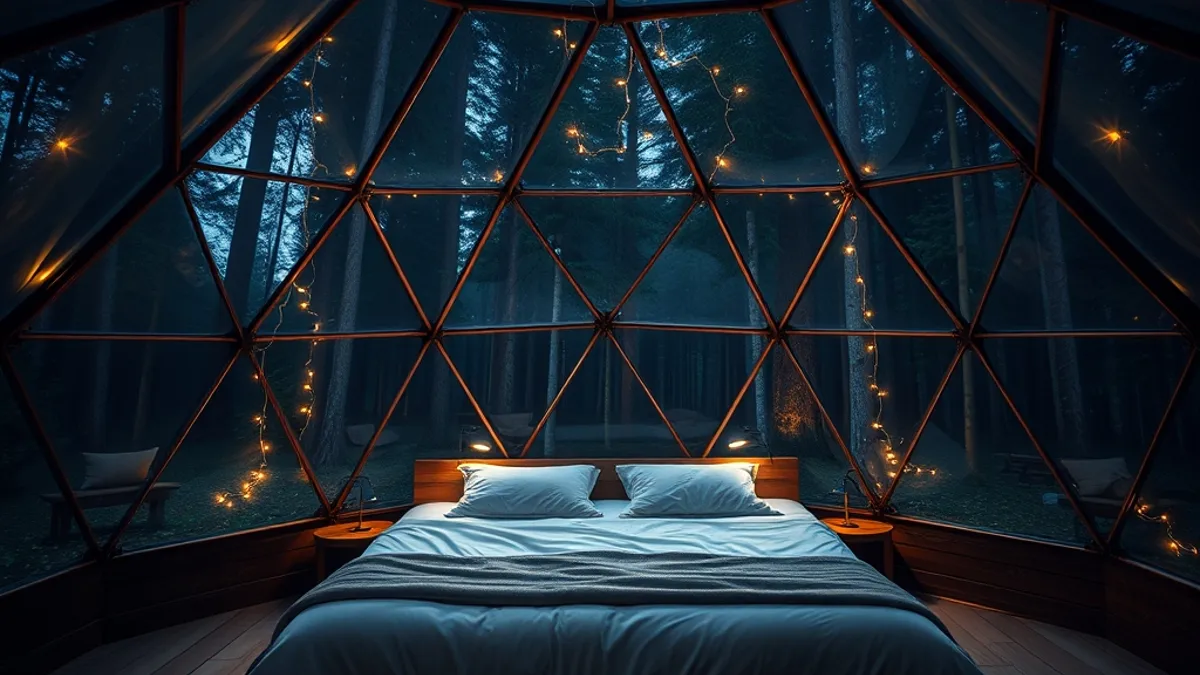
Safari tents are the classic choice: spacious, airy and wonderful in warm months, especially in open landscapes like coastal meadows where the canvas breathes with the breeze. Geodesic domes have become the romantic favorite thanks to transparent ceiling panels that let you stargaze from bed, and many are insulated for year-round use. Insulated cabins and bungalows are the safest bet when winter trips or rainy climates are on the cards, since solid walls and proper heating remove the weather gamble entirely.
If you want to see how a lakeside version of this works in practice, this Masurian lake glamping review for slow travelers shows what a calm, nature-first stay can feel like.
- Safari tents: check whether the listing mentions mesh screens and ventilation, since canvas heats up quickly in midsummer afternoons.
- Geodesic domes: ask whether the transparent panel sits directly over the bed or over a seating area, because only the first gives you stargazing while you lie down.
- Cabins and bungalows: look for a wood stove or heater listed explicitly, not just “cozy,” and confirm whether the kitchen is inside or in a separate shared building.
Picking the Setting: Lakes, Coast or Countryside
Once you know what kind of unit you want, the setting decides the mood of your days together. Lakes, coast and countryside each bring their own rhythm, and the right one depends on how the two of you like to spend slow mornings and long evenings.
Lakeside and coastal stays
Lakeside sites are made for quiet mornings. You get sunrise views over still water, mist rising off the surface, and the option of paddling a canoe or kayak together before anyone else is awake. The water also acts as natural sound insulation, so lake sites tend to feel calmer than their surroundings suggest. For a sense of how this plays out, this review of glamping in Combe Martin on the Devon coast gives a good picture of a coastal couple’s stay.
Coastal glamping adds its own pleasures: long beach walks, rock pools, and dinners timed to the sunset. The trade-off is wind. Exposed coastal plots can be breezy even in summer, which affects canvas tents more than solid cabins, so check how sheltered the unit is before committing.
Countryside and farm stays
Countryside and farm stays trade water views for dark skies and slower pleasures. Light pollution is minimal, so fire pit evenings stretch into proper stargazing, and many farm properties serve farm-to-table breakfasts with eggs and produce from meters away. If your idea of romance involves blankets, bonfires and unhurried mornings rather than swimming, this is usually the most affordable and most atmospheric option of the three.
When to Book: Seasons and Lead Times
Timing makes a bigger difference to a romantic glamping trip than most couples expect. In Europe, the sweet spot is May-June and September-October. You get long evenings, warm enough weather for outdoor dinners, and campsites that feel calmer than in peak summer. The light in these months is also softer, which matters more than you’d think when you’re watching the sun go down from a private deck.
July and August can still be wonderful, but they come with a catch: the best units disappear early. Reserve summer weekends 3-6 months ahead, especially if you have your eye on a small retreat. Popular two-unit properties, where you share the site with just one other couple, sell out first and often months before anything else.
Winter stays and off-peak savings
Don’t dismiss the colder months. November-March stays at insulated domes and cabins can cost 20-40% less than in high season, and a wood-fired hot tub under a clear winter sky is hard to beat. Just make sure the unit is genuinely winterized, with proper insulation and heating, before you commit. Some properties, like the lakeside retreat we covered in our Laghi Nabi review, show how year-round setups can work beautifully outside the summer rush.
One practical tip: if your dates are flexible, book a Sunday or Monday night instead of a weekend. Small properties often have gaps midweek even in busy months, and you’ll likely have more of the site to yourselves.
Budgeting for a Couple’s Glamping Trip
Couple-oriented glamping units typically run €120-€300 per night in Europe and $150-$400 in the US. That’s a wide range, and the difference usually comes down to three things: the type of unit, the level of privacy, and the romance upgrades attached to it. A basic safari tent on a shared meadow sits at the lower end, while a dome with an en-suite bathroom and its own hot tub sits at the top.
Romance upgrades like hot tubs and private decks typically add €30-€80 per night on top of the base rate. That sounds like a lot until you compare it with a spa hotel, where comparable privacy and extras would cost far more. If the weather looks unreliable, prioritize the en-suite bathroom and heating over the hot tub; a soaked walk to a shared shower block will undo any romance fast.
Also think about distance. Keep the drive or train ride under 3 hours so a two-night stay feels worthwhile. Anything longer and you lose half a day each way, which turns a relaxing escape into a logistics exercise.
- Ask what’s included in the rate. Some properties bundle firewood, breakfast baskets or a bottle of wine into the price, while others charge for each separately — a €30 difference per night can hide in these extras.
- Check the minimum stay. Many small retreats require two or three nights on weekends, which changes the total cost more than the nightly rate does.
- Factor in deposit and cancellation terms. Small properties often take full payment upfront with strict cancellation policies, so read the fine print before booking a trip that depends on good weather.
- Look at what’s nearby. A site with a good restaurant or village within a short drive saves you from bringing every meal, which can offset a slightly higher nightly rate.
Red Flags to Avoid When Booking Glamping for Couples
Glamping listings are masters of flattering photography, so you need to read between the lines. The single biggest red flag: photos showing units packed shoulder to shoulder. If tents line up in rows with neighbors visible from every deck, you’re looking at a party campsite, not a couples retreat. No amount of fairy lights fixes that. Genuine romantic stays usually show one unit per photo, with trees, water or open land in the background.
Bathrooms and reviews tell the real story
Check the facilities list carefully. Shared bathroom blocks listed without mentioning en-suite options mean a long midnight walk across the site, in the dark, in a robe. For a couples trip, an en-suite bathroom isn’t a luxury — it’s the difference between feeling like you’re in a private hideaway and feeling like you’re back at a school camp. If the listing is vague, email the host and ask directly how far the nearest toilet and shower are from the unit.
Reviews are your other best filter. Scroll through and search for words like couples, honeymoon or anniversary. If nobody mentions celebrating anything together, the vibe is probably family-first: kids’ play areas, group activities, early noise. That can be lovely — for a family trip. For a romantic escape, you want properties where past guests describe quiet mornings and evenings by the fire.
One more subtle signal: look at how the host responds to negative reviews. Defensiveness about noise complaints or cleanliness is a warning, while calm, specific answers suggest a well-run property that takes guest experience seriously.
Wrapping Up Your Romantic Glamping Choice
Choosing glamping for couples comes down to three things: privacy, stay type and setting. A single safari tent on its own plot, a dome with a transparent ceiling or an insulated cabin with an en-suite bathroom will deliver far more intimacy than any star rating or crowded resort-style campsite ever could. If a property has 10 units or fewer, you are already on the right track.
Timing and budget matter too. Aim for the shoulder months of May-June or September-October, and lock in your summer weekend spot early, since the most romantic properties fill up long before the season starts. Expect to pay €120-€300 per night in Europe for a genuinely romantic stay. With those numbers in mind, the choice becomes simple rather than overwhelming. Found the perfect dome or tent for your next escape? Share your pick or your own tips in the comments below.