There’s nothing quite like glamping in fall: crisp air at night, a wood-fired stove ticking away, and waking up to a canopy of red and gold outside your tent. But foliage season is frustratingly short, and the difference between a trip at peak color and one a week past it can come down to timing and where you choose to base yourself.
This guide walks you through the whole planning process. We’ll cover why fall often beats summer for tent and cabin stays, when color actually peaks in different regions, how to pick a small town that puts several leaf-peeping loops within easy reach, and what to pack for cold, wet nights. We’ll also share booking tactics that help you snag a spot before the best sites sell out, plus ideas for filling your days beyond the viewpoints, from harvest festivals to quiet trails. By the end, you’ll have a realistic plan for catching the season at its best.
Why Glamping in Fall Beats Summer Trips
Ask anyone who has camped in July and then again in October which trip they enjoyed more, and fall usually wins. Summer nights in a tent can be sticky and restless, with canvas that holds heat long after sunset. In fall, the air cools down naturally, sleeping under a duvet feels like a treat rather than a chore, and a cabin with a small heater becomes genuinely cozy instead of stifling.
Your wallet notices the change too. Once school holidays end and the family-travel rush fades, glamping rates typically run 20-40% below summer peak prices. That can mean the difference between a basic site and one with a private hot tub or a panoramic deck, for the same budget.
Quieter trails, better photos
The crowds thin out as well. Trailheads and overlooks that require elbowing through groups in July and August become calm again, and you can often have a viewpoint to yourself on a weekday morning. Morning mist over lakes and valleys is also far more common in cool fall air, which photographers will appreciate.
The one trade-off is daylight. With roughly 10 hours of usable light in mid-fall, you’ll want to plan hikes and drives around early starts and be back at camp before dark. Think of it as a reason to slow down rather than a limitation: one good morning hike, a long lunch in a village, and an evening by the fire is a full day.
When Foliage Peaks: Timing Your Fall Glamping Trip
Foliage doesn’t peak everywhere at once, and this is where most trips go wrong. Color moves like a wave across each region, and booking a week too early or too late means either bare branches or mostly green canopy. The good news is that the wave is predictable enough to plan around if you know the general windows.
In New England, peak color arrives late September in the far north and works its way south through mid-October, so northern Vermont and Maine turn first while southern areas follow a couple of weeks later. In Europe, forests generally hit peak color around mid-October to early November, which makes late-season glamping trips surprisingly rewarding. If you’re dreaming of a warmer-weather option, southern Italy keeps the season going well into autumn, as we found when we stayed at a lakeside glamping site near Castel Volturno, reviewed in our full Laghi Nabi experience.
Japan runs its own show, with the autumn front traveling south from late September through November, starting in the northern island of Hokkaido and finishing in Kyoto and further south.
- Elevation matters as much as latitude: mountain valleys often peak a week or two before nearby lowland areas, so a single region can offer two color windows.
- Oak and beech forests turn later than maples: mixed woodland areas tend to hold color longer, extending your booking flexibility.
- Wind and heavy rain end a season early: a big storm can strip leaves in days, which is why flexibility in your dates is worth paying for.
- Foliage forecast maps update weekly: check the regional map for your destination 1-2 weeks before locking in final dates, not months ahead.
Choosing a Base: Small Towns Near Fall Color
The biggest mistake foliage travelers make is treating a glamping trip like a road trip, moving to a new site every night. Pack-up and check-in time eats your limited daylight, and you spend your evenings reorganizing bags instead of by the fire. A better approach: pick one base town that sits within 1-2 hours of several leaf-peeping loops, and drive out and back each day. You’ll cover more color with far less hassle.
Water doubles the show
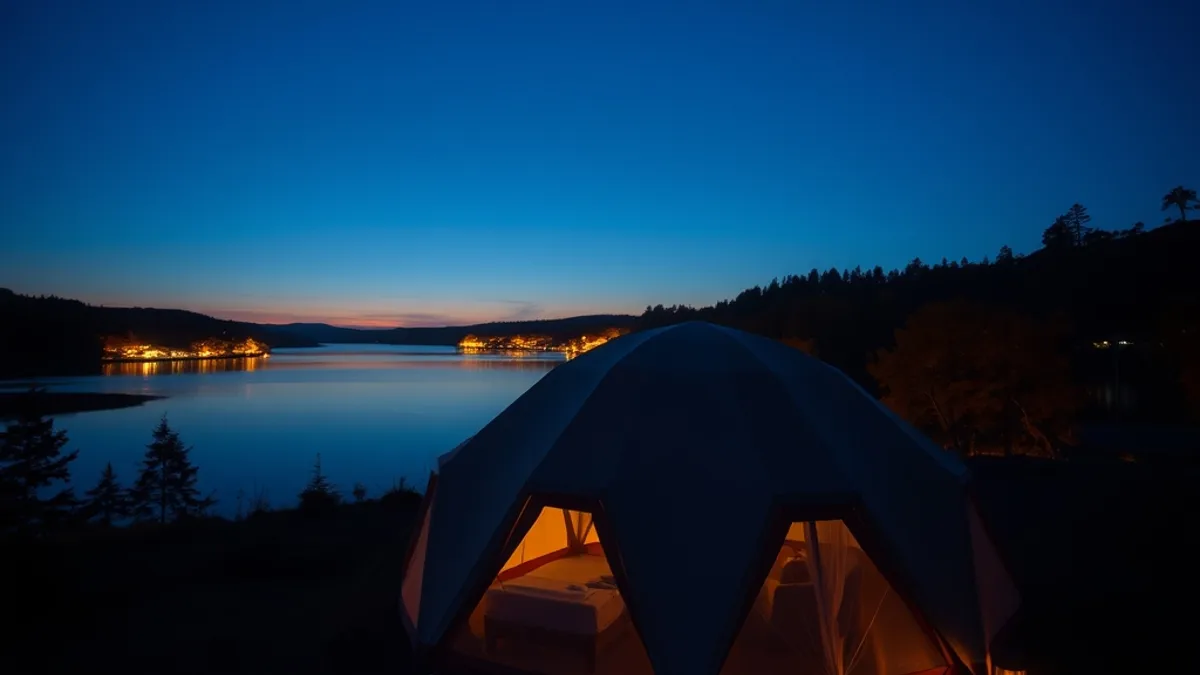
If you can, choose a coastal or lakeside base. Water reflections effectively double the foliage, and morning fog rolling off a lake toward a red hillside is the kind of scene you’ll remember long after the trip. Shoreline roads and lakeside trails also tend to offer open sightlines through the trees, which helps when the canopy starts thinning.
Rainy-day insurance
Fall weather doesn’t always cooperate, so a village base with local markets, bakeries and cafes pays off. A wet afternoon becomes a slow lunch and a browse through farm stands rather than a wasted day stuck in a tent. Look for towns that feel lived-in year-round, not just seasonal resorts that shut down after summer.
Finally, favor bases near national or regional parks. Protected forest land usually holds color longer than scattered roadside trees, and park trails give you reliable, well-marked routes into the best of it. Check that your chosen town has groceries and fuel within a short drive, then book and stop second-guessing.
What to Pack for Fall Glamping
Fall glamping is a packing challenge in a way summer trips never are. Afternoon temperatures can sit around 15°C while the same night drops close to 5°C, and a single jacket will not cover that spread. The solution is layers you can add or shed as the day shifts, rather than one bulky coat you sweat through at lunch and freeze in after dark.
The second thing first-time fall campers underestimate is how quickly a tent loses heat. Once the sun drops, canvas and fabric structures cool fast, and the warmth you built up during the evening disappears within an hour. Your sleepwear matters as much as your daytime outfit, so pack for the night, not just the trail.
Rain is the other constant. October showers turn parking lots and trailheads to mud, and a soggy pair of sneakers can end a trip early. Before you zip your bag, run through this checklist:
- A moisture-wicking base layer, a fleece or wool mid-layer and a windproof shell, so you can adjust to each temperature swing without overpacking
- Insulated sleepwear and a warm hat for bed, since a surprising share of body heat escapes through your head while you sleep
- Waterproof boots with decent tread and a spare pair of socks packed in a dry bag, because muddy trails are the norm, not the exception
- A headlamp with fresh batteries and a fully charged power bank, since roughly 10 hours of darkness means you will be using lights far longer than on a summer trip
How to Book Fall Glamping Before It Sells Out
Fall glamping inventory is limited, and the best structures in famous foliage regions often fill months before the leaves turn. Safari tents, cabins and domes are far fewer in number than hotel rooms, so a single popular property can sell out its entire peak season in a matter of weeks. A little planning goes a long way, and the order you do things in matters as much as how early you start. Work through the steps below before you pay a deposit.
- Reserve 2-3 months ahead of your travel dates. If you have your heart set on a peak October weekend in a well-known foliage area, book even earlier, because those specific nights are the first to disappear from every calendar.
- Aim for a 3-4 night stay that includes weekdays. Midweek rates are usually softer than Friday and Saturday prices, and trailheads near popular bases are noticeably quieter from Monday to Thursday. A longer stay also gives you a buffer day in case rain or early leaf drop disrupts your plans.
- Question the host before you pay a deposit. Ask specifically how the tent or cabin is heated, whether hot water is available in the mornings, and if there is covered outdoor space where you can sit out a rainy afternoon. Responses to these questions tell you a lot about how the property handles cold snaps and wet weather.
- Get the cancellation terms in writing. Foliage timing shifts with the weather from year to year, and flexible terms let you move your dates a week later if the color has not peaked where you booked. Confirm any change fees by email so you have a record.
Reading a detailed review before committing also helps you know what you are paying for. Photos can flatter a property, but reviews reveal how it performs in real conditions, from thin tent walls to muddy access roads. A property-level look, like this Under Canvas Lake Powell review, shows the kinds of questions worth asking any host about comfort and setup.
Beyond Leaf-Peeping: Fall Activities From Your Tent
The leaves get top billing, but they are only half of what a fall glamping trip offers. Rural bases put you close to working farms, orchards and small food festivals that only happen in harvest season, and most are a short drive from your tent rather than a full-day outing. Ask your host for recommendations when you check in; many work directly with nearby producers and can point you toward apple picking, cider tastings or weekend markets you would never find on your own.
Trails with a View That Keeps Opening
Fall hiking has a quiet advantage: as the canopy thins, your sightlines open up. Views you would never get in summer appear through the branches, and popular paths are far less crowded than at the height of the season. Cooler air also makes longer walks comfortable, so you can cover more ground without the midday heat slowing you down. Plan your loops within 1-2 hours of your base so you spend your time on the trail, not in the car.
Longer Nights, Better Skies
Earlier sunsets work in your favor after dark. Campfires last longer and stargazing starts at a reasonable hour instead of midnight, which makes it an easy family activity rather than a late-night mission. If slow mornings and evenings by the water appeal to you, a lake-based glamping trip in Poland’s Masurian Lake district shows how rewarding a calmer pace can be.
Keep your eyes open during the day, too. Autumn is an active season for wildlife, with animals foraging heavily before winter, so deer, birds and other creatures are often easier to spot along quiet trails than at other times of year. Bring binoculars if you have them, and keep noise low near dawn and dusk when activity peaks.
Wrapping Up Your Fall Glamping Plan
Fall glamping solves the problem every foliage chaser faces: the season is short, and one wrong week can mean brown leaves instead of gold. Get the timing right and you get crisp nights, quieter trails and rates typically 20-40% below summer peak prices, all while the color show peaks outside your tent. The key is matching your destination to its foliage window, whether that means late September in New England or early November in parts of Europe.
Once the dates are set, book 2-3 months ahead, pick one well-located town as your base and pack for cold, wet nights rather than mild summer weather. Do those three things and the rest is just coffee, campfires and color. Have a favorite fall glamping spot or a tip that saved your trip? Share it in the comments or pass this article along to a friend planning their own foliage escape.