You booked that glamping trip months ago, and now the forecast shows rain for every single day. Your first instinct might be to cancel and rebook for sunnier weather, but hold that thought. Glamping in the rain is often far more enjoyable than people expect, and with a little preparation, a wet weekend can become the coziest trip you take all year.
This guide walks you through everything you need to know before the clouds roll in. We will cover what a rainy night in a dome or safari tent actually feels like, how to choose a site that handles wet weather well, and the best time to book a wet-season stay. You will also find a practical packing list, ideas for rainy-day activities, tips for keeping your tent dry and comfortable, and an honest case for why cancelling is usually the wrong move.
What Glamping in the Rain Is Actually Like
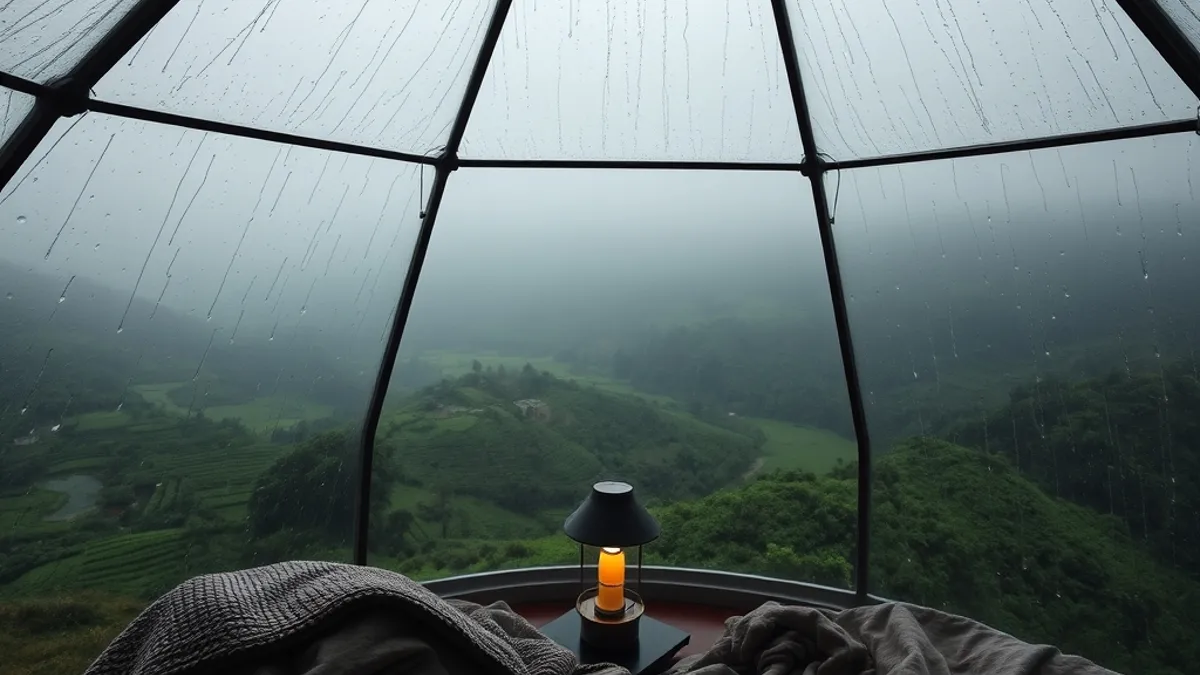
The first surprise for most first-timers is how good the rain sounds. Rain tapping on a canvas roof or a clear dome panel works like natural white noise, and many glampers report sleeping better on rainy nights than on dry ones. There is no need to run a fan or a sound app; the storm does it for you.
The second surprise is how dry you actually stay. Well-designed glamping sites plan for wet weather, and covered porches and indoor lounges are among the most requested wet-weather features for good reason. Add a wood stove crackling in the corner and you can watch an entire storm roll across the valley without a single drop landing on you.
The less glamorous side
That said, rain does leave its mark. Paths between your tent, the bathroom and the parking area turn muddy, so expect to trudge through puddles at least a few times a day. Windows and dome panels collect condensation overnight, especially when temperatures sit in the comfortable 5-20°C range that canvas handles well. And during heavy downpours, check-ins tend to move slower as staff deal with wet luggage, slippery walkways and extra questions from guests. None of these are dealbreakers, but knowing they are coming makes them much easier to shrug off.
Choosing a Rain-Friendly Glamping Site
Not all glamping structures handle rain equally well, and your choice of accommodation matters more than the destination itself. Domed tents with solid platforms, wooden cabins and safari tents on raised decks all keep you well above the mud. Basic bell tents pitched directly on grass are the weakest option in wet weather; they may look romantic in photos, but a night of steady rain can leave the floor damp and the surrounding ground sodden.
Location within the site matters too. Pitches on raised ground or with gravel paths drain far better than lakeside or open meadow spots, where water pools after the first heavy shower. If you want a real-world example of how well this can work, this review of glamping in Terras de Bouro, Portugal shows how a site in a genuinely rainy region keeps guests comfortable year-round.
What to look for in a listing
- Covered decks and porches: these give you outdoor space that stays usable in a downpour, and they are the most requested wet-weather feature for a reason.
- Sheltered fire pits: a fire pit under a roof or overhang means evening campfires continue even in steady rain, which changes the whole mood of the trip.
- All-weather access roads: sites that mention gravel or hardened access roads save you from a muddy, stressful arrival and from carrying luggage through standing water.
- Heating and insulation details: listings that specify a wood stove, electric heater or insulated panels signal that the operator has thought about wet and cool conditions, not just fair-weather stays.
One more reason to embrace the wet months: rainy-season rates typically run 20-40% below peak-season prices. If your dates are flexible, the wet season is the best budget window a glamping destination offers.
When to Book for a Wet-Season Glamping Trip
There is a common assumption that you can book a rainy-season glamping trip at the last minute because demand will be low. In practice, the opposite often happens with the best units. Domes and cabins sell out first in every season, rain or shine, so plan to book wet-season stays 2-3 months ahead to secure the structures that handle bad weather best. Waiting until the forecast turns usually means settling for whatever basic tent is left.
Picking the right months
Timing makes a big difference to your experience. In temperate Europe, the May-September window offers mild rain, warm days and noticeably fewer crowds than peak summer. Shoulder months like May and September are especially rewarding: you get the dramatic skies and cozy evenings of wet-season travel without the chill of deep autumn. For tropical destinations, the June-October rainy season brings its own rhythm, with short intense showers rather than all-day drizzle.
Before you confirm any wet-season booking, ask the host three direct questions. How does the site handle drainage around the tents? What heating is provided, and is it included? What are the cancellation terms if the weather turns genuinely severe? A host with good answers to all three is a strong signal that the site takes wet-weather comfort seriously. For inspiration on what a well-chosen wet-season stay can feel like, read about slow-travel glamping in the Masurian lake district, a region where rain is simply part of the experience.
Packing List for Glamping in the Rain
Glamping in the rain rewards travelers who pack with intention. A few well-chosen items make the difference between a cozy, storm-watching stay and two days of damp misery, so build your bag around staying dry rather than looking stylish.
Start with the essentials: a waterproof jacket, quick-dry layers and waterproof boots are non-negotiable. You will walk on wet grass, muddy paths and slick wooden decks at some point, even at the most polished sites. On a recent stay at a lakeside dome resort in southern Italy, which I wrote up in my review of glamping at Laghi Nabi in Castel Volturno, I watched guests in canvas sneakers give up on evening walks entirely, while those with proper boots still enjoyed the waterfront after a downpour.
Beyond the basics, a few small additions earn their space in your bag:
- Microfibre towel: it wrings out almost dry and takes up less room than a standard cotton one, which stays damp for hours in humid tent air.
- Dry bags for electronics: even a dome with good zippers lets in some moisture, so keep your phone, camera and power bank in individual sealed pouches.
- Spare socks in sealed bags: nothing lifts morale faster than dry socks after a wet hike, and vacuum or zip bags keep them that way until needed.
- Headlamp: tents and domes get dark early on overcast days, and a hands-free light makes finding things in the entry zone far easier.
- Compact board game set: long evenings inside the tent pass quickly with cards or a travel-sized game, especially without reliable streaming.
One final rule: skip cotton entirely. Cotton holds water and dries slowly, which is miserable in humid tent air. Merino wool and synthetics wick moisture and dry far faster, so favor them for everything from base layers to socks.
Rainy-Day Activities at the Camp
Rain changes the rhythm of a glamping trip, and the best way to enjoy it is to lean into that slower pace rather than fight it. Start with slow mornings: make a hot drink, settle under the covered porch and watch the mist roll across the valley or lake. It is no surprise that covered porches and indoor lounges top the list of what glampers ask for when the forecast turns gray, so check what your site offers before you book and plan your mornings around it. Canvas tents hold their comfort best when outside temperatures sit somewhere between 5-20°C with rain, which is exactly the kind of mild, drizzly weather many wet-season trips deliver.
Between the showers
Most rainy days are not wall-to-wall rain. Use the gaps: retreat to the indoor lounge for reading or journaling, and if you are in a clear-roofed dome, stargazing between showers can be spectacular, since wet air often clears the sky beautifully after dark. Keep a book and a notebook in your dry bag so these moments do not depend on luck.
Timing your adventures
Save hikes and excursions for forecast dry windows, which usually arrive mid-morning after overnight rain has burned off. Check the forecast each evening and plan the next day around it rather than committing to a rigid schedule in advance.
Finally, book on-site extras like saunas or hot tubs. There is no better contrast than sitting in steaming water while rain taps on the canvas above you, and these facilities often require advance booking at smaller sites, so reserve your slot early in your stay.
Keeping Your Tent Dry and Comfortable
A tent or dome can stay dry and comfortable through days of rain, but only if you manage moisture deliberately. Canvas and dome panels collect condensation on their own, and every wet jacket you drag inside adds to the problem. Left unchecked, that trapped humidity makes bedding feel damp, slows down drying of any clothing and can leave the whole interior smelling musty by your second night. The good news is that preventing this takes almost no effort. A simple evening routine, repeated each day, keeps the interior fresh and your gear usable for the whole stay, no matter how long the downpour lasts outside.
- Ventilate slightly, even in rain. Crack the windows or vents a little so humid air can escape; closing everything up tight actually worsens condensation on canvas and dome panels, because trapped moisture has nowhere to go. A small airflow makes a bigger difference than most guests expect.
- Designate an entry zone. Keep wet boots and jackets in the porch or entry area, never in the sleeping space. If your tent has no separate porch, use a waterproof mat or bin near the door as a staging area so dripping gear stays contained.
- Wipe down damp gear each evening. A quick pass with a microfibre cloth or towel over boots, jackets and bags stops moisture from spreading to bedding and furniture overnight.
- Run a fan or heater if the site provides one. Moving air or gentle heat dries out the interior noticeably faster, so ask at check-in what equipment is available and how to use it safely in the space.
None of these steps takes more than a few minutes, and together they mean you wake up to a dry, fresh-smelling tent instead of a clammy one. They also protect the tent itself: hosts notice guests who care for the canvas, and a well-ventilated unit simply feels warmer and more inviting. Make the routine automatic on your first evening, before the rain has a chance to build up inside, and the rest of your wet-weather stay will largely take care of itself.
The Case for Not Cancelling
So the forecast shows rain for your long-awaited glamping trip, and you’re wondering whether to cancel or go anyway. Here’s the honest answer: rain rarely spoils a glamping stay. It transforms it. Rain on a canvas roof becomes white noise that often helps you sleep better, and a slow morning with hot drinks under a covered porch beats a packed itinerary any day.
The quiet rewards of wet-season travel are real: lower rates, empty trails and dramatic, misty landscapes you simply don’t get in high summer. With the right site, a sensible packing list and a mindset that embraces slower days, glamping in the rain can genuinely outshine the sunny version. If this helped you decide, leave a comment or share the article with a fellow traveler.