Tuscany in July is wonderful and exhausting in equal measure. The lanes of Siena and San Gimignano fill with tour groups by mid-morning, and hotel rates in the big towns climb with the temperature. So where can you sleep under canvas without joining the crowds? Glamping in Tuscany works best once you leave the town walls behind, and that is exactly what this guide is about.
We’ll look at why the countryside beats the hill towns for your base, then compare three very different areas: the vineyard hills of Chianti near Florence, the wide open views of Val d’Orcia, and the wild coastal side of Maremma. You’ll also find practical advice on when to go, how far ahead to book, and how to choose a site worth your money. If you want mornings among olive groves instead of queuing for a photo spot, read on.
Why Glamping in Tuscany Works Better Outside the Towns
Ask anyone who visited Siena or San Gimignano in August, and you’ll hear the same story: beautiful streets, far too many people. Visitor numbers in these hill towns peak between June and August, and the effect on your wallet is immediate. Accommodation anywhere near the main sights gets expensive fast, and even simple rooms can feel overpriced when demand is at its highest.
Glamping flips that equation. Move your base into the countryside and you wake up among vineyards and olive groves instead of day-trip crowds. You still get the rolling hills and cypress trees you came for, but with quiet evenings, space around your tent, and often a farmer or winemaker as your host rather than a busy front desk.
The price difference is real
There’s a simple rule of thumb worth remembering: prices drop noticeably once you move 20-30 minutes beyond the main tourist corridors. That short drive is usually the difference between paying peak-season town rates and paying a fraction of the same amount for a tent or lodge among the fields.
The trade-off is convenience. A countryside base means driving to restaurants and sights, and planning your days a little more carefully. For most travelers who come to Tuscany for the landscape rather than the nightlife, that’s an easy trade to make.
Chianti: Vineyard Country Close to Florence
The Chianti hills stretch between Florence and Siena, and they are the most practical choice if you want a taste of Tuscany without giving up easy access to a major city. This is working wine country, and several sites here let you camp or stay in a tent directly on winery grounds. You can walk out of your tent in the morning, look across rows of vines, and be tasting the local Sangiovese by evening.
Close enough for day trips
Most glamping sites in Chianti sit 30-60 minutes by car from Florence. That makes day trips easy: drive in early, see the Duomo and the Uffizi, and retreat to the quiet of the hills by late afternoon. You get the city without sleeping in it, and without paying city prices for a bed.
One thing to set expectations on: Chianti is about rolling vineyard settings, not water views. There are no lakes or coastline here. If you want your morning coffee with a beach or a lake in the distance, you’ll be happier further south or on the coast, and you can see what a lakeside glamping stay looks like in our review of glamping at Laghi Nabi in Castel Volturno.
For first-time visitors who want to combine Florence sightseeing with countryside evenings, Chianti is hard to beat. The roads are manageable, the distances are short, and the setting is the classic Tuscany most people picture before they arrive.
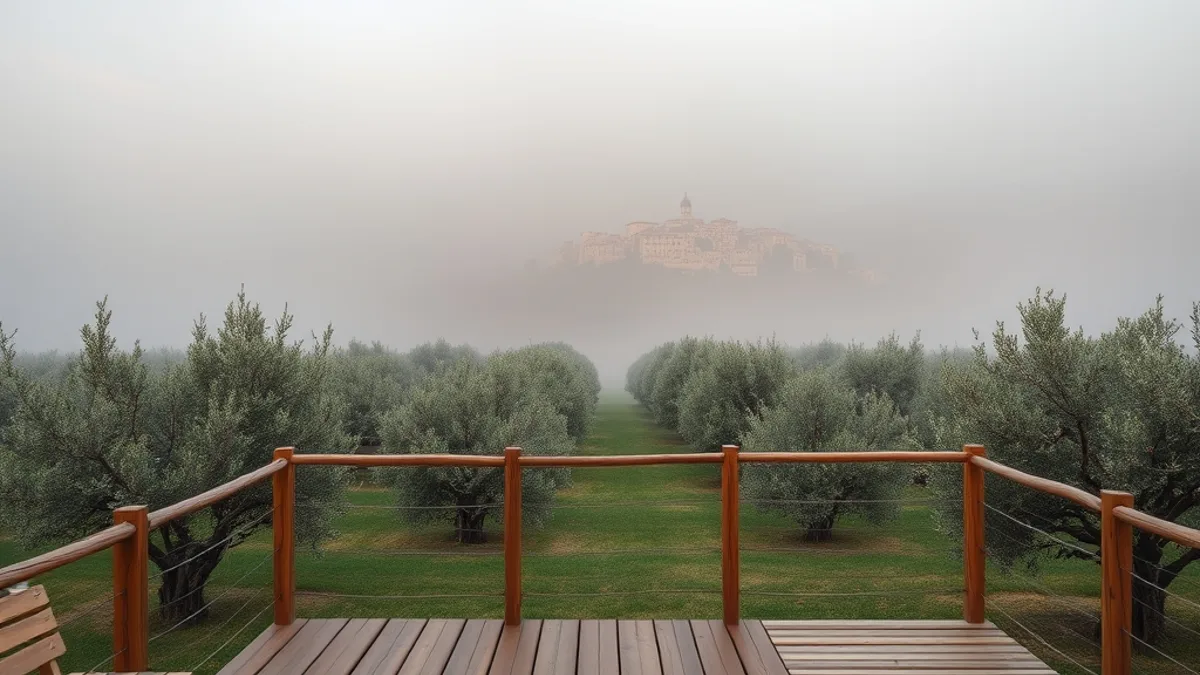
Val d’Orcia: Wide Landscapes and Slow Mornings
Southeast of Siena, roughly 60-90 km away or about 1-1.5 hours by car, the Val d’Orcia is the Tuscany of postcards: cypress-lined roads, lone farmhouses on hilltops, and wide open views that seem to go on forever. The valley is UNESCO-listed, and unlike the tighter Chianti hills, its landscape is all breadth and light. Photographers tend to be out at dawn for a reason.
Quieter, even in summer
Even at the height of the season, the Val d’Orcia feels calmer than Chianti. The towns are smaller and the roads wider, so the crowds thin out quickly once you leave the famous viewpoints. If you want maximum quiet, aim for May or October, which bring the best light and the emptiest roads. In May the fields are green and the poppies are out; in October the hills turn gold and the harvest is underway.
Where to base yourself
Pienza and Montepulciano both make excellent bases, with glamping sites and countryside stays in the surrounding hills. Pienza is famous for its pecorino cheese and its compact Renaissance center, while Montepulciano sits high above the vineyards with sweeping views from its walls. From either town, you can reach the thermal springs in the valley for a slow afternoon, and string together hill-town day trips without long drives.
This is the part of Tuscany where doing less is the point. Book a site with a view, plan one or two outings a day, and let the wide landscapes do the rest.
Maremma: Tuscany’s Wild Coastal Side
The Maremma, Tuscany’s southwestern corner around Grosseto, feels like a different region altogether. Pine forests run down to sandy dunes, wild boar roam the hills, and you’ll hear far more Italian than English or German here. Foreign tourists largely skip this coast, which means glamping sites stay calmer even at the height of summer.
The trade-off is distance. Beach-side glamping sites in the Maremma sit roughly 2-2.5 hours southwest of Florence by car, so plan this as a destination in its own right rather than a base for day trips north. The upside of committing to the drive is waking up a short walk from the sea, with coastal pine shade instead of vineyard rows.
Beyond the beach
Hot August afternoons don’t have to mean another few hours on the sand. The area’s wildlife parks offer walking trails and the chance to spot Maremmana cattle and other native animals in open countryside, while Etruscan sites scattered through the hinterland add archaeology to the mix. Both make good alternatives when the beach gets too intense, and both tend to be pleasantly uncrowded compared with sights further north.
Practically speaking, the Maremma suits travelers who want nature first and towns second. Bring groceries with you when you arrive, as villages can be small and spread out, and check what your site provides before you set off.
When to Go and How to Book
Timing makes a bigger difference in rural Tuscany than in most destinations. The sweet spot is May, late September or October, when days typically run 15-25°C, rates drop meaningfully, and the countryside does its best work: wildflowers in spring, harvest activity in autumn. Vineyards hum with pickers and tractors in late September, and morning mist over the valleys makes early walks genuinely rewarding. June through August brings the crowds and the top prices, both for sites and for everything around them, from restaurants to rental cars.
Booking windows vary by season. For summer stays, reserve 3-6 months ahead, since the best pitches and lodges go early. In spring and autumn you can usually book 4-6 weeks out and still have good options, which makes these seasons friendlier for spontaneous trips as well as planned ones.
- Budget expectations: countryside tent and lodge stays typically run €90-250 per night in high season, with meaningful discounts outside June-August — often enough to upgrade your tent type for the same money.
- Kitchen facilities: confirm before booking whether your site has a shared or private kitchen, because many rural locations sit 20-40 minutes from the nearest restaurant, making self-catering the difference between a relaxed evening and a long drive for dinner.
- Grocery runs: plan to shop in a larger town on your way in; small village shops often close for long midday breaks and may have limited stock.
- Direct booking vs. platforms: contacting smaller sites directly can sometimes secure a quieter pitch or a better layout, since owners know their grounds best.
Before you pay a deposit, email the site with your specific questions — arrival logistics, shade on the pitch, and how far the facilities are from where you’ll sleep. Ask about evening lighting and whether the pool or common areas stay open outside peak season, since some rural sites scale back services in quieter months. Rural sites vary widely, and a short message avoids most surprises.
Getting Around and Choosing a Site
Rural Tuscany runs on wheels. Public transport rarely reaches the good stuff, and most countryside glamping sites sit well away from the nearest train station, often down narrow country lanes with no bus connection to speak of. Renting a car isn’t a luxury here — it’s the practical difference between seeing the region and being stuck at your tent.
Book the smallest car you’re comfortable with. Country roads around vineyards and olive groves can be narrow, and local drivers take them at speed. A compact car handles them far more easily than a large SUV, and parking in hill towns is easier too. Automatic transmissions can be harder to find at Italian rental agencies, so reserve early if you can’t drive a manual.
Choosing the right site
If quiet matters more to you than a pool or a bar, filter for small sites with under 30 pitches. Larger operations offer more facilities, but they also bring more neighbors, more children at the pool, and more evening noise. Small sites trade amenities for space and calm, which is usually why people choose the countryside in the first place.
Reviews are your best filter. Look specifically for mentions of road noise and neighbor spacing — the two most common complaints about rural sites. A beautiful setting means little if tents are packed shoulder to shoulder or a busy road runs past your head all night. For a good example of what a small, quiet countryside site looks like in practice, see this review of a glamping site near Bucine in the Chianti hills, which shows the kind of spacing and setting worth prioritizing.
Tuscany Without the Crowds, Wrapped Up
If the hill towns of Siena and San Gimignano feel impossibly packed in June-August, the answer is simple: sleep in the countryside instead. Chianti, Val d’Orcia and Maremma each offer a distinct countryside flavor beyond the busy towns, from vineyard-covered hills to wide valley views and a wild, pine-scented coast. You trade the day-trip crowds for cypress roads, olive groves and quiet evenings under canvas.
Timing makes the difference. May, late September and October combine mild weather with lower prices and thinner crowds, while summer stays are worth booking 3-6 months ahead. With a car and a little planning, glamping in Tuscany becomes a calm base for exploring the whole region. If this helped you plan your trip, leave a comment or share the article.