Glamping photos almost always show the bed, the fairy lights and the view. What they rarely show is whether you get a real kitchen, a bathroom of your own, or a shared camp block a short hike away. That gap between the listing and reality is where most glamping disappointments happen, especially when you arrive with grocery bags and discover the “kitchen” is a kettle on a shelf.
This guide breaks down glamping site facilities so you know exactly what to check before booking. We cover what different facility tiers actually include, how shared kitchen blocks compare to private kitchenettes, what showers and bathrooms look like at each price level, and the rules around cooking on gas hobs, fire pits and BBQs. We also help you match facilities to your trip style and give you the specific questions worth asking a host. By the end, you will be able to read a listing the way an experienced camper does.
What Glamping Site Facilities Actually Include
Most glamping sites fall into one of three tiers, and knowing which one you are booking solves most of the confusion. The basic tier is a furnished tent — often a bell tent or similar — with access to a shared facilities block. The mid-range tier usually means a cabin or safari tent with a private washroom, but you still share a kitchen with other guests. The top tier is the full package: a luxury tent or cabin with an en-suite bathroom and private cooking facilities.
Read the wording carefully
The phrases listings use matter more than the photos. “Private bathroom” means what it says. But “private access to facilities” is a subtle and common distinction — it often means you get a key or code to a shared block without sharing it at every moment, not that the bathroom is attached to your unit. If the bathroom’s location is unclear, message the host before booking and ask directly whether it is inside your accommodation.
How price tracks facilities
Facility level usually follows price predictably. A full glamping setup with a private bathroom typically costs 2-3 times a basic tent pitch at the same site. That premium is worthwhile for some trips and wasted money for others, which later sections of this guide help you decide. What matters here is knowing the pattern: if a listing offers an en-suite unit at a price close to a basic pitch, double-check what “en-suite” actually includes, because the terms are used loosely across the industry.
Kitchens: Shared Blocks vs Private Kitchenettes
Shared camp kitchens are the workhorses of the glamping world. A typical setup gives you a two-burner hob, a sink, a fridge and a set of basic shared cookware — pots, pans and utensils that hundreds of guests have used before you. They work well for simple meals, but quality varies a lot between sites. At one Italian farm-stay glamping site in Bucine we reviewed, the shared kitchen was spotless and well stocked; at others, the frying pan situation can be genuinely grim.
Private kitchenettes are a different animal, and they range enormously. At the modest end you get a kettle and a mini-fridge — enough for coffee and cold drinks, not for cooking dinner. At the top end you get a full hob and oven, essentially a compact apartment kitchen. The quickest way to tell which you are getting: look at the listing photo of the sink. A sink with a drainer and counter space usually signals real cooking ability; a tiny basin next to a kettle does not.
Practical extras worth knowing
- Bring your own knife and cutting board. Shared camp kitchens frequently have one blunt knife for everyone, and it makes any vegetable prep frustrating.
- Pack a small bottle of dish soap and a sponge, since shared blocks often run out or supply nothing at all.
- Take a set of food containers with lids — fridges in shared kitchens get crowded, and open plates attract wasps and flies.
- In peak season, June to August in Europe, a single shared kitchen may serve 20-40 guests at once, so a small headlamp for late-evening cooking trips is more useful than it sounds.
Showers and Bathrooms: What to Expect at Each Price Level
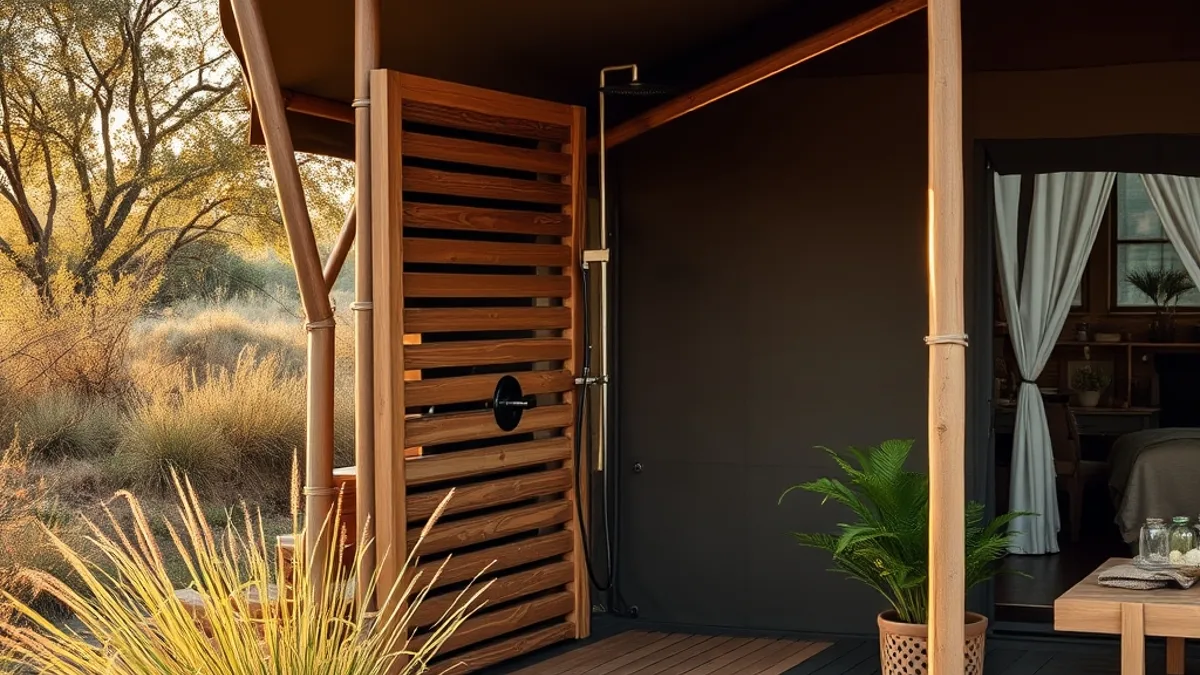
Communal shower blocks are standard at basic and many mid-range glamping sites. They usually sit within 50-200 meters of tent pitches, which sounds fine on a dry summer evening and considerably less fine at night in the rain. Pack a lightweight robe and a pair of sandals for the walk — you will use both every day, and flip-flops also protect you from wet stone floors and muddy paths.
Hot water hours matter more than you think
Hot water in shared blocks is often available only from roughly 6:30 to 22:30. If you like to start hiking at dawn, that window matters: an early start may mean a cold wash or no wash at all. Check the posted hours when you arrive, and plan your shower around them rather than hoping for exceptions. Sites with solar or limited water heating tend to be the strictest about this.
What en-suite really means
En-suite bathrooms in luxury tents and cabins mean a real flush toilet and often a proper shower with decent pressure — not just a wet room with a drain in the floor. That said, “proper” varies, and some luxury units still use composting toilets or compact showers. Our review of a coastal glamping site in Combe Martin shows how much an en-suite changes the experience, especially on longer stays. If a flush toilet matters to you, ask the host specifically rather than relying on the word “en-suite” in the listing title.
Cooking Options: Gas Hobs, Fire Pits and BBQ Rules
There is something special about cooking over an open flame on a glamping trip, and many sites lean into it with dedicated fire pits or cooking pits near the tents. The catch is that these are usually the first thing to close when conditions get dry. During summer fire-risk periods, open fires are typically banned outright, and in dry regions it is safest to assume that June-August fires are simply off the table. If a fire-cooked dinner is the main reason you booked, check the site’s current fire policy before you go rather than hoping for the best.
Barbecues are the usual workaround. Many sites rent BBQ grills by the stay or provide a communal grill area near the kitchen block, and charcoal is often sold at reception so you do not have to haul a bag in your luggage. A few sites even allow small portable grills on pitches, though rules vary widely, so ask first. For a sense of how well-run sites handle outdoor cooking, this review of a glamping stay near Lake Powell and Grand Staircase shows what a properly organized setup looks like in practice.
If you plan to cook daily rather than just grilling once or twice, the hob in your unit or the shared kitchen matters more than any fire pit. Confirm whether it runs on gas or induction, because the difference changes what cookware works and how predictable the heat is. Just as important, ask whether fuel is included in the price or charged separately, since gas cylinders and electricity can appear as surprise extras on your final bill.
- Grill reservations: communal BBQ areas can get busy on weekend evenings, so ask at check-in whether you need to book a time slot for the grill.
- Utensil gaps: rented grills and shared pits rarely include tongs, brushes or foil, so pack a small set if you intend to barbecue more than once.
- Wind and shelter: outdoor cooking areas exposed to wind make simmering nearly impossible, so look for a covered or walled cooking shelter if your menu involves anything beyond grilling.
- Cleanup rules: some sites require hot coals to be fully extinguished and disposed of in designated bins, which affects how late you can finish cooking.
How to Match Facilities to Your Trip Style
The right facilities depend far more on how you travel than on any generic star rating. A couple on a one-night romantic escape and a family road-tripping for two weeks with a cooler full of groceries need completely different things from the same site, and the price difference between those needs can be significant.
If you are self-catering
Road trippers who plan to cook most of their own meals should prioritize a real shared kitchen or a private kitchenette over tent luxury every time. A beautifully furnished bell tent with no usable cooking setup will cost you more in restaurant meals and frustration than a simpler unit with a proper hob, fridge and counter space. Look closely at the kitchen photos and the equipment list before booking, and treat a full-size fridge as non-negotiable if you are traveling with fresh food for several days.
If you are staying short or traveling in cold weather
Short weekend stays are the opposite case. If you are only on site for one or two nights, a shared bathroom block is usually perfectly acceptable, and eating most meals out is often the plan anyway. That lets you skip the premium that full en-suite setups command, which typically runs 2-3 times the price of a basic tent pitch, and put that money toward a better location or an extra night instead.
Cold-weather trips deserve their own warning. Outdoor kitchens and covered cooking shelters become unusable off-season, when rain, wind or freezing temperatures push everyone indoors. Before booking a shoulder-season or winter stay, confirm in writing that the unit has indoor cooking facilities and real heating, and ask whether those systems run all night or only during set hours. A safari tent that is glorious in July can be miserable in November if the heater is a small electric fan unit on a timer.
Questions to Ask Before Booking Glamping Site Facilities
Most glamping disappointments come down to information that was technically available but never asked for. Listing photos almost always show the tent interior styled at its best, because that is what sells bookings. The kitchen block and the shower building, which will shape your daily routine far more than a string of fairy lights, are frequently left out or shown in a single blurry wide shot.
The simplest fix is to message the site directly before booking and ask for current photos of both the kitchen and the shower block. Reputable operators send them without hesitation. While you have them on message, confirm the practical details that listings tend to bury or omit entirely: when hot water is available, whether towels and bedding are included in the rate or cost extra, and whether cooking fuel such as gas is charged separately. Any hesitation to answer these straightforward questions tells you something useful about the operator.
Walking distance is the detail people regret ignoring. If you are booking a non-en-suite unit, ask how far your specific pitch is from the facilities, not just how far the nearest block is from reception. A listed 50-200 meters can mean a two-minute stroll or a muddy five-minute walk in the dark with a towel under your arm, depending on where your tent sits on the site.
- Bedding specifics: ask whether bedding means duvets and pillows already made up, or a sleeping bag liner you assemble yourself, since the difference changes both comfort and packing.
- Kitchen equipment inventory: request a list of what the shared kitchen actually provides, because “fully equipped” can mean anything from a full cookware set to a single dented kettle.
- Night-time lighting: ask whether the path to the shower block and the washroom itself are lit after dark, which matters more than distance for late-evening trips.
- Fridge space: in shared kitchens, ask whether the fridge is communal with shared shelves or whether each unit gets an assigned shelf or box.
- Fuel and extras pricing: if gas, charcoal or firewood is sold on site, ask how it is charged so you can budget it alongside the nightly rate.
Wrapping Up: Choosing Facilities With Confidence
Glamping listings love to show a styled tent interior, but that photo rarely tells you whether the bathroom is truly your own or a two-minute walk down a gravel path. The good news is that glamping site facilities fall into three clear tiers, and the price gap between shared and en-suite is roughly 2-3 times. Once you know which tier a listing sits in, the photos start making sense.
Kitchens, showers and cooking options each come with predictable trade-offs, and the sections above cover what to expect at every level, from communal shower blocks to fire bans in dry summer months. A few direct questions before booking remove almost all surprises: ask about hot water hours, fuel costs and the real walking distance to the facilities. If this guide helped you sort marketing photos from reality, leave a comment or share it with a fellow traveler.