You want a night under the open sky, but a question keeps nagging at you: should you rough it in a tent you pitch yourself, or book a ready-made glamping setup with a proper bed waiting inside? The glamping vs camping debate comes down to more than price tags, and picking the wrong style for your personality can turn a promising weekend into a soggy, sleepless disappointment.
This guide breaks the choice down step by step. We start with the core difference between the two styles, then compare nightly rates and the hidden gear costs nobody mentions upfront. You will learn what you actually sleep on in each case, when to book for the best availability and prices, and which style matches your travel personality. Finally, we point you toward destinations that do both well, so your next outdoor night is the right kind of memorable.
Glamping vs Camping: The Core Difference at a Glance
At its heart, the difference between these two styles is simple: who does the work. With traditional camping, you bring and set up everything yourself. That means packing a tent, sleeping bag, stove and cooler, driving to a campsite, finding your pitch, and assembling your home for the night before you can even think about dinner. When the trip ends, you reverse the whole process, dry the tent in the backyard, and repack it all for next time.
Glamping flips that equation. You arrive at a pre-built bed, a furnished tent, a cabin or a safari-style structure that someone else has already prepared. Your packing list shrinks to clothes and food, and within minutes of arriving you can be sitting outside with a drink instead of wrestling with tent poles in fading light.
Effort versus comfort
That is the real trade-off. Camping rewards self-sufficiency: the skills you build, the routine you create, and the satisfaction of a night you made happen entirely on your own. Glamping removes the setup work and hands you the comfort part of the outdoors without the learning curve. Neither is the better choice in the abstract; the better choice is the one that matches how much effort you actually want to spend on your night outside.
Cost Comparison: Nightly Rates and Hidden Gear Expenses
On paper, the price gap looks enormous. A basic campsite pitch usually costs $15-$50 per night, while glamping stays typically run $100-$400 per night depending on the region and the season. If you compare nightly rates alone, camping wins by a wide margin every single time.
But that comparison ignores the gear problem. If you are starting camping from scratch, you need a one-time gear kit that costs roughly $300-$600 for two people before you spend your first night outside. Glamping requires no equipment investment at all, which is why it can even out over a single short trip. A glamping stay near the Italian lakes, for example, costs more per night than a pitch, but you walk in with nothing but a duffel bag.
Before you compare prices, think about what each option actually includes:
- Stove and cookware: campers need a portable stove and basic pots, while glamping units often include at least a kettle or kitchenette, though you should check what the host provides.
- Cooler and food storage: a cooler is standard camping kit; some glamping setups offer a fridge, which changes how you shop and what you can cook.
- Resale and reuse: camping gear holds value if you camp regularly, so the one-time cost spreads thinner with every trip you take.
Run the numbers for your own trip length. The longer and more often you go, the more camping pays off; the shorter and rarer your outdoor nights, the more glamping makes sense.
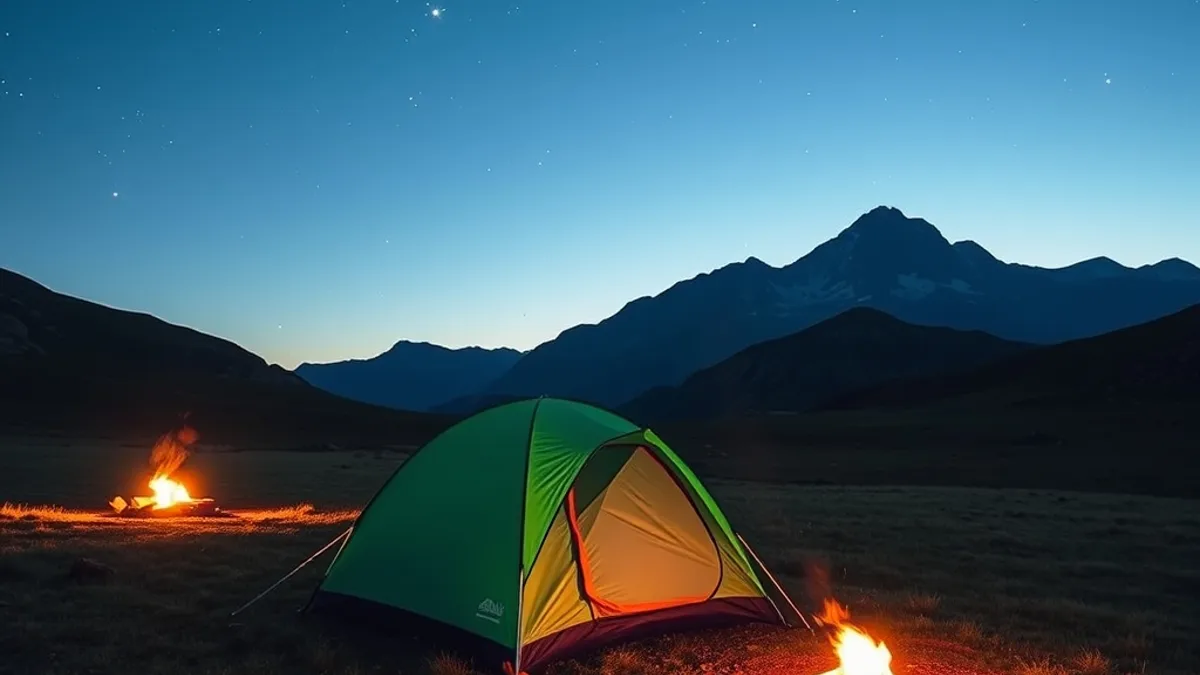
Comfort, Facilities and What You Actually Sleep On
This is where the two styles feel most different, because sleep quality makes or breaks an outdoor trip. Glamping setups usually include a real bed with linens, and often a private bathroom or at least shared hot showers on site. You lie down on a mattress, pull up a duvet, and sleep the way you do at home, just with more stars visible through the window. Stays like the glamping tents near Lake Powell show how close to a hotel room the experience can get while keeping you right in the landscape.
Camping comfort depends entirely on your own gear choices. Your night is only as good as your sleeping pad, your sleeping bag rated for the season you are visiting, and the quality of the campsite washrooms. Get those three right and camping can be genuinely comfortable. Get them wrong and one cold, lumpy night can put you off the whole idea.
Questions to ask before you book
Glamping varies far more than the photos suggest, so ask the host a few direct questions before paying: Is there heating, and is it included? Are there cooking facilities on site or nearby? Are the toilets and showers private to your unit or shared with other guests? The answers separate a genuinely comfortable stay from a tent with a bed in it, and they are much easier to ask in advance than to discover on arrival.
When to Go: Seasons and Booking Lead Times
Timing matters more in outdoor travel than in almost any other kind of trip. The best units and sites are limited in number, and summer demand is intense. If you have your heart set on a furnished safari tent or a lakeside cabin for July or August, start looking two to six months ahead. Hosts often open their calendars early, and the most photogenic, best-reviewed units go first.
Campsites in sought-after national parks follow a similar rhythm. For summer weekends, reservations typically open months in advance and popular loops can fill within days of the booking window opening. If you are flexible on dates or willing to camp midweek, you will find far more availability, but a guaranteed Saturday spot in July usually means booking early.
The shoulder seasons of May-June and September-October are the sweet spot for both styles. You get milder prices, thinner crowds and weather that is still reliable in most temperate regions. A slow-travel stay like glamping by the Masurian lakes shows how pleasant the quieter months can be, with calm water and empty trails.
- Check cancellation policies before booking far ahead, since some glamping hosts offer flexible refunds while others require payment upfront for peak-season dates.
- Set a calendar reminder for the exact day a national park reservation window opens, as first-come systems can fill within minutes for prime summer weekends.
- Midweek nights in July or August are often easier to book than weekends, so a Tuesday arrival can rescue a last-minute summer plan.
- Shoulder-season travelers should pack an extra warm layer, since late September evenings can turn chilly even when daytime weather stays pleasant.
Which Travel Style Matches Your Personality
Some travelers are honest with themselves quickly: they love the idea of a campfire but not the reality of inflating a sleeping pad in the dark. If you get genuine satisfaction from pitching your own tent, cooking breakfast on a camp stove and watching the sunrise with coffee you made yourself, camping will probably click for you. The reward is a sense of self-reliance that is hard to replicate anywhere else.
If, on the other hand, your idea of a great trip centers on the setting rather than the logistics, glamping is the better match. You still get the forest, the lake and the stars, but you end the day in a proper bed with linens instead of on the ground. That matters most on shorter trips, when you have only a night or two and cannot afford to spend half of one setting up and packing down.
Who tends to pick which
Couples and first-timers often start with glamping because it lowers the barrier to entry: no gear to buy, no skills to learn, and a much smaller chance of a miserable first night. It is a low-risk way to find out whether you even enjoy sleeping outdoors.
Families with kids, by contrast, often prefer the flexibility of a traditional campsite. Children can run between the tent and the playground, meals are simpler and cheaper when you cook your own, and a campsite gives everyone room to spread out. If your crew thrives on a bit of chaos and hands-on routine, camping usually wins.
Be honest about what energizes you. If setup and camp chores feel like part of the fun, go camping. If they feel like obstacles between you and the view, book the furnished tent and enjoy it without guilt.
Where to Try Each Style: Destinations That Do It Well
Some destinations simply lean toward one style. Glamping thrives in soft, scenic countryside where the view does the entertaining: think safari-style tents on the shores of Italian lakes, or furnished cabins and bell tents scattered around Poland’s Masurian lake district, where slow-travel travelers spend days swimming, kayaking and cycling between villages. In these settings, the point is comfort with a panorama, and a proper bed facing the water is part of the appeal.
Where Camping Comes Into Its Own
Classic campgrounds, on the other hand, shine near coastlines and in national parks, where the infrastructure is already built for you. Sites along the Baltic coast or at the edge of well-known parks typically offer marked pitches, washroom blocks, fire rings and trailheads within walking distance. When the hiking, beach access and ranger programs are already in place, your own tent feels less like work and more like the natural way to stay.
If you genuinely cannot decide, look for mixed sites that offer both. A growing number of campgrounds pair traditional tent pitches with furnished units such as wooden pods, cabins or pre-pitched tents on the same property. Book a pitch for two nights and a furnished unit for the next two, and you can compare the styles back to back with zero extra driving. Just check ahead, as these hybrid sites are popular and the furnished units tend to fill first in July and August.
The Bottom Line for Your Next Outdoor Night
So, which one wins? If the thought of pitching a tent after a long drive makes you sigh, glamping hands you a real bed, linens and often a private bathroom for $100-$400 a night, with zero setup work. If you’d rather keep costs at $15-$50 per night and don’t mind investing $300-$600 in a starter kit for two, camping rewards you with full control and the quiet satisfaction of doing it all yourself.
Neither style is better, they simply suit different moods: comfort and ease versus hands-on adventure. The smartest move is to try both during the shoulder seasons of May-June or September-October, when prices are milder and crowds are thinner. Whichever way you sleep under the open sky, we’d love to hear how it went, so leave a comment or share this article with a friend.