You know you want a villa in the Ionian islands, but you cannot tell whether Kefalonia’s dramatic coastline or Corfu’s green north-east shore fits your trip better. That is a common dilemma, and the honest answer is that these two islands deliver genuinely different holidays. This Kefalonia vs Corfu villas comparison walks through where to stay on each island, what you can expect to pay, and how the beaches, villages and day trips stack up.
We start with the character of each island, then break down the best villa areas: Fiskardo, Lassi, Argostoli, Skala and Assos on Kefalonia, and the north-east coast, the olive-grove interior and Corfu Town on Corfu. From there we compare prices, seasons and booking timing, run through the headline sights, and look at village life and getting around. A short verdict at the end helps you decide which island to book.
Two Ionian Islands, Two Very Different Villa Holidays
Kefalonia and Corfu sit in the same sea and share the same villa season, yet they feel like different countries. Kefalonia is the larger of the two, covering roughly 770 km² compared with Corfu’s 590 km², and it wears that size quietly. The island is built around dramatic limestone cliffs, deep pebble coves and a handful of low-key resort villages scattered along the coast. You drive long stretches of road without passing much more than a taverna and a viewpoint.
Corfu: greener, busier, better connected
Corfu is the greener island, thick with olive groves and cypress, and noticeably busier in summer. It has a genuine historic capital in Corfu Town, a well-developed villa scene along the north-east coast, and easier flight access, with direct flights from many European cities running from April to October. Kefalonia’s flight season is shorter, roughly May to October, which shapes when you can travel.
Because both islands share the same May-to-October villa season, weather is not the deciding factor. The real choice comes down to landscape and pace: raw coastal drama and quiet on Kefalonia, or a livelier mix of beaches, towns and culture on Corfu.
Where to Stay in Kefalonia: Villa Areas That Match Your Plans
Kefalonia is big enough that your villa choice shapes the whole holiday. Distances are real: expect 30–60 minute drives between the main areas, so it pays to pick one base that matches your plans rather than plotting daily cross-island trips. The good news is that each corner of the island has a clear personality.
Fiskardo, in the north, is the island’s most polished villa area. It survived the 1953 earthquake intact, so the harbourfront keeps its Venetian-era look, and the rental stock here is generally the smartest on the island. Villas around the harbor suit travelers who want boat days, waterfront tavernas and a certain gloss. Lassi and Argostoli, on the west coast near the capital, work better for families who want beaches, tavernas and shops all within a short drive. Skala, in the south, is the value play, with sandy beaches and larger villas that often cost less per person than northern equivalents. Assos delivers the postcard scene, a tiny pastel village on a narrow isthmus, but with far fewer rentals, so book early if it appeals.
- Fiskardo: a natural base for renting a small boat for the day and exploring the coves of the northern coast without a long drive first.
- Lassi and Argostoli: close to the famous sinkhole beach of Myrtos by car, and near the capital’s supermarkets and bakery runs for self-catering.
- Skala: one of the few spots on Kefalonia with long sandy stretches rather than pebble, a real difference if you have small children.
- Assos: small enough that villa supply is limited to a handful of properties, so availability disappears early for peak weeks.
Where to Stay in Corfu: From Olive Groves to the North-East Coast
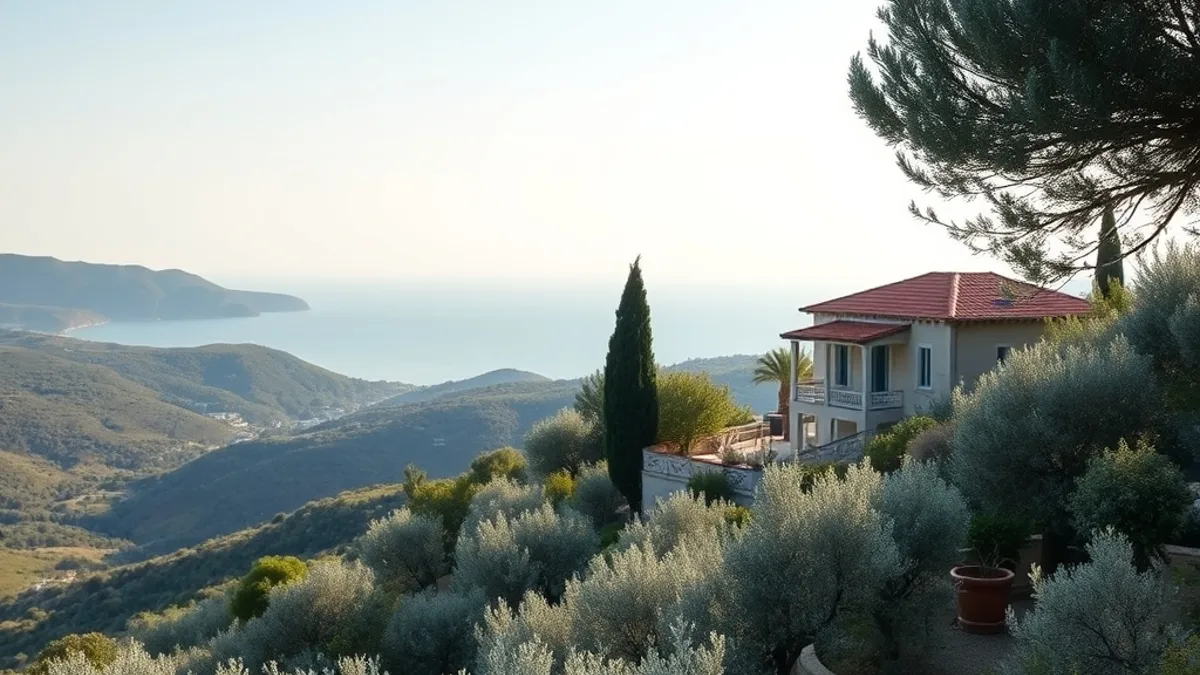
Corfu’s villa market is more concentrated than Kefalonia’s, which makes choosing an area simpler. The north-east coast is the island’s villa heartland: the stretch between Kassiopi in the north and Benitses further south pairs sea-view pools with easy access to small coves, and villas here are built to make the most of the water and the Albanian hills across the strait. If you picture a Corfu villa holiday, this is usually the coastline in the photo.
Inland and on the west coast, the trade-off changes. You give up walking distance to the beach and gain olive-grove seclusion, bigger plots and lower weekly rates. For a closer look at that style of stay, our guide to Corfu villas for olive groves covers the inland option in detail. Staying near Corfu Town is the third route: you get the UNESCO-listed old town, restaurants and nightlife within easy reach, though genuine town-center villas are scarcer than coastal ones.
Corfu’s compact size works in your favor. Most villa areas sit within 45–60 minutes of the airport, so arrival day is rarely an ordeal, and day trips do not demand marathon drives.
- Kassiopi: a working fishing town with a small harbor, giving north-coast villa guests tavernas and boat rental without heading south.
- West-coast areas: put you closer to long sandy beaches on the exposed side of the island, which can be breezier than the sheltered east.
- Inland villages: often sit among working olive groves, and some villas come from restored family estates rather than purpose-built rental blocks.
Kefalonia vs Corfu Villas: Prices, Seasons and Booking Timing
Villa prices on both islands follow the same broad rhythm, but Kefalonia’s ceiling sits noticeably higher. In the peak July–August weeks, expect roughly €1,500–4,000 per week in Kefalonia and about €1,200–3,500 in Corfu. The gap comes down to Kefalonia’s top-end stock: cliffside villas with infinity pools above the Ionian are scarce, and scarcity pushes the upper end of the market up. Corfu has a deeper pool of mid-range properties, which keeps its overall range a little softer.
Shoulder months are where savvy bookers save. May, June and September can cut weekly rates by 30–40% compared with peak, and the sea is still warm enough for swimming throughout those months. June and September are the sweet spots: long, settled days, tavernas fully open and pool water that has had time to heat up in June or is still holding summer warmth in September.
How far ahead to book
Peak-season villas on both islands reward early planning. For July and August, reserve 5–6 months ahead, especially if you want a specific view, a walk-to-beach location or a large property for a group. Shoulder-season stays are more forgiving: a 2–3 month lead time is usually enough, and you may even find good choice closer to departure.
One practical difference favors Corfu at the edges of the season. Corfu receives direct flights from many European cities from April through October, while Kefalonia typically starts a month later in May and winds down in October. That means more early-season availability on Corfu, both in flights and in villas with flexible changeover days. If you are eyeing an April escape, check flight schedules carefully before committing to Kefalonia, as you may need to route through Athens.
Beaches, Scenery and Day Trips Compared
Kefalonia’s scenery is the headline act. Myrtos Beach, with its blinding white pebbles and electric-blue water, is one of the most photographed beaches in Greece, and it lives up to the pictures in person. Melissani Cave, a collapsed cavern where rowboats glide across turquoise water under an open roof, is a short drive away. The Assos headland, with its tiny pastel village curled around a fortified peninsula, rounds out the trio. These sights are scattered across a large island, so a hired car is the practical way to combine them over two or three relaxed days rather than one rushed circuit.
Corfu answers with variety rather than raw drama. The UNESCO-listed Old Town in Corfu Town brings Venetian arcades, fortresses and proper city sightseeing, something Kefalonia cannot match. Paleokastritsa’s green coves on the west coast offer a softer version of Ionian beauty, and small boats run regular trips to nearby islets and sea caves. Add monasteries, viewpoints and a handful of water parks, and Corfu covers more bases in a single stay.
Can you visit both islands in one trip?
Island-hopping between the two is not a day trip. There is no direct ferry; going by sea means traveling via Patras, which takes about 5–7 hours door to door, and flying via Athens takes around 1 hour plus airport time. Treat a two-island trip as a proper multi-center holiday, not a spontaneous excursion.
The bottom line on scenery: choose Kefalonia for raw coastal drama and fewer crowds at the viewpoint, and Corfu for a mix of beaches, culture and organized excursions. Both deliver classic Ionian water; the difference is whether you want it framed by cliffs or by olive groves and an old town.
Village Life, Food and Getting Around
Kefalonia keeps things lean when it comes to organized village life. There are no big purpose-built strips, and evenings revolve around tavernas rather than entertainment programs. The clusters to know are Fiskardo’s polished harborfront, the small square in Assos, Skala’s low-key strip and Argostoli’s waterfront, where locals and visitors share the same evening stroll. Outside these spots, you may have a village kafeni and little else, which suits travelers who want quiet more than nightlife.
Corfu’s inland villages feel more lived-in. Many stay open year-round, so kafenia serve regulars rather than just seasonal visitors, and olive-oil producers sell directly from family presses. If village culture is a priority, Corfu has the deeper well; for a closer look at that side of Greek travel, this guide to staying in Greek villages with local hosts shows what everyday island life looks like beyond the resort towns.
Cars, buses and stocking the villa fridge
Both islands realistically require a rental car if your villa sits outside the main resorts, which most do. Roads on Kefalonia wind through mountains, so allow more time than the map suggests. Corfu’s compact size helps, and the island additionally supports a bus network running from Corfu Town to many coastal and inland villages, useful for a car-free day trip into the capital.
Self-catering is easy on both islands. Weekly markets bring local produce to the larger towns, and village shops are well stocked with everything from fresh bread and feta to wine and cleaning supplies. Fiskardo, Argostoli and Corfu Town all have enough shops and bakeries to fill a villa kitchen properly, though prices in the most touristy harbors run a little higher. A good habit on either island: shop early, as smaller village stores close for a long afternoon break and reopen in the early evening.
The Short Answer: Which Island Should You Book
So which island should you book? If your ideal villa holiday is built around dramatic cliffs, quiet pebble coves and a slower pace, Kefalonia is the stronger pick. You trade some convenience for raw coastal scenery, and you may pay slightly more at the top end during the July and August peak.
Corfu wins if you want easier flight access, greener landscapes and a holiday that mixes beach days with village culture and the attractions of a historic town. Since the villa season runs from roughly May to October on either island, booking 5–6 months ahead for peak summer weeks matters more than the choice between them. If you have stayed on either island, or you are torn between the two, leave a comment below or share this article with a friend who is planning the same trip.