Choosing between Lanzarote and Tenerife is a common dilemma for villa hunters. One island promises stark volcanic beauty and design-led stays, while the other offers big beaches, buzzing resorts and family attractions. The trouble is, both sound appealing, and it’s hard to know which one actually fits the holiday you have in mind.
This Lanzarote vs Tenerife villas comparison breaks down what each island does best. We’ll look at the landscapes and how they shape the villa experience, the best bases on each island, when to book for the weather and prices you want, what your money typically gets you, and how transfers and getting around work in practice. We’ll finish with a simple way to decide between the two. By the end, you should know exactly which island deserves your booking.
Lanzarote vs Tenerife Villas: Landscape and Setting
Lanzarote feels like nowhere else in Europe. Much of the island is covered in black and rust-red lava fields, and villas here are often tucked into this raw landscape rather than built over it. In the La Geria wine region, vineyards grow in hollows dug into volcanic ash, bordered by low stone walls, and staying in a villa nearby means waking up to one of the most unusual agricultural views you’ll find anywhere.
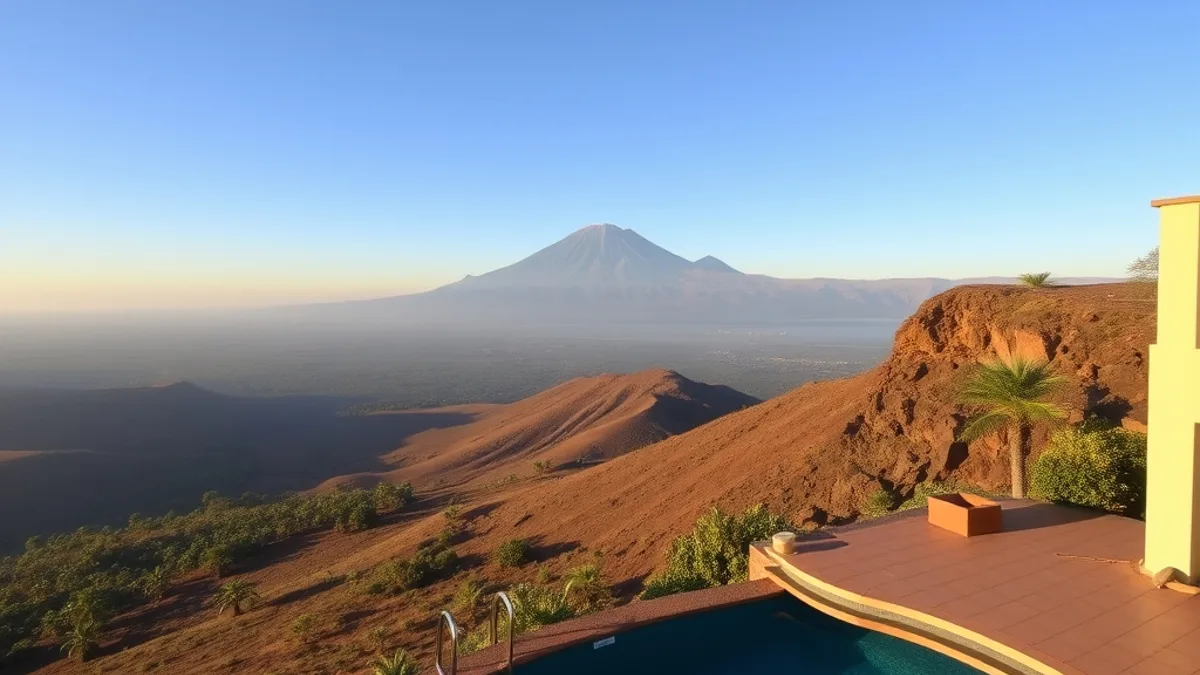
Tenerife plays a very different hand. The island is dominated by Mount Teide, Spain’s highest peak, which rises from a lunar-looking national park at its center. Yet the north side holds green valleys and banana plantations, while the south is all golden beaches and resort towns. That contrast gives Tenerife noticeably more varied scenery within a short drive.
Why Lanzarote villas look the way they do
Lanzarote’s appearance owes much to strict local building regulations, championed by the artist César Manrique. New construction must stay low-rise and painted whitewash over volcanic stone, with no towering hotel blocks spoiling the horizon. For villa renters, this means most properties sit quietly in the landscape, often with unobstructed views, and the island has kept a cohesive, understated charm that larger resorts elsewhere have lost.
Where to Stay on Each Island
On Lanzarote, your choice of base shapes the whole stay. The island is compact, so nothing is far away, but each resort has a distinct personality. Playa Blanca in the south is the pick for beach lovers, with a string of sheltered coves and a relaxed promenade. Puerto del Carmen puts you closest to the island’s main nightlife and dining strip, while Costa Teguise, north of the capital, is the calmest and most family-friendly of the three.
Tenerife’s villa market is concentrated in the south, where Costa Adeje and Los Cristianos offer the widest choice and the best beach access. If you’d rather escape the resort scene entirely, the greener north around Puerto de la Cruz brings cooler air, banana-plantation scenery and a more local feel. If you want a sense of what a well-located private villa can offer, this review of a beachside villa stay gives a useful picture of the experience.
- Playa Blanca, Lanzarote: home to the island’s best swimming beaches, including the sheltered Playa Dorada and the famous Papagayo coves a short drive away.
- Puerto del Carmen, Lanzarote: a long seafront strip with restaurants and bars, plus the old town harbor area for quieter evenings.
- Costa Teguise, Lanzarote: purpose-built and spread out, with calm waters and easy walking distances that suit travelers with young children.
- Costa Adeje and Los Cristianos, Tenerife: neighboring resorts sharing the same stretch of coast, so villas here put you within walking distance of both beaches and amenities.
- Puerto de la Cruz, Tenerife: a historic town with botanical gardens and black-sand beaches, better for culture and greenery than sunbathing.
Best Seasons for Villa Stays
The Canary Islands earn their reputation as a winter-sun destination honestly. From November to March, both Lanzarote and Tenerife typically see daytime highs of 20-23°C, warm enough for lunch outdoors and a swim if you’re lucky with the breeze. It’s the main reason villa owners can rent year-round rather than relying on a short summer window.
Peak season and prices
June to September is peak season on both islands, and July and August bring the highest villa rates of the year, along with the fullest beaches and booked-out restaurants. If you’re set on a summer stay, booking well ahead is the only realistic way to secure the best properties.
The shoulder-season sweet spot
May and October are the months regulars aim for. The weather stays warm and settled, sea temperatures have had time to climb, yet villa prices drop noticeably below peak levels and the resorts feel calmer. For travelers who want sunshine without the crowds, these two months offer the best balance of the year on either island.
Villa Prices and What You Get
Villa prices on both islands are more similar than you might expect. As a baseline, expect to pay roughly €90-300 per night for a good-quality villa, with August pushing rates above €400 on either island. The difference is not so much in the price tags as in how easy it is to find a bargain.
Tenerife is roughly three times the size of Lanzarote, and that shows in the villa market. More inventory means more competition, so late deals are genuinely easier to find there. If you like booking a few weeks before travel and hunting for a reduced rate, Tenerife gives you far more options to choose from.
What your money buys on each island
Lanzarote plays a slightly different game. Villas there often trade design and seclusion for slightly smaller pools and grounds, so you may get a striking, architect-led property with a plunge pool rather than a sprawling estate with lawns and a 15-meter pool. For many travelers that trade is worth it, especially if you plan to spend your days exploring rather than lounging.
On Tenerife, the same budget typically secures more space: bigger pools, larger plots and more bedrooms, particularly in the southern resort zones. If you are traveling as a group and want room to spread out, your money generally stretches further here.
Whichever island you pick, remember that July and August are the busiest months, so rates climb sharply. Check current prices with villa owners or booking platforms directly, as they shift with demand from season to season.
Getting There and Around
Getting to either island is refreshingly simple from the UK. Flights from London take around 4.5 hours to both Lanzarote and Tenerife, so you can leave in the morning and be by your villa pool by late afternoon.
Transfers are where the two islands differ. On Lanzarote, the island is compact enough that most villa zones are a short drive from Arrecife airport, with the popular Playa Blanca villa area sitting about 30-40 minutes away. On Tenerife, Tenerife South airport serves the main villa zones of Costa Adeje and Los Cristianos, making transfers pleasantly short once you have landed in the south.
A hire car is recommended on both islands, and it is almost essential if your villa sits outside a resort center. Villas in rural or coastal spots are rarely walkable to shops and restaurants, and taxis can be thin on the ground in quieter areas.
- Book your car early in summer: rental fleets shrink during the July and August peak, and last-minute availability on small islands can be limited.
- Check your villa’s access road: some Lanzarote villas sit on unmarked tracks through lava fields, so ask the owner for directions before you land.
- Factor in parking: villas in busier zones like Costa Adeje or Puerto del Carmen may have limited on-site spaces, so confirm this when booking.
- Compare airports carefully: Tenerife has two airports, so make sure your villa host confirms which one is closer before arranging transfers.
Whichever island you choose, check current flight schedules and transfer times with your operator before booking, as routes and timings can change between seasons.
How to Choose Between the Two Islands
If you are torn between the two, start with the kind of holiday you want rather than the villa itself. Lanzarote rewards travelers who want design-led stays in quiet, volcanic scenery, where the island is compact enough to explore almost entirely within a week. You can drive from lava fields to vineyards to a fishing village in a single morning, then return to a whitewashed villa that looks like nothing else in Europe.
Tenerife makes more sense if you want bigger beaches, family attractions like water parks and animal parks, and a wider villa market at every price point. Its size means you can pair a beach-focused week with day trips to green valleys and Mount Teide, and the sheer volume of properties gives you more flexibility on dates, budgets and group sizes.
Timing your booking
Whichever island wins, book early for summer. For stays between June and September, aim to reserve 6-9 months ahead on either island, since the best villas with pools and sea views go first. Those mid-summer weeks see demand at its absolute peak, so late availability tends to be limited unless you are flexible on location.
Winter sun is more forgiving. Booking 2-3 months ahead is typically enough for a November to March stay, when the islands deliver reliable highs around 20-23°C without the peak-season crowds. If you can travel in May or October, you will usually find warm weather with softer prices on both islands.
The Bottom Line
So which island wins? If you picture your villa holiday framed by lava fields, whitewashed walls and quiet evenings, Lanzarote is the clear match. It rewards travelers who want dramatic landscapes, design-focused stays and an island that is easy to explore in a week.
Tenerife suits travelers who want more variety: larger beaches, family attractions and livelier resort towns, with plenty of villas to match almost any budget. Rental prices are broadly comparable across both islands, so your decision really comes down to scenery and pace rather than cost. In short, pick the island whose views you want to wake up to. If this helped you decide, leave a comment or share the article with a fellow traveler planning their own Canary Islands escape.