A dream lodge booking can turn miserable fast. Snow blocks the mountain road, rain floods the hiking trails, or a heat wave turns a room built for cool evenings into something closer to a sauna. The problem is that lodges sit in exactly the places where weather bites hardest, and unlike a city hotel, there is no easy escape. So how do you plan around it?
This guide walks through lodge stay weather risks one by one: why remote locations deserve extra planning, how to handle snow closures on winter trips, how to time and equip a stay for the rainy season, and how to cope with heat in lodges built for cooler climates. We will also help you pick the right season for your destination, and finish with booking, insurance and backup strategies so a bad forecast never ruins the whole trip.
Why Lodge Stay Weather Risks Deserve Extra Planning
Lodges earn their charm by being remote. They sit on mountainsides, lakeshores and coastlines, often at the end of a single winding road, sometimes hours from the nearest town. That isolation is the whole appeal, but it also means the weather around them changes quickly and matters far more than it would in a city.
Think about what happens when conditions turn. In a city hotel, a storm is an inconvenience: you switch restaurants, duck into a shop, take the metro instead of walking. At a lodge, the same storm can affect your entire stay. If the access road closes, you may not arrive at all, or you may be stuck there longer than planned. There is no alternative restaurant, no corner store, no taxi rank down the street. Your lodge becomes your entire world for the duration, for better or worse.
Three threats, three different failures
Snow, rain and heat each disrupt a lodge stay in a different way. Snow cuts access: the lodge itself may be cozy, but a blocked road can keep you from reaching it or leaving it. Rain ruins outdoor plans: the reason most people travel to a mountain or lakeside lodge is to be outside, and a week of downpours can erase that entirely. Heat is subtler but increasingly common, making un-air-conditioned rooms, which many traditional lodges have, genuinely uncomfortable during summer heat waves. Each threat needs its own planning response, and the sections that follow cover all three.
Snow: Winter Lodge Trips and Access Closures
Winter lodge trips live or die on access. The lodge may have space available and the slopes may be perfect, but if the last stretch of road is buried under snow, none of that matters. Remote mountain properties are exactly the places where a forecast can upend your plans, because there is rarely a fallback restaurant, shop or taxi rank around the corner. The good news is that most winter arrival problems are predictable, and a little forward planning protects both your booking and your first day on the snow. The five steps below cover the essentials, from timing your reservation to making sure someone is actually awake when you roll in after dark.
- Book early and dodge the peaks. For a December to April ski lodge window, aim to book 3-6 months ahead. If you can avoid Christmas, New Year and February half-term, you will typically find better prices and more room choices at the same property.
- Ask how you actually get there. Check whether the lodge provides or arranges snow clearance, a shuttle or 4WD access. Some mountain lodges become car-inaccessible in deep snow, and you need to know before you drive whether your rental car will make it or whether you should plan to park lower down and transfer.
- Build in an arrival buffer. Mountain roads can close for snow, so allow a 1-2 day buffer around your arrival rather than booking a tight same-day connection to the lodge.
- Carry what the road requires. In many mountain regions, snow chains are required or strongly recommended in winter. Check the rules for your specific route and rent or buy chains in advance, since local shops sell out during storms.
- Confirm late check-in. Winter delays often mean arriving after dark. Confirm the lodge accepts late arrivals and know exactly how you will collect keys or check in if the reception is closed.
None of these steps takes long, but together they turn a risky winter arrival into a manageable one. A quick email about access, a set of chains in the trunk and a flexible arrival day cost almost nothing now and save enormous hassle later. The goal is simple: even if the weather delays you by a day, your stay still happens on your terms, with a warm room and a cleared driveway waiting at the end of the road.
Rain: Wet-Season Timing and Rainy-Day Lodge Comfort
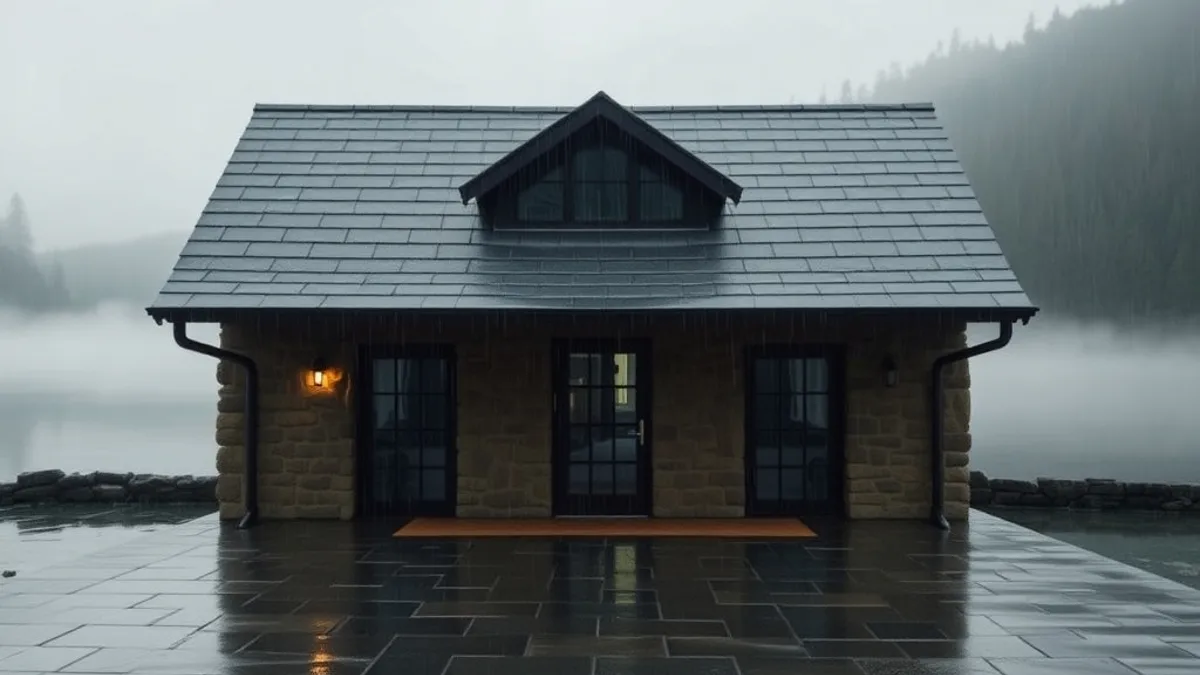
Rain is the most underestimated of the three threats. Travelers obsess over snow and heat, then book a mountain lodge in the middle of monsoon season and spend a week watching water run down the windows. If hiking, sightseeing or wildlife watching is the point of your trip, timing matters more than anything else you can control.
Timing your stay around the wet season
In many mountain regions, the monsoon or heavy-rain season typically falls between June and September. During those months, trails turn to mud, views disappear behind cloud, and activities get canceled regularly. If being outdoors is your main goal, it is usually worth shifting your dates rather than hoping for a dry spell.
The good news is that the months on either side often offer the best value of the year. Shoulder months like May-June and September-October frequently bring fewer crowds and rates 20-40% lower than peak season, with only moderate rain risk. You trade a small chance of a wet day for significant savings and quieter trails, which is a trade many travelers are happy to make.
Choosing a lodge that handles rain well
When some rain is unavoidable, pick a lodge that makes wet days enjoyable rather than wasted. Look for covered terraces where you can still sit outside, a proper lounge with books and games, a spa or sauna, and indoor activities on offer. A lodge with a fireplace, good food and a view of the rain can be a pleasure in bad weather; a lodge with nothing to do indoors becomes a cell the moment the clouds close in. Ask specifically what the lodge offers on rainy days before you book, not after.
Heat: Summer Stays in Lodges Built for Cool Climates
Many travelers picture alpine and northern lodges as cool escapes, but heat waves above 30°C now reach these destinations in July and August too. The catch is that many traditional lodges were built for cool climates, with thick walls, fireplaces and no air conditioning at all. Before you book a summer stay, confirm in writing whether your room has air conditioning or at least fans, and ask what happens during a heat wave if the cooling system struggles.
Room choice matters just as much as the building itself. A room that bakes in afternoon sun can stay uncomfortably warm well past sunset, while a shaded room with windows on two sides can stay pleasant with nothing more than open windows. When you book, ask specifically how the room is oriented and whether cross-ventilation is possible.
Your daily schedule should shift with the temperature as well. Hiking and wildlife watching are far more enjoyable, and safer, in the cooler hours, and midday is better spent somewhere shaded or near water. It also helps to know what the lodge itself offers for hot afternoons.
- Ask whether the lodge has a pool, or direct access to a lake or river, since swimming is often the most reliable way to cool off when rooms lack air conditioning.
- Request a room on an upper floor if heat is a concern, because warm air rises and ground-floor rooms next to kitchens or boiler rooms can run noticeably warmer.
- Check whether outdoor seating areas have shade from trees, umbrellas or pergolas, since a sunny terrace can be unusable at midday even when the evening is lovely.
- Find out if the lodge serves dinner outdoors or on a covered terrace, because late evenings in northern latitudes can still be warm enough for al fresco meals.
Choosing the Right Season for Your Lodge Destination
The best season for a lodge trip depends entirely on what you want to do once you get there. Ski lodges see their busiest stretch from December to April, and if you want quieter slopes and softer rates, aim for the weeks outside the major school holidays. Lake and national park lodges shine from June to September, when trails are clear, water is warm enough for swimming and wildlife is active. If your goal is color rather than snow or sunshine, autumn foliage lodges come into their own in September and October.
For many travelers, the smartest window is a shoulder season. Stays in May-June or September-October often come at a noticeable discount compared to peak dates, and you share the lodge, the trails and the viewpoints with far fewer people. Weather in these months is usually milder too, though it can be less predictable, so it suits travelers who value savings and quiet over guaranteed conditions.
Check the Region, Not Just the Country
Country-level climate summaries can be misleading. A single country can hold a rainy coastline, a dry interior plateau and a snow-capped mountain range with completely different seasons. Before locking in dates, look up historical monthly rainfall and temperature averages for the exact region where your lodge sits, ideally the nearest town or valley. A lodge two hours from an airport can sit in a different weather zone entirely.
It also helps to read up on a specific lodge before committing, since location shapes the whole experience. Our review of Crater Lake Lodge in the United States shows how a single lakeside property changes character with the season, from snowbound winter access to busy summer months. Use that kind of detail to match your dates to the experience you actually want.
Booking, Insurance and Backup Plans for Weather Disruption
Weather is the one thing you cannot book around in advance, so build flexibility into everything you can control. If you are traveling in snow season or during a monsoon-heavy period, a refundable rate is worth paying extra for. If the cheapest rate is non-refundable, read the cancellation window carefully and note the exact date after which you lose your money, then set a reminder a few days earlier so you can decide while you still have options.
Travel insurance is the second layer of protection. Policies that cover weather-related delays, road closures and cancelled activities typically cost around 4-8% of your total trip price, and for a remote lodge stay that coverage earns its keep. Check the policy wording for road closure and delayed arrival specifically, since a lodge you cannot reach is exactly the scenario standard trip-cancellation cover sometimes handles poorly.
Finally, give yourself room on both ends of the trip. A flight delay or a closed mountain road should cost you a few hours, not your whole stay.
- Plan to arrive at the lodge a day or more after any long-haul flight or connecting journey, so a missed connection does not eat into a short booking.
- Identify a fallback hotel in the nearest town before you travel, and save its contact details, so you have somewhere practical to sleep if the lodge road closes.
- Ask the lodge how it notifies guests about access problems, whether by phone, email or messaging app, and confirm they have a current number for you.
- Keep essentials like medications, chargers and a change of clothes in your day bag rather than checked luggage, in case you spend an unplanned night away from your bags.
Wrapping Up Your Weather-Ready Lodge Plan
Every lodge stay weather risk comes down to one of three threats: snow that cuts off access, rain that cancels your outdoor plans, and heat that turns a room built for cool climates into an uncomfortable night’s sleep. None of these ruin a trip on their own, but each one punishes travelers who book a remote lodge without thinking about the season first.
The good news is that each threat has a matching fix. Picking the right season handles the rain, confirming cooling or access arrangements before you book handles the heat and the snow, and flexible rates plus weather insurance handle everything the forecast throws at you later. Plan all three before you commit, and a remote lodge stay stays enjoyable in any forecast. If this helped you plan your trip, leave a comment or share this article with a fellow traveler.