One of you is picturing a remote wilderness hideaway with nothing but pine trees and a firepit. The other is dreaming of a spa afternoon, a good dinner and no need to drive anywhere after dark. If that sounds familiar, you are not alone, and the good news is that lodge stays for couples can actually satisfy both of you, provided you pick the right setting.
This guide walks through the whole decision, step by step. We start with why lodges work so well for two, then help you match the setting to your shared travel style, from national park lodges to alpine and lake-side retreats. From there, we cover choosing the right season and timing, what couples should expect to pay, and the practical checks to make before you book. Finally, you will find inspiration by destination and a simple way to settle on the lodge that fits you both, so the planning feels like part of the trip rather than a chore.
Why Lodge Stays for Couples Work So Well
The appeal of a lodge comes down to two things working together: privacy and scenery. Unlike a resort hotel where your room sits off a long corridor with neighbors on both sides, most lodges offer standalone rooms or small buildings. That means fewer shared walls, less hallway noise, and the feeling of having your own little piece of the landscape rather than a slot in a tower block.
Room counts matter too. Most lodges cap their numbers well below what a large hotel would run, so evenings stay quiet and the communal spaces, whether that is a lounge with a fire or a deck facing the water, never feel crowded. You can share a bottle of wine by the fireplace without competing for chairs, and breakfast is a calm affair rather than a buffet queue.
When the setting is the entertainment
Perhaps the biggest difference for couples is that the setting does the entertainment work for you. Trailheads start at the door, firepits are lit after dark, and the evening program is a sky full of stars rather than a schedule of activities. That suits pairs who want time together rather than a packed itinerary, because there is nothing to organize and nowhere to rush. You simply arrive, settle in, and let the surroundings set the pace of the trip.
Match the Setting to Your Shared Travel Style
Not all lodges offer the same experience, and the fastest way to narrow your search is to be honest about what you both want from a typical day. An outdoorsy hiker and a scenery lover can share a trip happily, but only if the setting gives each of you something to enjoy. Think about how you want your mornings, afternoons and evenings to look, then match the lodge type to that picture rather than to the prettiest photo you can find. A lodge that photographs beautifully can still leave one of you bored by day three if the pace does not suit you.
Four broad categories cover most of what is on offer. Use them as a starting point for your shortlist:
- National park lodges put dramatic landscapes and hiking trails within walking distance of your room, so you can be on a summit by mid-morning and back for an early dinner. Expect rooms that lean rustic rather than plush, and evenings that wind down early after a full day outside. These suit couples who measure a good trip in trail miles.
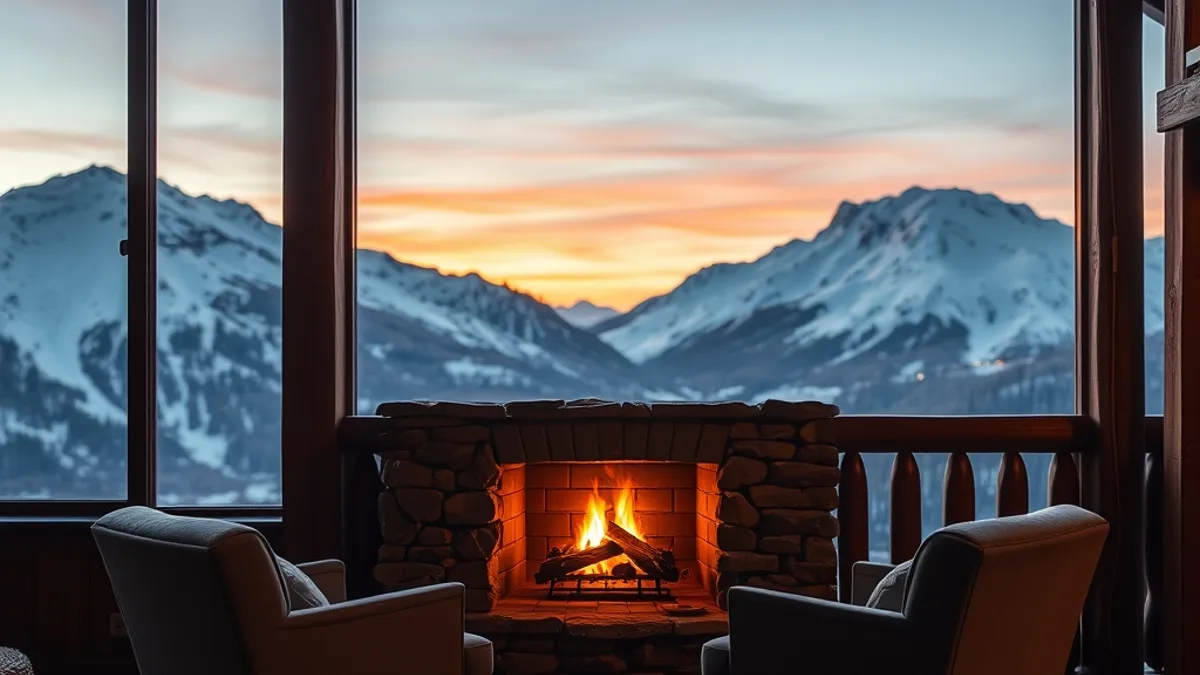
- Alpine and ski lodges work as a single base for a whole trip: slopes or hiking lifts by day, then saunas, hot drinks and fondue evenings without needing to drive anywhere. They are at their best from December to March, when snow sports and fireside dinners define the trip. Summer stays shift the focus to lifts and ridge walks.
- Lake and loch-side lodges balance gentle walks, boat trips and fine dining, which makes them a strong pick if one of you prefers scenery over sport. You can paddle or stroll in the morning and linger over a long lunch in the afternoon, with no pressure to be anywhere.
- Wellness-focused lodges center the stay on the spa and half-board dining, so the day is built around treatments, thermal circuits and slow meals rather than sightseeing. This suits couples whose priority is genuinely slowing down, not squeezing in one more viewpoint before dark.
Once you know which category fits you both, comparing specific lodges becomes far easier, because you are weighing like against like instead of a mountain lodge against a spa retreat. It also keeps your budget conversations honest, since a spa-heavy stay and a trail-heavy stay spend your money in very different ways.
Choosing the Right Season and Timing
Season shapes almost everything about a lodge stay: the price, the crowds, the activities and even whether a particular lodge is open at all. Getting this decision right first makes every other choice easier, so start here before you fall in love with a specific property.
Picking your window
For alpine hiking and lake stays, aim for June to September, when trails are clear and boats are running on full schedules. If your trip is built around snow, December to March is the window for ski lodges, when slopes, saunas and fireside dinners are at their best. Choose the window based on what you actually want to do, not on when flights happen to be cheapest.
Shoulder months deserve a serious look if you are flexible. May, early June and late September often cut rates by 20-40% versus peak and bring noticeably thinner crowds, which makes communal spaces feel even more private. The trade-off is that some high-altitude lodges close outside the main season, so confirm your shortlisted properties are actually operating before you commit.
How far ahead to book
Timing matters as much on the calendar as on the year. Popular national park lodges should be booked 6-12 months ahead, because the best rooms, the ones with the views and the standalone layouts, sell out first. Remote alpine lodges typically need 3-6 months of lead time, which gives you more flexibility but still rewards early planning. If you are aiming for a shoulder month, you can usually book later, but the same rule applies: the most atmospheric rooms go first, whatever the season.
Budgeting: What Couples Should Expect to Pay
Lodge pricing varies more by country and remoteness than by star rating, so it helps to start with realistic nightly numbers. In the United States, a couples suite or standalone lodge room typically runs $250-600 per night. In Switzerland, expect CHF 300-700 for comparable accommodation, especially in alpine regions where construction and staffing costs are high.
The biggest budget question for couples is usually food. Half-board or dinner-inclusive rates often add $60-120 per person per day, which sounds steep until you consider the alternative. At remote lodges where the nearest restaurant is a night drive away, that included dinner often pays for itself in convenience alone, not to mention the second glass of wine you can order without worrying about the road home.
Spa pricing is the other line item couples forget. Treatments at spa-equipped lodges usually cost $50-150 each, and those charges add up quickly over a long weekend. Before booking, compare how the lodge prices its couples packages against paying as you go.
- Some lodges bundle a small spa credit into couples packages, which can effectively discount a massage you were already planning to book.
- Half-board rates at remote properties remove the need to drive unfamiliar mountain roads after dinner, a safety benefit that goes beyond pure cost.
- If a lodge sits near a town with restaurants, skipping half-board and eating out one or two nights can trim a meaningful amount from the total bill.
- Ask whether dinner-inclusive rates include a set menu or a choice of courses, since the value differs considerably between the two.
For a concrete sense of what a Swiss alpine lodge offers at these price points, a detailed look at a lodge stay in Lenzerheide, Switzerland shows how room rate, dining and setting combine in practice.
Practical Checks Before You Book
Remote is part of the appeal of a lodge stay, but remoteness has practical consequences that are easier to handle before you book than after you arrive. Many wilderness lodges sit 30-90 minutes from the nearest town, which matters a lot if one of you pictures casual mornings at cafes and shops. Check the actual drive time on a map, not just the lodge’s description, and think about how many times you are willing to make that round trip.
Room layout is the second thing couples should verify carefully. Classic lodge buildings sometimes preserve their original configuration, and that can mean twin beds or compact bathrooms that feel far less romantic than the photography suggests. Look at the specific room category, not just the lodge in general, and read recent guest reviews that mention the bathroom and bed configuration.
Dining and arrival logistics deserve a phone call or an email. Remote lodges frequently run fixed dinner seatings and may struggle to accommodate late arrivals, so match your travel day to their kitchen hours rather than hoping for the best.
- Ask whether the lodge offers airport or train station transfers, since arranging your own transport to a remote property can be costly and stressful in winter conditions.
- If you land late or your flight is delayed, confirm whether the kitchen can hold a meal or whether you should plan to eat en route.
- Verify Wi-Fi quality with recent guest reviews or a direct question, because some properties have strong signal in the main lodge but weak coverage in standalone rooms.
- If one of you needs to check in with work or family, ask about mobile signal as well, since some mountain valleys have patchy cell coverage regardless of the lodge’s own internet.
None of these checks should take more than an hour, and together they prevent the most common disappointments couples report after a lodge stay that looked perfect online.
Where to Find Inspiration by Destination
Comparing lodge cultures is worth doing early in your planning, because each tradition offers a genuinely different pace. North American park lodges tend to be rustic and nature-first, with early nights and trailheads at the door. Scottish loch-side retreats lean toward gentle walks, whisky by the fire and long dinners. Alpine spa lodges, particularly in Switzerland and Austria, balance hiking or skiing with saunas, half-board dining and a strong culture of slowing down.
Detailed reviews of specific lodges are the fastest way to understand how setting, service and season interact. A lodge in Olympic National Park, a ski base in Hakuba, Japan and a spa hotel in the Swiss Alps will each reward a different kind of couple, and reviews show you which one. For example, reading an in-depth review of a lodge in Olympic National Park reveals how ocean setting, weather and room style shape the experience in a way a booking page never will.
Build a Shortlist, Not a Wish List
Instead of bookmarking a dozen lodges across three continents, shortlist two or three in the same region. That approach lets you weigh remoteness against convenience with real examples: one lodge might be a forty-minute drive from town while another sits right at the trailhead, and seeing them side by side makes the trade-off concrete.
Your shortlist should also make season and budget comparisons easier. Two lodges in the same valley often differ noticeably in price for similar rooms, and reviews will tell you whether the cheaper option cuts corners on dining or comfort. Once you have compared a handful of real properties, the choice usually becomes obvious for reasons neither of you could have articulated from a generic search.
Finding the Lodge That Fits You Both
So, one of you wants a remote wilderness hideaway and the other wants spa time and easy dining — the good news is that you rarely have to pick one over the other. Many lodges pair dramatic settings with proper comfort, and the trick is agreeing on which matters most to you both before you start booking.
Work through the three decisions that shape everything else: season, budget and drive time. Once those are settled, check the practical details like room layout and dining hours, and the lodge itself becomes the easy part of planning the trip. Find the balance between remoteness and comfort, and you will both come home happy. If this helped you plan a couples getaway, leave a comment or share the article.