Both promise a night in the wild, but choosing between a treehouse stay and a safari tent comes down to comfort, climate and budget. One lifts you into the canopy on wooden legs; the other spreads out over a canvas platform closer to the ground. They feel completely different once you’re inside, and the right pick depends on who you’re traveling with and when.
In this guide, we compare treehouse stays vs safari tents across the things that actually matter: layout and comfort, how each handles wind and rain, what you can expect to pay, and how far ahead you need to book. We finish with a simple way to match the option to your trip, whether that’s a romantic forest hideaway or a family adventure under wide-open skies. By the end, you’ll know exactly which one to book.
Treehouse Stays vs Safari Tents: The Core Differences
A treehouse is a fixed wooden structure built on stilts or frames among the trunks of real trees. Because it’s a solid building, it feels closer to a cozy cabin than a tent: solid walls, real doors and a level floor. The big draw is elevation. You sleep several meters off the ground, often with a small balcony or window framing the forest canopy, and that height brings a sense of privacy that’s hard to beat.
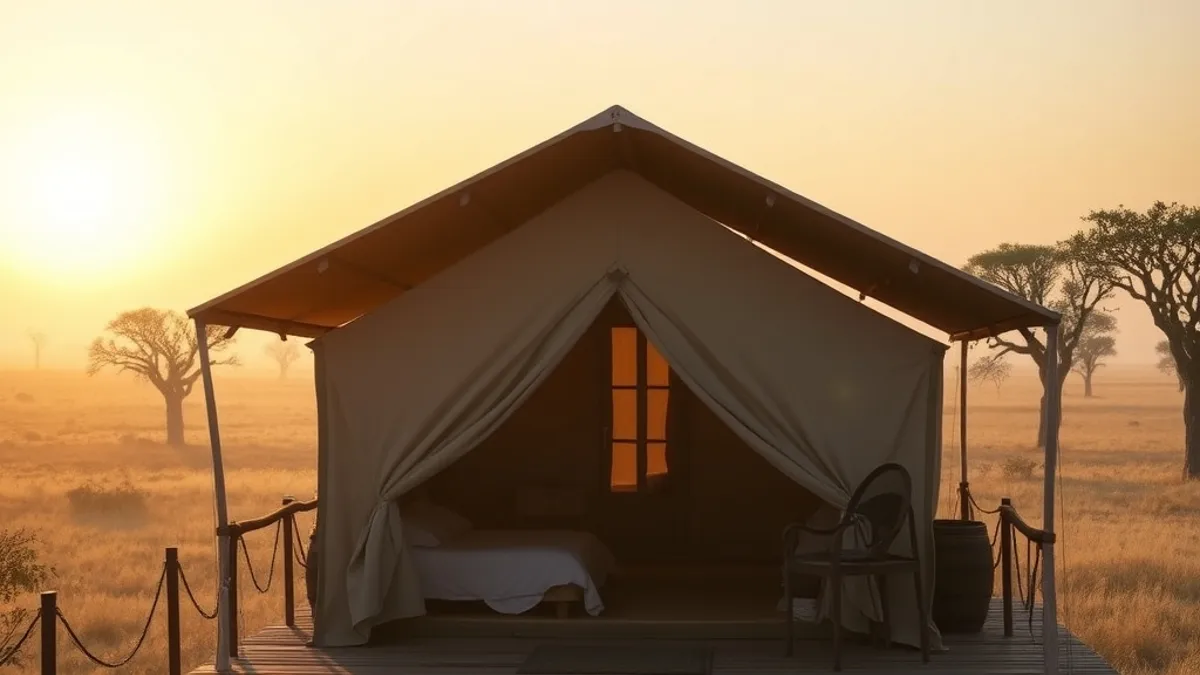
A safari tent works differently. It’s a heavy canvas tent stretched over a rigid frame on a wooden platform, usually at ground level. The atmosphere leans toward camping: canvas walls that move in the breeze, wide-open views and a camp vibe that many people love. Because tents sit closer to the ground and often open onto grass or savanna-style sites, the surroundings feel more spacious and less enclosed.
Who each one suits
Treehouses tend to suit couples looking for a quiet escape in forest or lakeside settings. Most properties have only one or two units, so you get real seclusion. Safari tents, with their larger footprints and open layouts, suit families and groups who want room to spread out, especially in destinations with open landscapes and long dry seasons.
Comfort and Layout Compared
Safari tents are the space winners, and it’s not close. They generally offer 25–50 square meters of floor area, and many layouts include separate bedrooms, a kitchenette and a private deck for morning coffee. Families appreciate that parents and kids can sleep in different rooms instead of sharing one open space, and there’s usually enough room to spread out a board game on a rainy afternoon or dry towels on the deck without tripping over them.
Treehouses are cozier by design. Most sleep 2–4 guests on a single compact level, with an en-suite bathroom included but storage limited to a few shelves or a small wardrobe. Pack light, because there’s rarely room for bulky suitcases, and a duffel bag is usually easier to stash than a hard-shell case. Access is the other practical difference: most treehouses require climbing 10–20 steps or a short ladder to reach the entrance, which is fine for most adults but worth thinking about if you’re traveling with toddlers or anyone with limited mobility.
- Check the access details before booking. Some properties list the exact number of steps or whether a ladder is involved; if stairs are steep or spiral, that changes the effort considerably, especially with bags in hand.
- Ask about luggage handling. A few hosts will carry bags up for you or use a pulley system, while others leave you to manage suitcases on the stairs yourself.
- Confirm the bathroom setup. En-suite is standard, but in some treehouses the shower or toilet sits on a lower level, which matters for nighttime trips.
- Look at sleeping arrangements. In a compact one-level treehouse, a “sleeps 4” layout often means a double bed plus a sofa bed or bunks, so check bed types if you’re traveling with kids who need real beds.
Season and Weather: When Each Works Best
Weather is where these two options diverge the most. Safari tents are seasonal in most of Europe, generally operating from April to October. Canvas is a poor insulator: it loses heat quickly on chilly nights, and wind and rain can get noisy enough to disrupt sleep. Many operators close their tent sites entirely outside the warmer months for exactly these reasons.
Treehouses have the opposite profile. Because they’re built from insulated wood with proper windows and doors, they often operate year-round and handle cold, storms and wet weather far better than canvas. A treehouse in late autumn can feel like a snug cabin in the trees, with heating on and rain drumming harmlessly on the roof. If your trip falls outside the classic camping season, this makes the decision much easier.
The sweet spot for both
Shoulder months like May–June and September offer the best weather-to-price balance for either option. Days are warm enough for canvas tents to be comfortable, evenings are cool enough for treehouse coziness, and rates sit below the peak summer highs. If your dates are flexible, aim for these windows and you’ll likely get better weather and a better price at the same time.
What You’ll Pay
Let’s talk numbers, because they matter more here than in most accommodation decisions. Treehouse stays typically run $150–$400 per night, with the price driven by design and location. A simple wooden cabin on stilts in a quiet forest sits at the lower end, while a multi-level build with floor-to-ceiling windows over a lake valley can push toward the top of that range.
Safari tents range from $120–$350 per night. The spread is wide because the category covers everything from basic canvas rooms with shared facilities to large family layouts with proper kitchens and private decks. Family-size tents cluster at the upper end of the range, since you’re effectively paying for an apartment’s worth of space under canvas.
Both types command a premium in peak summer, when demand at glamping sites often outstrips supply. If your dates are flexible, midweek bookings often cut 15–25% off rates, which on a three-night stay can add up to real money. A few other pricing details worth knowing before you compare listings:
- Cleaning fees are common at both types, and on a one- or two-night stay they can add a noticeable chunk to the total, so check the final price rather than the nightly rate.
- Treehouse prices often rise with the view: units higher up or facing water within the same property can cost noticeably more than the “standard” treehouse next door.
- Safari tent rates frequently include extras such as firewood, BBQ access or breakfast at camp-style sites, while treehouse stays on small private properties more often charge these separately.
- Long-stay discounts of the kind hotels offer are rare at small glamping properties, so don’t assume a week-long booking automatically gets you a better nightly rate.
How to Book Each One
Booking these two types of stays follows different rhythms, and it mostly comes down to how many units each property typically has. A safari tent site might run a dozen tents or more, so it can absorb last-minute demand and still leave you a choice of spots. A treehouse property often has one or two units, and some owners operate just a single one. That scarcity shapes everything about when and how you should reserve, and it also means a canceled booking at a small property leaves a much bigger gap for the owner.
- Reserve treehouses 2–4 months ahead. With only a couple of units per property, weekends fill early, and popular designs in scenic regions can be gone even sooner around public holidays.
- Book safari tents 1–3 months ahead. This window is usually comfortable, but push it earlier for summer weekends at well-known sites, where the best-positioned tents go first.
- Confirm heating before paying for a treehouse. Most are insulated wood and work fine in cooler months, but a few budget builds rely on a small portable heater, and you want to know that in advance rather than arrive to a cold night.
- Check bathroom access and whether it’s en-suite or a short walk away. This varies more than you’d expect, especially at smaller, family-run properties.
- Ask about the climb before you book. Since treehouses sit up in the trees by design, the owner can tell you exactly how you get in and out, which matters if anyone in your party has limited mobility.
One last habit that pays off: read the cancellation terms carefully before you commit. Small glamping properties often have stricter policies than hotel chains, and some request a deposit upfront rather than full payment at booking. If your plans might shift, a flexible-rate option at a slightly higher nightly price can be the smarter buy. It’s also worth sending a quick message with any special requests, since small owners can often accommodate them in a way large sites simply can’t.
Which One Fits Your Trip
By now the choice probably feels less random, but let’s make it explicit. The right answer depends less on which type is “better” and more on who’s traveling, in what season, and what kind of atmosphere you’re after. Both can be wonderful; they’re just wonderful in different ways.
Choose a treehouse when the trip is about atmosphere. A raised wooden room in a forest canopy, with birds at eye level and no neighbors on either side, is hard to beat for a romantic break or a quiet solo reset. It also suits travelers who want a cabin-like feel without committing to a full rental house. If water is part of the picture, glamping around lake regions pairs especially well with this style, as our guide to slow glamping in the Masurian Lake District shows.
Choose a safari tent when space and flexibility matter. Families with kids appreciate separate sleeping areas and room to spread out, and groups can book adjacent tents on the same platform site. Tents also shine in destinations with long dry seasons, where you’ll genuinely live on the deck rather than retreating indoors.
- Couples celebrating something: a treehouse’s privacy and elevated views make it feel like an occasion, which is exactly what an anniversary or engagement trip calls for.
- Families with young children: a safari tent’s ground-level platform means no stairs to guard, and kids can run between tents at camp-style sites.
- Winter and shoulder-season travelers: the treehouse is the safer bet, since insulated wood handles cold and storms far better than canvas.
- Dog owners: many safari tent sites allow pets on the open grounds, while treehouse properties are stricter, so always confirm the policy before booking.
The Bottom Line
So, which should you book? Both promise a night in the wild, but the choice really comes down to comfort, climate and budget. Treehouses win on year-round comfort, privacy and romance, making them the pick for couples and cooler months. Safari tents win on space, family fit and lower prices, with room for more guests at a friendlier rate.
A simple way to decide: match the choice to your season, your group size and how much climbing you’re willing to do. If it’s a winter escape for two, the treehouse is hard to beat; if it’s a summer trip with kids, the safari tent makes more sense. Whichever way you lean, we’d love to hear it—leave a comment or share this article.