Around 130 words in, here’s the thing: yurt stays in winter sound magical in photos — snow on the roof, a warm glow through the canvas — but most travelers hesitate at one question. Can a round fabric dwelling really stay warm when the temperature drops well below freezing? It’s a fair worry, and the answer depends almost entirely on the type of yurt you book.
This guide walks through the whole picture. We’ll look at whether a yurt can genuinely hold heat in sub-zero conditions, which heating systems you’ll actually encounter, and how insulation separates a true four-season build from a summer tent. You’ll also find practical advice on packing, what to expect on site, how to book smart, and the snowy regions where a winter yurt stay is worth the trip.
Can a Yurt Stay Warm in Winter? The Short Answer
The short answer is yes — if you book the right kind of yurt. Purpose-built four-season yurts come with insulated walls and a wood stove, and they comfortably hold indoor temperatures around 18–22°C even when it’s -15°C outside. That’s the difference between a cozy snow retreat and a shivering night you regret.
The catch is that not all yurts are built for cold. Summer-only, festival-style yurts use thin canvas with little or no insulation, and they’re a completely different product. Between November and March, these should be avoided. They may look identical in listing photos, so you need to check the specs before booking, not after arrival.
Why the round shape helps
There’s also a physics bonus built into the design. A yurt’s circular shape gives it less surface area per unit of floor space than a rectangular cabin of the same size. Less exposed wall and roof means less heat escapes to the outside, so the stove works more efficiently. In practical terms, a well-insulated yurt needs less fuel to hold the same temperature than you might expect from a canvas structure. It’s one of the reasons these dwellings have survived harsh continental winters for centuries.
Heating Systems You’ll Actually Find in Winter Yurts
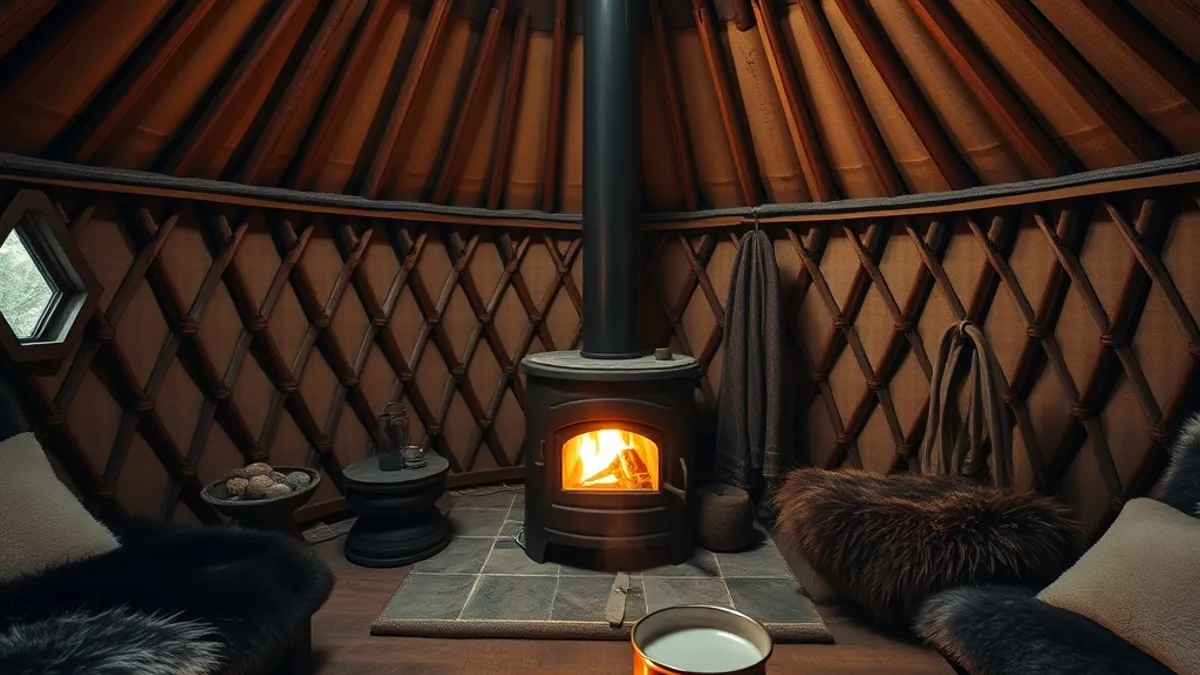
Wood stoves are the standard heat source in winter yurts, and for good reason: they’re simple, reliable and create the crackling atmosphere most guests are after. But they demand participation. Expect to load logs every 3–4 hours, or accept that the fire dies by early morning and you wake up to a cold yurt that takes time to reheat. Some travelers love the rhythm of tending a fire — splitting kindling, adjusting the damper, watching the flames while snow falls outside. Others would rather not set an alarm at 3 a.m. just to keep warm. Neither approach is wrong, but you should know which type of traveler you are before you book.
At the premium end, some yurts add propane heaters or electric underfloor heating, either as a backup for the stove or as the primary heat source. Underfloor heating in particular changes the experience — warm floors under bare feet, no overnight refuelling, no smoke smell clinging to your clothes the next day. These setups usually come with a higher nightly rate, but for many guests the trade-off is worth it.
Before you confirm a booking, ask a few practical questions. Hosts vary widely in what they provide, and the answers can make or break your stay.
- Firewood supply: Ask whether firewood is included in the rate. Some hosts provide generous stacks; others charge per bundle, which adds up fast on a cold week.
- Pre-heated arrival: Ask how the stove is pre-heated before you arrive. Walking into a yurt that’s already warm after a day in the snow is a completely different welcome than starting a fire from a cold, damp interior.
- Stove type and glass door: A stove with a glass door lets you watch the flames from bed — a small detail that makes a big difference to the atmosphere on a long winter evening.
Whichever heating setup you choose, the goal is the same: stepping out of your boots after a day in the cold and feeling the warmth wrap around you immediately. A little preparation ensures that happens every night of your stay.
Insulation: What Separates a Four-Season Yurt from a Summer Tent
Insulation is what truly separates a four-season yurt from a summer tent with a stove in the corner. Proper winter yurts use double-layer canvas, reflective foil liners or felt batting, adding an R-value of roughly 7–10. That’s modest compared to a modern house, but combined with the yurt’s efficient round shape and a steady stove, it’s enough to keep the interior comfortable in deep cold. When comparing listings, ask specifically about the insulation layers — a single thin canvas wall will never hold heat the same way.
The floor matters as much as the walls
Heat doesn’t just escape upward. A well-designed yurt sits on an insulated floor platform with a thermal break from the ground, and this matters as much as the walls. Without it, cold rises straight up through the boards and you spend the night with freezing feet no matter how hot the stove burns. Ask whether the platform is insulated and how it’s separated from the ground or deck beneath.
Finally, look up. The crown of the roof — the circular opening at the top — is where most heat escapes. A fitted canvas sky dome or insulated roof cap seals this weak point while still letting light in. A yurt with a proper crown cover, layered walls and an insulated floor will hold warmth dramatically better than one that only advertises “cozy canvas living.”
What to Pack and What to Expect On Site
A winter yurt stay is wonderfully rustic, but it pays to know what you’re walking into before you zip up your bag. The biggest practical adjustment is underfoot: paths, decks and steps between the yurt and any outbuildings are often icy between November and March. Even a short walk to the toilet at midnight can feel like an ice-skating trial, so plan your footwear accordingly.
Inside, don’t expect hotel lighting or plumbing. Many winter yurts run on stove-only lighting or a few dim solar lamps, and the toilet is frequently a composting unit in a separate outbuilding a short walk away. Thermal base layers and a headlamp stop being optional gear the moment you need to find your boots in the dark. Condensation is the other surprise factor: moisture from breath, cooking and the stove rises and settles on the canvas dome, so keep gear, bedding and electronics away from the walls where drips can form.
- Microspikes or insulated snow boots: microspikes stretch over ordinary boots and grip packed ice on decks and stairs, while insulated boots handle fresh snow on un-groomed paths.
- A headlamp with spare batteries: batteries drain faster in cold conditions, and a headlamp keeps both hands free for carrying water or firewood after dark.
- Merino or synthetic base layers: these wick sweat away overnight, which matters because damp clothing near a wood stove can add to indoor condensation.
- A dry bag or plastic sacks: sealing cameras, phones and spare clothes protects them from the damp microclimate that forms along the canvas walls.
- A small towel or squeegee cloth: useful for wiping down the dome-side of bedding or drying boots by the stove in the morning.
Booking a Winter Yurt: Timing, Prices and Questions to Ask
Winter yurt availability is tighter than most first-timers expect. The season is short, the number of genuinely four-season builds is limited, and weekend and holiday dates in the November–March window fill quickly. A little planning makes the difference between a well-insulated yurt with a good stove and a summer tent you’ll regret booking. Before you hand over a deposit, work through a short checklist with the host. It takes ten minutes, and it filters out the listings that look cozy in photos but weren’t built for snow, ice and sub-zero nights.
- Reserve 2–3 months in advance for weekends and holidays. Popular dates around Christmas, New Year and mid-winter school breaks are often gone well before the season starts, so book as soon as your dates are firm. If you’re flexible, midweek stays are usually easier to find and sometimes cheaper.
- Set a realistic budget. Nightly rates in winter usually range from €100 to €250, moving higher for better insulation, a private bathroom and a remote or scenic location. Treat a suspiciously cheap mid-winter listing as a warning sign rather than a bargain.
- Confirm the heat source. Ask directly whether the yurt has a wood stove, and whether any backup heating such as propane or electric heat is included. A single heat source with no backup is workable, but you should know before you arrive, not when the temperature drops.
- Confirm the firewood supply. Check that firewood is included in the rate, how much is provided per night, and whether the stove will be pre-heated before you arrive. Hauling your own logs through snow is nobody’s idea of a relaxing start.
- Confirm road or shuttle access in heavy snow. Some remote yurts become reachable only by ski, snowshoe or snowmobile after storms, so ask how you’ll actually get there, where you can park, and what happens if a storm hits mid-stay.
Once you have clear answers on heat, wood and access, the rest is easy. Hosts who respond quickly and specifically to these questions are usually the ones running a genuinely winter-ready operation, and that single conversation often tells you more than any listing description. If answers are vague or slow, keep looking — there are plenty of well-run winter yurts, and the good ones reward travelers who ask the right questions early.
Where Winter Yurt Stays Shine: Snow Landscapes Worth the Trip
Few accommodations put you this close to a winter landscape. A yurt’s circular canvas walls and glowing stove create an atmosphere that hotels spend fortunes trying to imitate, and certain regions do it especially well.
Lapland and the far north
Lapland is the classic choice for a reason. Sub-zero nights, deep snow and long dark hours create ideal conditions for aurora viewing, and many yurt sites position their decks facing open northern skies — so you can watch for the lights without leaving your blankets. If you want to extend that kind of trip, our guide to Lapland homestays for snowy days covers more ways to stay close to the snow.
Mountains and forests
In Europe, mountain regions like the Alps and the Carpathians treat yurts as backcountry basecamps. You snowshoe in from the trailhead, spend the day on quiet white slopes and return to a pre-warmed stove — a rhythm that suits both fit hikers and slower weekend travelers. Across North America, national-forest yurts work the same way for cross-country skiers: trails often start right outside the door, and the yurt doubles as a warm overnight base between long days on the skis.
Wherever you go, the appeal is the same: big snow, small footprint, and a fire to come home to.
The Cozy Truth About Winter Yurts
So, can a round canvas dwelling really keep you warm in freezing temperatures? Yes, when it is built for it. A properly insulated yurt with a wood stove stays comfortably warm even in deep sub-zero conditions, holding cozy indoor temperatures while snow piles up outside.
The recipe is simple: choose a genuine four-season build rather than a summer tent, pack for ice underfoot and condensation on the canvas, and book early, since winter dates fill up months ahead. Get those three things right, and a snowy yurt night becomes one of the most atmospheric stays in the glamping world — firelight on canvas, silence, and a dome full of stars overhead. Have you slept in a yurt in winter? Share your experience in the comments, or pass this article along to a friend who needs a cozy escape.