You found a lodge that calls itself pet-friendly, and the photos look perfect: a stone fireplace, a deck overlooking the water, trails out back. But before you load up the crate and the kibble, it pays to read the fine print. Not every pet-friendly lodge stays that way once you dig into the details, and the difference between a warm welcome and a list of restrictions often comes down to fees, weight limits and where your dog is actually allowed to go.
This guide walks you through the policies worth checking before you book. We’ll cover what “pet-friendly” really means on a lodge’s terms, the fees and deposits that can surprise you at check-in, the areas of the property where pets are typically welcome or off-limits, and house rules around crates, unattended pets and vaccination proof. You’ll also learn when to book to secure a pet-designated room, and how to match the lodge to your pet’s energy and your travel style so the trip works for everyone.
What Pet-Friendly Lodge Stays Really Mean
When a lodge advertises itself as pet-friendly, that label can mean almost anything. On one end of the spectrum, you have lodges that truly welcome pets everywhere: treats at the front desk, water bowls in the lobby, dogs allowed on the deck at dinner. On the other end, “pet-friendly” might mean two designated rooms in a back wing, a hefty nightly fee and a rule that your dog never sets a paw outside those four walls. The label alone tells you very little, which is why the policy page is your real starting point.
Which animals does the policy actually cover?
It’s easy to assume “pet” means your pet, but many lodges use the word to mean dogs only. If you travel with a cat, check explicitly whether felines are accepted, and whether the same rules and fees apply to them. Some properties also draw lines around other animals entirely, so birds, rabbits or reptiles may not qualify no matter how well-behaved they are. A quick question to the lodge before booking can save you from an awkward conversation at the front desk.
Do the rules change with the season?
Another detail travelers often miss: pet policies aren’t always consistent year-round. Some lodges allow pets only in low season, when occupancy is lighter and staff can manage the extra cleaning. During busy stretches, the same lodge may suspend pet acceptance entirely, or shrink the number of pet-designated rooms. If your trip dates are fixed, confirm that pets are allowed during your specific window, not just at some point in the year. Reading the policy page carefully, and asking direct questions, is the only reliable way to know what “pet-friendly” means at the lodge you have your eye on.
Pet Fees, Deposits and Weight Limits
Pet fees are one of the biggest sources of sticker shock at lodge check-ins. Most properties charge somewhere between $25 and $150 per stay, or $10 to $50 per night, and the structure matters: a nightly fee adds up fast on a weeklong trip, while a flat per-stay fee can be a better deal for longer visits. Always ask whether the fee is refundable or a one-time charge, and whether it applies per pet or per room. If you’re traveling with two animals, a per-pet fee can double your cost without warning.
Weight limits are the second filter to check before you book. Caps commonly fall between 20 and 80 pounds, so a large breed like a Labrador or a German shepherd may exceed the limit at some lodges while passing easily at others. Many lodges also cap the number of pets at two per room, and some allow only one. If your dog sits near the top of a lodge’s range, ask whether the limit is strictly enforced or flexible, and get the answer in writing if possible.
Finally, ask about damage deposits. Some lodges place a refundable hold on your card at check-in, which can temporarily reduce your available credit. Knowing the amount ahead of time helps you plan.
- Ask what triggers deposit forfeiture: some lodges keep the deposit for any pet-related cleaning beyond the standard service, such as fur on furniture or accidents on carpet, so clarify exactly what counts.
- Check whether fees differ by room type: a suite or a cabin-style room may carry a higher pet fee than a standard room at the same lodge.
- Find out if the fee covers amenities: some lodges bundle extras like a pet bed, bowls or treats into the fee, which can make a higher charge more reasonable.
Where Pets Can and Cannot Go on Property
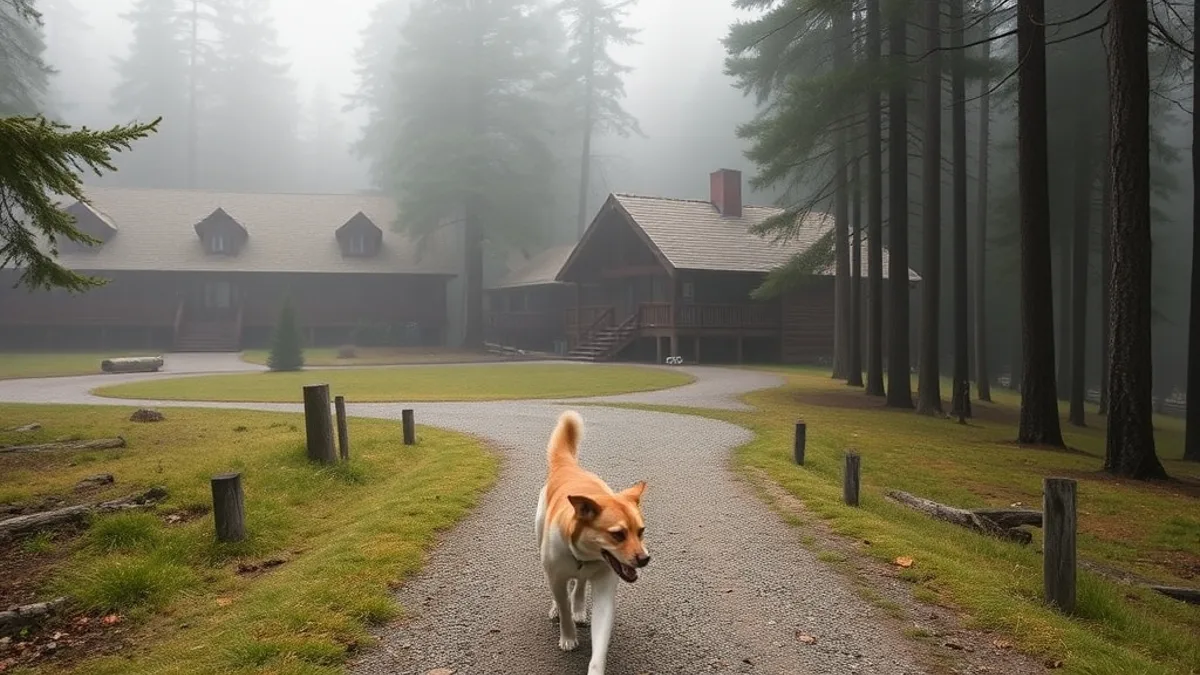
Even at a lodge that welcomes pets, your animal’s territory is usually smaller than you’d expect. Many lodges restrict pets to designated rooms, floors or wings, which means the room category you booked online may not qualify at all. Before you reserve, confirm that your specific room type is pet-designated. A lakeside suite or a remodeled cabin might be off-limits to animals even if the lodge as a whole accepts them. Getting this confirmed in advance prevents the disappointment of being reassigned to a less desirable room on arrival.
The usual off-limits zones
Certain areas are almost universally closed to pets, and it helps to know them before you promise your dog a spot at the dinner table. Dining rooms are typically banned, including restaurants and indoor breakfast areas. Pools, spas and fitness centers are also standard no-go zones, for hygiene and safety reasons. If the lodge has a great room, bar or shared lounge, ask whether pets are allowed there or only in your room and the grounds outside. Some lodges make exceptions for covered porches or outdoor patios, which can be a pleasant compromise on a cool evening.
Relief areas and outdoor access
Outdoor access matters just as much as indoor rules, especially for late-night potty breaks. Ask the lodge where the designated relief areas are located and whether they’re lit after dark. If you’re staying in a mountain or lakeside lodge, find out whether green space or trails connect directly to the property, or whether you’ll need to drive to a trailhead. A lodge with a grassy area a few steps from your door makes every walk easier, while one surrounded by parking lots and roads turns a simple potty break into a production. These details sound small until you’re walking a dog at six in the morning in the rain.
House Rules: Crates, Unattended Pets and Vaccination Proof
One of the most common surprises at pet-friendly lodges is the crate rule. Many properties require your pet to be crated whenever it is left alone in the room, and some will not allow unattended pets at all. If your dog is not used to a crate, start practicing at home a few weeks before your trip so the experience is not stressful for either of you.
Noise matters just as much. A dog that barks at every footstep in the hallway can trigger complaints from neighboring rooms, and repeated disturbances can lead to fines or even eviction without a refund. If your pet is anxious in new environments, plan to stay with it rather than leaving it behind, or bring a long-lasting chew to keep it occupied during short absences.
Housekeeping is another detail worth clarifying before arrival. Some lodges only service pet rooms when the animal is removed or crated, which means you may need to coordinate timing with the front desk each morning.
- Ask whether the lodge supplies a crate on request or whether you must bring your own, since airline-style soft crates are not always accepted.
- Check if vaccination records must be printed or if a photo on your phone is acceptable at check-in.
- Find out who is liable for damage such as scratched doors or chewed furniture, and whether the lodge distinguishes normal wear from chargeable damage.
- Ask if there is a designated contact number to report a barking issue or an escape so staff can help quickly rather than penalize you.
Booking Lead Times and Room Availability
Pet-friendly rooms are usually the scarcest inventory at any lodge. Properties often keep only a small share of rooms designated for animals, and those fill first during peak season, which for mountain and national park lodges runs June through September. If you are planning a summer stay, aim to book 2 to 3 months ahead rather than hoping something opens up at the last minute.
Online booking systems add another wrinkle. A search filter that says “pets allowed” does not always guarantee the specific room you reserved accepts animals, and third-party sites can display outdated policies. This is where a short phone call pays off.
Confirm Before You Pay the Balance
After booking online, call the lodge directly and confirm that a pet-friendly room type was actually reserved, not just a standard room with a note added to your file. Ask the staff member to note your pet’s size and breed on the reservation, since some properties verify this against their weight limits at check-in.
Why Ground-Floor Rooms Matter
When you call, also ask whether a ground-floor room is available. Ground-floor rooms make late-night and early-morning walks far easier, especially in rain or snow, and they reduce noise complaints since your dog is not pacing above someone’s head at 2 a.m. If the lodge is multi-story and only upper floors remain, ask how close the nearest exit and relief area are before you commit.
Matching the Lodge to Your Pet and Trip Style
The right lodge depends heavily on what kind of traveler your pet is. Active dogs that live for long walks do best at national park and lakeside lodges, where trails often start right from the property and you can burn off energy without loading the car. A lodge like Kalaloch Lodge on Washington’s Olympic coast is a good example of this style, with beach and forest access steps from the rooms.
Calm Pets and Short Stays
Resort-style lodges work differently. They often have stricter indoor rules, limited outdoor space and more foot traffic, which suits calmer pets and shorter stays. If your dog is older, nervous around strangers or content with two short walks a day, this type of property can be more comfortable than a trailhead lodge where every guest arrives with hiking gear and a dog of their own.
Plan for Emergencies Before You Arrive
Remote lodges are wonderful until something goes wrong, so do a quick check of veterinary options before you book. Look for vet clinics and pet supply stores within roughly a 30-minute drive of the property, and save the nearest emergency animal hospital’s address in your phone. If the lodge sits deep in a park or far from any town, ask staff at reservation time what they recommend for after-hours emergencies. A few minutes of research gives you peace of mind for the whole trip.
The Bottom Line Before You Reserve
A lodge that welcomes pets can still come with rules that shape your whole trip, from extra charges to limits on where your dog can roam. None of that makes it a poor choice, but it changes what your stay looks like, so it pays to understand the details before you pay rather than after you arrive.
The practical steps are simple: plan ahead, since pet-designated rooms tend to fill quickly, and confirm the policy applies to your specific reservation. Just as important, pick a lodge that matches your pet’s energy and your trip style, whether that means trails from the door or a calmer indoor setting. When those pieces line up, everyone enjoys the stay. If this helped you plan, leave a comment or share the article with a fellow traveler.