Many families pick a resort based on a single glossy pool photo, then arrive to find the shallow area is a tiny corner, the umbrellas are all by the adults-only pool and nobody is watching the water except them. Resort pools for families are rarely the relaxing extra the brochure suggests — for kids, they are the whole vacation.
Before you book, it pays to look past the marketing shots and check the details that actually shape your days: depth zones for different ages, lifeguard coverage, shade, pool hours and heating. This guide walks you through why the pool can make or break a family stay, how to match water features to your children’s ages, what safety setup to confirm, and how to book smart so the pool you saw in the photos is the one you actually get.
Why Resort Pools for Families Make or Break a Stay
Ask any parent who has spent a week at a family resort and they will tell you the same thing: the pool is not an amenity, it is the main event. Kids often spend four to six hours a day in the water, split between morning swims, post-lunch splashing and a late-afternoon return before dinner. That means the pool effectively replaces the entertainment program, the kids’ club and half your sightseeing plans. If the pool works for your children, the whole trip feels easy. If it doesn’t, you will spend the week improvising.
The problem with one pool for everyone
The classic mistake is booking a resort that looks impressive but has a single deep lap-style pool designed with adult swimmers in mind. A pool like that can leave toddlers with nowhere safe to play at all, and parents end up standing in chest-deep water for hours with a child glued to their arms. Family resorts with multiple pools usually have two to four separate pools precisely so each age group gets water suited to it.
This is also where guest reviews tell the truth. Pool quality is the single most common complaint in family resort reviews — more than rooms, food or service. Travelers rarely forgive a pool that is too deep, too cold or too crowded for kids, so reading recent feedback carefully before booking is one of the most useful things you can do.
Depth Zones and Water Features by Age Group
The single best indicator of a genuinely family-friendly pool complex is variety. Different ages need completely different water, and a good resort doesn’t ask a two-year-old and a fourteen-year-old to share the same pool. Before booking, look at the pool map or photos and check that each of your children has somewhere designed for them.
For the youngest guests, a dedicated toddler splash zone is the gold standard. These areas are typically 20-30 cm (8-12 inches) deep, which is shallow enough for a toddler to sit and play while a parent sits beside them. The best splash zones include fountains, gentle sprays or tipping buckets that keep small children entertained without any swimming skill at all.
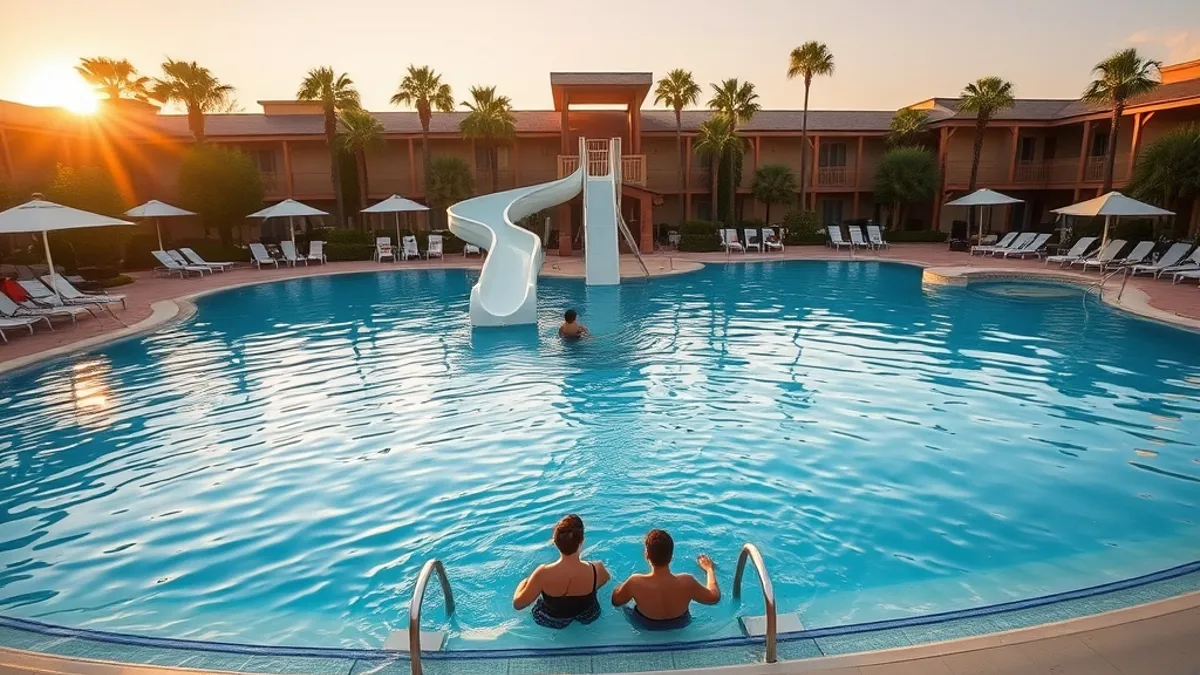
Children’s pools with slides generally suit ages roughly 3-10. Look for a separate pool of about 0.6-1 m depth — deep enough for confident young swimmers to paddle and play, shallow enough that a stumble isn’t frightening. Lap-style main pools suit older kids and teens, especially when the resort adds activities that give them a reason to leave their phones behind.
- Zero-entry access: beach-style pools slope in gradually, so non-swimmers can walk in at their own pace instead of negotiating steps or a sudden drop-off — a huge confidence builder for cautious kids.
- Interactive water features: spray grounds, water cannons and shallow play structures keep toddlers busy for far longer than an empty shallow pool, and they work even for children who won’t leave the edge.
- Small slides in the kids’ pool: a slide sized for younger children, ending in 0.6-1 m of water, gives the 3-10 crowd their own thrill without sending them to the big slide line with teens.
- Teen-friendly extras: basketball hoops, inflatable obstacle courses or a genuinely deep main pool give older kids real activity, not just a place to float.
Safety: Lifeguards, Fencing and Supervision
Pool safety is the area where marketing photos tell you the least, so this is where direct questions matter most. Start with the basics: check whether lifeguards are actually posted at the kids’ pool during opening hours, or whether supervision is entirely the parents’ job. Some resorts staff only the main pool; others rotate a single guard across several pools, which can mean gaps. If no lifeguard is provided, plan on one adult being on duty whenever the kids are in the water.
Next, look at how the pool area is built. Fenced or gated pool areas are a strong sign a resort takes young children seriously — a self-closing gate means a toddler can’t wander from the garden straight into the water. Also confirm whether the kids’ pool is physically separated from the deep main pool. A low wall, separate deck or clear barrier prevents a strong-swimming older sibling from drifting into water that’s too deep, and it makes supervision far easier because you’re watching one contained area.
Finally, ask the small questions that only matter once you’re there. A quick email to the resort covers most of them:
- Depth markings: clear, color-coded markings at the pool edge let kids see for themselves where the shallow end ends.
- Non-slip surfaces: textured decking around the pool and in the shallow zones reduces the falls that cause most minor pool injuries.
- Borrowed life jackets: resorts that lend properly sized flotation vests for toddlers and young children save you packing your own — ask what sizes are available and whether they’re free.
- Guard coverage for your dates: lifeguard staffing can differ in low season or outside peak pool hours, so confirm for your specific travel dates rather than assuming the high-season setup applies.
Comfort Around the Pool: Shade, Seating and Space
The pool deck is where your family will actually live during the trip, so shade and seating deserve as much attention as the water itself. When you look at resort photos, count the shaded options near the family pool specifically. Umbrellas, cabanas and pergolas are often clustered around the adult or infinity pool, while the kids’ area bakes in full sun all day. A gorgeous photo of a shaded lounge means nothing if it is a ten-minute walk from the splash zone.
Timing matters too. In high season, sunbeds near kids’ pools fill by mid-morning, so plan to claim shade before 10 am if you want a spot with both sun protection and a clear view of the water. If your family likes slow starts, look for a resort where you can still get a decent spot later, or consider a cabana you can reserve for the day.
Comfort in the water counts as well. Parents of toddlers spend hours standing in shallow water, so look for built-in shelving or wide steps where you can sit submerged while your little one plays. It is far easier on your back than crouching for an hour.
- Poolside food service: A snack bar or grill within sight of the kids’ pool means you can order lunch without leaving your sunbed or dragging wet, hungry children across the resort.
- Restroom and changing access: Toilets and showers a short walk from the family pool prevent the constant treks back to your room, which is where most pool sessions quietly fall apart.
- Room proximity: Staying close to the pool area pairs perfectly with a relaxed schedule, something we explore in our guide to resorts made for lazy mornings, where slow starts and nearby amenities do the heavy lifting.
Hours, Heating and Seasonal Pool Conditions
Pool hours and water temperature can quietly decide whether your trip works. Most family pools run roughly 8 am-8 pm, with peak hours around 9 am-6 pm, but that varies widely. If your kids wake early and you want a quiet morning swim, or you like a relaxed evening dip after dinner, confirm the exact hours with the resort before you book rather than assuming.
Temperature is the other dealbreaker, especially for small children. Water below about 24°C (75°F) feels genuinely cold to a toddler, and a shivering child ends a swim session in minutes. Heated pools matter most in shoulder seasons, when air temperatures seem fine but the water has not caught up. Ask whether the kids’ pool specifically is heated, since some resorts heat only the main pool.
Maintenance is the surprise nobody plans for. Some resorts close pools for cleaning, resurfacing or repairs in low season, sometimes draining the very splash zone your kids were promised. Ask for exact dates before booking, and get the answer in writing if the pool is central to your plans.
- Indoor or covered pools: These keep a resort trip viable in cooler months, letting kids swim even on rainy or chilly days when an outdoor pool would sit empty.
- Heating scope: Ask whether heating covers the children’s pool and splash zone or only the main pool, since a warm lap pool next to a cold toddler pool helps no one.
- Quiet-hour advantages: Early morning and evening slots outside peak hours often mean near-empty water, ideal for nervous swimmers and parents who want easy supervision.
Booking Smart: Rooms, Timing and Verifying Pool Claims
Once you know what to look for, the booking process itself becomes a tool for getting the family pool experience you want. A little planning goes a long way, especially for school-holiday dates when poolside rooms vanish first. The steps below take you from search to confirmation, and each one only takes a few minutes.
- Book 3-6 months ahead for school holidays. Rooms closest to the pool area are limited in number and sell out first during peak family travel periods, so early booking is your best chance at the location you want.
- Request a room overlooking or steps from the kids’ pool. A specific request makes naps, swimsuit changes and forgotten goggles far easier. Some resorts can note this on your reservation even if they cannot guarantee a specific room.
- Scan recent guest photos and reviews. Marketing shots can be years old. Recent traveler photos show whether the splash zone, slides and shade actually match the brochure, and reviews often mention pool temperature, crowding and how well the water features hold up.
- Email the resort directly. Ask about lifeguard coverage, pool heating and any planned maintenance for your exact travel dates. Written answers give you something to reference if anything does not match on arrival.
Doing this homework also helps you compare resorts fairly, since two properties can both advertise a “family pool” and mean very different things. One may offer a multi-pool layout with a proper children’s area, while another has a single basin that tries to serve everyone. For a sense of how a well-run resort property comes together, our review of the San Clemente Palace Kempinski in Venice, Italy shows what to expect when a resort takes its grounds and guest experience seriously. Ten minutes of verification before you click book can save a week of disappointment, and it often costs nothing more than a short email.
The Family Pool Checklist Before You Click Book
That gap between the marketing photos and reality is exactly what this checklist is designed to close. A resort can look perfect online and still have a splash zone the size of a bathtub, zero shade and no lifeguard in sight. Asking a few pointed questions before you pay turns that gamble into an informed choice.
Run through the essentials one more time: match the depth zones and features to your children’s ages, from toddler splash zones to teen pools, confirm lifeguard coverage, fencing and separation from the deep pool, and check shade, seating, hours and heating for your travel season. Then book three to six months ahead for school holidays, pick a room close to the kids’ pool, and verify every claim through recent guest photos and reviews. If this helped you plan a trip, share it with another traveling family or leave a comment below.