If you’ve ever scrolled through glamping photos and wondered whether a tent with a bed inside can really feel like a hotel room in the wild, you’re not alone. Many first-timers worry the reality will either be too rough to enjoy or too overpriced to justify. So, what is glamping actually like once you’re standing on that wooden deck at night, hearing the wind in the canvas? This honest guide walks through the whole picture, from what glamping means and how the accommodation really feels, to costs, booking timing, packing lists and the mistakes beginners make most often.
We’ll cover what to expect from canvas walls and shared bathrooms, how much a night typically runs and when to book, plus how to choose between a dome, a safari tent or a lakeside yurt. By the end, you’ll know whether glamping suits you, and how to plan a first trip that lands on the comfortable side of the adventure-comfort trade-off.
What Is Glamping, Exactly?
Glamping is short for glamorous camping, and the name does most of the explaining. Instead of rolling out a sleeping bag on hard ground, you get a real bed with linens, a solid floor underfoot and weatherproof canvas or solid walls overhead. You still sleep in a tent-shaped structure out in nature, but you skip the gear, the setup and the aching back.
The range of places you can glamp in is wider than most beginners expect. Common stay types include:
- Safari tents – large canvas tents, often on raised wooden decks, inspired by African expedition camps
- Yurts – circular, lattice-walled tents with a domed roof, popular in meadows and mountain settings
- Dome tents – geodesic domes, often with clear panels for stargazing
- Treehouses – elevated stays built into or around mature trees
- Cabins – small solid-wall structures that sit at the comfort end of the spectrum
Where glamping ends and a cabin begins
The line between glamping and a small cabin is genuinely blurry. Many sites offer both side by side, and some “tents” have more solid construction than basic cabins. As a rough rule, true glamping keeps you feeling close to the outdoors: canvas that moves in the wind, birdsong through the walls and a deck facing open land. If the structure feels like a small hotel room that happens to be in a field, it’s drifting toward cabin territory. Neither is better, but knowing which experience you’re booking helps you pick the right site and the right expectations for your first trip.
What the Accommodation Is Actually Like
Let’s be honest about the part glamping photos never show: canvas walls are thin. You will hear the wind moving the fabric, birds at dawn and, on busier sites, your neighbors’ conversations and footsteps. Soundproofing is minimal, so light sleepers should pack earplugs and pick a site that spaces tents well apart. A stay like our glamping review near Lake Powell and the Grand Staircase shows how atmospheric this can be, but also how close you really are to the elements.
Beds, space and storage
The good news is that beds are usually proper mattresses with real linens, often dressed up with throws and extra pillows. The trade-off is space: tents are compact, storage is limited to a trunk, a rack or a shelf, and there’s rarely anywhere to unpack a full suitcase. Pack soft bags rather than hard-shell cases and keep your floor area clear.
Bathrooms and temperature control
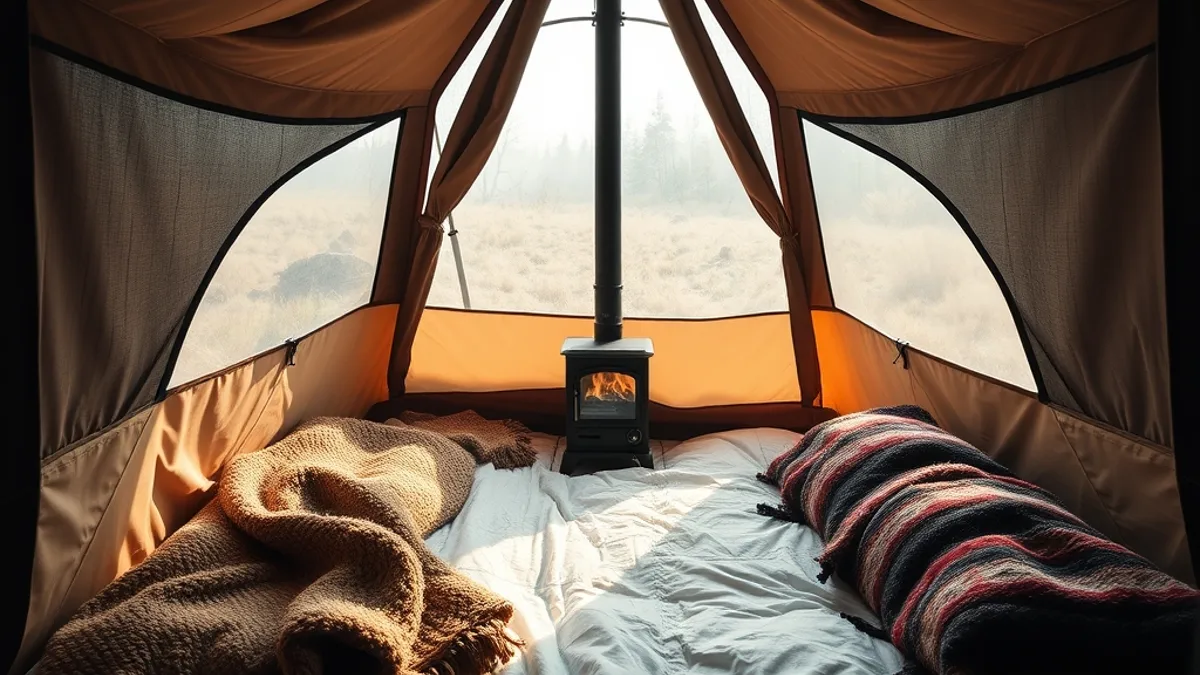
Bathrooms vary more than anything else between sites. Some tents have en-suite bathrooms with hot showers; others use shared facilities that can be 50 to 100 meters away, which matters a lot on a rainy night. Always check the listing before booking. Heating and cooling also range widely: wood stoves and fans are common, but full climate control is rare, so ask what’s provided for the season you’re visiting.
How Much Glamping Costs and When to Book
Glamping prices vary widely by location, season and comfort level, but a realistic starting point is $100 to $400 per night. That range covers simple safari tents in rural fields through to high-end domes with private decks. If you want an en-suite bathroom, expect it to add roughly 20 to 40 percent to the nightly rate. It’s often the single biggest price jump on a listing, so decide early whether a walk to shared facilities bothers you. A site like the lakeside glamping stay we reviewed in Castel Volturno, Italy shows the kind of setting and setup you can get within a mid-range budget.
When to book
Timing matters more than most beginners realize. For summer weekends, book 2 to 4 months ahead; for popular national park areas, aim for around 6 months, as the best tents go first. If your dates are flexible, shoulder season is your friend: May and September typically bring lower prices while the weather stays pleasant in most Northern Hemisphere destinations.
How long should your first stay be?
Most first-timers are happiest with a 2 to 3 night stay. That’s long enough to settle in, adjust to the sounds and rhythms of canvas living and actually enjoy the setting, without feeling bored or paying for more novelty than you need. One night rarely lets you relax into it; a week is better saved for a second trip once you know you love it.
Packing and Preparing for Your First Glamping Trip
Packing for glamping is closer to packing for a cottage weekend than a camping trip, with one big caveat: canvas is a poor insulator. Even on a warm day, the temperature inside your tent can drop around 10°C once the sun goes down, so layers are non-negotiable. Bring a warm hoodie or fleece for evenings around the fire, plus thick socks for cold feet on canvas floors.
The second thing to understand is that “upscale” does not mean “bug-free.” You are still sleeping in or near nature, and many sites deliberately avoid heavy pesticide use. Insect repellent belongs on your list even if the photos show a designer interior. Similarly, if the bathroom is a shared block down the path, you will be grateful for flip-flops and a torch with a head strap so you can keep your hands free at night.
As for gear, resist the urge to bring it. Most sites provide bedding, towels and either a kitchen, a fire pit or an on-site restaurant, so sleeping bags, coolers and camp stoves can stay home. Do check the listing first: some tent sites ban open flames and cooking entirely for safety, which means your meals come from the site or nearby restaurants.
- A small daypack for carrying your torch, water bottle and phone to the washroom block, so you are not juggling items in the dark.
- A book or downloaded entertainment, since many sites have weak or no Wi-Fi and evenings end early once the fire burns down.
- A reusable water bottle, because some sites run on well water or tank systems and may not stock bottled water in the tent.
- Earplugs if you are a light sleeper, since canvas walls let in roosters, owls and wind with almost no filtering.
Choosing the Right Glamping Style for You
Not all glamping is the same experience, and picking the right style matters more than picking the fanciest tent. If you dream of lying in bed and watching stars through a clear ceiling panel, a dome or yurt is your match, since both usually sit in open fields with big sky views. If this is your first time and you want a soft landing, a safari tent with a proper deck gives you a real bed, a covered porch and a coffee spot that feels like a tiny veranda.
Slow travelers should look at farm-based sites. You get animals wandering nearby, fresh local food and a rhythm that suits longer, quieter stays. For scenery that photographs beautifully, lakeside and coastal sites are hard to beat, though the trade-off is real: you will typically drive longer to reach towns, shops and restaurants, so plan your groceries and dinners before you arrive. If that slower, water-and-nature pace appeals to you, our guide to slow-travel glamping on the Masurian lakes shows how it works in practice.
Whichever style you choose, spend twenty minutes on reviews before booking. Reviews reveal what photos hide.
- Search reviews for “noise” to find out whether the site sits under a flight path, next to a road, or simply has thin canvas between you and a party-loving neighbor.
- Look for temperature complaints, since some tents turn into ovens at midday or never quite warm up despite the wood stove.
- Note how far the bathrooms actually are; a “short walk” in the listing can mean a muddy, torch-lit trek after rain.
- Check recent reviews only, as sites change management, add tents or let maintenance slip from one season to the next.
Common First-Time Mistakes to Avoid
Most glamping disappointments come from assumptions, not from the tents themselves. The biggest one is assuming every unit has its own bathroom. Many sites offer a mix of en-suite and shared facilities, and the listing will tell you which is which. If a private bathroom matters to you, confirm it in writing before you pay, because upgrading on arrival is rarely possible on busy weekends.
The second common mistake is booking a single night. One evening is barely enough to settle in, and you will spend half of it figuring out the wood stove, the path to the bathroom and where the good sunrise spot is. Many sites also impose minimum-stay requirements or surcharges on one-night bookings, so the short trip often costs more per night anyway.
Finally, think about season and luggage honestly. July and August bring the biggest crowds and the hottest canvas, so if you travel then, confirm the tent has ventilation, shade or a fan before booking. And when packing, remember the site already covers the basics, so a duffel bag beats a car full of gear.
- Photograph the confirmation email showing your unit type and bathroom setup, so any mix-up at check-in is easy to resolve on the spot.
- Ask about arrival times and check-in routines, since some sites are unmanned and rely on codes, maps or a phone call to find your tent.
- Check the cancellation policy, because weather-dependent trips deserve flexible terms, and small glamping operations often have stricter rules than hotel chains.
- Read what is provided versus what you bring for meals, since some sites include breakfast while others leave you entirely to nearby restaurants or a shared kitchen.
Is Glamping Worth It for Beginners?
So, is glamping worth it for beginners? If the photos tempted you but the price gave you pause, here’s the honest answer: glamping delivers a real bed, solid shelter and immediate access to nature without buying gear or figuring out setup. At $100 to $400 a night, you’re paying for convenience and novelty, not hotel polish. Canvas walls still let in wind and birdsong, and bathrooms may be a short walk away.
The safest first test is a 2 to 3 night stay in shoulder season, when prices dip and the weather is usually kind, with bathroom arrangements confirmed before you book. If you value quiet, scenery and the novelty of sleeping under canvas more than crisp sheets and room service, glamping is absolutely worth trying once. Have you tried it yet, or are you still on the fence? Leave a comment below or share this article with someone who needs a nudge.