If you travel with a dog, you already know the drill: you find a gorgeous safari tent or a dome under the stars, spend twenty minutes picturing your pup on the deck, then read the fine print and discover pets are banned. Most glamping sites either exclude dogs outright or set quiet restrictions that only surface after an email exchange. Owners can burn hours messaging hosts, only to hear no again and again.
This guide to pet-friendly glamping is here to cut that wasted time. I’ll show you where dogs are actually welcome, how to search and filter for stays that take pets, the questions to ask before you book, and when to time your trip for the best odds. We’ll also cover packing for a tent stay with your dog and the etiquette that keeps these policies alive. By the end, you’ll know exactly how to find a site that says yes before you fall in love with a listing.
Where Pet-Friendly Glamping Is Actually Common
The fastest shortcut in pet-friendly glamping is choosing the right kind of site in the first place. Farm stays and safari-tent sites welcome dogs more often than any other category, and the reason is simple: animals are already part of the setting. A host who keeps sheep, goats or chickens has usually built their whole operation around guests who want a rural experience, and a well-behaved dog rarely shocks them.
Setting matters as much as site type. Riverside, lakeside and woodland sites tend to be more dog-friendly than beachfront domes with manicured grounds. A owner of a woodland site expects muddy paws; a beachfront dome operator guarding pristine decking usually does not.
Where policies are easiest to find
Rural sites in the UK, Portugal and the gateways to US national parks tend to list their pet policies openly, right in the listing. Mediterranean resort-style camps, by contrast, often leave pet rules vague or handle them case by case, which means more emails and more uncertainty for you.
One category to skip entirely: overwater structures, treehouses and stilted accommodations almost always exclude pets, for safety and access reasons. Don’t spend your search time on them.
How to Search and Filter for Dog-Welcoming Stays
Finding dog-welcoming stays is mostly a filtering problem, and the trick is to treat every filter as a starting point rather than a guarantee. Platforms host thousands of listings, and pet policies sit in a gray zone: they change often, they vary by unit, and they are rarely the first thing a host updates. That means the filter is your shortlist, not your answer. Here is the process I use, in order, and it has rarely failed me.
- Start with the platform’s “pets allowed” filter. It narrows the field fast, but remember that filters are often outdated. Hosts change policies and platforms don’t always keep up, so treat every filtered result as unconfirmed until you hear it from the host directly.
- Search listing descriptions and reviews for key phrases. Try “dog-friendly”, “pets welcome” and even “well-behaved dogs”. Hosts who use that last phrase are usually signaling a flexible, case-by-case policy worth an email, because it suggests they judge each dog on its merits rather than applying a blanket ban.
- Read recent guest reviews for mentions of dogs. Reviews show you how the policy works in practice: whether the fenced area is real, whether the pet fee was charged as described, and whether other dogs were around during stays. Three-year-old reviews are less useful than the last few months.
- Email the host before booking anything non-refundable. Include your dog’s breed, weight and temperament, and ask one or two specific questions. A short, honest message gets faster and more accurate answers than a generic “is my dog ok?”
Some sites make their pet policy unusually clear, which is always a good sign. Reading a detailed account like this review of a glamping stay at Laghi Nabi in Castel Volturno, Italy shows the kind of practical detail worth looking for: how the ground rules were explained, what the setting was actually like with a dog, and how the host handled questions. Once you have written confirmation from a host, you can book with confidence.
Questions to Ask Before You Book
Once you’ve found a promising site, a short list of questions will save you from surprises at check-in. Money comes first: confirm the pet fee, whether it’s charged per night or per stay, and whether there’s a refundable damage deposit on top. Pet-friendly glamping sites typically charge a pet fee of roughly $20-50 per night or a flat $50-100 per stay, so ask which model applies and factor it into your comparison. Two otherwise identical tents can end up costing very different amounts once pet charges are added, so getting this in writing before you book makes honest price comparison possible. Then move on to the practical rules, ideally in the same message so you get everything documented in one thread.
- Number and size limits. Most sites cap pets at 1-2 dogs per booking, and expect a weight limit at some properties, commonly around 25-30 kg (55-65 lbs). Ask about breed restrictions too, since a few insurers force hosts to exclude certain breeds. If you travel with two dogs, confirm both are welcome rather than assuming the cap applies per tent.
- Unattended dogs and exercise space. Find out whether dogs may ever be left alone in the tent, and whether there’s a fenced area or nearby off-leash space where your dog can burn off energy legally. A site with a secure exercise area makes a multi-day stay far easier.
- Access rules by area. Some sites exclude dogs from dining decks, hot tubs or shared lounges. Knowing this in advance helps you plan meals and downtime without awkward conversations on arrival.
Ask these questions before paying any deposit, not after. Hosts who answer clearly and promptly are usually the ones who run well-organized sites, so the replies themselves tell you something useful about the stay ahead. Save the email thread on your phone so you can show it at check-in if any detail gets disputed, and keep a copy of your dog’s vaccination records alongside your booking confirmation.
Timing Your Trip: Seasons and Booking Windows
Timing matters more for dog owners than for almost any other type of glamping trip. The easiest window to book is the shoulder season of May-June or September-October, when sites are quieter and hosts tend to say yes to pets more readily. With fewer guests to manage, farm stays and woodland sites are often happy to make room for a well-behaved dog, and you get more space to yourself as a bonus.
Summer is a different story. Pet-friendly units are usually a small share of a site’s total inventory, and they sell out first once families start planning July-August trips. For peak summer dates, reserve 2-3 months ahead rather than hoping a dog-friendly tent will still be free at the last minute.
Shoulder-season trips are far more forgiving. In most regions, booking 4-6 weeks out is enough lead time, which makes autumn a great fit for spontaneous travelers. Lakeside destinations are especially pleasant then, and a quieter site means fewer triggers for a reactive dog. If slow, low-season travel appeals to you, consider a trip like glamping by the Masurian lakes, where shoulder-season calm suits dogs beautifully.
One more reason to avoid the hottest weeks: canvas heats up fast. Tents can become uncomfortably warm inside by mid-afternoon, and many sites bar dogs from staying during midsummer heatwaves altogether. If your dates are fixed, ask the host how the tent handles heat and whether shaded pitches are available before you commit.
Packing and Prepping Your Dog for a Tent Stay
A little preparation turns a tent stay from stressful to smooth for both of you. Start with paperwork: many sites ask to see proof of current vaccinations and up-to-date flea and tick treatment at check-in, so carry printed or digital records rather than assuming nobody will ask. Rural and woodland locations often have grass, long vegetation and wildlife, which makes prevention genuinely important, not just a box-ticking exercise.
Think about your dog’s comfort at night, too. Canvas walls amplify every sound, from rustling leaves to distant farm animals, and an unfamiliar sleeping spot can unsettle even a calm dog. Bring a familiar bed or blanket from home so the tent smells like somewhere they already know.
Before you zip the bag, run through this kit:
- Long line and stake-out: lets your dog relax at camp without roaming, useful on sites where full fences are rare and free-roaming livestock is common.
- Extra towels: one for wet grass, one for muddy paws, one for rain — canvas floors and bedding stay much cleaner if you wipe down at the entrance.
- First-aid kit with tick tweezers: include paw-safe antiseptic, bandage material and any regular medication, since vets can be a long drive from rural sites.
Finally, plan a rest day on arrival. A long travel day followed by a brand-new environment is the most common trigger for barking complaints. Give your dog a quiet afternoon to sniff around, settle on their own bed and decompress before you head out on longer adventures.
Glamping Etiquette That Keeps Dogs Welcome
Good etiquette is what keeps pet-friendly glamping alive, and it starts the moment you arrive. Keep your dog leashed on site at all times, even at seemingly relaxed farm stays. Livestock, wildlife, other guests’ children and other dogs can all appear suddenly, and a leash is the simplest way to prevent an incident that reflects badly on every future guest with a dog.
Never Leave Your Dog Alone in the Tent
This rule has no exceptions. A dog left alone in an unfamiliar canvas tent can panic, chew, scratch at the walls or bark for hours, and noise travels through canvas remarkably well. Beyond the complaints it generates, an unattended dog can overheat quickly or injure itself trying to escape. Take your dog with you or arrange with the host in advance if you need to step away.
Protect the Tent, Protect the Policy
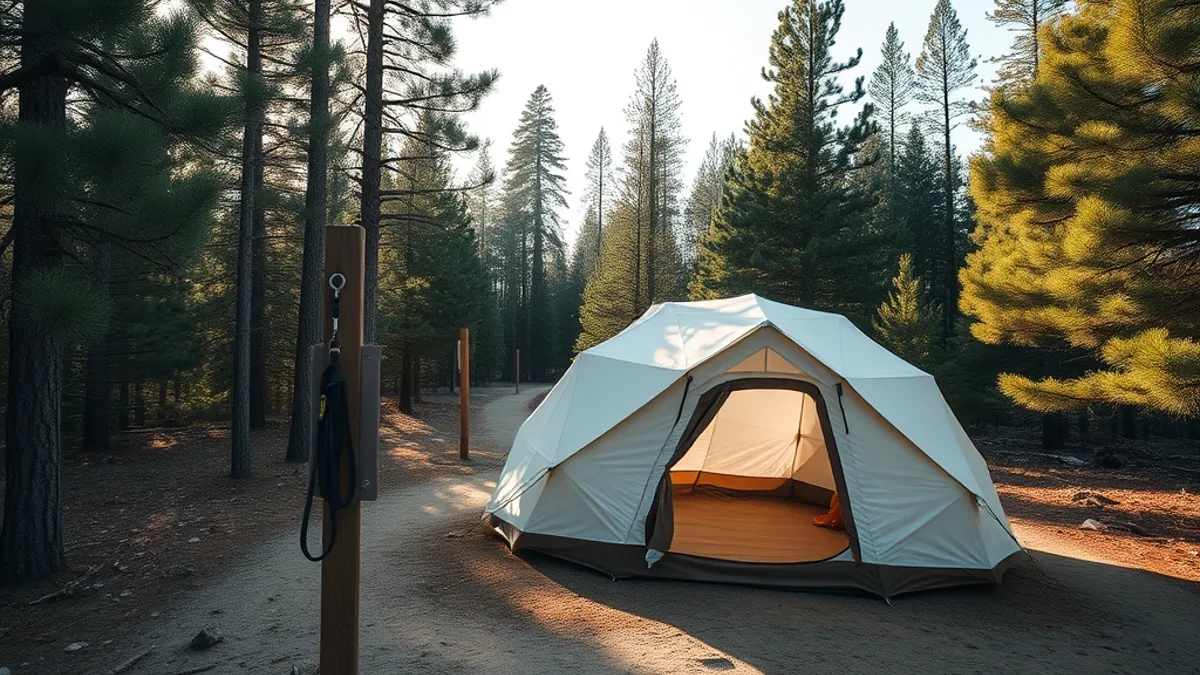
Clean up waste immediately, and rinse muddy paws before entering the tent — most sites provide a hose or a designated washing spot for exactly this. Mud ground into canvas flooring and bedding is one of the fastest ways to lose a damage deposit, and repeated damage is why some hosts quietly drop their pet policy. Waterside sites see this constantly; at a lakeside destination such as this glamping review from Lake Powell in the United States, sandy and muddy paws are simply part of the terrain, so towels by the door are non-negotiable.
Every smooth stay makes it easier for the next guest with a dog. Hosts extend pet-friendly policies based on experience, so a quiet, clean, supervised dog is the best argument for keeping those policies in place — and for more sites opening their tents to four-legged travelers.
The Trail Home
Finding a glamping stay that actually welcomes your dog comes down to targeting the right kind of site and asking the right questions before you pay. Rural farm and woodland sites in shoulder season are where dog owners hear “yes” most often, so start your search there rather than sending dozens of emails into the void.
Once you have a promising candidate, confirm fees, limits and access rules in writing before handing over any money. For summer trips, book 2-3 months out, since pet-friendly units are a small slice of inventory and go quickly. Pack vaccination records and a familiar bed, and once you arrive, keep your dog leashed and supervised on site. If this guide helped you plan a trip with your four-legged companion, leave a comment or share it with a fellow dog owner.