Summer crowds and peak prices are behind you, but autumn raises a new set of questions: which glamping sites actually stay open past September, where is it still warm enough to swim, and how do you keep a canvas tent comfortable when nights turn cold? Most guides cover summer glamping in detail and leave autumn glamping trips vague, which is exactly when they can be at their best.
This guide walks through why autumn works so well for glamping, the regions in Europe, North America and Japan that deliver either warmth or foliage color, and how to tell a genuinely good cold-season site from one that just sounds cozy online. You’ll also find a practical packing list for cold nights, realistic booking windows and price ranges, plus a short plan that pulls it all together before you reserve.
Why Autumn Is Glamping’s Best-Kept Secret
Autumn is when glamping stops being a novelty and starts making sense. Once the late-September-to-mid-October foliage peak passes, shoulder-season rates drop by 20-30%, which means a midweek night in autumn often costs a fraction of what the same tent goes for in July. If you can travel outside the foliage rush, the savings are real and immediate.
Then there’s the comfort side, and this is where glamping quietly beats regular camping. When nights fall to 5-10°C, a campfire, a wood-fired hot tub and a proper duvet on a real bed stop feeling like luxuries and start feeling earned. Insulated canvas, wood stoves and heated floors are exactly what these structures are built for; summer guests rarely use them, autumn guests depend on them.
Quieter sites, better views
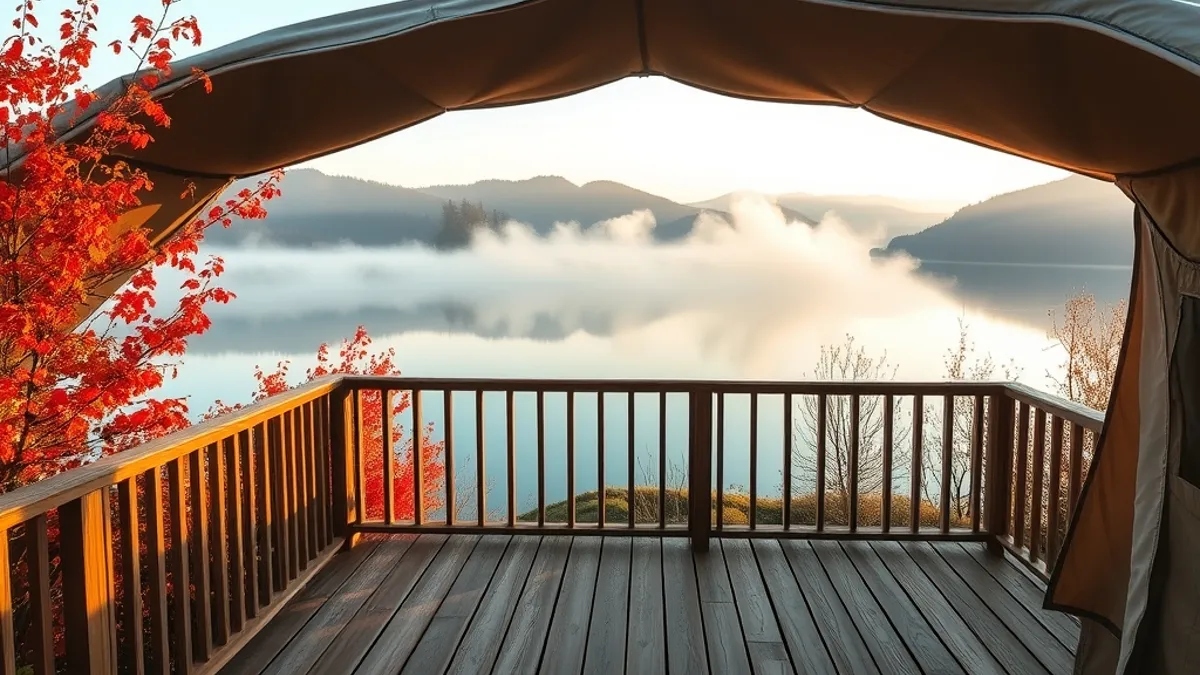
Fewer guests change the whole feel of a site. You get unobstructed views from the deck instead of sharing them with a queue, last-minute upgrades become far easier to arrange, and evenings are quiet enough to hear the fire rather than the neighbors. For travelers who found summer glamping a bit crowded, autumn is the season that converts them. The rest of this guide shows where to go, how to vet a site for genuine cold-weather comfort, and what to pack so the cold works in your favor.
Where to Go in Europe for Autumn Glamping Trips
Southern Europe is the safe bet if warmth is the priority. Portugal’s Gerês mountains and Greece’s Sithonia peninsula stay mild into late October, and on good days swimming is still genuinely possible rather than a dare. Sites here also tend to keep their full facilities running longer than camps further north.
The UK plays a different game: coastal drama instead of warmth. Spots like Combe Martin pair rough autumn seas and empty cliff paths with snug safari tents, and the window is shorter, roughly September to mid October, before the weather turns properly grim.
For color and stillness, few places beat Poland’s Masurian Lake District, which turns red and gold through October while lakeside sites sit nearly empty. If slow mornings, mist over the water and total quiet sound appealing, our Masurian Lake glamping guide covers the region in detail.
Italy works two ways, depending on the trip you want:
- Tuscan farm camps such as Bucine put you in the middle of harvest season, with olive and grape work happening around you and farm-to-table dinners that peak in autumn rather than summer.
- Coastal Campania trades harvest for warmth, holding onto late-September nights mild enough for dinner outdoors and a last swim of the year.
Autumn Glamping in North America and Japan
The US Southwest is arguably at its best in autumn. Around Lake Powell and the Grand Staircase area, late September through October brings warm days, cool nights and none of the punishing summer heat, which makes time on the water and on the trail far more pleasant. We spent nights here and wrote up the experience in our Under Canvas Lake Powell – Grand Staircase review.
New England and the Great Lakes run on foliage time instead. Peak color lands in late September to mid October, and those weekends are the most contested dates of the autumn season, so book 2-3 months out or expect to compromise on location.
Japan offers something none of the others do: farm camping tied to the rice harvest. The Katori area, east of Tokyo, is at its best in October, with mild days, crisp evenings and fields turning gold as the harvest comes in.
- In the Southwest, plan activities for the middle of the day and evenings by the fire; dark falls early, and stargazing over the water is a genuine highlight once the summer haze is gone.
- For foliage regions, aim for midweek nights within the peak window, since weekend availability vanishes first and midweek sites are noticeably quieter.
- In Katori, look for farm-stay style camps that let you join or at least observe harvest work, which turns the stay into something closer to a cultural trip than a tent booking.
How to Spot a Genuinely Good Autumn Site
The difference between a magical autumn glamping trip and a soggy disappointment usually comes down to how well the site is built for cold weather. Marketing photos can make any tent look inviting, so you need to dig into the practical details before you book. Heating is the first thing to check, and “cozy” in a listing description means nothing on its own.
Look for concrete features: a wood stove inside the tent, insulated canvas rather than thin polyester, or heated floors in a cabin. If the description only mentions blankets and fairy lights, ask the host directly how the unit is heated and how cold it actually gets inside at night. A good host will answer quickly and specifically.
Opening dates matter just as much. Many European campsites shut down in early October, so a gorgeous listing may not even be available when you want to travel. Check the site’s stated season, and if you’re booking for mid or late October, confirm by email that your chosen unit will be open and staffed.
Finally, read reviews from people who actually stayed in autumn. Summer reviewers never test whether a tent gets damp, whether the paths turn to mud, or whether the wood stove keeps the space warm at 3 a.m. Filter reviews by recent months and search them for those exact words.
- Ask about firewood: some sites include a daily supply of stove logs in the rate, while others charge per bundle or leave you to forage, which changes both your budget and your evening routine.
- Check the tent’s position: units on exposed ridges lose heat faster and take more wind, while those tucked into a tree line or a sheltered hollow stay warmer and quieter.
- Look at the washroom setup: a heated shower block a short walk from your tent is a very different experience in October from an unheated ablution block at the far end of the site.
- Confirm lighting and power: autumn nights are long, so ask whether the unit has working lamps, USB charging or mains power, since some low-season sites reduce facilities.
- Read the cancellation terms: autumn weather is less predictable than summer, so flexible booking conditions are worth more now than at any other time of year.
One useful shortcut is to find a detailed write-up of a site you’re considering, such as this Laghi Nabi review of glamping in Castel Volturno, Italy, which shows the kind of first-hand detail on heating, comfort and facilities that listings rarely provide. Reviews like that tell you what a site is genuinely like once the summer crowds are gone.
What to Pack for Autumn Glamping Trips
Packing for autumn glamping is really packing for two seasons in one day. Afternoons can be mild enough for a T-shirt, while nights commonly drop to 5-10°C (40-50°F), and a well-thought-out kit makes that swing comfortable rather than miserable. The trick is to think in systems rather than single items: layers that work together, footwear that handles damp ground, and a few small comforts that make the dark hours pleasant instead of something you simply endure. Canvas tents and cabins hold warmth well once you’re settled, but getting warm in the first place is on you. Work through the steps below before you zip up your bag, and you’ll be ready for whatever the evening throws at you.
- Build your layering system first. Start with merino base layers for your top and bottom, add a midweight fleece, and finish with a windproof shell. Three layers cover a daily swing of around 15 degrees, letting you strip down on mild afternoons and bundle up the moment the sun drops. Merino is worth the extra cost here because it stays warm even if you work up a sweat on an afternoon hike, and it resists the damp air that autumn campsites almost always have.
- Sort out your footwear and socks. Waterproof boots are non-negotiable, because morning grass and woodland paths stay damp well into the day. Pack a spare pair of wool socks per day of your trip so a wet morning walk never ruins your evening. Keep one pair sacred for sleeping only — dry socks at bedtime do more for warmth than an extra blanket.
- Prepare for the dark hours. Bring a headlamp with fresh batteries, a thermos for hot drinks, and slip-on shoes for night trips to the washroom. Evenings are long in autumn, so a physical book or downloaded films on a tablet will earn their place in your bag. A headlamp beats a phone torch because it leaves your hands free for zips, laces and firewood.
- Edit out the summer extras. Swimwear is only worth packing for southern Europe, where the sea can stay swimmable into late October. Leave the bug spray at home unless you’re traveling in early September, when a few late mosquitoes may still linger. Skipping these items frees up space for the bulkier cold-weather gear you’ll actually use.
- Add small comfort boosters. A hot water bottle, thick bed socks and a small pack of hand warmers weigh almost nothing but transform a cold night in a canvas tent. Toss in a lip balm and hand cream too, since cool, dry air chaps skin faster than most people expect.
One last tip: pack your layers where you can reach them without unpacking everything. The temperature drop from dinner to bedtime is fast, and you’ll thank yourself for keeping the fleece on top of the bag rather than buried at the bottom of it. The same logic applies to your thermos and headlamp — the things you need after dark should never live at the bottom of a duffel bag.
Booking Windows and What Autumn Nights Cost
Autumn glamping rewards planners more than summer travel does, but not everywhere demands the same lead time. The rule of thumb is simple: the more famous the foliage, the earlier you need to book. Peak weekends in New England, the UK’s most popular countryside regions and the Alps fill up fast, so treat those dates as your priority when you sit down to reserve.
When you can book later
Southern Europe and the US Southwest are far more forgiving. Because these regions trade on mild weather rather than a short color peak, availability typically holds up closer to your travel dates. You can often book a few weeks out and still find a good heated tent or cabin, especially if you’re flexible on exact nights. That flexibility also opens the door to last-minute deals, since some operators would rather discount an empty canvas tent than leave it cold for the season.
What autumn nights actually cost
Expect to pay roughly $120-$350 per night depending on region and tent type, with midweek stays usually sitting at the lower end of that range. A basic safari tent in rural Portugal will land somewhere very different from a wood-fired hot tub cabin in Vermont, so treat these as planning figures rather than quotes, and check current prices with operators directly.
Timing matters as much as location. Late October and early November tend to be the cheapest stretch of the season in most regions, once the foliage crowds have gone home. If your goal is a premium site you couldn’t normally afford, target a Tuesday-to-Thursday stay in that window. You’ll often get the same stove, the same views and the same duvet-covered bed for a fraction of what the same site charges at its busiest, and you’ll have the wood store and the lounge to yourself besides.
Your Autumn Glamping Plan in Brief
Autumn solves the problem that keeps most glampers away: the summer crowds and peak prices are gone, but the season still delivers. The key is deciding what you actually want. If warmth is the priority, pick a mild southern region that stays pleasant into late October. If you’re chasing color, choose a foliage destination and accept that peak weekends book out first.
Before you pay a deposit, vet the site properly: confirm real heating, that it stays open through October, and that there’s covered space for rainy evenings. Pack in layers for cold nights, which commonly drop to 5-10°C even when afternoons feel mild. And reserve 2-3 months out for foliage-peak weekends to lock in the best rates, with shoulder-season discounts of 20-30% available on quieter dates. If this helped you plan your trip, leave a comment or share the article with a fellow traveler.