You’ve found the perfect resort, but then comes the hard part: choosing a room. The photos look gorgeous, yet the labels are vague. Is an ocean view worth the jump in price? Will a garden room feel dark and far away? Does a swim-out really mean you step straight into the water? Without clear answers, it’s easy to pay extra for a view you barely see or miss out on a feature you’d use every day.
This guide breaks down the most common resort room categories so you can match them to how you actually travel. We’ll explain why the labels confuse so many travelers, what ocean view and garden rooms really offer, how swim-out access works, and how to choose between the three. You’ll also get practical booking tips, from requesting a specific building to timing your reservation for high season, so the room you pay for is the room you get.
Why Resort Room Categories Confuse Travelers
The first thing to understand is that resort room categories describe location and access, not size or quality. An ocean view room isn’t automatically bigger or more luxurious than a garden room; it simply sits in a spot with water in the sightline. A swim-out isn’t a higher tier of comfort; it’s a ground-floor unit with a terrace that opens into a pool. Once you read the labels this way, comparing categories becomes much easier.
Too many categories, too small a price gap
A single resort can sell six to ten room categories, often with small price gaps between them but very different experiences in practice. Two categories might differ by only a modest percentage, yet one puts you steps from the pool while the other overlooks a parking area. The price ladder rarely tells you which differences actually matter.
No standard naming across brands
Category names are also not standardized across hotel groups. One brand’s “deluxe ocean view” may offer the same sightline and layout as another brand’s “premium garden.” A “junior suite” at one property can be smaller than a standard room at another. This is why it pays to look past the label and ask concrete questions: which floor, which building, what exactly do you see from the terrace, and how far is the walk to the beach or pool? The answers tell you far more than the category name does, and they help you spot when a small upgrade is genuinely worth it.
Ocean View Rooms: What the View Is Really Worth
An ocean view room comes with a balcony or terrace angled toward the water, often from the second floor and up. That elevation matters: the higher you are, the more likely you’ll get an open, sweeping view instead of rooftops and palm fronds in the foreground. For many travelers, this is the room where the vacation actually happens, coffee at sunrise, a drink at sunset, all from your own terrace.
View vs. oceanfront: know the difference
Here’s where the fine print matters. Ocean view can mean a partial or side view, where you crane your neck to catch a sliver of water between buildings. Oceanfront, by contrast, means the room directly faces the water with nothing in between. If seeing the sea head-on is important to you, confirm which one you’re booking, because the two categories can carry very different sightlines at the same property. If you love ending the day watching the light change over the water, it’s worth reading up on resorts made for sunset evenings before you choose.
What the premium gets you
Ocean view rooms typically cost 15-30% more than garden view rooms at the same resort. The best value usually sits on the higher floors, where the view is widest for the same category price. This upgrade makes the most sense for travelers who spend real time on the balcony, especially at sunrise and sunset. If you’re the type who leaves the room after breakfast and only returns to sleep, you’re paying for a view you’ll rarely see, and a garden room may serve you better.
Garden View Rooms: The Quiet Budget Pick
Garden view rooms are usually set in interior blocks surrounded by landscaping, typically a 3-8 minute walk from the beach. That short stroll is the trade-off for a lower price, and for many travelers it’s a fair one. You trade an instant beach access for quieter surroundings and, often, a more generous room.
More space for the same money
One of the best-kept secrets of garden categories is size. At the same price tier, garden rooms often measure 5-10% larger than entry-level view categories. If you’re traveling with a family or simply hate feeling cramped, that extra space can matter more than a water view you only glance at on your way out the door.
The quietest buildings on the property
Garden blocks are also typically the calmest spots at a resort. They sit away from poolside music, beachfront entertainment and the evening traffic of guests heading to dinner. Light sleepers and early risers tend to notice the difference immediately. If your routine is breakfast, beach, pool, excursions and dinner, and you only use the room to shower and sleep, a garden view is usually the smartest spend. You keep the money you’d pay for a view and put it toward experiences instead, without giving up much that you’d actually use.
Swim-Out Rooms: Direct Pool Access Explained
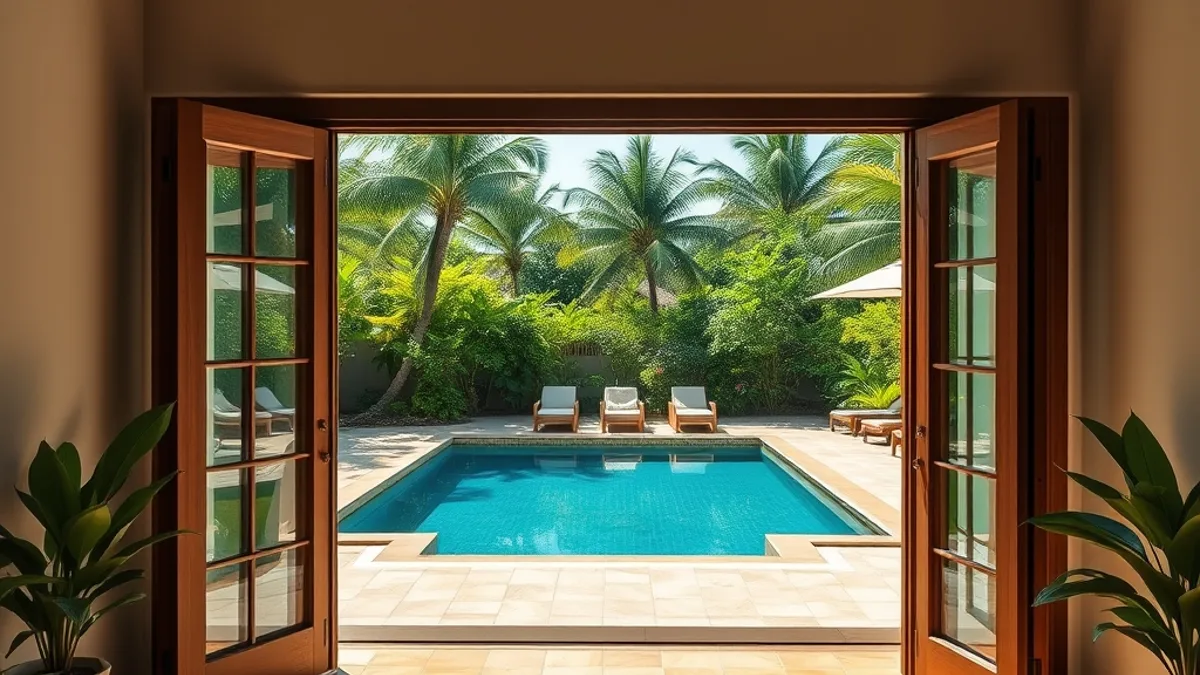
Swim-out rooms are the category everyone gravitates toward on the resort website’s photo gallery, and for good reason. These are ground-floor units whose terrace opens directly into a pool, so you can walk out your back door and step straight into the water. No elevators, no towel ritual at the main pool, no hunting for loungers before breakfast.
That convenience comes at a price. Swim-out rooms typically command the biggest premium of any category, commonly 30-50% above standard rooms at the same resort. Before you commit that budget, there is one detail worth clarifying with the resort: who else uses that pool?
Shared pool or semi-private?
Most swim-out rooms open onto a pool that is shared with the entire swim-out block, which can mean a dozen or more neighboring terraces all feeding into the same water. A smaller number of resorts offer genuinely semi-private pools, shared between just two or four units. The difference in atmosphere is significant, so ask specifically how many rooms share the pool before you book.
Swim-out rooms are best suited to two types of travelers. Families with small children love the easy in-and-out access, since parents can keep one eye on the kids from the terrace. And guests who genuinely plan to spend hours in the water get real value from the premium. If you are the type who swims once a day and prefers the beach, that 30-50% markup is probably better spent elsewhere.
How to Choose Between the Three Categories
Choosing between ocean view, garden and swim-out comes down to one honest question: how do you actually use a hotel room? The right answer differs from couple to couple and family to family, and matching the category to your habits matters far more than chasing the fanciest-sounding name. A room you never see is money spent on nothing, while a room that fits your routine pays for itself in daily enjoyment.
- Match the category to your room time. If you love lingering on a balcony with coffee at sunrise or a drink at sunset, ocean view is your category. If you spend all day on excursions, at the beach bar or in the pool and only use the room to sleep and shower, garden view delivers the best value. If the pool is the entire point of the trip, swim-out is worth the premium, since stepping from your terrace straight into water changes the whole rhythm of a stay.
- Ask the resort for specifics before paying for an upgrade. Request the exact floor, building and sightline. A vague promise of “ocean view” can mean a sliver of water between two palm trees, so get a clear description in writing or by email before you commit. Reputable reservations teams will answer these questions without hesitation.
- Compare the price gap. If ocean view costs under 20% more than garden view at the same resort, that is usually the sweet spot for couples, since the upgrade is modest relative to the daily enjoyment it adds. Once the gap widens, weigh it against how many waking hours you will actually spend looking at that view.
Work through these three steps and the decision almost makes itself. The most expensive room is rarely the best value, but the cheapest room that ignores how you travel is no bargain either. Be honest about your habits, get the details confirmed before you pay, and let the resort’s answers guide the final choice rather than the brochure photos.
Booking Tips for Getting the Right Room Category
A little strategy at booking time goes a long way with resort room categories, especially when inventory is tight. The three categories behave very differently in the booking system, so each needs its own approach. Garden view rooms are usually the easiest to secure because they sit in interior blocks with more units, while swim-out rooms and high-floor ocean view rooms sell out first and reward early planning.
Swim-out rooms deserve the most urgency. Because they occupy ground-floor space that cannot be stacked like a tower block, the inventory is genuinely small, often just a handful of units per resort. For high season travel between December and April, book 4-6 months ahead to have a realistic shot at the dates you want. Waiting until a month out typically means choosing between leftover units in less desirable positions or paying a steep last-minute premium.
- Write your preferences into the booking notes. Request a specific floor or building at the time of booking rather than waiting until arrival, when the best positions have typically been assigned.
- Reconfirm 2-3 weeks before arrival. A short email to the resort restating your request dramatically improves the odds that housekeeping and front-desk teams can honor it.
- Ask about upgrades at check-in. Both free and paid upgrades are common at the desk, and ocean view and swim-out blocks often have last-minute openings in shoulder season when bookings shuffle.
None of these steps guarantees an upgrade, and policies vary widely between chains and independent resorts. But travelers who ask politely and early consistently end up with better sightlines, better floors and sometimes a nicer room for the same money. The effort takes minutes, and the payoff can be a week in a room you would have paid extra for.
Picking Your Room Category With Confidence
Those booking photos and vague labels make it hard to know whether an ocean view, garden or swim-out room is worth the price jump. The short answer: ocean view suits balcony time, garden suits budget and quiet, and swim-out suits pool-first stays. With premiums ranging roughly 15-50% between categories, the right choice comes down to how many hours you actually spend in your room each day.
A couple who watches the sunset from the balcony will feel the ocean view upgrade was money well spent. A traveler who leaves the room at breakfast and returns at midnight won’t notice the difference. And confirming your exact sightline with the resort, plus booking swim-out rooms early, removes most of the guesswork. Have a category question or a room upgrade story of your own? Leave a comment or share this article.