A resort that looks perfect for adults can fall apart fast with a toddler. That infinity pool might have no shallow end, the kids’ club might start at an age your child won’t reach for two more years, and the 8:30 am breakfast might begin long after your little one has been awake since dawn. The photos rarely tell you any of this, which is why a resort stay with a toddler needs a different kind of research before you book.
The good news is that a handful of practical checks will surface most problems in advance. This guide walks through when to book, how to choose the right room setup, what to look for in pools, kids’ clubs and babysitting, how to handle dining times, how to plan each day around naps, and what to pack that resorts tend to forget. A short checklist at the end pulls it all together so you can book with confidence.
When to Book a Resort Stay With a Toddler
Family rooms at resorts are the first thing to disappear. If you are aiming for peak summer between June and August, or any stretch of school holidays, plan to book around 4-6 months ahead. Leave it later and you will often find the family rooms gone, leaving you to squeeze a crib into a standard room or pay for two connecting units.
Why shoulder seasons work in your favor
If your dates are flexible, aim for May-June or September-October instead. Rates typically drop 15-30% compared to high season, and the pools and buffets are noticeably less crowded. With a toddler, thinner crowds matter more than the savings: shorter lines at breakfast, easier parking at the pool, and staff with more time to help when you need a high chair or a warmed bottle.
Request the essentials at booking time
Do not wait until check-in to ask for a crib or cot. Confirm availability when you book, and mention the mini-fridge for milk and snacks in the same message. Many resorts provide cribs free of charge, though some charge a nightly fee, so ask about the cost upfront. An arrival-day scramble for a sleeping spot is a rough way to start any trip, especially if you land in the evening with a tired toddler.
Choosing the Right Room Setup
With a toddler, the distance from your room to the pool becomes a daily logistics problem. You will be making that walk multiple times a day, usually carrying a child in one arm and pushing a stroller loaded with swim gear in the other. A ground-floor room, or one within a 2-3 minute walk of the main pool and restaurant, removes most of that friction. Elevators with a stroller are doable once; five times a day is another story. Ground-floor rooms also make sandy, wet exits from the pool far less painful, since you can step straight outside to rinse off rather than trek through a lobby.
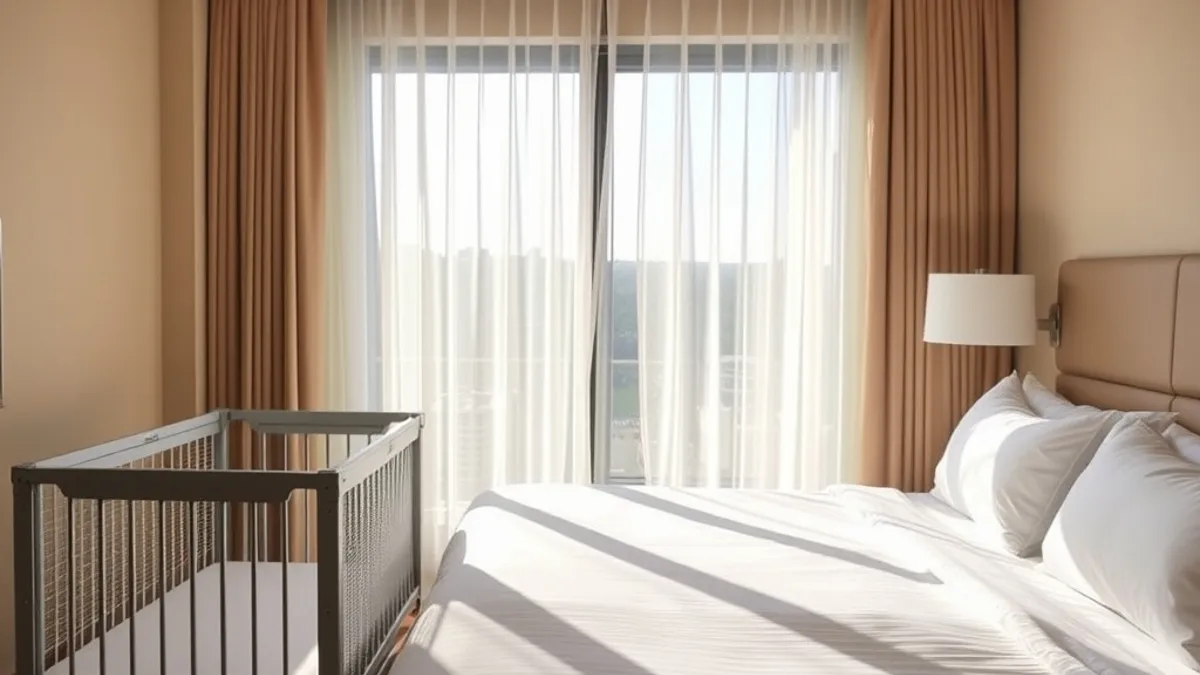
Just as important is where everyone sleeps. If your toddler still naps, a separate sleeping area or a suite lets you keep the 1-2 hour midday nap going while a parent reads quietly in the other space. In a single open room, nap time means everyone whispers in the dark for two hours, which gets old by day three. A connecting room or a suite with a sofa bed also gives adults an evening after the toddler is asleep, which matters more than you think on a week-long trip.
Before you confirm anything, run through this list with the resort:
- Mini-fridge: ask for one to store milk, yogurt and cut fruit, and confirm whether it comes standard or carries a nightly charge, since some resorts only add it as a paid upgrade.
- Balcony safety: request a room with solid, closely spaced railings or no balcony at all; vertical slat railings and climbable furniture near the edge are a real concern with a climbing toddler.
- Flooring and layout: ask whether the room has carpet or tile and where the bathroom door sits, since an early-rising toddler in a tiled room can wake the whole family at 5:30 am.
- Blackout options: check if the resort provides blackout curtains or accepts portable covers, because light mornings shorten naps and nights fast.
Pools, Kids’ Clubs and Babysitting
The pool is where toddlers spend most of a resort vacation, so its design matters more than any waterslide. What you want is a shaded, zero-entry or shallow toddler pool under 40 cm deep, where a wobbly walker can splash and sit without deep water an arm’s length away. Fenced is even better, since it removes the constant fear of a child bolting toward the big pool while you juggle towels and sunscreen. Look at resort photos and map views carefully, and email to confirm the toddler pool setup before booking.
Kids’ clubs look great in brochures, but read the fine print: most accept children only from age 3-4, often with toilet independence required. If your toddler is younger, your realistic childcare option is paid babysitting, which typically runs $15-30 per hour at family resorts. Ask in advance how sitters are vetted and whether you can request the same person for consecutive evenings, since familiar faces matter enormously at this age.
One detail parents rarely think to ask: lifeguard coverage. Confirm the hours lifeguards are on duty so you know exactly when the pool becomes effectively unsupervised, and plan your swims accordingly.
- Shade over water: ask whether umbrellas or canopies cover the toddler pool itself, not just loungers, because midday shade is the difference between a happy swim and an overheated child.
- Pool water temperature: in cooler months or at altitude, an unheated pool can be too cold for a toddler to enjoy, so it is worth confirming before you promise your child a swimming week.
- Babysitting booking lead time: ask how far ahead sitters need reserving; during school holidays the pool of available sitters can shrink quickly.
- Club trial visits: some resorts let you sit in with your child for a first club session, which is a gentle way to test whether a shy toddler will accept drop-off care later.
Food and Dining Times
Food can make or break a resort stay with a toddler, and the first thing to check is breakfast timing. Most family resorts serve their buffet breakfast from around 7:00 to 10:30 am, but this varies, so confirm the exact window before you book. If your toddler wakes at 6 am and breakfast opens at 7:30, you will be managing a hungry, cranky little one with nothing to snack on. Ask whether the kitchen or bar can offer fruit, bread or yogurt earlier, or plan to bring your own breakfast supplies for the first hour.
Beyond the buffet
Do not assume that high chairs and kids’ menus are available everywhere on site. Many larger resorts have several restaurants, and only the main buffet may be properly set up for small children. Email the resort and ask specifically about high chairs and children’s options at each venue, including poolside snack bars. A restaurant with a beautiful view but no high chair is a stressful place to eat with a two-year-old.
Finally, ask whether the kitchen can prepare simple off-menu dishes. Plain pasta, steamed vegetables, mashed potatoes or a boiled egg are usually easy for a resort kitchen to make, but only if you request them. Asking in advance, ideally before arrival, gives the kitchen time to accommodate you and gives you peace of mind that your toddler will eat something on day one.
Building a Toddler-Friendly Daily Plan
A toddler’s day has a rhythm, and the resorts that work best are the ones where you can plan around it rather than fight it. Before you book anything, sketch out what a realistic day will look like on paper. Most toddlers thrive on familiar anchors: a predictable wake-up, a proper breakfast, active play in the morning, a solid rest after lunch, and something calm in the late afternoon. If your holiday plan mirrors that shape, days tend to run smoothly. If it ignores it, you will feel it by day two.
- Protect the midday nap. Block out the early afternoon for quiet time in the room with the curtains closed. Treat it as non-negotiable when planning anything else, because an overtired toddler affects the whole family’s evening.
- Book excursions in half-day formats only. A full-day boat trip or coach tour will almost certainly collide with nap time, so choose shorter outings that end before lunch or start after it.
- Schedule pool time before 11 am or after 3 pm. This keeps your toddler out of the strongest sun and lines up neatly with the rest period in between.
- Plan one anchor activity per day. One thing, such as a morning at the toddler pool or a short beach walk, is enough. Everything else should be optional.
- Leave buffer time around every transfer. Add extra minutes for getting a toddler dressed, finding lost sandals and calming the occasional tantrum, so a delay never derails the whole day.
This approach feels less ambitious than a packed itinerary, and that is the point. A toddler-friendly plan trades quantity for calm, and it usually means the adults get to enjoy the resort too, instead of spending every day managing a meltdown in a shuttle bus. Write the daily rhythm on your phone’s notes app and check new plans against it before saying yes. Small compromises, like shifting dinner earlier or skipping a second excursion, cost you little but protect the routine that keeps everyone happy. In practice, the families who enjoy resort holidays most are rarely the ones doing the most; they are the ones whose days leave room for a nap, a swim and an unhurried dinner.
Packing the Details Resorts Forget
Most resorts cover the basics for adults, but toddler-specific gear is where they fall short, and resort shops know it. Anything you forget, from swim diapers to children’s sunscreen, tends to be sold at a steep premium, if it is stocked at all. A little packing discipline before you leave saves both money and stress, and it also means you can skip the overpriced gift-shop dash on arrival day.
- A foldable travel stroller: pick one that folds small enough to fit in a taxi or shuttle and that you can carry one-handed while holding your toddler through the lobby.
- A portable blackout cover: resort curtains are rarely thick enough, and a suction or clip-on cover makes the room dark enough for naps and early bedtimes.
- Familiar sleep items: the comfort object, the exact sleep sack and the white noise app your toddler knows from home make the unfamiliar crib feel safe.
- Swim diapers and rash guards: pack several of each, since a toddler can go through more swim diapers in a week than you expect, and replacements on site cost a premium.
- A thermometer and basic fever medicine: bring your own so a mild evening fever does not turn into a midnight hunt for an open pharmacy.
- Rehydration sachets and bandages: sun, heat and new foods can upset small stomachs, and having these on hand saves a trip to the shop.
- A lightweight beach or pool bag: you will be hauling towels, snacks, sunscreen and toys back and forth daily, so a dedicated bag keeps the room from turning into a pile of wet gear.
Before you travel, download the resort map from the website or app and save it offline. Resort maps are also handy for checking whether your room type sits near the pool or a noisy bar, so you can request a quieter spot when you confirm your booking. While you are at it, note the nearest pharmacy and clinic to the resort, and how you would reach them. You will almost certainly never need them, but knowing exactly where they are turns a potential emergency into a minor errand.
The Toddler Resort Checklist in Short
So what should you actually check before booking? Start with timing: lock in your dates early if you’re aiming for peak summer or school holiday weeks, when family rooms go first, and consider a shoulder season if your calendar is flexible. Get the crib or cot and your room location confirmed when you reserve, not when you arrive with a sleepy toddler in tow. A room close to the pool and dining areas makes a real difference once you’re hauling a stroller and a beach bag several times a day.
Then match the resort to your toddler’s rhythm. Look for a shaded, shallow toddler pool, ask how the kids’ club and babysitting options fit your child’s age, and make sure breakfast and dining hours line up with early wake-ups and the midday nap. Run through this short checklist before you pay the deposit, and a trip that could go sideways becomes a relaxed family stay instead. If this helped you plan, leave a comment or share the article with another parent.