You found a stunning off-grid glamping stay: a canvas tent on a hillside, a fire pit, total quiet. Then a detail hits you. There is no electricity. No sockets for your phone, no fridge for your food, and no switch to flick when the sun goes down. If you have never stayed somewhere without mains power, it is normal to wonder how you will cope.
The good news is that off-grid glamping is far more manageable than it sounds, as long as you know what to expect and pack accordingly. This guide walks you through what off-grid glamping actually means day to day, how to book the right site, how to handle power and charging without electricity, and how to plan food, water and cooking. We will also cover the realities of composting toilets and cold nights, the best seasons to go, and the mindset that turns a lack of plugs into the best part of the trip.
What Off-Grid Glamping Actually Means
Off-grid glamping simply means staying in a comfortable, often luxurious setup that is not connected to the electrical grid. There are no wall sockets, no overhead lights and no electric appliances. Lighting typically comes from solar lamps, candles or propane lanterns, and hosts usually provide at least some of these. The atmosphere at night is warm and low, which many guests end up loving, but it pays to bring your own backup light source too.
Water and showers
Water works differently as well. At many sites it is hand-pumped from a well or gravity-fed from a tank, so you may need to fill containers yourself rather than simply turning a tap. Showers can be solar-heated bags, bucket showers or communal wash blocks, and hot water often depends on how much sun the day has offered. It is a slower rhythm than home, but it works.
Cooking and food storage
Cooking is usually done on a gas ring or over a wood fire, and there is no fridge anywhere on site. That means food storage is entirely your responsibility: a good cooler, smart meal planning and realistic ideas about what will keep. Once you accept that trade-off, the rest of the experience is remarkably easy to enjoy.
How to Book an Off-Grid Glamping Stay
Off-grid sites are often small, sometimes just one or two tents on a private patch of land, so the best spots go quickly. A little planning before you book saves disappointment and surprises later. Follow these steps:
- Reserve early for summer weekends. Book 2-3 months ahead if you want a May to September weekend, when sites in the typical $120-300 per night range fill fastest. Midweek dates are usually easier to find and often quieter, which suits the whole off-grid mood better anyway.
- Read the listing carefully. Look for phrases like “solar only”, “no mains power” or “compost toilet”. These tell you exactly what you are signing up for and what you need to bring. Also check the fine print on pets, fires and arrival times, since small sites often have stricter rules than big campgrounds.
- Message the host before paying. Confirm what is actually provided: bedding, lanterns, drinking water and cooking fuel. Hosts vary widely, and a two-line message removes most of the guesswork. It is also a good moment to ask about the track up to the site, since some are reached by rough lanes where a low car will struggle, especially after rain.
Doing this homework takes maybe twenty minutes, and it makes the difference between a smooth stay and a cold, dark first evening. Remember that many sites sit 30-60 minutes’ drive from the nearest town, so forgetting something important is not a quick fix. If you want a sense of how a well-run off-grid stay works in practice, this review of glamping in Combe Martin, United Kingdom shows what a good setup looks like on the ground.
Power and Charging Without Electricity
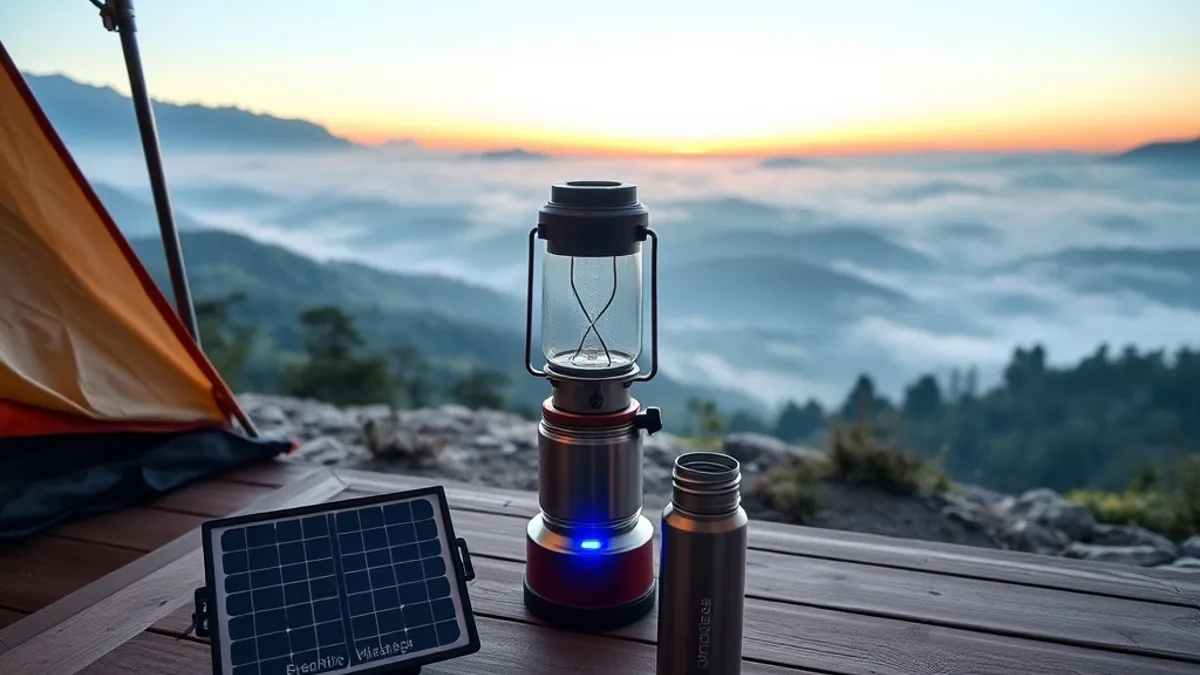
Staying charged without wall sockets is mostly about planning your charging windows. A 10,000 mAh power bank is the single most useful item you can pack, since it holds enough capacity to charge a phone 2-3 times over a weekend. Pair it with a small folding solar panel and you can top it up daily, provided the weather cooperates. Some sites, like the lakeside glamping retreat in Castel Volturno, Italy, lean on solar power themselves, so arrival with a full battery is still your safest bet.
Timing matters more than gear. Solar panels need 4-6 hours of direct sun to be reliable, so plan your charging at midday rather than leaving the panel in shifting afternoon shade. Put the panel out after breakfast, clip your devices on, and collect everything before the light drops.
- Headlamps beat handheld torches. Choose one with a red-light mode: it keeps both hands free for cooking or finding things in the tent, and the soft red beam does not blast glare into everyone’s night vision.
- Charge everything before you leave home. Phones, power banks, headlamps and camera batteries should all arrive at 100%, because cloudy days can stall solar charging entirely.
- Put phones in airplane mode. Signal hunting drains batteries fast; if you only need the phone for photos and offline maps, airplane mode can stretch a single charge across two days.
With those habits in place, a weekend without sockets stops feeling like a limitation and starts feeling like a rhythm.
Food, Water and Cooking Off the Grid
Without a fridge, your cooler becomes the most important piece of kit you pack. A good hard-sided cooler with ice blocks will keep perishables safe for roughly 2-3 days, so build your meal plan around that window. Eat the most fragile items first — fresh meat and dairy on night one — and save hardy staples like pasta, root vegetables and canned goods for later in the stay.
One-pot meals are your best friend here. Think chili, curry, stew or pasta dishes cooked on a gas stove or over a wood fire, built from ingredients that need no refrigeration until you open them. Drinking water matters just as much as food: plan on 2-3 liters per person per day, and check with your host whether site water is safe to drink or you should bring your own.
Don’t forget the morning routine, either. With no microwave or electric kettle on site, a way to boil water is essential for coffee, tea and rehydrating meals. On our stay at a farm stay in Tuscany (you can read about it in this Agricampeggio Madonna di Pogi review), a simple camping kettle and shared outdoor kitchen covered everything we needed.
- Pack ice blocks rather than loose ice — they melt slower and won’t flood your food as they thaw.
- Freeze meat at home and let it defrost slowly in the cooler, doubling as extra ice for the first day.
- Keep the cooler in the shade and open it as rarely as possible; every peek cuts its effective life short.
- Bring a small cutting board, a sharp knife and biodegradable soap — communal kitchens don’t always supply them.
- Decant oil, spices and sauces into small containers so you’re not hauling full bottles.
Comfort, Hygiene and Night-Time Realities
Off-grid glamping is comfortable, but “comfortable” means something slightly different out here. Most sites skip flushing toilets and hot-on-demand showers in favor of composting toilets, solar-heated or bucket showers, and shared wash blocks. They’re usually clean and well maintained, but expect a short walk from your tent and a slower pace to the whole routine.
If a bucket shower sounds daunting, keep an open mind. A few liters of sun-warmed water poured steadily over your head genuinely does the job, and it makes you far more conscious of how much water you use — which is rather the point. Bring a quick-dry towel and flip-flops for the walk to communal facilities.
The 3 a.m. temperature drop
The biggest surprise for first-timers is how cold canvas gets at night. A tent that feels pleasant at sunset can drop 10°C or more by 3 a.m., so layer your bedding: a warm sleeping bag or duvet plus a blanket you can add at midnight. Socks and a light hat sound excessive until you need them.
Living without signal
Many off-grid sites sit 30-60 minutes’ drive from the nearest town with reliable signal, and reception on site is often patchy or nonexistent. Download offline maps before you leave home, plus any music, podcasts or shows you might want in the evening. A downloaded star chart app or a pack of cards goes a long way once the solar lamps come on and the phones stay dark.
Best Seasons and Mindset for Off-Grid Glamping
Timing makes a huge difference to how much you enjoy an off-grid stay. In temperate climates, most sites operate from May to September, and for good reason: those months bring warm, dry nights and, crucially, the long sunny days that keep solar lamps and solar showers working reliably. Go in a gray, drizzly stretch and you’ll be reading by candle and feeling the chill in ways the brochure didn’t mention.
Why the shoulder months shine
May and September deserve special mention. Sites are quieter, rates tend to be lower than peak summer, and the biting insects — midges in particular — are far less of a nuisance. The evenings cool down sooner, so pack the same layered bedding you would for any other month, but for many travelers this is the sweet spot for a first off-grid trip.
Reframe the lack of power
The single best thing you can bring is the right mindset. If you arrive looking for the conveniences of a hotel, the absence of sockets and Wi-Fi will feel like a flaw to be endured. Treat it instead as a digital detox you chose: no notifications, no doom-scrolling, just conversation, a book and an early night under canvas. Travelers who arrive expecting simplicity — and having packed the few basics that make it comfortable — consistently rate these trips among their most memorable. Those who fight it spend the weekend grumbling about their phone battery. Decide which one you’ll be before you book.
Wrapping Up Your Off-Grid Glamping Trip
So, can you cope without electricity for a weekend? Absolutely — as long as you swap sockets for smart planning. Off-grid glamping really comes down to a handful of swaps: solar lamps instead of light switches, a good cooler instead of a fridge, a power bank instead of wall chargers, and a simple 2-3 day food plan built around meals that don’t need refrigeration.
Timing matters too. Book 2-3 months ahead for the May-September window, when the best sites at $120-300 per night for two fill up fast. Then go with the right mindset: treat the lack of power as the whole point, not a problem to solve. With the comfort basics covered, the quiet nights and star-filled skies reward you far more than any outlet ever could. Have you tried an off-grid stay yet? Share your experience in the comments below.