One of the biggest worries first-time glampers have is simple: will I get a real bathroom, or am I trudging through wet grass at midnight to a cold shower block in the woods? The truth is that glamping bathroom facilities vary enormously, from private en-suites with hot showers and flushing toilets to composting toilets at remote, off-grid sites. Knowing what to expect before you book makes all the difference between a comfortable stay and an unpleasant surprise.
This guide walks you through the full range. We’ll look at what private en-suites actually include, how shared bathroom blocks work and what they typically contain, and what to expect from eco-toilets and off-grid setups. You’ll also find practical tips on checking bathroom facilities before booking and matching them to your trip, since en-suite units often cost noticeably more than those with shared facilities. By the end, you’ll know exactly which questions to ask.
The Range of Glamping Bathroom Facilities
Glamping bathroom facilities sit on a wide spectrum, and knowing where a site falls on it makes a big difference to your booking. At the top end, many tents, domes, and cabins come with a private en-suite bathroom built right into the unit. In the middle, some sites offer dedicated private bathrooms that are assigned to a single tent or cabin and sit a short walk away. And at the traditional end, there are shared bathroom blocks used by everyone on site.
None of these options is better in absolute terms. An en-suite gives you the closest thing to a hotel bathroom, while a dedicated private unit offers much of the same comfort with a brief walk. Shared blocks are the most basic setup, but they are often perfectly clean and well maintained, and they usually come with a lower price tag.
What you get at each level
Luxury safari tents and geodesic domes almost always include an en-suite bathroom, since they are designed to feel like a boutique hotel room under canvas. Bell tents and simpler cabins, on the other hand, more often rely on shared blocks. That is not a hard rule, but it is a reliable pattern you will see again and again when browsing listings.
Price follows the same pattern. En-suite units typically cost 20-40% more than equivalent tents that use shared facilities. If you are comparing two similar-looking options on the same site, the bathroom setup is often the main reason for the price gap. Deciding whether that premium is worth it for your trip is easier once you know exactly what each option includes.
Private En-Suites: What You Actually Get
If your tent or dome comes with a private en-suite, you’re getting the closest thing to a hotel bathroom that glamping offers. The typical setup includes a flush toilet, a walk-in shower or wet-room style shower, and a small vanity sink. At the more upscale end, you might even find a heated towel rail, which is a genuine luxury when mornings turn chilly.
The shower itself is usually full-sized rather than a cramped cubicle, and wet-room designs are common because they suit the compact, self-contained layouts of glamping units. Water is heated by gas or electric systems, so unlike solar setups at remote sites, hot water tends to be reliable at any hour. That said, many operators ask guests to keep showers short, and tank sizes on smaller units mean a long soak for two may run lukewarm near the end. Treat it a bit like a boat shower: get wet, turn off the water, soap up, rinse.
One Thing to Adjust To
Sound privacy is the real difference from a hotel. Canvas walls and dome panels don’t muffle much, so your partner will hear the fan, the flush, and every footstep on the floor. Most couples adapt within a night, but it’s worth knowing before you book a romantic getaway.
For a real-world example of how well this works, the Under Canvas Lake Powell review shows what a thoughtfully designed en-suite in a tent looks like in practice.
Shared Bathroom Blocks and How They Work
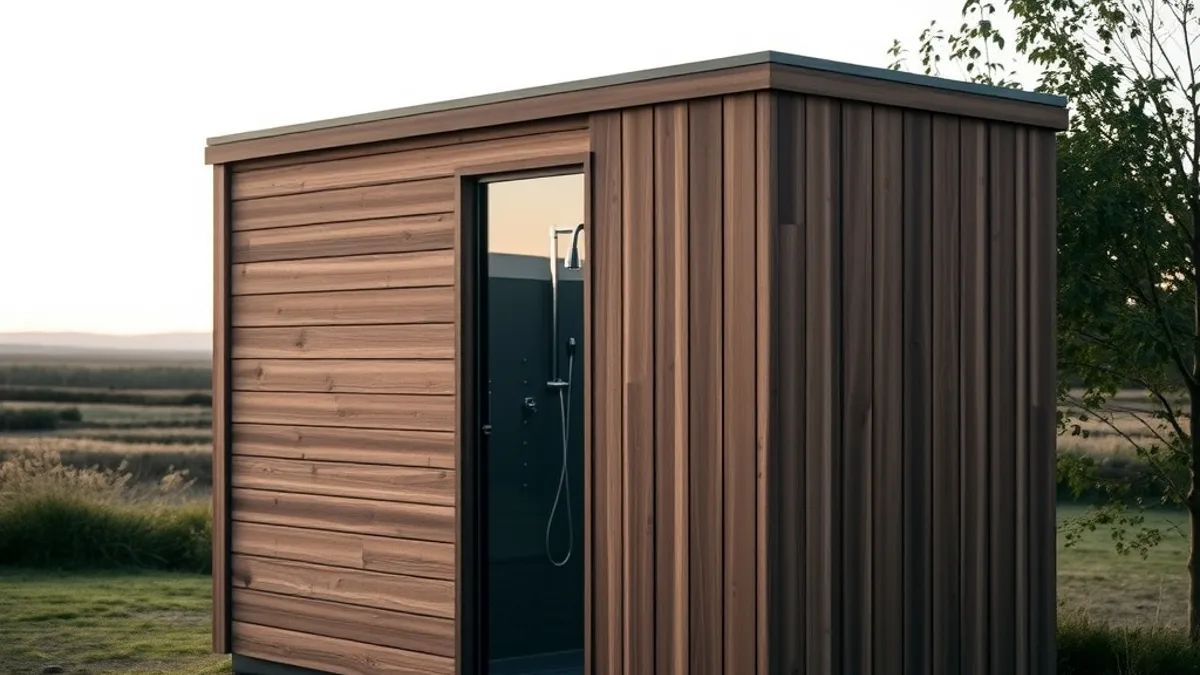
At many glamping sites, especially those with bell tents, cabins, or safari tents without plumbing, the bathroom situation comes down to a shared block. These are purpose-built facilities, usually a short walk from your tent — at European glamping sites they typically sit 30-100 m away, close enough for a barefoot dash in flip-flops but far enough that you’ll want a headlamp at night. A standard block houses 4-8 showers and toilets for the whole site, so the ratio depends heavily on how many guests are staying.
The good news is that shared doesn’t mean rough. Most blocks are laid out with individual shower cubicles rather than open communal showers, and each cubicle usually has hooks for your towel and clothes plus a small bench to stand on while dressing. Many sites also include a separate washing-up area with sinks for dishes, which keeps camp cooking smells out of the bathroom space and speeds things up at mealtimes.
Timing matters more than anything else here. Between 8 and 9 am, queues are common as everyone gets ready for the day at once. You have two easy fixes:
- Shower the evening before instead of the morning — blocks are often nearly empty after dinner, and you’ll start the day clean anyway.
- Grab your toiletries in a single hanging toiletry bag so you can carry everything in one trip and don’t have to return to the tent mid-routine.
- Pack flip-flops or shower shoes — shared block floors stay wet for most of the day, and they’re the one item first-time glamperers consistently wish they’d brought.
- Bring a small torch or headlamp for the walk back at night, since paths between tents and blocks are rarely lit beyond a few low-level markers.
For a real-world example of how well a shared setup can work, the Armenistis Camping & Bungalows review from Sithonia, Greece shows what a well-run block looks like in practice. If you’re used to hotels, a shared block takes a day to adjust to — after that, most guests stop noticing the difference entirely.
Eco-Toilets and Off-Grid Setups
The further a glamping site sits from the mains network, the more creative its plumbing gets. Remote sites, especially in forested or lakeside regions, often skip conventional flush systems entirely and rely on composting toilets paired with solar-heated or wood-fired showers. If you are considering an off-grid stay such as a lakeside glamping retreat in the Masurian region, it pays to know what these systems involve before you arrive.
What composting toilets feel like
A well-managed composting toilet should be completely odor-free, thanks to a ventilation pipe and a layer of covering material such as sawdust after each use. The experience differs from a flush toilet mainly in feel: you sit over a container rather than a water trap, and there is no flushing sound or splash. Most first-timers adjust within a day. Just follow the site’s instructions, usually posted on the door, about what can and cannot go in.
Showers at off-grid sites depend on the sun or a stove. Solar-heated water works well after a warm, clear day but can be lukewarm after rain, and wood-fired systems need time to heat up. Many sites also limit hot water availability during the shoulder months, when demand for heating is higher and solar input is lower. If you plan a trip in spring or autumn, ask the host directly how the hot water system performs outside peak summer.
How to Check Bathroom Facilities Before Booking
The difference between a great glamping trip and a disappointing one often comes down to a few details buried deep in the listing. Photos show you the bed, the view and the fire pit, but they rarely show you the bathroom situation clearly. Before you pay a deposit, work through the following steps so you know exactly what you are booking and can match the facilities to your comfort level.
- Read the listing line by line. The phrase “private bathroom” is ambiguous by design. It can mean a full en-suite inside your tent or a dedicated bathroom unit a short walk away that only you use. Both are private, but they are very different experiences on a rainy night in October. Look for words like “en-suite”, “shared facilities” or “composting toilet” and note exactly which ones appear.
- Check what type of unit it is. Luxury safari tents and domes almost always include an en-suite, while bell tents and simple cabins more often rely on shared blocks. Use the accommodation type as a first filter before you study the fine print, and remember that en-suite units typically cost 20-40% more than tents with shared facilities.
- Book early for summer. En-suite units are the first to sell out for July and August stays. Aim to reserve 3-6 months ahead if a private bathroom is non-negotiable for your trip, especially at popular sites in France, Portugal or the UK.
- Message the host with specific questions. Ask how far the showers are from your tent, whether hot water runs around the clock or only at set hours, and whether towels are provided. These three answers tell you more than any photo gallery ever will.
Ten minutes of checking saves you from the most common glamping complaint: arriving with assumptions the host never promised. A short, polite message also shows the host you are a considerate guest, which often leads to honest, detailed answers rather than vague reassurances.
Matching Facilities to Your Trip
The right bathroom setup depends less on luxury and more on who is traveling with you. A setup that suits a couple on a budget trip can be miserable for a family with a toddler, and vice versa. Match the facilities to your group before you book, not after you arrive, because this one detail shapes how the whole stay feels.
- Families with young children: prioritize an en-suite or a unit less than 30 m from your tent. Nighttime toilet trips with a half-asleep four-year-old are manageable across a few meters of grass and genuinely difficult across a large site in the dark. Add muddy ground, headlamps and a rainstorm, and the walk gets longer still.
- Shoulder-season travelers: if you are going in April-May or September-October, look for heated facilities or proper indoor plumbing. Hot water and heating can be limited in the shoulder months, and a cold wash at an open-air block loses its charm quickly in October drizzle. Older travelers and anyone sensitive to cold should weigh this especially carefully.
- Couples watching their budget: a shared block is a reasonable trade-off. Skipping the en-suite saves the typical 20-40% price premium, which on a longer stay adds up to extra nights or a nicer location. Many couples find the short walk barely registers once they are settled in.
Groups of friends have an easier middle ground: book adjacent tents near the facilities and nobody is more than a minute away. Whichever group you fall into, be honest about your own comfort threshold. Some travelers happily share facilities all week; others find it sours the whole trip. Knowing which one you are is the single most useful thing you can do before comparing listings.
Wrapping Up: Glamping Bathroom Facilities
So, will a glamping trip leave you with a proper bathroom or a cold walk through the woods? The honest answer is that it depends on the unit you book. Facilities range from full en-suites inside the tent to shared blocks a short stroll away and simple eco-toilets at off-grid sites — and that variety is exactly why checking before you book matters so much.
Remember that en-suite comfort usually comes with a 20-40% price premium, and those units sell out first, so booking several months ahead for a summer trip makes sense. A quick read of the listing and a direct message to the host will remove the biggest surprise of your glamping adventure. If this guide helped you plan your trip, feel free to leave a comment or share it with a fellow traveler.