You want a honeymoon that feels special and adventurous, but your budget rules out five-star resorts, and you worry that anything cheaper means cold showers, bunk beds and zero romance. That fear keeps a lot of couples booking overpriced hotels they can barely afford. The good news: a glamping honeymoon gives you a real bed, private space and a wild, romantic setting, usually for a fraction of what a resort charges.
In this guide, we’ll walk through why glamping makes financial sense for newlyweds, which seasons offer the best weather at the lowest rates, and how to pick a destination that stretches your money further. You’ll also learn when and how to book for the best price, what to pack so you can splurge wisely, and a handful of romantic touches that cost almost nothing. By the end, you’ll see how a memorable honeymoon is entirely possible without draining your savings.
Why a Glamping Honeymoon Works on a Budget
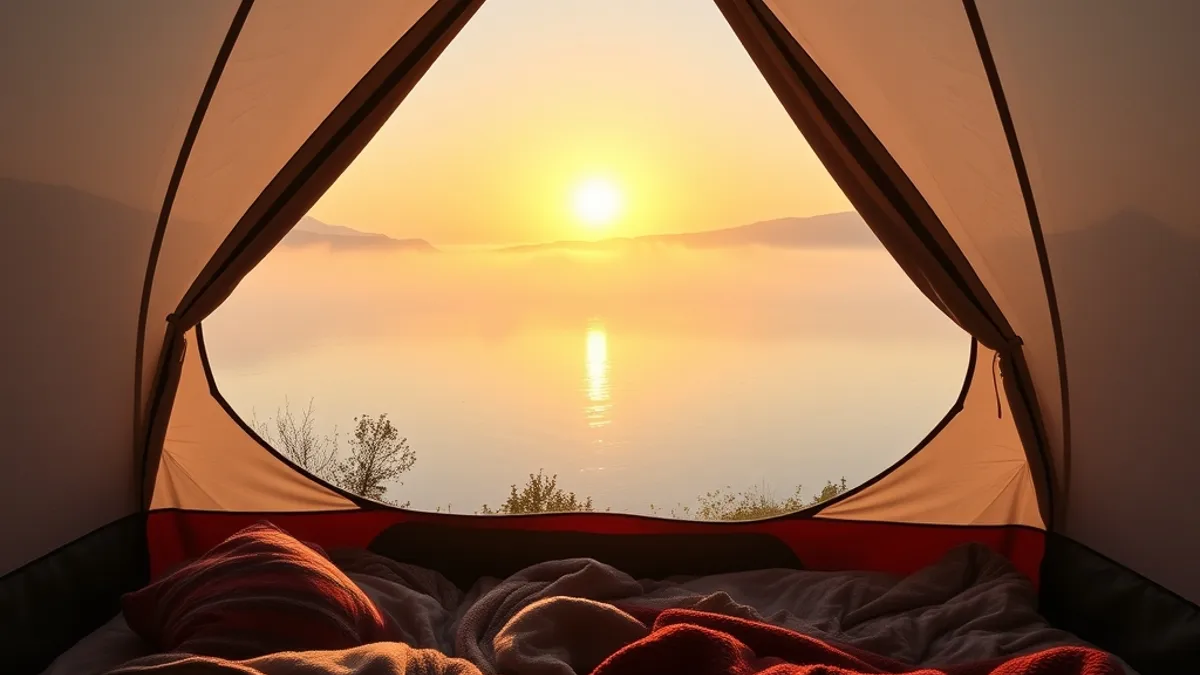
Glamping solves the honeymoon dilemma better than almost any other style of travel: you get a remote, beautiful setting, a real bed and complete privacy, without the resort price tag. Think waking up in a canvas tent surrounded by forest or ocean views, with a proper mattress, soft lighting and your own deck. That kind of intimacy is exactly what most couples want from a honeymoon, and glamping delivers it at a fraction of what a hotel in the same region would charge.
What’s included in the nightly rate
Many glamping sites bundle experiences into the price of your stay. Fire pits, kayaks, breakfast baskets or guided walks are often part of the deal, which cuts down the extra spending that quietly inflates most honeymoon budgets. At a resort, each of those would likely appear as a separate line item on your final bill. Before you book, check exactly what the rate covers and compare the total value, not just the nightly price.
The savings become obvious when you run the numbers. A mid-range tent in Europe or North America typically costs $100-250 per night. That’s often more intimate and far more atmospheric than a $400 hotel room in the same region. You trade lobbies and elevators for stars, silence and space of your own, and your budget thanks you for it.
Choosing the Right Season for a Glamping Honeymoon
Timing is the single biggest lever on your glamping honeymoon budget. Shoulder seasons give you mild weather, quieter sites and noticeably softer prices. In most regions, May-June and September-October offer the best balance of weather and cost, with rates running roughly 20-40% below peak summer prices. You get long, pleasant days without the crowds, and hosts have more time to add personal touches to your stay.
When not to go
Avoid July and August in Europe and North America if you can. Prices peak, popular sites sell out months ahead, and even the most romantic tent can feel less special when you’re surrounded by families on school holidays. If your dates are fixed and fall in summer, book as far ahead as possible and expect to pay top rates.
Warm-water honeymoons need different timing. Late September often still delivers genuine beach weather in southern regions, with lower rates and empty shores. If a slow lake escape appeals to you, shoulder season is particularly lovely — this guide to slow travel by the Masurian lakes shows how quiet and affordable that kind of trip can be outside the summer rush.
Picking a Destination That Stretches Your Budget
Where you go matters almost as much as when. Southern Europe stretches a honeymoon budget much further than its famous Alpine and French counterparts. Portugal and Greece offer coastal glamping with meals and transport costing far less than you’d spend in France or Switzerland, often with better weather outside high summer. For a concrete example, this review of glamping in Terras de Bouro, Portugal shows how far your money goes in the country’s green north.
Another easy win: stay put. Choosing one base site for 5-7 nights instead of hopping between locations saves on transfers, reduces packing stress and lets you settle into honeymoon mode. Many hosts also offer better rates for longer stays, so it never hurts to ask.
Location within a region matters too. Rural inland sites roughly 30-60 minutes from tourist hubs often cost half of their waterfront equivalents, and you can still drive to the coast for day trips.
- Check what meals are included. Some Portuguese and Greek sites throw in breakfast or dinner, which trims your food budget significantly over a week.
- Look at nearby transport links. A site near a train station or bus route means you can skip renting a car entirely in some regions.
- Ask about the water situation. Inland sites sometimes lack swimming spots, so confirm there’s a lake, river or pool if cooling off matters to you.
When and How to Book for the Best Price
Glamping sites are small, often with just a handful of tents, and the best ones in popular regions get snapped up quickly, so timing your booking matters as much as timing your trip. Unlike big hotels, a sold-out site rarely frees up space, and hosts usually cannot add inventory at the last minute. The good news is that a few simple habits can shave a meaningful amount off your total, and hosts are often more flexible than booking platforms make them seem.
- Match your booking window to your season. For peak season stays, book 3-6 months ahead to get your pick of tents before prices climb. For shoulder-season trips, 4-8 weeks ahead is usually enough, and you may even catch last-minute deals.
- Ask directly about honeymoon perks. Once you have booked, email or call the host and mention it is your honeymoon. Late checkout, a bottle of prosecco, or a free night after five booked nights are commonly offered, but you usually only get them if you ask. A short, friendly message costs nothing and often gets a warm response.
- Compare weekday versus weekend rates. At the same site, midweek nights can be 15-25% cheaper than Friday and Saturday. If your schedule allows, building your stay around four or five midweek nights stretches the same budget noticeably further.
Reading a detailed review before you commit also helps, and our firsthand look at a lakeside glamping site near Naples shows what to check: what is included in the rate, how private the tents really are, and how responsive the hosts are before arrival. It is also smart to read recent guest reviews on the booking platform itself, paying attention to comments about noise between tents, bathroom cleanliness, and whether the photos match reality. Those details are exactly what you want to confirm before paying a deposit, because glamping sites often have cancellation policies that are stricter than hotel chains.
What to Pack and How to Splurge Wisely
Off-grid glamping sites, the ones without full electricity and plumbing, typically run 30-50% cheaper than luxury dome resorts, and honestly, they often feel more romantic. There is something about lantern light, a canvas roof and total quiet that a polished dome with air conditioning just cannot match. The trade-off is that you need to arrive better prepared than you would for a hotel, because the site will not bail you out with a gift shop or a 24-hour front desk. A little smart packing and one or two well-chosen splurges will do more for your honeymoon than a bigger nightly rate ever could.
- Layers for day-to-night swings. Even in warm months, temperatures drop after sunset, especially in rural or mountain areas. Pack a fleece or light jacket, warm socks for cold mornings, and a set of clothes you do not mind getting muddy around the fire pit.
- A headlamp with fresh batteries. Off-grid sites rely on lanterns or solar lights, and paths between your tent and the bathroom can be genuinely dark. A headlamp keeps your hands free for carrying drinks, firewood or a tray of breakfast, and a spare flashlight is worth the tiny bit of luggage space.
- Your own wine and snacks, where allowed. Remote sites often mark up provisions heavily because everything has to be trucked in. Check the site policy first, then bring a couple of bottles and easy snacks so a spontaneous glass on the deck costs you nothing extra.
- Basic toiletries and a quick-dry towel. Some off-grid sites have composting toilets or outdoor showers rather than full plumbing. Simple items like biodegradable soap and a towel you can hang outside make those setups far more comfortable.
As for splurging, skip the on-site spa treatments, which are usually the most marked-up extra a glamping site offers. Instead, put that money toward one private picnic or a boat day. A catered picnic in a quiet spot or an afternoon on the water gives you a memory and a story, which is what a honeymoon splurge should actually buy. Ask your hosts which local operators they trust, since small sites usually know exactly who delivers on their promises.
Romantic Touches That Cost Almost Nothing
The most romantic moments of a glamping honeymoon tend to be the ones that cost nothing at all. You are already paying for a private space in a beautiful setting, so the trick is to arrange your days around what the site naturally offers rather than adding paid activities on top.
Plan around the night sky
Check the moon phases before you choose your dates, and time your stay around a new moon. With no bright moonlight, the stars over a rural site are dramatically better, and you do not need anything more than a blanket and the deck of your tent. Bring a star app on your phone so you can actually name what you are looking at, then put the phone on silent and enjoy it.
Use your host as a local guide
Hosts know their land better than any review site, so ask them directly about sunrise spots, hidden swimming holes, or whether they can set out firewood for a private evening fire. Most hosts love sharing these details, and a fire lit just for the two of you, away from any shared area, can easily become the highlight of the whole trip.
Finally, plan one slow day with no activities at all: breakfast in the tent, a long walk, dinner by the fire. It feels indulgent precisely because you have not packed it with plans, and it costs you nothing but the time.
Your Budget Glamping Honeymoon at a Glance
A glamping honeymoon proves you don’t need a five-star resort to wake up feeling like the trip of a lifetime happened. Traveling in shoulder season means milder weather and noticeably softer nightly rates than the summer rush, all while you sleep in a real bed under an open sky.
The recipe is simple: book early, pick a region where your money stretches further, and settle into one base site for 5-7 nights. That approach keeps a full honeymoon within $800-1,500 in most destinations. Add the free touches — stargazing from your tent deck, a private campfire dinner, one slow morning together — and the trip feels luxurious no matter what you paid. If this helped you plan yours, leave a comment or share the article with a fellow traveler.