You know you want a week in the Alps this winter, but you can’t decide whether to book inside a ski resort or a village a valley away. It’s the classic ski resort vs village stay dilemma, and both options can make a brilliant holiday. The difference shows up in your morning routine, your dinner bill and how much of your week actually revolves around the slopes.
This guide walks through what each base really offers: the convenience and snow reliability of a resort, the value and character of a village, and how the costs genuinely compare once you add up lodging, food and transport. We’ll also match each option to different trip types, from families with ski-school-age kids to mixed groups, look at the best timing for booking each one, and finish with five questions to ask before you commit. By the end, you should know exactly which base fits your week.
What a Ski Resort Base Actually Gives You
The biggest argument for sleeping inside a resort is simple: you step out of your accommodation, walk a few meters, and you’re at the lift. Ski-in/ski-out access means boots on by 9am and no daily transport logistics to think about. If the snow is good and you want to squeeze every possible run out of your lift pass, nothing beats it. You can also pop back for lunch, drop off a tired child or swap a wet glove without planning an expedition.
Resorts are also built around the after-ski hours. Rental shops, ski schools, spas and restaurants sit within walking distance, so a forgotten pair of goggles or a spontaneous massage never turns into a logistics problem. Everything you need for a ski week is compressed into a few hundred meters.
Snow reliability at altitude
Higher elevation usually means more reliable snow from December through April. Family-friendly resorts typically sit between 1,200 and 2,000 meters, which extends the season and improves the odds of good conditions across your whole week. Check a resort’s base and top station elevations before booking, especially for early or late season trips.
The trade-off is real, though. You pay a premium for all that convenience, and many purpose-built resorts can feel like a bubble: one operator’s architecture, one pricing structure and an atmosphere designed for skiers rather than for a living community. For some travelers that’s exactly the appeal; for others it feels limiting after a few days.
Why a Village Stay Works for Some Travelers
Village stays win on price almost immediately. Nightly rates run lower than in-resort accommodation, and once you arrive the savings keep coming: groceries and restaurants in a village often cost 10-20% less than the same meal or basket in the resort up the road. Over a week, that gap quietly funds an extra dinner out or a pair of ski socks you forgot to pack.
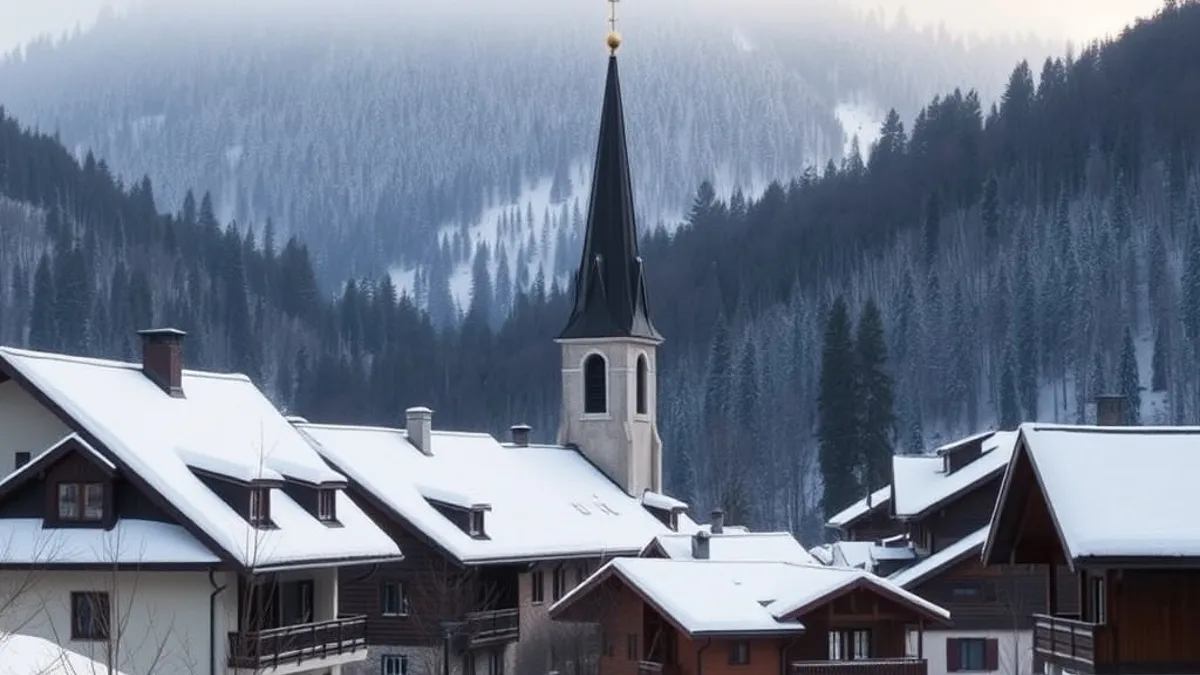
There’s also the question of atmosphere. A village gives you an authentic year-round community feel instead of a purpose-built resort: a bakery that opens for locals, a church square, neighbors who live there in July as well as January. If your trip is as much about the Alpine setting as the skiing, this character is hard to replicate in a resort built in a single architectural style.
The commute to the lifts
The obvious compromise is access. A ski bus or a 5-15 minute drive to the lifts replaces doorstep skiing, which means a little more planning each morning: catching the bus timetable, driving with snow chains in the boot or parking at the lift station. For most people this costs twenty minutes a day, not a holiday.
Villages are also a better fit for mixed groups where some travelers ski less or not at all. Non-skiers get cafés, walks and local life instead of an environment built entirely around lift queues, while the skiers in the group still reach the slopes easily. Everyone gets a version of the holiday they wanted.
Cost Comparison: Ski Resort vs Village Stay
The headline number is lodging. Ski-in/ski-out resort accommodation typically costs 30-50% more than comparable village accommodation in the same valley, so a week that fits your budget in a village may stretch it considerably at the resort. That premium buys doorstep access and walkable amenities, but it’s worth deciding consciously whether you’ll use them enough to justify it.
Here’s the good news: lift passes cost the same regardless of where you sleep, since the lifts serve the whole valley. Your savings come entirely from lodging, food and drink. Self-catering in a village amplifies those savings, because resort dining adds up fast over a week, especially for a family eating out nightly. Breakfast at your own rental plus a few simple dinners can shift the total significantly.
Before you declare the village the winner, add transport to the tally. Those costs are easy to overlook when comparing nightly rates:
- Ski bus tickets: many valleys run a regular bus from villages to the lifts; some are free with a lift pass or tourist tax receipt, others charge per ride, so check the current arrangement for your specific village.
- Car hire or private transfer: if a car is your link to the slopes, include the rental, fuel and any winter equipment fees in your comparison, plus parking at the lift station.
- Parking and chain requirements: driving to the lifts in snow means possible parking charges and, on some roads, winter equipment rules, so factor in the small daily costs as well as the big ones.
Run the full weekly total for both options with transport included, and the true gap between resort and village is usually narrower than the nightly rates suggest, but often still meaningful.
Choosing by Trip Type: Families, Couples and Groups
Not every alpine trip is the same, and the best base depends heavily on who is traveling with you. A family with young children in ski school has very different needs from a couple who skis two mornings and spends the rest of the week exploring. Before you book, match the base to your group rather than to a generic idea of what a ski holiday should look like.
Families probably gain the most from a resort base. When small children need to be at a ski school meeting point by a set time each morning, staying close to the lifts removes the daily scramble for buses and parking. Being able to pop back to the apartment for a forgotten glove or a mid-morning nap is worth a lot when you are juggling little ones. It also helps that resorts aimed at families usually sit at elevations of 1,200 to 2,000 meters, where snow cover tends to hold up better through the season.
Couples who care more about atmosphere, long dinners and wandering a real town center often prefer a village base. Groups with a mix of skiers and non-skiers also work well from a village, because the non-skiers get cafés, walks and local life instead of a single resort square.
- Families: check exactly where the ski school meeting point is before booking, and choose lodging within walking distance of it so mornings stay calm.
- Couples: look for a village with several restaurants within strolling distance, so evenings feel like a holiday rather than a shuttle run.
- Mixed groups: confirm the ski bus or drive to the lifts is short and frequent, so the skiers are not resenting the non-skiers by day three.
- Beginners: remember that ski school meeting points vary, and some valley villages serve different lift systems, so pick the location closest to the beginner area you plan to use.
Timing and Booking: When to Lock In Each Option
Timing matters as much as location when you book an alpine winter base. High-season weeks sell out fast, and the price gap between booking early and booking late can be substantial. The general rule: the more popular the week, the earlier you should commit.
High-season weeks need early planning
For Christmas, New Year and February half-term, book resort lodging 4-6 months ahead. These weeks combine peak demand with limited beds, and ski-in/ski-out options in particular can be gone well before autumn. If you are set on a specific resort for a school-holiday week, treat the booking like a flight: secure it as soon as dates are confirmed.
When villages give you more flexibility
Village stays typically keep more last-minute availability, especially outside school holidays. If you like deciding on short notice, a village base in a valley with several accommodation options is a safer bet than a single resort. For the best overall balance of snow, prices and quieter slopes, aim for January or mid-March. The slopes are usually well covered by then, rates dip below peak levels, and you share the mountain with fewer people.
If budget is your priority over snow certainty, early December and late April bring the lowest rates of the season. Just be aware that snow coverage at the edges of the season is the least reliable, so check resort conditions and opening status before committing.
How to Decide: Five Questions Before You Book
With two very different bases on the table, the decision usually comes down to a handful of honest questions. Work through them in order, and the right choice tends to reveal itself. Be brutally realistic with your answers, because the version of the trip you imagine at booking time rarely matches the one that unfolds on the ground.
- How many days will you actually ski? If you plan to be on the slopes every single day from first lift to last, doorstep access can justify the premium. If skiing fills only two or three days of your week, paying a large markup for lodging you barely use may not make sense.
- Will you have a car, and how far is the nearest lift? A car changes the maths. A village 5-15 minutes from the lifts works well with your own wheels, while relying on a ski bus means checking its frequency and last return time before you book.
- Is your week high season? During the busiest school holiday weeks, resort prices and crowds both peak, which strengthens the case for a village base where rates and atmosphere stay calmer.
- Do you value convenience or character? Resorts offer spas, restaurants, rental shops and evening entertainment within walking distance. Villages offer quieter streets, local cafés and a year-round community. Decide which evenings you want to remember.
- What does the true total look like? Add up lodging, food, transport to the lifts and extras for both options before comparing. The sticker price rarely tells the whole story, and small daily costs compound fast over a week.
Write down your answers next to the price quotes you have collected and compare them side by side. Answer these five questions for your own trip and the choice usually becomes obvious. The goal is not to find the objectively best base, but the one that fits your group, your budget and your week.
Finding Your Alpine Winter Base
So, resort or village? The short answer: resorts buy you convenience and snow reliability, while villages buy you value and character. Neither is the wrong choice — they simply suit different weeks and different travelers.
The right base depends on your trip type, your budget, and how central skiing really is to your week. A family living on the slopes all day will weigh things differently than a couple who skis twice and dinners out five times. Whichever you pick, matching the base to your group matters far more than the name on the map. If this helped you decide, leave a comment or share the article with your travel crew.