Choosing between Phuket, Krabi and Koh Samui is one of the most common trip-planning headaches for travelers heading to Thailand. All three promise palm-fringed sand and beachfront resorts, yet they differ sharply in scenery, season and price. Pick the wrong island for your dates and you can end up facing monsoon seas instead of calm water, or paying peak rates for a beach that does not suit your style.
This guide compares the three islands side by side: what each one is like at a glance, how their beaches and scenery stack up, when to visit each one for the best weather, what your budget actually buys in resort terms, how to get there and get around, and finally how to choose the right island for your trip. By the end, the choice between Phuket, Krabi and Koh Samui should feel much less like a gamble and much more like a decision.
Phuket, Krabi and Koh Samui at a Glance
Phuket, Krabi and Koh Samui each deliver a proper Thai resort holiday, but they are built around very different settings. Phuket is Thailand’s largest island and its most established resort hub, with the biggest flight selection of the three and the liveliest beaches. Krabi, centered on Ao Nang and the dramatic Railay peninsula, trades scale for scenery: limestone cliffs rise straight out of the sea, and the whole area works as a quieter base for island-hopping. Koh Samui sits in the Gulf of Thailand with a more laid-back, self-contained resort scene, where many travelers rarely leave their chosen beach.
The good news is that you will not have to compromise on accommodation. All three offer beachfront resorts from simple budget bungalows to luxury pool villas, so the real differences come down to atmosphere, landscape and timing rather than what is available to book. Whatever your style, there is a comfortable base waiting on each island.
- Phuket suits travelers who want everything in one place: international airport connections, huge restaurant choice, and enough beaches that you can move around during a single stay. It is the easiest option to reach, with plenty of direct flights and short transfers to the main resort areas.
- Krabi appeals to anyone who wants the postcard karst scenery on their doorstep, with boat trips to nearby islands leaving directly from the beach. It also tends to suit travelers who prefer a slower evenings pace after a day on the water.
- Koh Samui works well for a single-resort week, with enough restaurants, spas and small beaches on the island itself that you barely need to plan day trips. Its Gulf-side location also means the weather pattern runs differently from the Andaman coast, which can make it the smarter pick in months when the west is wet.
Beaches and Scenery Compared
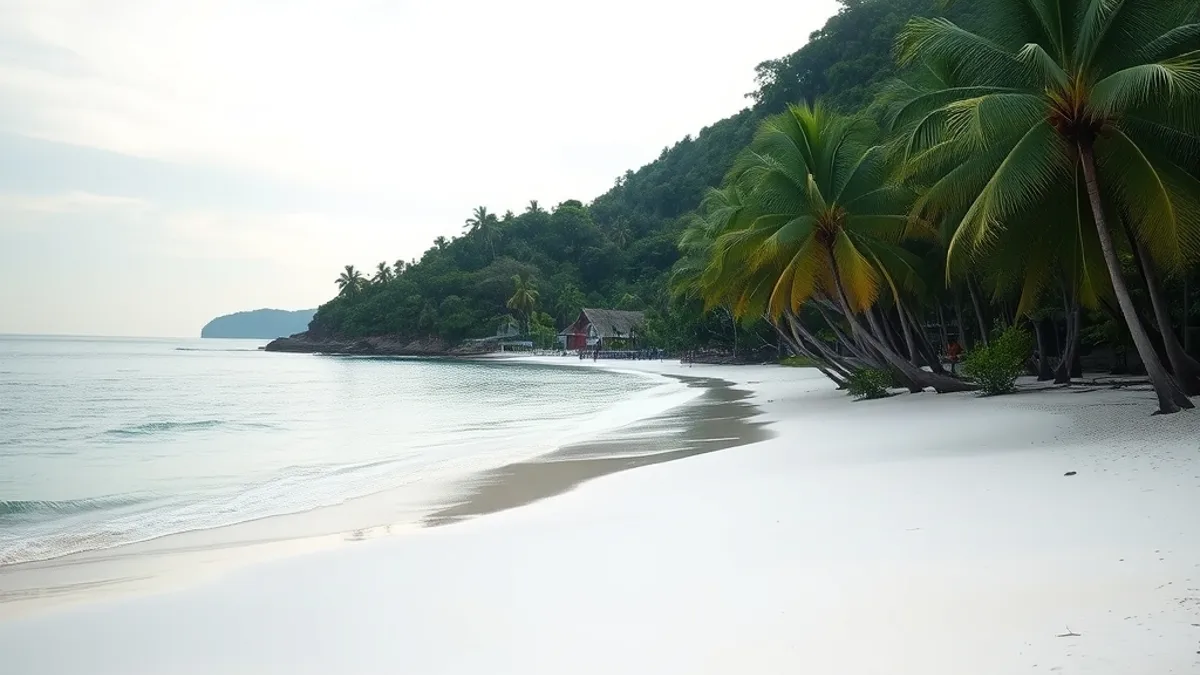
Phuket’s best swimming beaches line its west coast, where wide stretches of sand like Kata and Karon face the sunset. These are proper resort beaches with plenty of room, though the open Andaman exposure means occasional strong surf, especially outside the driest months. If you want calm water every day, check conditions before committing to a west-coast base.
Krabi’s cliffs and coves
Krabi offers the best scenery of the three, and it is not close. Railay’s coves are walled in by towering limestone cliffs, so you arrive by boat onto sand with a karst backdrop, while Ao Nang’s strips run from pebbly at one end to softer sand further along. The drama of the setting is the draw here as much as the beaches themselves.
Koh Samui’s calm east coast
Koh Samui plays a calmer game. Chaweng has a long, swimmable bay that is arguably the most comfortable all-round beach of the three islands, and the east-coast beaches generally offer shallower, gentler water than Phuket’s west coast. Water clarity is generally best on Krabi’s offshore islands and on Samui’s east coast during the dry months, so if clear water is a priority, time your trip accordingly.
When to Visit Each Island
Timing is the single biggest factor in whether your resort week delivers postcard conditions, and Thailand’s two coasts run on roughly opposite calendars. For Phuket and Krabi on the Andaman coast, aim for November to April, with December to March the driest and most dependable window. Koh Samui flips the pattern entirely: January to September is the safer bet, since the Gulf island’s heaviest rain tends to fall from October to December. Pick the wrong season and you can end up watching rain from a pool villa you paid a premium for.
This split matters in two situations. If your dates are fixed but your island is not, match the calendar to the coast. If your island is fixed but your dates are flexible, work around its dry window. Shoulder months bring lower rates and thinner crowds on whichever island you choose, though you are taking a modest weather risk. During monsoon season, expect rough seas, ferry delays and some beachfront closures, which can put a real dent in a beach-focused holiday. It rarely rains all day, but gray stretches are common.
- Swimming and boat trips: calm seas matter most, so match your island to its dry window rather than gambling on shoulder-season savings for a water-sports trip.
- Weddings and honeymoons: December to March gives the Andaman islands their most reliable sunshine, while Samui’s equivalent stretch runs in the early months of the year.
- Booking around the rain: if you must travel in the wet season, choose a resort with good covered facilities and check ferry schedules in advance, since crossings can be disrupted at short notice.
Resort Prices and What Your Budget Buys
Resort pricing across Phuket, Krabi and Koh Samui is more similar than most travelers expect. In high season, a mid-range beachfront room typically runs $60-150 per night on all three islands, and at that level you usually get air conditioning, a pool, breakfast and genuine beach access rather than a “short walk” to the sand.
At the top end, luxury pool villas range roughly $250-600 per night depending on the island and the season. Koh Samui often delivers the best value per square meter here, with private-pool villas that would cost noticeably more on Phuket for comparable space and sea views.
Where each island wins on price
Krabi tends to be the cheapest of the three overall, especially around Ao Nang, where the same budget often buys a room closer to the water than on the other islands. Phuket has the widest top-end range: you can spend modestly near Kata, but the island also hosts some of the most expensive beachfront properties in Thailand, so prices there spread further in both directions.
Timing matters as much as destination. Outside peak weeks, shoulder-season discounts of 20-40% are common on all three islands, and many resorts throw in extras like free upgrades or late checkout. If your dates are flexible, shifting a trip by a few weeks can easily move you a whole price category down.
Getting There and Around
All three islands are easy to reach from Bangkok, and none of them require an internal connection or a long overland slog. Phuket and Krabi involve flights of about 1.5 hours, followed by a short transfer from the airport to the main beach areas. Koh Samui sits closer, with a roughly 1-hour flight from Bangkok, and because the island is compact, resort transfers are often under 30 minutes once you land. That makes Samui a good pick if you want to be unpacked and on the beach by early afternoon.
If you want to combine the Andaman coast destinations, Phuket to Krabi takes about 3-4 hours by road and ferry via Krabi town. It is a manageable half-day journey with some scenic stretches along the way, though it eats into beach time and can feel tiring with luggage in tow, so many travelers prefer to fly between the two instead and save their energy for the coast.
Getting around once you arrive is straightforward but varies by island:
- Scooters are the go-to option on all three islands and rent cheaply, but roads can be steep and busy near the main beaches, so ride only if you are confident.
- Songthaews, the converted pickup trucks that run fixed routes, cover short hops between beaches and town for a few baht, especially on Phuket and Samui.
- Koh Samui’s ring road circles the whole island, making self-driving the easiest of the three since almost every beach and resort sits just off it.
- Ride-hailing apps and hotel-arranged cars work well for airport transfers and dinner outings, though fares on Phuket tend to run higher than on the other islands.
How to Choose the Right Island for Your Trip
Each island suits a different kind of trip, so the best choice depends less on which is “best” and more on what you want from your week. Phuket offers the most flights, the biggest dining and nightlife scene, and family-friendly west-coast beaches with plenty of space. Krabi trades convenience for scenery, with dramatic limestone cliffs, cove beaches and the best island-hopping of the three. Koh Samui delivers a relaxed, self-contained resort week where you can settle into one property and let the island come to you.
Weather should shape your decision too. Phuket and Krabi share the Andaman season, so they align naturally. Samui runs on its own Gulf-side calendar, which is handy if your travel dates fall outside the Andaman dry months.
To narrow it down further, think about these details:
- If you plan day trips, base yourself in Ao Nang in Krabi, where longtail boats to nearby islands leave straight from the beachfront.
- If traveling with kids, Phuket’s west-coast beaches like Kata offer gentler entries, more family resorts and easier access to shops and medical care.
- If you want a honeymoon-style hideaway, look at Samui’s quieter north and northeast coasts, where resorts sit on their own stretches of sand.
- If nightlife matters, Phuket is the clear pick, with the liveliest bars and entertainment options of the three by a wide margin.
Finally, book ahead. High-season beachfront rooms should be reserved 2-3 months in advance, and pool villas even earlier if you are targeting December-January, when the best properties fill first and rates climb as availability shrinks.
The Bottom Line on Thailand’s Resort Islands
So which island should you pick? Phuket wins on variety and access, with the most flights, dining and beach choice. Krabi takes the crown on scenery and price, thanks to those limestone cliffs and quieter coves. Koh Samui is the pick for a laid-back, self-contained resort week.
The season is the real deciding factor. The Andaman islands of Phuket and Krabi peak from November to April, while Samui shines from January to September. Match the island to your travel dates first, then your budget: $60-150 per night stretches far at mid-range level on all three. If this helped you compare, leave a comment or share the article with a friend planning the same trip.