You want a quiet nature escape in Europe, but the usual mountain lakes and pine forests of Central Europe start to feel crowded, and you’re unsure where glamping in Estonian bogs fits into a trip plan. The idea of sleeping in a glass dome or timber sauna hut beside a dark, mirror-still bog pool sounds tempting, yet you may wonder how remote it really is, when to go and what to pack.
This guide walks you through the essentials. We’ll look at why Estonia’s protected bogs and forests make such a strong case for a glamping trip, compare the two regions worth targeting, break down stay types and typical prices, and cover booking windows, packing lists and how to make the most of saunas, boardwalks and dark skies. By the end, you’ll know exactly how to slot a bog-side stay into your itinerary.
Why Glamping in Estonian Bogs Belongs on Your List
Estonia protects more than 20% of its territory as bogs, forests and wetlands, which changes the whole practicality of a wild stay. Instead of driving half a day to reach untouched nature, you can leave Tallinn and be standing on a bog boardwalk within an hour or two. That proximity is what makes glamping here genuinely different from most European nature trips.
A landscape you won’t find elsewhere
Bogs are strange, beautiful places. Wooden boardwalks stretch across spongy, moss-covered terrain, leading to dark mirror pools that reflect the sky so perfectly they look like sheets of glass. The silence is the part that surprises most visitors: no traffic hum, no crowds, just wind through the pines and the occasional crane call. It’s a level of quiet you rarely get in Central European nature stays, where popular valleys and lakeshores fill up quickly in summer.
Wild, but not rough
Glamping is the smart middle path. You get direct access to this terrain, often with a boardwalk trail starting practically at your door, but you return to a real bed, insulation and usually a sauna rather than wrestling with a tent in damp conditions. If you’ve been curious about bog landscapes but hesitant about a full wilderness camping trip, this is the comfortable way in.
Where to Go: Bog and Forest Regions Worth Targeting
Estonia is compact, so your choice of region really comes down to trip style. Two national parks stand out for glamping, and they cater to slightly different travelers.
Soomaa National Park sits about 130 km from Tallinn, roughly a two-hour drive. It’s famous for its “fifth season,” when spring floods spill over the meadows and the park briefly becomes a maze of waterways. Forest cabins here tend to sit deep in quiet woodland, making Soomaa the pick for slow nature immersion. If you enjoy the idea of a stay where the landscape itself dictates the pace, this is your park. For a comparison point on lakeside calm elsewhere in Europe, this review of a glamping stay on Italy’s volcanic lakes shows how different the mood can be.
Lahemaa National Park lies about 60–70 km east of Tallinn, around an hour by car. It packs more variety into a smaller radius: coastal forest, bogs, and historic manor houses with accommodation nearby. It works well for shorter trips, or for travelers who want to mix a bog boardwalk with a coastal walk in the same day.
- Soomaa in flood season: if your dates align with the high-water period, local operators typically offer canoe trips over the flooded meadows, an experience that’s hard to arrange anywhere else in Europe.
- Lahemaa’s manor angle: some stays here sit close to restored manor estates, so you can pair your nature nights with a more traditional Estonian country-house atmosphere.
- Day-trip flexibility from Lahemaa: being only about an hour from Tallinn means you can arrive late, leave early, or tack the park onto a city break without restructuring your whole trip.
- Soomaa’s night skies: with fewer settlements nearby, light pollution is minimal, which matters if stargazing from your dome or cabin is part of the plan.
Choosing Your Stay Type: Domes, Cabins and Sauna Huts
Estonian glamping stays generally fall into two camps, and both have real appeal depending on how you travel.
Geodesic domes
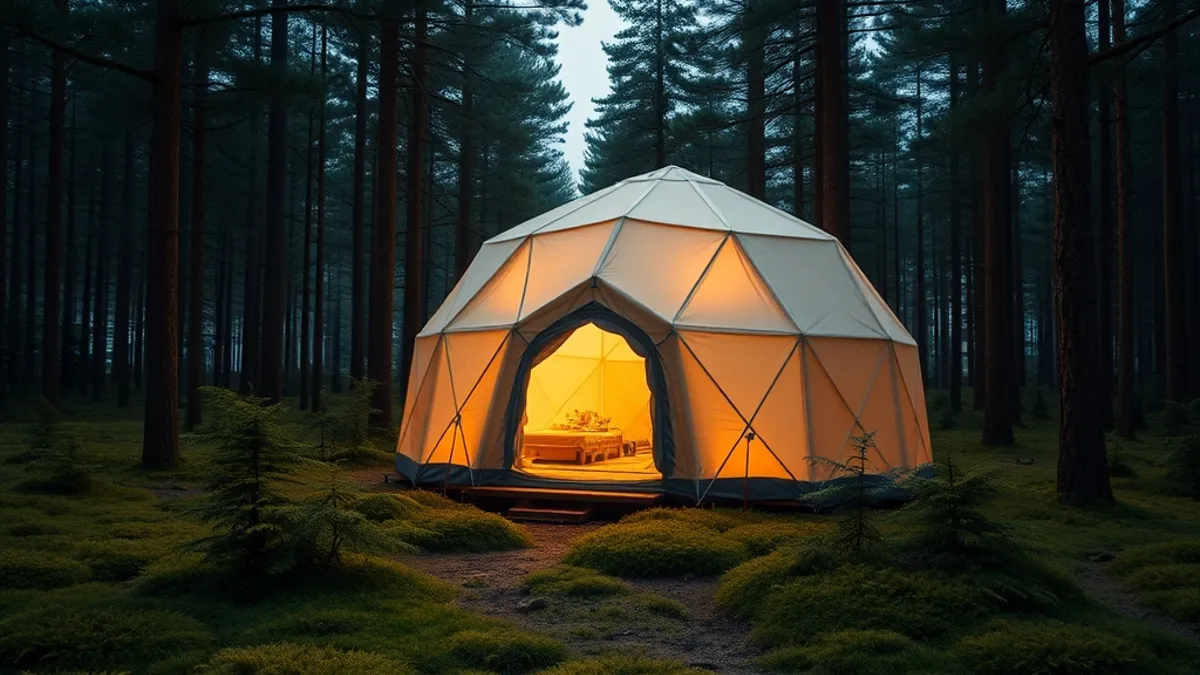
Domes are the modern option, and they suit couples best. The transparent panels frame either bog or forest views, so you can watch the light shift over the landscape from your bed. The trade-off is that domes can feel cooler in the shoulder seasons, so it’s worth asking about insulation and heating before you book rather than assuming.
Timber cabins and sauna huts
Timber cabins and sauna huts are the classic Estonian choice, and honestly, the more atmospheric one. Many come with a wood-fired sauna, which is less an add-on here and more a core part of the experience. After a day on damp boardwalks, heating up the sauna and stepping out into cool forest air is the ritual that defines a stay like this. Cabins also tend to handle cold weather better than domes, which matters if you’re eyeing the winter season.
On price, expect roughly €70–€150 per night for either a cabin or a dome. Where you land within that range depends on the season, the insulation level of the unit and whether you have a private sauna. A basic summer cabin sits at the lower end; an insulated dome or a sauna hut in peak season pushes toward the top. If you like the idea of slow, lake-adjacent cabin stays, this guide to Masurian lake glamping for slow travelers covers a similar philosophy in Poland.
When to Book: Seasons, Weather and Lead Times
Timing shapes your Estonian bog experience more than almost any other decision. May to September is the prime bog season, when boardwalks are walkable, wildlife is active and the landscape shifts week by week. If you want the richest colors, aim for late August, when the peat mosses turn deep reds and rust tones that photographs barely do justice.
Winter: frozen bogs and aurora chances
Winter stays run roughly from December to March, when the bogs freeze and take on a quiet, otherworldly beauty. Snow-draped pines, icy pools and long dark nights make this a completely different trip from summer. It is also the season when the northern lights occasionally appear. The catch: not every glamping unit is built for cold weather, so confirm that your dome or cabin comes with proper heating before you book.
Lead times matter in both seasons. For a summer stay, reserve 2–3 months ahead, as the best units in Soomaa and Lahemaa fill quickly. Winter aurora-season stays need even more planning; book 3–4 months ahead to secure a heated unit in a good location. Whenever you travel, check current conditions with your host, since bog access can depend on weather and trail maintenance.
What to Pack for Bog and Forest Glamping
Packing well makes the difference between a magical bog stay and a soggy, itchy one. Estonian forests stay damp even in high summer, and boardwalks can be slick with morning dew or a light drizzle that rolls in without warning. The single most important item you can bring is proper footwear, followed closely by clothing that handles a wide temperature swing between day and night. Glamping hosts usually provide bedding and basic comforts inside your dome or cabin, so focus your luggage on what you will wear and use outdoors.
Summer days often reach a pleasant 20–25°C, but nights can drop close to 10°C, so think in layers rather than one warm jacket. June and July bring peak mosquito season, which is also when waterproof boots matter most, since damp paths and bog edges are at their wettest. Long sleeves and light long pants do double duty here, protecting you from both bites and the evening chill while you sit outside watching the sky.
- Waterproof boots with good grip: boardwalk slats get slippery when wet, and low sneakers will soak through on damp forest paths within minutes.
- Strong insect repellent: bog mosquitoes are persistent at dawn and dusk, so bring a proven repellent and consider treating outer clothing if you are sensitive to bites.
- A headlamp with spare batteries: glamping sites sit on dark, unlit forest paths, and walking back from a sauna or stargazing spot without light is both difficult and unsafe.
- Quick-dry towel and swimwear: many hosts expect you to use the wood-fired sauna, and a proper towel makes that ritual far more comfortable.
- A reusable water bottle and small daypack: useful for boardwalk walks and carrying layers you shed as the day warms up.
Finally, pack a light rain shell even if the forecast looks clear when you leave home. Weather in the Baltics changes fast, and staying dry keeps you out enjoying the bog instead of hiding in your dome. A small dry bag for your phone and camera is a smart addition too, especially if you plan to photograph the mirror-still bog pools early in the morning when dew is heaviest.
Making the Most of Your Stay: Saunas, Boardwalks and Dark Skies
A bog glamping trip rewards those who plan their days around the light rather than the clock. The landscapes here are at their most beautiful when the sun sits low, and the good news is that you rarely have to share the moment with anyone else.
Boardwalks at golden hour
Time a sunrise or sunset walk on the bog boardwalks. When the light is low, the dark mirror pools between the hummocks reflect the sky in oranges and pinks, and the whole landscape glows. These are also the hours with no crowds, since most visitors arrive mid-morning. Bring your headlamp for the walk back and keep to the boards, as the ground beyond them stays soft and wet.
Sauna and dark skies
After a day outdoors, book or use a wood-fired sauna if your host offers one. Sauna is a core part of Estonian nature culture, not a luxury add-on, and there is something deeply satisfying about the heat and crackle of the stove after hours on damp trails. Ask your host how to fire it properly and allow enough time for it to warm up.
Save energy for the night sky too. Around midsummer in late June, Estonia has near-white nights, when the sky never quite goes dark and evening walks feel dreamlike. Outside June and July, the skies turn properly black, which is ideal for stargazing from your dome’s transparent panels or straight off the boardwalk.
Your Estonian Nature Escape, Wrapped Up
If you have been searching for a quiet nature escape in Europe, Estonian bog and forest glamping answers the question neatly. You get protected wilderness, silence and dark skies without giving up comfort, and it all sits within an hour or two of Tallinn. That makes it easy to slot into a short trip rather than a full expedition.
The experience you end up with depends on a few choices: Soomaa or Lahemaa, a transparent dome or a sauna cabin, a summer stay or a frozen winter one. Book 2–3 months ahead for summer and pack for damp, cool nights, and the rest falls into place. If you have stayed in an Estonian bog dome or sauna hut, share how it went in the comments.