Those gleaming silver trailers look irresistible in photos: curved aluminum walls, retro fabrics, a string of lights outside and a fire pit a few steps away. But if you have never actually slept in one, it is hard to know what you are signing up for. Is there a bathroom? Will you freeze at night? How much space do two people really get?
This guide walks through the reality of vintage trailer stays, from what these trailers actually are to how they sleep, heat, sound and book. We cover the space and facilities inside a typical Airstream, the comfort quirks you should expect, realistic pricing and the best times to reserve, how to pick the right trailer for your trip, and what to pack for a night in a retro camper. By the end, you will know whether a vintage trailer stay fits your travel style, and how to book one with no surprises.
What a Vintage Trailer Stay Actually Is
The first thing to understand is that a vintage trailer stay is not a road trip. The trailer does not move. It sits permanently parked on a property, hooked up to power and water, and functions as a private glamping room. You check in, get a key or a code, and the trailer is yours for the night. Someone else handles the towing, the maintenance and the setup, which is exactly why this style of stay has become so popular with travelers who love the retro look but not the logistics.
These stays come in a few common flavors. Polished Airstreams are the icons, with their silver aluminum shells and interiors often restored or updated with modern bedding and lighting. Shasta-style retro campers lean into a 1950s and 1960s look, with pastel paint, chunky rooflines and plenty of nostalgia. Converted caravans round out the mix, often rebuilt by individual owners with a personal touch that chain accommodations cannot match.
Where you will find them
Location is part of the appeal. Trailers are usually parked on working farms, at vineyards, inside regular campgrounds or at dedicated trailer resorts where a whole row of retro units sits together. A farm stay might mean chickens wandering past your window in the morning; a vineyard setting puts you a short walk from a tasting room. The property around the trailer, whether it is a pasture, an orchard or a lakefront, is often what makes the stay memorable.
Inside an Airstream: Space, Beds and Facilities
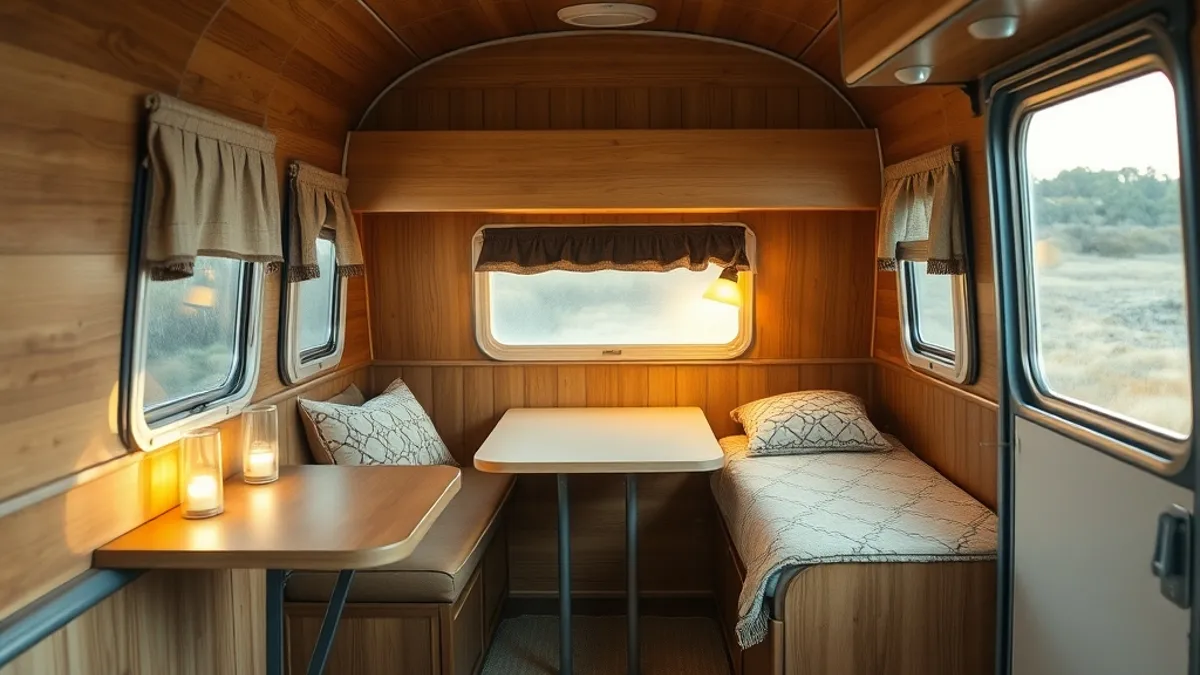
Most stays use trailers between 16 and 30 feet long, which sounds small until you see how cleverly the space is used. Inside you will typically find a real bed, a small dinette that can often convert into extra sleeping space, and storage tucked into every available corner. Most layouts sleep 2 to 4 guests, making them a natural fit for couples, though families with young children manage fine in the dinette-bed setups.
The biggest adjustment for most guests is the bathroom situation. The majority of trailers have no bathroom of their own, so you will walk to a shared bathhouse, usually 30 to 100 meters away. Some restored units do add a compact toilet or shower, but you should never assume one exists. On the kitchen front, interiors usually offer a mini fridge, a two-burner stove or microwave, basic cookware and linens, enough for simple meals rather than elaborate cooking.
What the standard kit usually includes
- Mini fridge and cooking gear: The two-burner stove or microwave handles breakfast and one-pan dinners, but there is rarely an oven, so plan meals accordingly.
- Linens and bedding: The real bed typically comes made up with sheets and blankets, so you can leave the sleeping bag at home.
- Basic cookware and tableware: Expect a pot, a pan, plates and utensils for the stated guest count, but not much beyond that.
- Overhead cabinets and curved walls: Headroom drops in spots near the ceiling cabinets and where the aluminum curves inward, so tall guests should duck carefully and expect to stoop in the sleeping area.
Treat the interior like a well-organized small boat cabin rather than a hotel room. Everything has a place, and once your bags are stowed, the space feels far more livable than the floor plan suggests.
Comfort Levels: Climate, Noise and Quirks
Here is the honest part of the story: aluminum is thin. You will hear wind, rain and rustling leaves far more than you would inside a wooden cabin, and sounds from neighboring trailers and campsites travel easily too. Most guests find this part of the charm, falling asleep to real outdoor noise instead of hallway chatter. Light sleepers, however, may want earplugs, especially on windy nights or in busier campgrounds.
Heating, cooling and the mild-season advantage
Climate control is usually limited to a small heater or AC unit, not the powerful systems you find in hotels. That means the trailer warms up and cools down slowly, and extreme heat or cold is genuinely uncomfortable. Stays in mild weather, when you can open windows and let fresh air do the work, are by far the most pleasant. If you are booking for a season with big temperature swings, ask the host how well the unit handles it.
Then there are the character quirks, which you should expect rather than dread. Doorways are narrow, so watch your shoulders and your luggage. Where a shower exists, it is compact, and vintage fixtures sometimes behave in idiosyncratic ways, from temperamental taps to lights that need a firm flip. None of this ruins the stay; it is simply part of sleeping in something built decades ago.
Connectivity deserves a final caution. Wi-Fi and phone signal vary widely by location, and a trailer parked on a remote farm may have neither. If you plan to work remotely or stream in the evenings, check with the host before booking rather than discovering the limits on arrival.
When to Book and What Vintage Trailer Stays Cost
Vintage trailer stays are generally gentler on the wallet than boutique cabins or design hotels. Most listings fall between $100 and $250 per night, while fully restored Airstreams often reach $150 to $300, especially in scenic spots near vineyards or coastlines. You are paying for character and location, so a polished aluminum shell beside a lake can cost the same as a plain motel room in a city.
Timing matters more here than with most accommodations. Peak season runs from May through September in most US and European locations, and summer weekends sell out quickly. If your heart is set on a July or August Saturday night, book two to three months ahead. Off-season dates are far easier: four to six weeks of lead time is usually enough, and rates can drop below $100 once demand fades.
The sweet spot for most travelers is the shoulder season. May, June and September combine pleasant weather with better prices and thinner crowds, which suits the small-heater-and-fan reality of trailer living.
- Weekday discounts: midweek nights, especially Tuesday through Thursday, often sit noticeably below weekend rates at the same property, so shifting your stay by a day or two can save real money.
- Minimum-stay rules: popular trailer resorts frequently require two-night minimums on summer weekends, which pushes the effective cost of a single night up; check the listing’s stay requirements before planning a quick one-night stop.
- Restoration premium: trailers with original-style interiors, new wiring and polished exteriors command the top of the price range, so compare photos between listings at different price points to see what the extra cost buys.
- Weather-driven cancellations: some hosts offer flexible cancellation in the off-season, which makes a cheap late-autumn stay low-risk if plans change.
How to Choose the Right Trailer Stay
The single most useful habit when booking a trailer stay is to study photos of the actual trailer, not just the campground around it. A glossy shot of a lakefront field tells you nothing about whether the Airstream has been properly restored. Look for interior pictures showing the bedding, flooring and appliances, and check whether the aluminum shell looks polished or tired and patched.
Then confirm the essentials before you pay. Bathroom arrangements vary a lot in this niche: many units come without one, and guests typically walk to shared bathhouses located 30 to 100 meters away, so if a private toilet matters to you, ask the host directly. The same goes for heating, since climate control is often limited to a small heater or AC unit, and for kitchen setup, where a mini fridge and basic cooking gear are typical but not universal. A short message to the host before booking saves awkward surprises on arrival.
Traveling with a group?
If more than four of you are traveling, look for hosts with several units on one property. Most trailers sleep two to four guests, so a host with two or three trailers clustered together lets your group share a fire pit and morning coffee while still having room to breathe. Some dedicated trailer resorts and farm stays arrange exactly this.
Location still does the heavy lifting
Because the interior is compact, the surroundings carry the experience. Choose a stay near hiking trails, a lake or a walkable town so the small space pushes you outdoors rather than boxing you in. A trailer beside a quiet lake, for example, turns the lack of square footage into a non-issue; you can see how that works in practice in this piece on lake glamping in the Masurian region for slow travelers.
Packing for a Night in a Retro Trailer
Packing for a trailer stay is closer to packing for camping than for a hotel, and a few small items make a big difference. The most important pair is flip-flops and a headlamp. Since most units skip a private bathroom, you will walk 30 to 100 meters to a shared bathhouse, often across grass or gravel and frequently after dark. Flip-flops handle the shower floor, and a headlamp keeps both hands free on unlit paths. Toss in a quick-dry towel as well, because bathhouse towel hooks can be scarce and damp towels stuffed in a locker turn musty fast.
Think about temperature too. Climate control is usually a small heater or AC unit, and small heaters warm a metal box slowly. Pack layers for cool evenings, even in summer, since temperatures can drop noticeably once the sun sets and the aluminum walls give up their daytime warmth quickly. A warm pair of socks for sleeping is worth more than you would expect.
- A soft duffel bag: trailers have narrow doorways and tight storage nooks, and a rigid suitcase often has nowhere to sit except the floor; a duffel squashes into overhead cabinets or under the dinette bench.
- A power bank: outlets are limited to one or two per trailer, usually shared with the fridge and lamps, so a charged power bank keeps phones and cameras topped up without fighting over the single socket.
- Slip-on shoes: stepping in and out of the trailer dozens of times a day is easier without laces, especially on grassy or muddy ground after rain.
- A small bag for dirty laundry: storage is minimal, and keeping worn clothes contained stops the tiny interior from feeling cluttered by night two.
Is an Airstream Stay Worth It?
So, is a night in a vintage trailer worth it? If you go in knowing what you’re getting, yes. You’re trading space and a private bathroom for charm, a memorable location and a lower price than many standard rooms. The aluminum walls are thin, the shower may be a walk down the path, and tall guests will duck a lot. But waking up in a polished Airstream on a farm or vineyard is an experience a hotel room simply can’t copy.
These stays suit couples and small groups best, especially those booking mild-season dates two to three months ahead. At $100–$300 a night, you get something photogenic, cozy and genuinely different from your usual accommodation. If that sounds like your kind of trip, it probably is. Have you slept in a vintage trailer yet? Share your experience or this article with a fellow traveler.