Most travelers considering yurt stays in Mongolia have a rough mental image: a round felt tent, open steppe, maybe a horse in the distance. What they usually can’t picture is the practical side. What kind of bed will you sleep on? How cold does it actually get at night? Where do you shower, and what exactly do you eat three times a day? These details decide whether a ger camp feels like an adventure or an ordeal, and they’re rarely explained clearly before you book.
This guide walks through the reality of ger camp life, one topic at a time. We’ll cover what a ger camp actually is, how warm (or not) your ger stays overnight, how the shared bathroom blocks work, what set-menu meals look like, when to book and which regions suit which travelers. By the end, you’ll know whether a ger camp fits your comfort level and how to plan one properly.
What a Ger Camp Actually Is
A ger camp is not a nomad family’s home that happens to take in guests. It’s a purpose-built cluster of traditional round felt tents, set up permanently or semi-permanently specifically for travelers. The staff work there, the gers are arranged for guests, and the whole operation runs like a simple, open-air hotel. If you’ve been picturing an invitation into someone’s family ger, this is a different — and more predictable — setup.
A standard camp holds somewhere between 15 and 40 gers, usually arranged around a central dining ger where meals are served. The shared bathroom block sits at the edge of the compound, a short walk from your tent. That layout shapes everything about your stay: you’ll cross the yard for meals, for showers and for the toilet, so pack accordingly and keep a flashlight handy.
What you’ll find inside
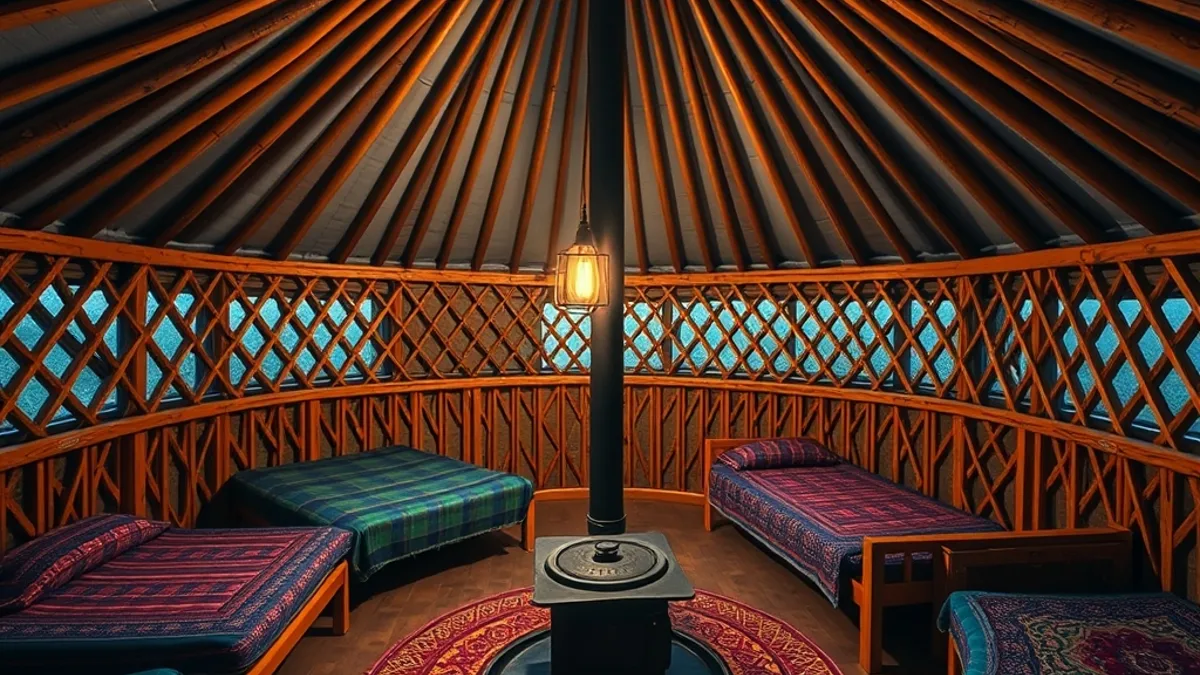
Each ger is furnished simply: wooden bed frames with thick blankets, a small stove or heater in the center, and a low table with stools for sitting. Don’t expect electricity sockets at every bed, a desk or much storage space. Most importantly, there is no running water inside the ger itself — water for washing and drinking comes from the dining ger or bathroom block. Think of it as a step up from camping, with a real bed and a roof that rattles in the wind, rather than a step down from a hotel.
Inside the Ger: Comfort, Beds and Nighttime Temperatures
A ger is built around a central wood or dung-burning stove, and that stove is the heart of your comfort. Gers sleep 2-4 guests on wooden frames fitted with thick blankets, and the beds are more comfortable than most visitors expect. The surprise comes after sundown: even on a warm summer day, night temperatures inside Mongolia’s open steppe can drop to 5-10°C. That’s cold enough to matter, and it’s why the stove and the extra blankets aren’t optional extras.
The stove question
In most camps, staff light the stove in each ger during the evening, so you return from dinner to a warm tent. The trick is that the fire doesn’t burn all night. Ask at reception how the stove works and whether you should refuel it yourself if you wake up cold — some camps leave wood or fuel beside the stove and expect guests to top it up. Knowing this before bedtime saves you a shivery 2 a.m. lesson in trial and error.
Sounds and sleep
Felt walls insulate against cold far better than against noise. You’ll hear the wind working around the roof crown, and your neighbors’ conversations and footsteps come through clearly. If you’re a light sleeper, pack earplugs and consider them essential gear rather than a nice-to-have. The atmosphere is part of the charm, but only once you’ve slept through it.
Bathrooms, Showers and Daily Logistics
Showers and toilets at a ger camp live in a separate shared block at the edge of the compound, not in your ger. In most camps, hot water is available only during set evening hours, so plan your shower around dinner rather than expecting on-demand hot water at 7 a.m. Ask staff on arrival when the hot water runs — it varies from camp to camp, and timing your walk over well can be the difference between a warm shower and a bracing one.
The second thing to accept is that your ger has no bedside lighting switch and no in-room sink. You’ll rely on a single central light bulb at most, and all washing up — face, hands, teeth — happens at the bathroom block. That makes packing more important here than at a regular hotel. A few items earn their place in your bag:
- Headlamp: essential for the walk to the bathroom block after dark and for reading in bed without fumbling for a single central bulb.
- Quick-dry towel: camps don’t always provide towels, and a thin synthetic one dries overnight in a ger with limited ventilation.
- Toiletry bag that closes: you’ll carry everything to and from the shower block, so a hanging or zippered bag beats loose bottles.
- Flip-flops or sandals: shared bathroom floors and the walk across the yard in the morning are far more pleasant with them.
Phone coverage is the last logistics question, and the honest answer is that it depends entirely on the region. Camps in Terelj National Park, close to Ulaanbaatar, usually have signal. Camps in the Gobi and around Khuvsgul Lake often do not, so tell family before you head out and treat connectivity as a bonus, not a given.
Food at a Ger Camp: What the Set Menus Look Like
Most ger camps work on a full-board basis, and rates of USD 30-60 per person per night typically include all three meals: breakfast, a packed or hot lunch, and a group dinner. If your day involves a long drive or a hike, the camp will usually hand you a packed lunch in the morning, often bread, boiled eggs and maybe some fruit. When you are based at the camp for the day, lunch is served hot in the dining ger.
Dinners are the main event and center on hearty Mongolian staples: mutton or beef stews, noodles and rice. Portions are generous because the kitchen never knows exactly how hungry travelers will be after a day on the steppe. If you are vegetarian, tell the camp when you book rather than on arrival. Most camps can prepare meat-free meals, but they shop for supplies days in advance and cannot improvise if a driver forgot to pick up vegetables.
Fixed mealtimes shape your day
Meals are served in the communal dining ger at set times, and this rhythm defines the whole camp. Everyone eats together at roughly the same hour, so dinner becomes a natural place to swap route tips with other travelers. Plan your afternoon activities so you are back at camp before the dinner call, because the kitchen rarely keeps food warm for latecomers.
When to Book: Seasons, Prices and Lead Times
The ger camp season runs roughly from mid-May to late September, and outside those months most camps close entirely or operate at minimal capacity. That means your dates are largely decided for you. July and August offer the warmest weather and the greenest steppe, but they also bring the biggest crowds, especially families and tour groups traveling in convoy along the same routes.
If you want to travel during July’s Naadam season, book 2-3 months ahead. Camps near Ulaanbaatar fill first, because everyone wants to combine the festival with a taste of ger life, and drivers get booked up just as quickly as beds. The shoulder months of May, June and September need far less lead time, and you lose nothing financially by shifting your trip a few weeks, since nightly rates stay consistent across the standard range. Always confirm current prices directly with the camp or your operator, as rates shift from season to season.
Upscale eco camps sell out first
At the top end, upscale eco camps around Khuvsgul Lake and in the Gobi charge USD 100-150 per night and are the first to sell out each season. These properties have fewer gers than standard camps, which limits availability even in the quieter months. If a specific eco camp is on your wishlist, contact it as early as possible, ideally before you lock in flights. For standard camps in the shoulder months, booking a few weeks ahead is often enough, but a quick email never hurts.
Where to Stay: Terelj, Khuvsgul and the Gobi Compared
Mongolia is a big country, and where you choose to sleep in a ger shapes the whole trip. The three most popular regions each offer something different, from a quick taste of ger life near the capital to multi-day journeys into remote desert and lake country. Here is how they compare so you can match the camp to the kind of trip you want.
Terelj National Park is the practical choice for most first-time visitors. Its camps sit about 60-80 km from Ulaanbaatar, so you can reach one in a couple of hours by road and stay for just 1-2 nights without committing to a long expedition. Khuvsgul Lake camps suit travelers who want forest and lake scenery, and June or September are the sweet months, when mosquitoes and crowds are both lower than in peak summer. Gobi Desert camps involve the longest drives of the three, but they reward you with the most dramatic landscapes in the country. Expect colder nights there and more basic facilities than you would find near the capital.
- Terelj works well as an add-on. Because it is close to Ulaanbaatar, you can pair a ger night with city sights, museums or a Naadam visit without changing your overall route.
- Khuvsgul rewards slow stays. Camps there sit near the lakeshore, so you can spend whole days walking the forest trails or taking boat trips rather than just passing through.
- The Gobi is a driving trip. Distances between camps and sights are long, so plan on full days in a vehicle and build rest time into your itinerary.
- Facilities vary by remoteness. The more remote the camp, the simpler the shower block and dining setup tend to be, so pack accordingly.
Is a Ger Camp Right for You?
So, is a ger camp really rustic camping? Not quite. You get a real bed on a wooden frame, thick blankets, a stove lit for you in the evening and hot meals served at fixed times in a communal dining ger. What you give up are private bathrooms, running water in your room and hotel-style flexibility. Showers and toilets are shared, hot water often runs only during set evening hours, and summer nights can still drop to 5-10°C.
That trade-off suits travelers happy with shared facilities, chilly nights and a group rhythm to the day, and it suits less well anyone who needs hotel-level comfort. With the season, the USD 30-60 price range for standard camps and the regional trade-offs between Terelj, Khuvsgul and the Gobi in mind, you can pick the style of camp that matches your trip. If this helped you plan, leave a comment or share the article with a fellow traveler.