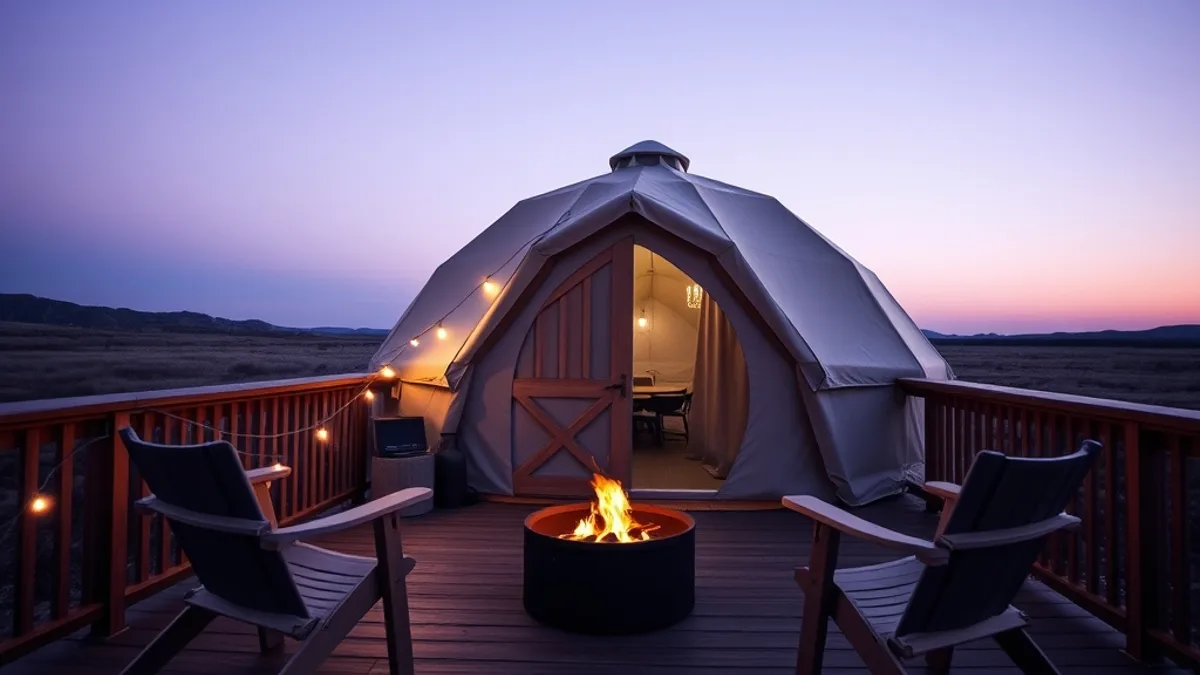
Glamping looks effortless in photos: a canvas tent glowing at dusk, wine glasses on the deck, not a chore in sight. In reality, a glamping weekend trip without a plan can turn into a rushed, overpacked and overpriced weekend. You drive too far, arrive after dark, discover the nearest store is an hour away and spend Saturday squabbling over an itinerary nobody agreed to.
The good news is that a great weekend only takes a little upfront thinking. This guide walks you through the whole process from start to finish: choosing dates and a destination radius that protects your weekend, picking a glamping style that suits the season, booking early and reading the fine print, building a realistic itinerary, packing smart, and squeezing every bit of enjoyment out of the site itself. Follow the steps in order and your two-night escape will feel as relaxed as it does in those photos.
Choose Your Dates and Destination Radius
The single biggest mistake people make with a glamping weekend trip is choosing a destination that turns Friday into a travel day. Pick a Friday-to-Sunday window and keep the drive under 2-3 hours. That way, travel never eats the weekend: you can leave work at a reasonable hour, arrive with daylight to spare and still be home early Sunday evening without feeling like you spent half the trip on the road.
Timing your trip for weather and value
Once you have your radius, think about when to go. The sweet spot for most regions is May-June or September-October, when you get mild weather, thinner crowds and lower nightly rates than peak summer. Shoulder-season weekends also book up more slowly, which gives you more choice of sites if you are planning on shorter notice.
Before you lock in specific dates, check two things: sunset times and local weather patterns. Evenings on the deck, around the fire pit or in the hot tub are half the appeal of glamping, so you want to arrive with enough daylight to settle in and enjoy them. If sunsets in your chosen month happen early, plan your Friday departure accordingly. A quick look at typical rainfall or temperature patterns for the area will also tell you whether to pack extra layers or plan a rainy-day backup activity.
Pick the Right Glamping Style for Two Nights
Not all glamping is the same, and the right structure depends heavily on the season you picked. Safari tents and yurts suit warm months beautifully, with airy canvas and plenty of ventilation. Domes and cabins with heating extend the season into cooler months, so if your dates fall in spring or fall, prioritize a solid structure over a classic tent.
Next, be honest about how much cooking you actually want to do on a two-night trip. Self-catering sites with kitchenettes give you flexibility and keep costs down, but they also mean grocery shopping before arrival and washing up on vacation. Resorts with on-site dining cost more but hand your evenings back to you. There is no wrong answer, only the one that matches your energy level.
For a short stay, private bathroom access should be near the top of your priority list. Shared facilities eat into limited time, especially on chilly mornings or middle-of-the-night trips across a dark campsite.
- Heating and cooling: ask whether the unit has a heater, fan or wood stove, since canvas structures can swing between hot afternoons and cold nights even in mild months.
- Water supply: some tented sites run on limited or non-potable water, which affects everything from showers to morning coffee, so check before booking.
- Privacy and spacing: look for sites that mention the distance between units, because a “secluded” tent ten steps from its neighbor changes the whole atmosphere.
- Power access: confirm whether there is electricity for charging phones and running small appliances, or whether you should bring a power bank.
If you want to see how these choices play out in practice, a lakeside glamping spot in southern Italy is a good example of what to look for in a well-run site, from on-site dining to the little details that make two nights feel easy.
Read our Laghi Nabi Review: Glamping in Castel Volturno, Italy for a real-world example of a site that gets these fundamentals right.
Book Early and Read the Fine Print
Glamping has grown popular enough that the best sites sell out their best units early. Reserve 2-3 months ahead for summer weekends, when demand peaks and the most photogenic tents, domes and cabins go first. For shoulder-season dates, booking 3-4 weeks ahead is usually enough, though popular spots near cities can still fill up.
Know what your money actually buys
Typical glamping prices run $150-400 per night for a tent, dome or cabin for two people. That range covers everything from a simple safari tent to a heated dome with a private deck, so confirm exactly what is included before you pay. Linens, towels, firewood, kitchen equipment and breakfast are included at some sites and charged as extras at others. A listing that looks cheap can quickly rival a hotel once you add rentals and fees, so compare the total for two nights, not just the nightly rate.
Reading reviews from past guests is the fastest way to spot what a listing omits, and our detailed review of a glamping resort near Lake Powell shows the kind of questions worth asking before you book.
See our Under Canvas Lake Powell – Grand Staircase review for a closer look at what a well-run glamping resort includes.
Check-in windows and cancellation policies
Before paying the deposit, note two details that catch travelers out. First, the check-in window: most glamping sites require arrival by early evening, often 5-7 pm, and late arrivals may need to arrange access in advance. Second, the cancellation policy. Weather is a bigger factor in canvas accommodations than in a hotel, so know how far ahead you can cancel or reschedule and what deposit is refundable. Five minutes of fine print now can save you the cost of an entire weekend later.
Build a Realistic Weekend Itinerary
A glamping weekend falls apart when you over-schedule it. With only two nights, the temptation is to cram in hikes, town visits and every activity the site offers, and then arrive home Sunday more tired than when you left. The whole point of glamping is that the site itself does most of the entertaining, so a packed agenda defeats the purpose. The fix is simple: build a light framework, not a packed agenda. That means deciding in advance what each day is actually for, then leaving generous gaps around it. Think of it like a good menu with two courses rather than a buffet: fewer things, enjoyed properly. The structure below keeps your weekend intentional without turning it into a checklist, and it works whether you are staying in a safari tent, a yurt or a heated dome.
- Plan one anchor activity per day. Pick a single thing to build the day around, such as a morning hike on a nearby trail or a slow wander through a small town with a good lunch spot. Once that anchor is done, let the rest of the day stay open for the deck, the fire pit or a nap. One anchor keeps the day from drifting, but two or three competing plans turn a relaxed weekend into a logistics exercise.
- Schedule grocery and supply stops before arrival. Many glamping sites sit 30-60 minutes from the nearest large store, so a forgotten bag of coffee becomes an hour-long errand. Do your shopping on the way out of town or at a supermarket you pass en route, and think through the meals you actually plan to cook. A short list written the night before saves you from standing in a rural aisle wondering what goes with sausages.
- Reserve the first evening for settling in. Don’t book anything for Friday night. You’ll want time to unpack, figure out the stove or heating, and watch the sunset without watching the clock. Remember that most sites expect you by early evening, often within a 5-7 pm check-in window, so arriving early leaves you the whole golden hour to explore the grounds at an easy pace.
- Protect the last morning. Keep Sunday checkout slow rather than rushed. A leisurely breakfast and one last walk around the grounds end the trip on the right note. Pack most of your things Saturday night so the final hour is yours, not a scramble for missing socks.
If you need a model for this unhurried approach, the philosophy behind slow travel at a Masurian lake glamping site captures it well: fewer plans, longer mornings and more time simply being where you are. The same mindset applies anywhere. Two nights is short, but a light itinerary makes them feel twice as long. Build in slack for weather, for a second coffee on the deck, for doing absolutely nothing, and you will drive home rested instead of needing another weekend to recover from your weekend.
Pack Smart for a Glamping Weekend Trip
Packing for glamping trips up first-timers in two ways: they bring too much of the wrong stuff and not enough of the right stuff. The biggest surprise for most people is temperature. Even in warm months, nights can drop 10-15 degrees below daytime highs, so the t-shirt and shorts that felt perfect at check-in leave you shivering on the deck by nine.
The solution is layers, not bulk. Think base layer, warm mid-layer and a windproof outer, so you can adjust as the evening cools. The same goes for footwear: days may call for hiking shoes, but evenings around a tent site are a different story.
Before you pack anything, reread the listing carefully. If bedding, towels and cookware are confirmed as provided, leave them at home. Every item you skip frees up space for the things that actually make the weekend enjoyable, like good food and a bottle of wine for the fire pit.
- A headlamp. Tent sites, domes and yurts often sit well away from exterior lighting, and phone flashlights are awkward when your hands are full of firewood or dishes.
- A reusable water bottle. Some sites rely on shared water stations or filtered taps rather than in-unit plumbing, so having your own bottle saves repeated trips.
- Slip-on shoes. You’ll be stepping on and off wooden decks and across grass, often barefoot-adjacent, and laces after dark get old fast.
- Easy food for night one. A ready-to-cook meal or good takeout means you don’t have to face a full cooking setup after the drive.
Make the Most of the Site Itself
Booking the site is only half the experience; how you use it matters just as much. Many glamping properties are destinations in themselves, with grounds, views and amenities that travelers walk right past because they’re focused on the next activity.
Arrive early, settle in slowly
Check-in windows at most sites typically run in the late afternoon and early evening, so plan your drive to land you there with daylight to spare instead of squeaking in at the last minute. Daylight arrival lets you explore the grounds, find the fire pit, locate the bathroom block and figure out how the tent or dome actually works, all before you’re fumbling with a headlamp in the dark. It also gives you a buffer if traffic or a wrong turn slows you down.
Spend your amenities, don’t save them
Here’s a mistake almost everyone makes: saving the fire pit or hot tub for Sunday night, when you’re tired, packed and watching the clock. Use them on night one instead, when your energy is highest and you have no departure looming. Light the fire, pour a drink and enjoy the best the site has to offer while you’re fresh enough to appreciate it. If there’s a second night, that’s your bonus round.
Finally, talk to your host when you arrive. Ask where locals eat, which viewpoint is worth the drive and what most guests miss. Hosts often point to eateries and lookouts that simply don’t show up on maps, and one good tip can turn into the best hour of your whole weekend.
Your Glamping Weekend, Sorted
Glamping looks effortless in photos, but a two-night escape can quickly unravel without a plan: too much driving, too much gear and too many expectations packed into one short weekend. The good news is that a little preparation goes a long way, and most of it happens before you ever leave home.
Think of the planning steps as a checklist rather than a chore. Once your dates, structure and booking are locked in, the actual trip becomes wonderfully simple: you arrive, unpack a small bag and settle in. The whole point of glamping is that someone else handles the hard part, so let the site deliver the comfort while you focus on the fire, the stars and the company.
If this guide helped you plan your own trip, leave a comment or share it with a friend who needs a weekend away.