Choosing where to stay around Victoria Falls is trickier than it looks. Travelers soon discover that Victoria falls lodges exist on both sides of the gorge — in Zimbabwe’s Victoria Falls town and around Zambia’s Livingstone — and each side delivers a noticeably different experience for your budget and itinerary.
This guide compares the two in detail: how the side you choose shapes your daily logistics, the lodge areas and atmosphere on each side, how the seasons change what you’ll actually see, and what prices, booking windows and border crossings look like in practice. We finish with clear recommendations for matching a lodge to your trip style, plus a straightforward takeaway. By the end, you should know exactly which side of the falls deserves your nights.
Why the Side You Choose Shapes Your Victoria Falls Lodge Stay
The question most travelers underestimate is simple: which country should your lodge be in? The falls sit on the border between Zambia and Zimbabwe, and both countries have tourism infrastructure on their side — but the two bases are far from interchangeable.
Distance and viewpoints
Zimbabwe’s Victoria Falls town sits about 2 km from the falls entrance, and roughly two-thirds of the viewpoints along the falls lie on the Zimbabwean side. That means more ground to cover, more angles on the main curtain of water, and the convenience of a proper town within walking distance of most lodges.
Zambia’s Livingstone is about 20 km from the falls, so you will typically drive or take a shuttle to reach the entrance. What Zambia lacks in distance it makes up for in drama: its side offers close-up angles such as Knife-Edge Bridge, where you stand almost inside the spray of the eastern cataract.
Why it matters for your days
Your choice affects daily logistics more than you might expect. On the Zimbabwe side, walking access to restaurants, markets and the falls entrance shapes your evenings and mornings. On the Zambia side, plan around transfers to the falls and to Livingstone town. If you want to see both sides — many travelers do — border crossings enter the picture, along with the paperwork and timing they involve. Activity bookings also differ: some operators run from one side only, so confirm where your chosen activities depart before you commit to a lodge.
Zimbabwe Side: Lodge Areas, Access and Atmosphere
Zimbabwe’s side is built around one compact hub: Victoria Falls town. It is genuinely walkable, with restaurants, cafes, craft markets and the falls entrance just minutes from most lodges. You can park your car, or skip renting one entirely, and get everywhere on foot or with a short taxi ride. For a first visit, that convenience is hard to beat.
Where the lodges sit
Lodges in and around town range from simple guesthouses to full-service safari hotels, many within strolling distance of the main street. If you prefer more atmosphere and less traffic, look upstream along the Zambezi River. Lodges there offer quieter settings — often with river views, hippos calling after dark and sunsets over the water — while remaining a short drive from town and the falls entrance.
Who this side suits
The Zimbabwe side is best for travelers who want full viewpoint access and a compact, tourist-ready base. With roughly two-thirds of the viewpoints on this side, you can spend a full day walking the rainforest paths and still have energy left for dinner in town. Add the ease of booking activities from a well-developed tourism hub, and it’s a practical choice for families, first-timers and anyone who likes their logistics simple. Check current entry requirements and park fees before you travel, as these change.
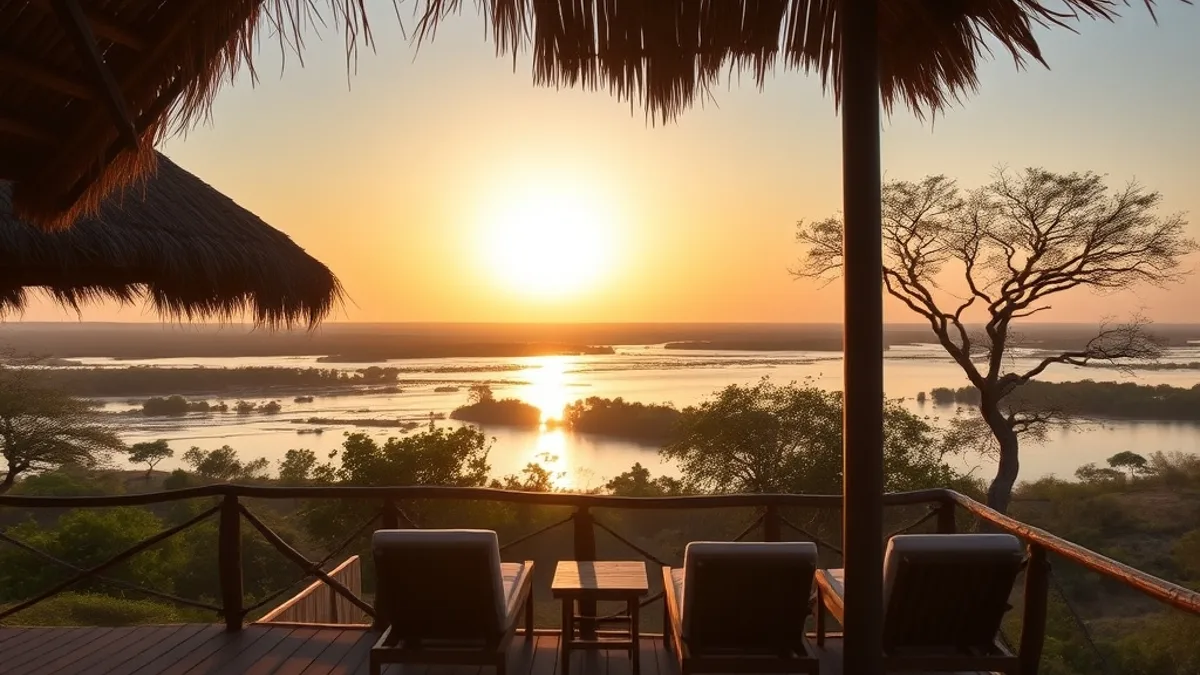
Zambia Side: Lodge Areas, Access and Atmosphere
Zambia’s side has a different rhythm. Livingstone’s lodges cluster along the Zambezi River, where riverside settings dominate and the overall feel is more relaxed and less developed than Victoria Falls town. Evenings tend to revolve around the water: sundowner drinks on a deck, the odd hippo grunting offshore, and far less traffic or noise than a purpose-built tourism town.
Where the lodges sit
Most accommodation spreads along the river both upstream and downstream of Livingstone itself. The Mosi-oa-Tunya area is the sweet spot for falls access: some lodges there sit within walking distance of the Zambian falls entrance, so you can arrive at opening time and have the paths nearly to yourself. Lodges closer to Livingstone town will mean a transfer to the falls, which most arrange without fuss.
Who this side suits
The Zambia side is best for travelers prioritising close-up falls views, sunset cruises and lower-key evenings. From viewpoints like Knife-Edge Bridge, you get dramatic, in-your-face angles that the wider Zimbabwean panoramas can’t match — especially when water levels are moderate. The river setting also makes sunset cruises and riverside dining effortless. If your ideal day ends with a quiet deck rather than a busy main street, this side fits. Confirm current park fees and border requirements before booking, as both change regularly.
How Seasons Change the Victoria Falls Lodges Experience
Victoria Falls is not the same waterfall year-round, and the season you pick will shape your lodge stay as much as the side of the border you choose. The volume of water moving over the edge changes dramatically through the year, and with it the spray, the views, the activities and even how wet your shoes get at breakfast.
From February to May, the Zambezi swells to its peak flow. This is when the falls are at their most thunderous, and the spray can rise in columns visible from far away. The trade-off is visibility: viewpoints on both sides are often drenched in mist, and walking paths can be soggy. Raincoats and waterproof covers for cameras are essential, and some angles may be little more than white cloud.
From September to December, water levels drop. The gorges open up, rock formations become visible, and photographers get the clearest lines of sight of the year. On the Zambian side, though, the falls can shrink to a trickle in places, so the famous curtain effect is reduced. On the Zimbabwe side, more of the falls keeps flowing.
June to October is the sweet spot for many travelers: decent water levels combined with dry, sunny weather. That popularity comes at a cost, with lodge rates often 30-50% higher than in green season, plus bigger crowds at the main viewpoints.
- Pack a dry bag in high water: even lodges a short drive from the falls can feel the spray, and electronics soaked on a viewpoint walk are a common green-season complaint.
- Low water opens activities: with reduced flow, options like swimming at the edge of the falls on the Zambian side typically become possible, which high water makes unsafe or impossible.
- Shoulder months can be a compromise: late May and early September often offer a middle ground between spray volume and visibility, with pricing closer to green season.
- Check moon dates for lunar rainbow tours: moonbows over the falls are only offered around full moon nights, and availability varies with water levels and cloud.
Comparing Prices, Booking Windows and Border Logistics
Lodge prices on the Zambia and Zimbabwe sides are more similar than most travelers expect. Budget and mid-range lodges on both sides typically start around $150 per night, while top riverside luxury properties can run $800 or more. What you pay for is usually the location along the Zambezi and the level of privacy, not the nationality of the border post you sleep near.
Timing affects your wallet more than your choice of side. During the June-October peak, rates often climb 30-50% above green season levels, and the most sought-after riverside lodges fill first. Booking 3-6 months ahead is the safe window for those months. In the green season, 1-2 months of lead time is usually enough, and you will find far more last-minute availability at every price level.
Border logistics are easier than many people assume. The two border posts sit roughly 10-20 minutes apart by road, so splitting your stay between Livingstone and Victoria Falls town is a realistic plan rather than an ambitious one. Build in 1-2 hours for the crossing during busy periods, since visa and immigration queues vary with arrival traffic.
- Kaza UniVisa: a multiple-entry visa covering both Zambia and Zimbabwe is typically available at the border posts, which makes same-day or multi-day crossings far simpler; confirm current eligibility and fees before travel, as these change.
- Day-trip versus overnight crossing: many visitors sleep on one side and cross for activities, but each crossing means repeat immigration formalities and repeat fees, so a split stay often works out better value than two daily round trips.
- Currency planning: Zimbabwe commonly uses US dollars for tourist transactions, while Zambian kwacha dominates everyday spending in Livingstone; carry small US dollar notes for border fees, taxi fares and tips on either side.
- Operator transfers: most lodges and activity operators can arrange cross-border transfers for you, which removes the guesswork from taxi negotiations and helps if your crossing lands in a queue-heavy window.
How to Match a Lodge to Your Trip Style
The best lodge choice often comes down to what kind of trip you’re planning. A first-time visitor with a checklist of viewpoints has different needs than a photographer chasing light through the gorge, and honeymooners care about something else entirely. Matching your base to your travel style saves you from daily compromises.
If you’ve never seen the falls before, base yourself in Victoria Falls town on the Zimbabwe side. You’ll be minutes from the entrance, and you can work through the viewpoints at your own pace, returning to your lodge for lunch and going back in the afternoon when the light changes. No shuttles, no planning, just walk out the door.
Photographers and repeat visitors should look at Zambia during low water, roughly September to December. With less spray, the gorge reads clearly on camera, and angles like Knife-Edge Bridge put you right in the action. If you’ve already seen the falls from the classic viewpoints, these close-up perspectives feel like a different destination.
Honeymooners and luxury seekers should focus on riverside lodges upstream on either side. Both countries have quiet stretches of the Zambezi where you trade walkability for privacy, sunset views over the water, and the kind of setting where dinner comes to you.
- First-timers: staying in town means you can split your visit across two days, morning and late afternoon, without paying for transport or rushing through the viewpoints in one go.
- Photographers: low water on the Zambia side also opens upDevil’s Pool–style angles at the lip of the falls, and the reduced mist means less lens wiping and clearer long exposures into the gorge.
- Honeymooners: look for lodges that include sunset cruises or private dinners on their own stretch of riverbank, and check whether the lodge arranges transfers, since an upstream location means you won’t walk to restaurants.
- Border flexibility: if you can’t decide, remember the posts sit about 10-20 minutes apart, so a Zambia lodge with a day trip to the Zimbabwe viewpoints (or the reverse) is a realistic plan, just allow 1-2 hours at the crossing in busy periods.
Zambia or Zimbabwe: The Takeaway
So which side should you book? Zimbabwe wins on viewpoint access and walkable town convenience, since the majority of the falls’ viewpoints sit on its side, with a falls entrance minutes from your lodge. Zambia wins on close-up drama, including angles like Knife-Edge Bridge, plus relaxed riverside lodges along the Zambezi near Livingstone.
Remember that season and budget matter as much as the side you pick. June to October brings peak-season rates often 30-50% higher than green season, while low water from September to December changes what you actually see from the paths. Whichever side appeals, booking 3-6 months ahead secures the best lodges for peak-season travel on both sides of the falls. If this helped you decide, leave a comment or share the article with a fellow traveler.