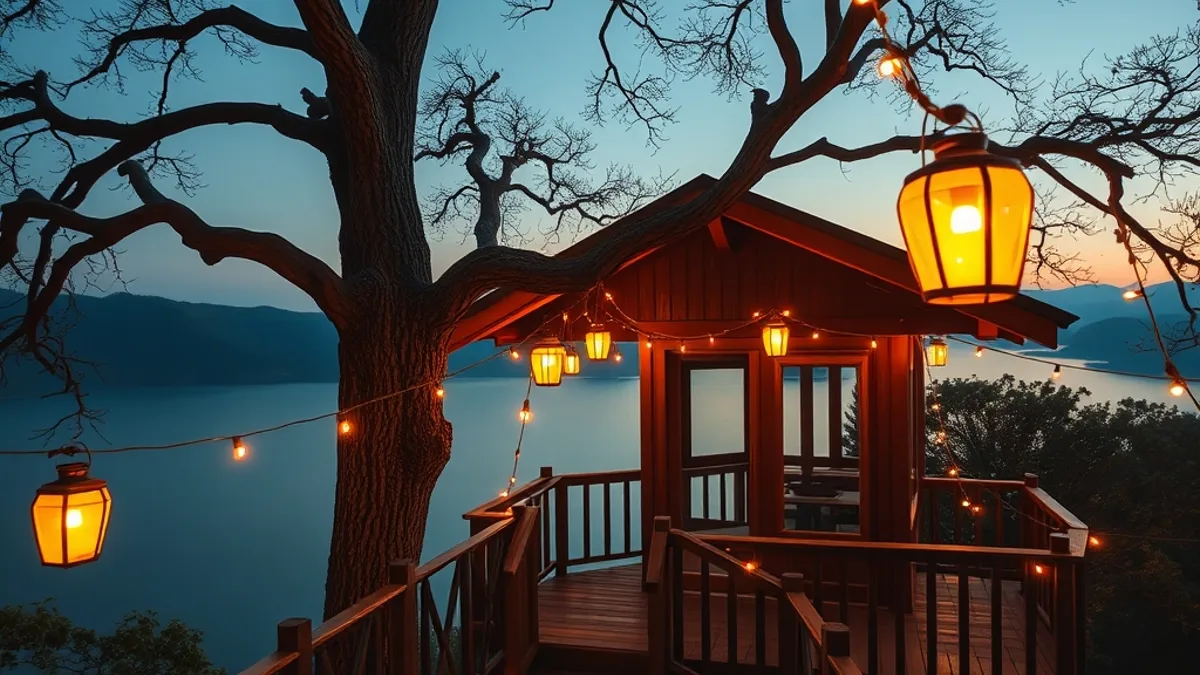
Treehouse stays look magical in photos: a canopy of leaves, a balcony at treetop height, morning coffee above the forest floor. Then guests arrive and discover the reality — a steep ladder instead of stairs, a shared bathroom a five-minute walk away, or a summer heatwave in a small wooden box with no air conditioning. The gap between the listing photo and the actual experience can be wide, and it usually comes down to details nobody thought to ask about.
This guide walks you through the whole process, from choosing the right type of treehouse for your trip to vetting access, safety, bathrooms and power before you pay. You’ll also find advice on when to book and what treehouse stays typically cost, the questions worth asking every host, and a practical packing list for a night in the trees. Read it before you book, and the magic in the photos is far more likely to match the stay itself.
What Kind of Treehouse Stay Fits Your Trip
The first decision is how much comfort you actually want. Luxury treehouse suites are essentially hotel rooms built into the canopy: en-suite bathrooms, climate control, proper insulation and often extras like outdoor baths or private terraces. Rustic cabins sit at the other end of the scale, with composting toilets, basic furnishings and a much closer-to-nature feel. Neither is better — but arriving expecting a hotel and finding a composting toilet will ruin an otherwise lovely trip.
Next, think about access. Platform treehouses are raised off the ground and reached by stairs or a ladder, which gives you the true elevated experience but rules them out for some travelers. Ground-access models sit on stilts or low platforms at ground level, making them easier for anyone with limited mobility or heavy luggage.
Who is staying, and where?
Most treehouse properties are couples-only, and most units sleep just 2 guests. Family units for 4–5 people exist but are rarer and tend to book out fastest, so if you’re traveling with kids, search specifically for them. Also decide between a treehouse resort — where several units share facilities like a pool, restaurant or bathrooms — and a standalone private rental, where you get the whole property to yourself. Resorts offer services and company; standalone rentals offer privacy and quiet, but you’ll be more self-sufficient.
How to Vet Access, Safety and Comfort Before Booking
Access is the detail that surprises treehouse guests most often. Before booking, ask exactly how you reach the unit: a short flight of stairs, a vertical ladder, a suspension bridge, or a walk of 10–30 minutes from where you park. That last one matters a lot if you’re carrying suitcases, groceries or a toddler. Some hosts meet you at the parking area and walk you in; others leave you to find the path yourself with a map photo sent by message. A property we stayed at, covered in our review of glamping at Laghi Nabi in Castel Volturno, Italy, showed us how much the approach shapes the whole experience — arriving after dark along an unfamiliar forest path feels very different from walking in on a sunny afternoon.
Safety and comfort questions deserve direct answers, not vague reassurances. Weight limits are real on raised platforms, so ask directly if you’re booking for two adults plus gear, and confirm railing heights if you’re traveling with children — some properties don’t allow kids at all because of ladder or stair access. Temperature is another common shock: treehouses can swing around 10°C between day and night, so insulation, heating and cooling matter more than in a standard hotel room. Ask how the unit is heated in cool months and whether it actually holds warmth overnight, since a small heater in a drafty wooden room may not keep up.
- Stability in wind: ask whether the structure moves noticeably in gusts and whether the property has ever closed units for weather.
- Insect control: check whether windows and openings have proper screens and whether the property treats the area around the platform.
- Noise: read reviews specifically mentioning creaking wood, wind in the canopy, or nearby roads — sound carries differently at height.
- Photo freshness: look for guest photos from the last year or two, since wooden structures weather fast and old listings can look far better than reality.
Bathroom, Kitchen and Power: What to Expect On Site
Bathrooms are the number-one dealbreaker in treehouse stays, so confirm the setup before paying, not after. En-suite bathrooms are standard in luxury suites, but many mid-range and rustic models rely on shared facilities located 50–200 meters away. That distance feels very different at midnight in the rain than it does in the listing photos, so ask for the actual walking distance and whether the path is lit.
Cooking rules vary just as much. Some treehouses include a full kitchen, others offer an outdoor grill only, and many — especially resort-style properties — allow no cooking at all and provide meals instead. If there’s no kitchen and no restaurant nearby, you’ll need a plan. Power and water deserve equally direct questions: mains electricity is common, but solar setups often mean limited sockets, and the most rustic units are candle-lit with no device charging at all. Running hot water is not guaranteed in rustic models, so confirm it exists if a hot shower matters to you.
- Water pressure and supply: ask whether water comes from a tank or mains, since tank systems can run low on busy weekends.
- Fridge access: even where cooking is banned, some hosts offer a shared fridge — useful if you’re bringing your own breakfast.
- Lighting type: check whether lighting is electric, solar or lantern-based, and whether lanterns are provided or you must bring your own.
- Meals logistics: if meals are provided, ask what times they’re served and whether dietary needs can be accommodated.
When to Book Treehouse Stays and What They Cost
Treehouse stays span a wide price range, so it helps to know what your budget actually buys. Most properties charge roughly $120–$350 per night, which typically covers a private unit with basic comforts. At the top end, luxury treehouse suites with en-suite bathrooms, climate control and panoramic decks regularly exceed $500 per night — closer to a boutique hotel rate than a cabin in the woods.
Timing matters as much as budget. For summer weekends, aim to book 2–4 months ahead, and if you want July or August in a popular region, start looking 6+ months out. Family units that sleep 4–5 guests are rarer than couples-only models and tend to sell out first, so reserve those even earlier if that is your situation.
Seasonal pricing: when the deals appear
Prime treehouse season runs from May to October in most temperate regions, when the weather is mild and the forest is at its best. If your dates are flexible, shifting to the off-peak window from October through April can cut rates by 20–40% compared to summer prices — you trade some warmth for quieter surroundings and lower costs.
Another easy saving is the day of the week. Midweek stays are often 15–25% cheaper than the same treehouse on a Friday or Saturday, and you will usually share the property with fewer guests. Check cancellation terms before committing to a far-out booking, since plans and weather can change.
Questions to Ask the Host Before You Pay
A few well-chosen questions before you pay can save you from surprises on arrival. Treehouses are unusual properties, and the details that matter — access, weather policies, what is actually included — are not always obvious from the listing. Photos can make a place look polished while leaving out the parts that affect your stay most, like how you actually reach the treehouse or what happens in bad weather. Send the host a short message covering the points below and judge them by how specific and prompt the answers are.
Start with the practicalities of getting there and getting in, then move to money matters like cancellation terms and what the rate covers. Keep your first message short and numbered so nothing gets skipped — hosts who answer each point in order usually run a tighter operation. Vague answers on access or inclusions are a reasonable signal to keep looking, even if the listing itself looks tempting.
- Exact distance from parking: ask whether it is a short stroll, a flight of stairs or a 10–30 minute walk or drive, and whether staff help carry luggage — hauling suitcases up a forest path alone is no fun.
- Weather-related closures: storms can shut treehouses for safety, so ask what happens if yours is closed — do you get a full refund, a free rebooking or a credit, and how far in advance will they tell you?
- Check-in logistics: confirm whether you get a self-access code and can arrive whenever you like, or whether a host guides you in at fixed times — late arrivals may need special arrangements.
- What is included in the rate: ask specifically about breakfast, firewood for the stove or fire pit, and any transfers from a nearby town or station, since these extras can otherwise add real cost to your stay.
If the host answers all four clearly, that is usually a good sign they run a well-organized property. If answers are vague or contradictory, treat it as a warning before you hand over a deposit.
Packing and Practical Prep for a Night in the Trees
Packing for a treehouse is closer to packing for light camping than for a hotel stay, even in upscale properties. Forest settings bring darkness, insects and temperature swings that a typical room does not, and luggage that works fine on hotel trolleys can become a real problem on stairs and gravel paths. A little preparation makes the difference between a magical night and a cold, buggy one.
The single most useful item is a headlamp or lantern, because paths between treehouses are often unlit and you will almost certainly need to walk somewhere after dark — whether to a shared bathroom, a fire pit or the parking area. Pack it in an easy-to-reach pocket, not the bottom of your bag.
- Layers, not one warm jacket: temperatures can swing noticeably between a sunny afternoon on the deck and a chilly night inside, so bring a t-shirt, a fleece and a light windproof layer you can add or shed.
- Insect repellent from May to September: you are sleeping in the trees with open windows or decks, so a good repellent and optionally a plug-in or travel mosquito device for the room make evenings far more pleasant.
- Soft-sided luggage: a duffel or soft backpack is far easier on ladders, stairs and suspension walkways than a hard-shell suitcase, which is awkward to carry and can damage narrow steps.
- Offline maps and downloaded entertainment: cell signal is often weak in forest settings, so download maps, playlists and shows before you arrive, and tell someone your plans if you will be out of contact.
Finally, keep a small day bag with essentials — water, snacks, charger, headlamp — so you are not unpacking everything just to find your toothbrush. Once you are settled in the trees, you will want to relax, not dig through your luggage.
Wrapping Up Your Treehouse Stay Plan
A treehouse stay can be every bit as magical as the photos suggest — as long as you match the treehouse type to your group size and comfort expectations before you fall in love with one. A couples-only suite with an en-suite bathroom is a very different night out than a rustic cabin reached by ladder with shared facilities down the path. Vet access, bathrooms and power before paying, and ask the host your key questions so there are no surprises when you arrive.
Timing matters too. Book 2–4 months ahead for summer weekends, target the May–October prime season, and pack for unlit paths and temperature swings between day and night. Do that homework, and the reality will match the dream. If you have stayed in a treehouse — or are planning your first night in the trees — share your experience or questions in the comments below.