You’ve picked your destination, packed your hiking boots, and now you’re stuck on one last decision: a cozy lodge with solid walls and a restaurant downstairs, or a glamping tent with a wood stove and a sky full of stars? The lodge vs glamping debate trips up a lot of travelers because the trade-offs aren’t obvious from the photos. One promises reliability, the other promises atmosphere, and both come with costs that aren’t always listed up front.
This guide breaks the choice down into the details that actually matter. We’ll define what each stay type really is, compare comfort levels from beds to bathrooms to weather resilience, and run the numbers on nightly rates plus the hidden extras. Then we’ll look at the experience each one delivers, when to book, how to match the stay to your trip, and finish with a clear bottom line. By the end, you’ll know exactly which option fits your season, your budget and your travel style.
Lodge vs Glamping: What Each Stay Type Really Is
The two options get lumped together in booking filters, but they’re built completely differently. Understanding what you’re actually paying for is the first step to choosing well.
What a lodge really is
A lodge is a permanent building, usually constructed from timber or stone, sitting in or near a natural setting. Think solid walls, real insulation, heating, en-suite bathrooms and, in many cases, an on-site restaurant and bar. Functionally, it’s a small hotel that happens to be surrounded by forest or mountains rather than a city block. Housekeeping, a front desk and communal spaces like lounges and fireplaces are all part of the package.
What glamping really is
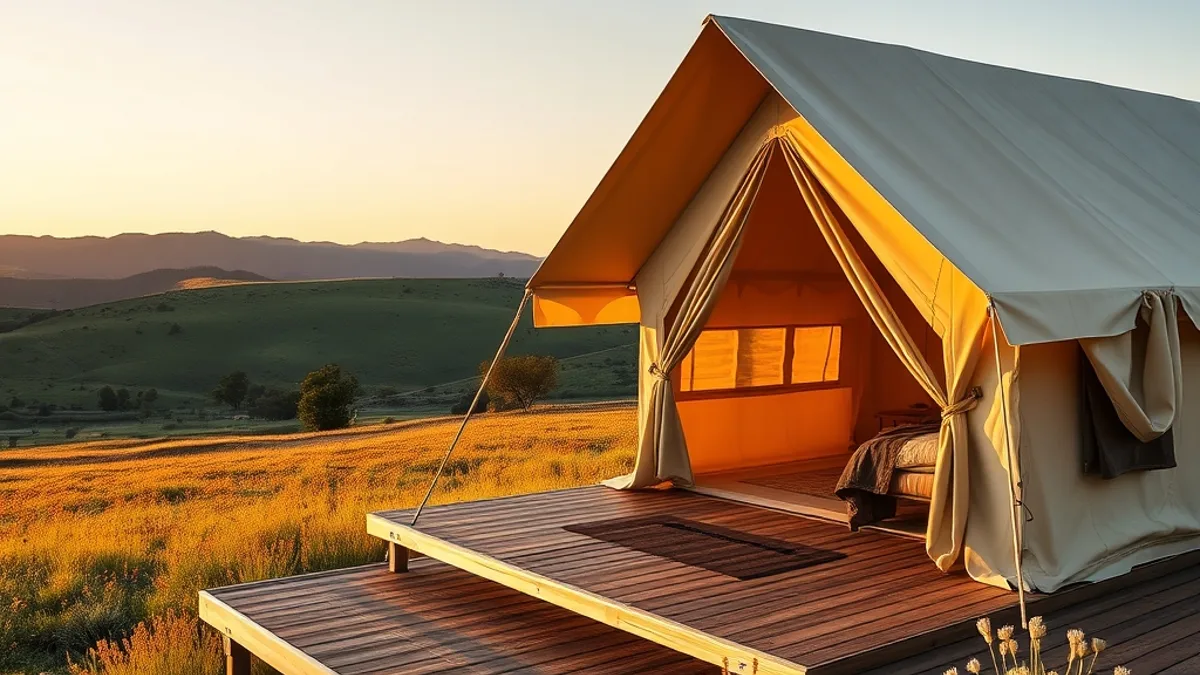
Glamping covers a range of semi-permanent structures: furnished canvas tents, geodesic domes, safari tents and cabin-style units. The idea is to keep the camping feel — canvas overhead, nature right outside the zipper — while adding real beds, furniture and often lighting and heating of some kind. Comfort varies widely from site to site, from fairly basic setups to units that feel close to a boutique hotel room.
The core difference comes down to this: a lodge is a small hotel in nature, while glamping is a comfort upgrade on a campsite. Neither is better across the board — they simply serve different moods, seasons and budgets, which is exactly what the rest of this guide unpacks.
Comfort Comparison: Beds, Bathrooms and Weather
Comfort is where the two options diverge most sharply, and it’s the area where glamping surprises people the most — in both directions.
Bedrooms and bathrooms
A lodge guarantees insulation, hot showers and heating no matter what the weather is doing outside. You can arrive in a snowstorm or a heatwave and the room will behave the same way. Glamping comfort depends heavily on the individual unit: some sites offer shared bathhouses a short walk away, while high-end safari tents and domes come with private en-suites and proper plumbing. Always check which end of that spectrum you’re booking.
Space follows a similar pattern. Glamping units are typically 20-50 square meters, which is comfortable for a couple but can feel tight for a family with luggage. Lodge rooms and suites range from 25 to over 60 square meters, and suites often include seating areas, desks and space to spread out on a longer stay.
How weather changes the equation
Cold nights, rain and insects affect canvas far more than solid walls. A tent that feels magical on a dry, warm evening can turn damp and chilly when the temperature drops or a storm rolls through. Shoulder-season glamping demands warm bedding, layered clothing and ideally a wood stove or reliable heater in the unit. Lodges simply don’t have this problem, which is why they remain the safer bet for trips where weather is unpredictable or where a bad night’s sleep would ruin your plans.
Cost Comparison: Nightly Rates and Hidden Extras
On paper, glamping looks like the budget option. In practice, the gap is narrower than most travelers expect, and the extras on both sides can shift the total more than the headline rate suggests. A tent that seems like a bargain can end up costing close to a mid-range lodge room once you factor in meals, fees and add-ons.
Typical lodge rates run $150-400 per night for double occupancy in popular nature regions, with the top of that range usually reflecting peak season or properties with extensive facilities. Typical glamping rates run $100-300 per night for a tent or cabin-style unit, so the saving is often smaller than expected — sometimes just $50-100 per night once you compare like-for-like locations and seasons. That difference can shrink further in shoulder months, when glamping sites discount to fill units.
Before booking either, add up the extras that rarely appear in the advertised rate:
- Parking fees: some glamping sites charge a daily fee per vehicle, which adds up on a multi-night stay, especially if you’re renting a car for the whole trip.
- Firewood and campfire bundles: many glamping sites sell firewood separately, and a couple of evenings by the fire can quietly add a noticeable amount to your bill.
- Breakfast not included: glamping sites often have no kitchen on site, so you’ll budget for café breakfasts or groceries, while many lodges include or offer a breakfast option in-house.
- Minimum-stay rules on weekends: popular glamping sites frequently require two or three nights over weekends and holidays, which can force a longer (and pricier) stay than you planned.
- Restaurant mark-ups: eating every meal at a lodge restaurant is convenient, but expect hotel-style pricing compared to cooking yourself or eating in a nearby town.
- Resort-style activity fees: some lodges charge for guided hikes, equipment rental or wellness facilities on top of the room rate, so check what’s included before you book.
- Higher peak-season pricing: both stay types raise rates in summer and holidays, but lodges in ski and lake regions often show the steepest jumps, so compare the same dates across both options.
The practical takeaway: get the full quote, including fees and meals, for both options before deciding. The cheaper sticker price isn’t always the cheaper stay, and the option with the most inclusions sometimes wins even at a higher headline rate.
The Experience: Atmosphere, Nature and Activities
Glamping puts you right at the edge of the outdoors. Canvas walls let in the morning light, and you fall asleep to wind in the trees rather than an air conditioner hum. Campfires and stargazing are built into the stay, not an optional add-on, because your evening literally happens outside. If you want a night that feels different from every hotel room you have had, this is where you find it.
The lodge as a base camp
Lodges work differently. They are the warm, structured center of your trip: a communal lounge to swap stories in, a bar with a fire going when you come back soaked from a hike, and staff who can arrange guided walks or dry your ski gear overnight. After a long day in bad weather, walking into a solid building with a restaurant downstairs is a genuine pleasure.
So the choice comes down to what you want the stay itself to feel like. Choose glamping for novelty and immersion, when the outdoor atmosphere is the point of the trip. Choose a lodge for structure, dining and all-weather reliability, especially if your plans involve full activity days and unpredictable forecasts. Neither is better; they simply serve different kinds of evenings.
Seasons and Booking: When to Reserve Each Option
Lodges operate year-round, which makes them the obvious pick for ski trips and winter escapes. You can book a mountain lodge in February with the same confidence as a summer stay, because the heating, kitchen and rooms all keep working when the snow arrives. Glamping is a different story: most sites run roughly April to October, and many close entirely or downgrade to limited units in winter. If your trip dates fall outside that window, a lodge is usually the only realistic option, so decide on your stay type before you fall in love with a specific property.
Booking windows matter too, and they differ more than most travelers expect. Lodges in popular nature regions have more rooms to sell, but the best-value units still go early for peak periods. Glamping sites are smaller, often with just a handful of units, which means a single busy weekend can wipe out availability. One rainy forecast can also trigger a wave of cancellations and rebookings, so flexibility on your dates helps when calling to ask about last-minute openings.
- Lodges: reserve 3-6 months ahead for summer and ski season, and ask about cancellation terms since winter trips carry more weather risk.
- Glamping: popular sites often sell out 2-4 months ahead in summer, so book as soon as dates are open.
- Shoulder months: May, June and September usually bring lower rates and thinner crowds for both stay types, with the bonus of quieter trails.
- Midweek stays: glamping sites in particular tend to have open calendars from Monday to Thursday, sometimes with reduced minimum-stay rules.
How to Choose: Matching the Stay to Your Trip
The right stay depends less on the tent-versus-building question and more on the trip itself. Traveling in winter or with young children? A lodge wins easily: heating you can trust, real space to spread out and reliable dining when everyone is tired and hungry. Glamping with a toddler during a cold snap is a memory you do not want. Families should also think about logistics, because a lodge puts breakfast, drying rooms and a front desk a few steps from your door, which makes rainy days and early starts far less painful.
On the other hand, a summer adventure or a romantic one-off is exactly what glamping was made for. Sleeping under canvas with a fire outside delivers the most memorable outdoor nights you can book. Trip length matters as well: a lodge desk, dependable Wi-Fi and room service make long stays and workcations far easier, while short 1-2 night trips suit glamping perfectly. Couples often find that one or two nights in a well-equipped tented unit feel special, whereas a week of cooler nights and shared facilities can start to test the romance.
- Winter or family trips: pick a lodge, and check whether family rooms or connecting suites exist before booking.
- Romantic getaways: look for glamping units with private en-suites and a wood stove, which soften the camping feel considerably.
- Workcations: confirm actual Wi-Fi speeds and desk space with the lodge before committing to a week or more.
- Mixed groups: many lodge resorts now offer standalone cabins or tented units on the same property, so part of the group can glamp while others take a proper room.
Lodge or Glamping: The Bottom Line
So which one wins? Neither, universally. Lodges take the crown on year-round comfort, generous space and built-in services like dining and heating, at $150-400 per night. Glamping wins on atmosphere and that rare feeling of sleeping inside the landscape, usually for $100-300 per night. The catch: most glamping sites only run from April to October, so your dates may decide for you.
The honest answer is that the right pick depends on three things: the season you’re traveling in, how long you’re staying, and how much weather risk you’re willing to accept. A solid roof makes sense for winter trips and longer stays, while a canvas tent under the stars is hard to beat for a short summer escape. If you’ve stayed in one or the other recently, tell us how it went in the comments, or share this article with a friend who’s stuck on the same decision.