Off-grid glamping has become one of the most popular searches in the glamping world, and for good reason: the idea of a cozy bed, a wood stove and total silence sounds irresistible. The problem is that many sites use the word off-grid as a marketing label while quietly running a mains cable to the nearest pole. If you book expecting candlelight and rainwater and arrive to find a full kitchen and a hot tub on demand, the experience you paid a premium for is not what you got.
This guide gives you a practical way to separate real self-sufficiency from clever wording. We will define what off-grid glamping actually means, then walk through the four tests that matter: power, water and waste, location and access, and the questions worth asking before you pay. We will also cover the red flags that expose a fake claim and how to read a listing with a critical eye, so you can book with confidence.
What Off-Grid Glamping Actually Means
A genuinely off-grid glamping site operates without any connection to mains electricity, public water, sewerage or gas lines. Everything guests use on site is generated, stored and managed there: power from solar panels or a generator, water from a well or tank, and waste dealt with on the property itself. That is the definition that matters, and it is far more demanding than most listings suggest.
Infrastructure, not remoteness
Here is the part many travelers get wrong: being off-grid is about infrastructure, not distance. A site can sit 20 minutes from a supermarket and still be genuinely off-grid if it self-supplies everything. Conversely, a remote-looking farm in the hills can have a mains cable running up the track. So when a listing leans heavily on how isolated it feels, that tells you about the view, not the plumbing.
The words used to sell these sites are also unregulated. Eco, green, sustainable and rustic can appear in any headline regardless of what is actually connected behind the scenes. One site may compost its waste and run on solar; another may use the same adjectives while running a full electric heating system off the grid. There is no certification body checking these claims in most countries, so the burden falls on you, the guest, to look past the vocabulary and ask about the actual systems. The rest of this article shows you exactly how.
Power: The First Test of an Off-Grid Glamping Site
Power is the clearest test of an off-grid glamping site, because electricity is the hardest thing to fake and the easiest thing to ask about. Message the host directly and ask where the electricity comes from: solar panels, wind turbines, a generator, or a mains hookup. A genuine off-grid host will answer in one sentence because they think about their power system every day. Vague replies like “it’s all very sustainable” or “we try to be green” are a red flag, since a site with real infrastructure knows its own setup in detail.
Solar-only sites often limit what you can run, so before booking, check whether hairdryers, kettles and electric heaters are permitted. Many are not, because a single kettle can drain a battery bank that took a full day of sun to charge. We noticed this firsthand during our stay at a lakeside glamping site in Castel Volturno, Italy, where the solar setup shaped everything from the lighting to what could be plugged in. Also ask what happens after two or three cloudy days: sites with battery banks or backup generators handle the gap, while others simply go dark until the sun returns.
The sockets themselves tell a story. Here is what to look for:
- USB charging points and 12V lighting are typical of true solar setups, since low-voltage systems waste far less of a limited battery charge than converting power to household voltage.
- Full 230V sockets in every tent suggest grid power or a large generator running constantly, which most small solar arrays cannot support.
- Shared rather than per-unit power, such as one charging station in a common area, usually indicates a modest solar bank being carefully rationed.
Water, Waste and Toilets
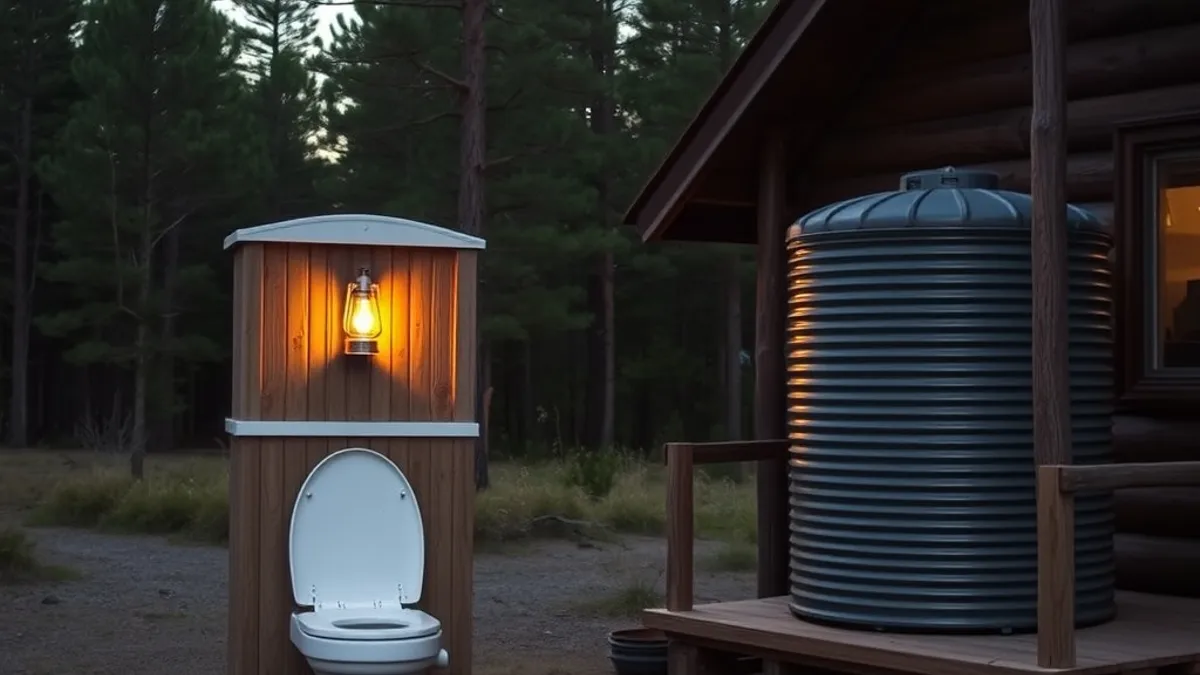
Water is where off-grid claims get tested quickly, because guests notice within hours whether the taps work the way a listing implied. Genuine sites source water from wells, boreholes or rainwater tanks, and a good host will tell you which one you are drinking from. They should also tell you whether the water is drinkable straight from the tap or needs boiling or filtering first. If a listing cannot answer that basic question, treat the off-grid claim with suspicion.
Toilets are just as revealing. Composting toilets, incinerating toilets or shared wash houses point to a real lack of sewer connection, because these systems exist precisely where flushing to a mains line is impossible. They are not glamorous, but they are honest. On properly off-grid sites, greywater from sinks is often filtered through reed beds or soakaways rather than piped away, so ask what happens to the water from the kitchen sink if the listing claims full self-sufficiency.
Hot showers deserve special attention. If a listing promises unlimited hot showers on demand, ask how that water is heated without mains gas or electricity, since heating water is one of the most energy-hungry tasks on any site. A few honest answers to expect:
- Wood-fired water heaters, where you may need to light a fire or request hot water in advance rather than turn a tap at any moment.
- Solar thermal panels, which work well on sunny days but mean shower timing matters and cloudy stretches can leave water lukewarm.
- Gas bottles trucked in, which can still be part of an off-grid setup since bottled gas is delivered, not piped, though it is worth confirming how often.
Location and Access Clues
Distance is one of the most honest clues you can check before you spend a cent. Open the map and time the drive to the nearest town or paved road. True off-grid sites typically sit 30 minutes or more from either, because hauling in mains connections gets expensive fast and self-sufficiency becomes the practical choice. If the site is a ten-minute drive from a supermarket, treat the off-grid label with some skepticism and probe the infrastructure instead.
What the access details tell you
Read the booking instructions closely. A long unpaved track, limited parking for one car per unit and a note to bring torches for the walk from your parking spot usually signal genuine remoteness. Hosts who run truly self-sufficient sites tend to spell these things out, because they want you prepared before you arrive.
Use satellite view before you book
Zoom in on satellite imagery and look at what surrounds the site. Neighboring buildings, power lines running to the units or a row of campsites next door can quietly undermine an off-grid claim. You can also spot solar arrays and water tanks on good imagery, which works in the site’s favor. For an example of a site that delivers this kind of isolation well, see this review of glamping near Lake Powell and Grand Staircase.
Finally, expect weak or absent mobile signal. That is often the point of the trip, not a flaw. Do confirm, though, how you would reach the host in an emergency, whether that is a landline at reception, a radio or a checked-in schedule.
Questions to Ask Before You Book
Once you have shortlisted a couple of sites, a short email exchange will tell you more than any photo gallery ever could. Serious off-grid hosts answer direct questions without hesitation, and they usually do it quickly, because they are proud of the systems they have built. A good example of a site that handles the basics honestly is this glamping review from Combe Martin in the United Kingdom, which shows the kind of practical detail you should expect from a host. Before you pay a deposit, put your questions in writing. Written answers give you something to compare between sites, and they protect you if the reality does not match the listing. Work through the following steps.
- Ask what is powered and what is not. Request a plain-language list of which appliances and lights run on the site’s own power, and what backup exists for heating and lighting if the batteries run low.
- Confirm the drinking water situation. Ask whether water is provided bottled or drawn from a well or tank that needs boiling or filtering. Also check whether cooking runs on gas, wood or electricity, since that affects what you can realistically prepare.
- Check the seasonal calendar. Ask when the site runs at full capacity and how it manages demand in the quieter months. Some hosts rely on generators only during winter months, which changes both the experience and the running costs.
- Compare prices realistically. Expect to pay roughly 10-30% more per night than a grid-connected equivalent. That premium covers batteries, generators and water systems, so it is reasonable, but know it in advance.
Take notes on the answers and compare them across sites, side by side. Hosts who reply with specifics almost always run the infrastructure they describe, while vague or evasive responses tell you to keep looking. Do not be put off by honest limitations, either. A host who admits that Wi-Fi is unavailable or that the mobile signal is patchy is being straightforward with you, and that candor is usually a good sign. The best answers are specific, unembarrassed and consistent with what the listing says, so trust the hosts who provide them.
Red Flags That Reveal a Fake Off-Grid Claim
Some listings use the word off-grid as pure decoration. The quickest way to test a claim is to compare the amenities on offer against the power a genuinely self-sufficient site can produce. Solar and battery setups can comfortably run LED lighting, USB charging and small devices, but they struggle with anything that generates heat or cold.
Beyond the amenities, look at what the listing chooses to explain. A real off-grid host is proud of the infrastructure and will describe the solar array, the water source and the waste system, because those details are part of the experience. A listing that talks endlessly about eco credentials but never mentions where power, water or waste actually come from is selling you a mood, not an infrastructure.
- Full-size refrigerators in every unit. A proper fridge draws far more power than a typical solar battery bank supports across multiple units, so it usually points to a mains hookup behind the scenes.
- Private hot tubs and electric heating. Both are among the heaviest loads you can put on a small power system. On genuinely off-grid sites, heat comes from wood burners and hot water is heated by gas or the sun, on the site’s schedule rather than yours.
- Reviews mentioning blenders or hair straighteners. Guests raving about smoothies and styling tools every morning are describing a site with grid-level power, whatever the listing claims.
- Constant, strong Wi-Fi in every unit. Some off-grid sites offer no Wi-Fi at all. Flawless streaming in every tent suggests a fiber or cable connection that no self-supplied system would deliver.
If you spot one of these signs, ask the host directly before booking. An honest answer about a partial grid connection is fine; a defensive non-answer is not.
Reading an Off-Grid Glamping Listing the Right Way
So how do you tell if a glamping site is actually off-grid? Ignore the headline and look at the infrastructure: where the power comes from, how water is sourced and treated, what happens to waste, and how remote the location really is. A site can call itself eco or rustic all it likes, but solar panels with a battery bank, a borehole and a composting toilet tell a far more honest story than any marketing copy.
Use the questions above and weigh detailed, plain-language answers over polished photos. Accept the trade-offs of limited power and simple facilities, and the experience rewards you with real quiet and genuinely dark skies. If this helped you separate true self-sufficiency from clever marketing, leave a comment or share the article with a fellow traveler.