You booked what looked like the perfect hotel, and then spent the night staring at the ceiling while street traffic rumbled below, the elevator hummed down the hall and a party carried on next door. Hotel room noise is one of the most common complaints travelers have, and it can undo even the most beautiful room or convenient location. The frustrating part is that a bad night usually comes down to where your room sits in the building, not bad luck.
The good news is that you can stack the odds in your favor before you ever check in. This guide walks through where hotel room noise actually comes from, which floors tend to be the quietest, and how to pick the best spot within the hotel. You’ll also learn how to request a quiet room when booking, how timing your stay helps, and which backup tools save the night when the room still disappoints. A short checklist at the end ties it all together.
Where Hotel Room Noise Comes From
Most hotel room noise comes from one of four places, and each source affects a different part of the building. Knowing which is which makes it much easier to avoid the wrong room in the first place.
Noise from the street and neighbors
For rooms on floors 1-3, the loudest culprits are outside the window: street traffic, nearby bars and construction sites. Low floors sit close enough to hear conversations on the sidewalk, delivery trucks idling at the curb and music spilling out of venues late into the night. If a hotel advertises a lively neighborhood, treat that as a noise warning for anything near street level.
Thin interior walls are the other classic complaint. Neighboring guests talking, watching TV or simply closing their doors can carry straight through, and connecting doors between rooms are notorious for letting sound travel. This kind of noise has nothing to do with which floor you’re on, which is why room location within the corridor matters just as much.
Mechanical noise inside the building
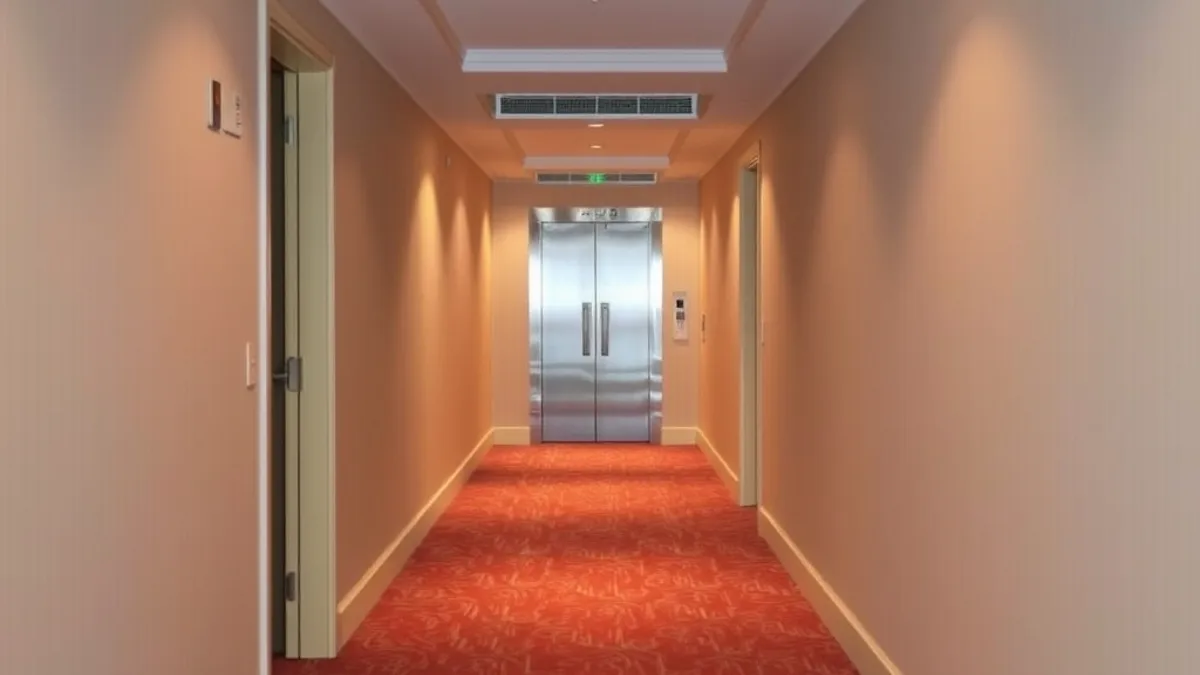
Corridors have their own soundtrack. Elevator banks whir and chime, ice machines kick on throughout the night, and housekeeping closets see carts rolling in and out from early morning. Rooms placed right next to these hubs absorb that mechanical hum around the clock.
Top floors face the opposite problem. Rooftop bars and pools bring late-night crowds and music overhead, while HVAC equipment can produce a low mechanical hum that’s easy to dismiss on a booking photo but hard to sleep through. The quietest rooms usually sit far from both the street and the roof.
Choosing the Best Floor for a Quiet Room
Once you understand where noise comes from, floor selection becomes a simple balancing act. You want to rise above street-level sound without climbing so high that rooftop equipment becomes your new neighbor.
Why mid-level floors win
Floors 4-8 hit the sweet spot in most hotels. They sit high enough that traffic, bar noise and sidewalk chatter fade away, but low enough to stay below rooftop mechanical equipment and any bar or lounge space up top. They’re also within easy elevator reach, so you’re not trading quiet for a long climb.
Ground-floor rooms are the riskiest bet for light sleepers. They face the most foot traffic past the windows, early-morning deliveries and the constant movement of guests passing through the lobby. If a hotel offers ground-floor rooms at a discount, that price often reflects exactly what you’ll hear at night.
The trade-offs at the extremes
Very high floors come with their own quirks. Rooftop HVAC units and mechanical systems can produce a steady hum that travels downward, and in some buildings the higher floors sit directly beneath rooftop bars or pool decks. You’ll also wait longer for elevators, especially at busy check-in and breakfast times.
When you book, aim for a mid-floor room near the middle of the corridor. That position balances quick elevator access with enough distance from stairwells and service areas. If the booking system lets you specify a floor, request one in that range; if not, a short note or a call to the hotel usually does the trick.
Picking the Right Location Within the Hotel
Floor level is only half the equation. Two rooms on the same floor can sound completely different depending on which walls they share and which way the windows face. Before you accept any room, think about its position within the building.
Corner rooms are usually the safest choice for light sleepers. Because they sit at the end of a wing, they share fewer walls with neighbors than standard mid-corridor rooms, which means less chance of hearing a stranger’s TV at midnight. Many hotels charge little or nothing extra for them, so they’re often the best value upgrade available.
Orientation matters just as much. Rooms facing courtyards or interior pools are usually quieter than street-facing rooms, since they buffer you from traffic, buses and nightlife. A garden view might seem less exciting than a city view, but you’ll likely sleep better looking at greenery than listening to an intersection.
Beyond corners and views, watch out for a few specific trouble spots when you check in:
- Rooms beside elevator banks: the machinery hums through the wall, and the chime plus the sliding doors repeat all night, often several decibels above the ambient corridor level.
- Rooms next to ice machines and vending areas: guests visit these around the clock, and the compressor restarts loudly every time someone fills a bucket.
- Rooms adjacent to housekeeping or service closets: carts start rolling before breakfast, and staff conversations carry through thin walls.
- Rooms near connecting doors: these double doors transmit sound between rooms more readily than a standard solid wall, so a family next door can sound like they’re in your room.
End-of-corridor rooms near stairwells deserve a final note. They get the least foot traffic, which is a real advantage, but the heavy stairwell door can slam loudly whenever someone uses the stairs. If you’re offered one, ask whether it sits directly beside the stairwell door before you say yes.
How to Request a Quiet Room When Booking
Most travelers assume a quiet room comes down to luck, but hotels actually reward guests who ask. The trick is layering your request at three points: when you book, a few days before arrival, and again at the front desk. Each step takes only a few minutes, and together they dramatically improve your odds of ending up on a calm corridor instead of one above the bar.
- Add a note when booking. Write a quiet-room request directly into the booking notes field 2-4 weeks before arrival, since early requests give housekeeping and the front office time to plan room assignments. Mention that you would prefer a room away from elevators and street-facing windows, because the more specific the note, the easier it is for staff to act on it.
- Call to confirm a few days before check-in. A short phone call lets you verify the request actually made it onto your reservation, especially if you booked through a third-party site where notes sometimes get lost between systems. Ask the agent to attach the request to your confirmation number so it survives any room reassignments.
- Ask questions before accepting a key. At the front desk, ask whether the room faces the street or a courtyard, and which side tends to be quieter. If the first offer sounds noisy, politely ask what else is available before you take the key.
- Mention that you are a light sleeper. Say it politely and without drama. Front desks often hold their quietest rooms for guests who ask, and a simple explanation gives them a concrete reason to prioritize you over the next person in line.
The whole process takes less than ten minutes of your time spread across a few weeks, which is a small investment for a much better night’s sleep. Guests who skip these steps generally get whatever room is left at check-in, and that is often the one nobody else wanted. If you are celebrating an anniversary or simply value rest, treat the quiet-room request as part of the booking itself rather than an afterthought. A polite, specific, and repeated request costs nothing and frequently makes the difference between a restful stay and a restless one.
Timing Your Stay to Avoid Noise
When you travel matters almost as much as where your room sits on the floor plan. Two city hotels in the same building can feel like completely different places depending on the night of the week and the season.
Weeknights beat weekends
In city hotels, weeknights are noticeably calmer than weekends, when nightlife guests fill the corridors and keep the lobby lively well past midnight. Corridor noise, slamming doors and late arrivals all spike on Friday and Saturday. The irony is that weekend rates for city hotels often run 20-40% higher, so you pay more for a noisier stay. If your schedule allows even one weeknight, you usually get a better room price and a quieter hallway at the same time.
Watch the calendar for crowds
Shoulder-season stays bring a second benefit: fewer groups, events and families moving through the hallways. Hotels feel emptier, housekeeping runs smoother and the breakfast room is less of a scrum. Before you lock in dates, check what is happening near the hotel. Large conferences and festivals at nearby venues can fill entire blocks with attendees, and those bookings often land the noisiest guests next to your door. A quick search of the local events calendar before booking can save you from a week of convention badges crowding the elevator.
None of this requires changing your trip dramatically. Shifting a stay by a day or two, or avoiding one busy week, is usually enough to change the character of your entire visit.
Backup Tools for a Noisy Night
Even careful planners occasionally land in a noisy room. A convention takes over the floor above, a delivery truck idles outside at dawn, or the walls are simply thinner than the photos suggested. Rather than losing a night of sleep, pack a small noise kit before your trip and know your escalation path once you arrive. The good news is that the most effective tools are cheap, widely available and take up almost no luggage space, so there is little reason to travel without them. Here is what to keep in your bag:
- Foam earplugs. They typically reduce perceived noise by 20-30 decibels, which is enough to soften a snoring neighbor or distant street traffic, and they cost only a few dollars a pair. Pack several, since a pair can fall out during the night or lose its shape after one use.
- White noise apps or a portable machine. A steady sound masks hallway voices and street bursts far better than silence does, because your brain stops reacting to each new noise. A phone app played through a small speaker works fine if you do not want to carry a dedicated machine.
- A rolled towel under the door gap. In older buildings, the gap under the door is often the main channel for corridor noise. Pressing a rolled bath towel snugly against it blocks a surprising amount of hallway sound and takes thirty seconds to set up.
- A room-switch request the next morning. If the first night proves unbearable, go to the front desk early, before checkout crowds arrive, and ask to move. Morning staff usually have the full room map in front of them and more flexibility than a night-shift colleague can offer.
Between earplugs, white noise and a willingness to switch rooms, almost every noisy night has a workable fix. The goal is not a silent hotel, which does not exist, but a room quiet enough that you stop noticing it.
The Quiet-Room Checklist
That sleepless night in a supposedly perfect hotel usually comes down to one thing: nobody thought about noise until it was too late. The good news is that most of it is predictable. Noise comes from the street, elevators, neighbors and rooftops, and each source has a simple fix once you know where to look.
The safest bets are rooms on floors 4-8, corner rooms and courtyard-facing sides. Request a quiet room 2-4 weeks ahead and confirm by phone before arrival. Traveling on weeknights or in shoulder season keeps both noise and rates down, and earplugs plus a white noise app will cover you when the room still disappoints. A little planning turns any booking into a quiet one. If this helped you sleep better, leave a comment or share the article with a fellow traveler.