Picture this: you book a city hotel for a January getaway, pack your swimsuit, and arrive to find the pool drained for maintenance or locked behind a spa fee nobody mentioned. It happens more often than you might think. Swimming pool access in winter is one of the most misunderstood details of city hotel bookings, especially when outdoor pools shut down for the cold season.
This guide walks you through what winter pool access really means at city hotels, how to choose between indoor and heated outdoor options, and which extra costs and rules to check before you pay. We also cover how to verify availability with the hotel, the best timing for your booking, and the destinations where a winter swim is genuinely worth planning around. A few simple questions asked in advance can save your trip.
What Swimming Pool Access in Winter Actually Means at City Hotels
When a city hotel advertises a pool, it usually means one of three things: an indoor pool, a heated outdoor pool, or both. The catch is that outdoor pools at city hotels typically close between late October and early November, then reopen in April or May. If you are traveling between those months, any outdoor pool listed on the website may simply not be in operation during your stay.
What indoor pools are really like
Indoor pools in city hotels are often smaller than the photos suggest, typically around 10-20 m long. That is fine for a few laps or a relaxing soak, but it is not a training pool. They also tend to double as spa facilities, shared with wellness guests booking massages or sauna sessions, so expect company rather than solitude.
Heated outdoor pools that stay open
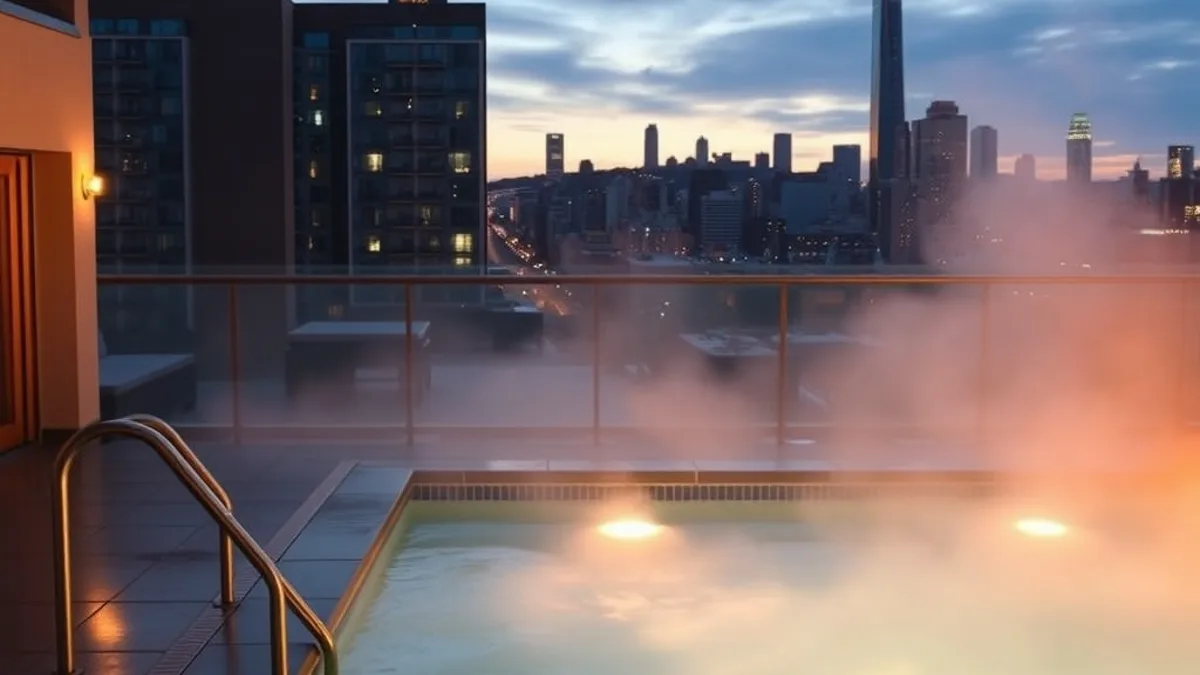
A small number of hotels keep their outdoor pools running through winter by heating the water to roughly 28-32°C (82-90°F). That is warm enough for a short, memorable dip even when the air is freezing, with steam rising off the surface. These setups exist, but they are the exception rather than the rule, so never assume your hotel has one without asking.
Indoor Pools vs Heated Outdoor Pools: Which Suits a Winter City Break
The case for indoor pools
Indoor pools are the dependable choice for a winter city break. They operate year-round, and opening hours usually run from around 6:00-7:00 am to 9:00-10:00 pm, which makes them easy to fit around sightseeing. A swim before breakfast or a soak after a long evening out is entirely realistic. If your priority is a guaranteed swim regardless of weather, an indoor pool is the safer bet.
The case for heated outdoor pools
Heated outdoor pools offer something an indoor pool cannot: the experience itself. Swimming in warm water while steam rises into cold winter air is memorable, and for many travelers it becomes the highlight of the trip. The trade-off is reliability. Sessions are often shorter, and cold snaps or storms can interrupt access. Treat an outdoor winter swim as a bonus, not a certainty.
Hotel type gives you a useful clue. Business-oriented city hotels are more likely to have indoor pools, since they serve guests who want a consistent early-morning routine. Resort-style urban properties, especially those with wellness areas or rooftop decks, lean toward heated outdoor options. Matching the hotel type to your expectations is the simplest way to avoid disappointment before you even send an email.
Extra Costs and Access Rules to Check Before Booking
The spa fee surprise
Pool access is sometimes included free for guests, but many city hotels treat the pool as part of a spa or wellness area and charge separately. When it is not bundled into the room rate, these fees commonly range from about €15-40 per day. For a week-long stay, that adds up quickly, so it belongs in your budget alongside breakfast and parking. The fee usually covers the wider wellness area too, which may soften the blow if you plan to use the sauna or steam room as well.
Rules that catch families out
Some properties restrict pool use to certain age groups or certain hours, and a few adult-oriented spa pools exclude children entirely. Families should confirm children’s swimming times in advance rather than discovering the restriction at the front desk. Ask specifically whether kids are allowed, at what times, and whether supervision rules apply.
Finally, check what is actually included at the pool itself. Towels, robes and locker facilities are usually provided, but a few hotels bill these separately at the spa desk. It is a small detail that only takes one email to clarify, and it spares you an awkward charge at checkout. Ask the hotel to confirm in writing what your rate includes before you book.
How to Verify Pool Availability Before You Book
Hotel websites can be vague about pools, and a listing that says “pool available” tells you very little in winter. A property might have a beautiful rooftop pool that drains every autumn, or a compact indoor one tucked next to the sauna that photographs poorly but delivers exactly what you need after a day of sightseeing. Before you book, spend ten minutes verifying the details directly, because the difference between a heated indoor pool and a drained outdoor one can reshape your whole trip. Here is how to do it properly.
- Email the hotel directly. Ask three simple questions: is the pool indoor or outdoor, is it heated, and will it be open during your exact travel dates? A short email gets you a written answer you can rely on, which matters far more than a glossy website photo taken in July.
- Ask about maintenance closures. January and February are the most common months for pool shutdowns in city hotels, since low season is when properties schedule draining, cleaning and repairs. If your trip falls in these months, ask specifically whether any closure is planned and for how long.
- Read recent guest reviews. Reviews that mention the pool often reveal what the hotel will not: whether the water was actually warm, how crowded the small indoor pool got, or whether guests arrived to find it closed without warning. Filter reviews by recent winter stays where possible, and pay attention to how the hotel responds when guests complain.
This same habit of asking ahead applies to any property, from a business hotel near the station to a resort-style stay like the one in our Katikies Kirini Santorini review. Keep the reply in your inbox rather than trusting a phone call, since front-desk staff change and a written confirmation gives you something to reference at check-in if anything goes wrong.
A two-line email before booking is the cheapest insurance you will ever buy for a winter city break. If the hotel cannot confirm the pool will be open, treat that as your answer and look elsewhere, because arriving to a padlocked pool door in December is a disappointment no room upgrade fully fixes.
When to Book for the Best Winter Pool Experience
Getting a hotel with a great pool in winter is less about luck and more about timing. Demand for pool-equipped city hotels spikes around the festive season, while the deep winter months trade lower prices for a small risk of maintenance work. Planning around both patterns gets you the best of each.
Booking for December dates
If you want a city break around the Christmas markets or New Year events, book 4-8 weeks ahead. Hotels with indoor pools and spa areas fill quickly in December, and by the time you arrive the good rooms and quieter pool slots are gone. Booking early also gives you time to confirm the pool details with the hotel before paying.
The January and February trade-off
January and February typically bring lower room rates, which makes them attractive for budget-conscious travelers. The catch is that some hotels rotate pool closures for maintenance during these low-season months, so confirm the pool schedule before you commit to a booking. One email asking about planned closures can save you from arriving to an empty, drained basin.
Once you are there, use timing to your advantage. Early morning and late evening are the quietest slots for an indoor pool, especially in larger city properties where daytime hours fill with spa guests and families. A swim before breakfast, with the pool nearly to yourself, is one of the better ways to start a cold-weather sightseeing day.
Destinations Where Winter Pool Access Shines
Where you travel matters almost as much as which hotel you pick. Winter pool access means very different things in a German spa town, a Colombian valley city, or a mild Atlantic coastal destination, so it pays to match your expectations to the place.
Spa cities and warm-winter destinations
Cities with strong spa traditions are the natural home of winter swimming. Baden-Baden in Germany pairs hotel indoor pools with thermal wellness areas, and there are few better contrasts than sitting in warm water while snow sits on the rooftops outside. These properties tend to treat the pool as a centerpiece rather than an afterthought, so availability and quality are usually dependable in the cold months.
At the other end of the scale, warmer-winter destinations keep outdoor pools genuinely usable. Medellín, Colombia, sees daytime temperatures around 22-25°C in winter, so rooftop and garden pools stay in service year-round. If that sounds appealing, our Medellin Marriott Hotel review gives a detailed look at what one full-service property there offers.
Milder European cities need a second look
Milder does not mean warm enough. Cities such as Lisbon or Rovinj enjoy gentle winters by European standards, but that climate is deceptive for swimmers. Their hotel outdoor pools still shut down for the cold half of the year and only reopen in April or May, so the postcard image of a sunny winter terrace rarely includes a working pool. For an off-season stay in these places, confirming an indoor pool before booking is essential rather than optional.
Wrapping Up Your Winter Pool Planning
So the disappointment most winter travelers know too well — arriving at a city hotel and finding the pool closed, outdoor-only or quietly added to your bill as a spa fee — is almost entirely avoidable. It comes down to three simple checks before you book: whether the pool sits inside or out in the open, whether the water is properly heated, and whether a spa or wellness fee applies on top of your room rate.
One extra question makes a real difference: ask the hotel directly about opening dates and possible maintenance closures in January or February, the months when city hotels most often shut their pools. With those answers in hand, a heated swim can easily become one of the highlights of a cold-season city break rather than an unwelcome surprise. If this helped you plan your trip, leave a comment or share the article with a fellow traveler.