Glamping photos promise a proper bed, a wood stove and a view — but they rarely show the one thing travelers actually worry about: where the power comes from. Will your phone survive the weekend? Can you charge a laptop, or run a CPAP machine overnight? At a site that looks wonderfully rustic, there may be no outlet at the bedside at all, and glamping power and charging setups vary enormously from one site to the next.
This guide walks you through how sites actually get their electricity, what you can realistically plug in once you arrive, and how lighting works inside and around the tent. We’ll also cover the power kit worth packing, the exact questions to ask before you pay, and what real off-grid sites offer in practice. Read it before booking, and the rustic vibe never turns into a dead-battery surprise.
How Glamping Sites Get Power: Grid, Solar and Generators
Almost every glamping site runs on one of three power setups, and the difference shapes your whole stay. Grid-hooked sites pull electricity from the regular utility supply, which means real wall sockets inside the tent. This is the most reliable option by a wide margin — laptops charge normally, medical devices run overnight without drama, and nobody has to think about the weather.
Solar and battery sites
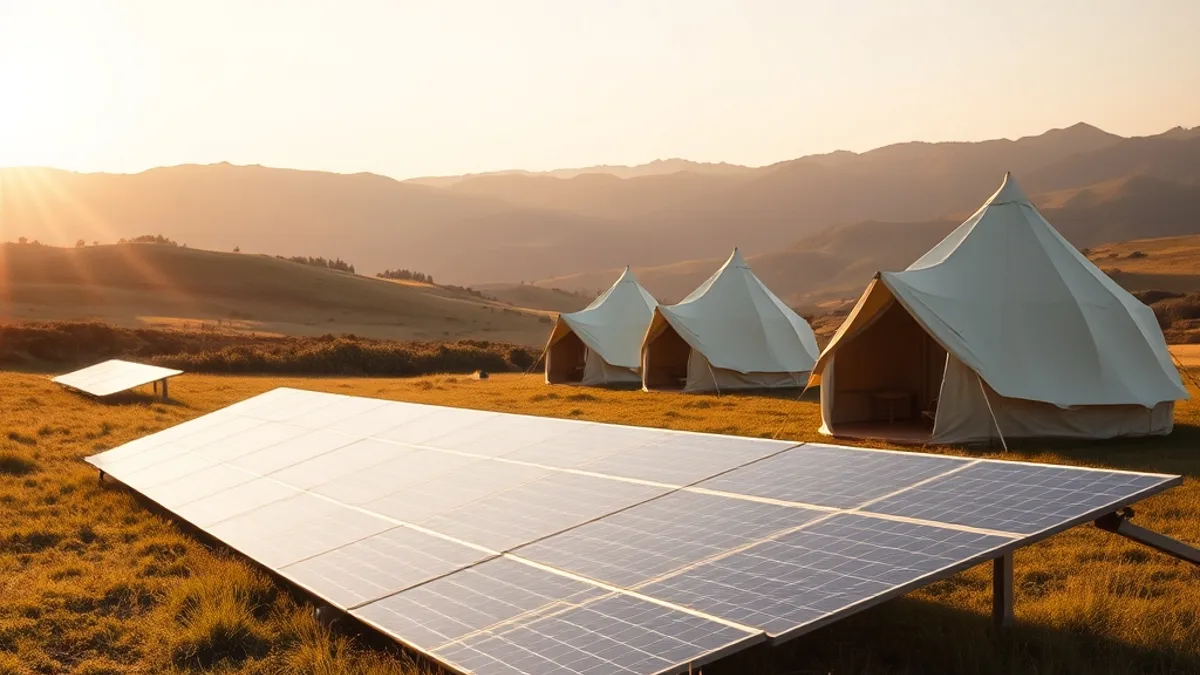
Solar-plus-battery sites are the most common at remote and eco-minded locations. Panels charge a battery bank during the day, and that bank feeds the tent’s outlets. The catch is capacity: these setups typically offer 12V USB charging only, not full 230V/110V wall sockets. That’s plenty for phones and cameras, but a hair dryer or electric kettle is off the table.
Generator power
Generator-powered sites usually run their generators for just 2-4 hours per day, often in the evening. That means your charging window is short and predictable, so plan device top-ups into those hours rather than leaving it to chance. Whichever setup appeals to you, ask the site directly which one they use before booking. Photos almost never show the outlets, and a two-minute email saves a lot of frustration later.
What You Can Realistically Charge On Site
The good news is that the essentials charge easily on any setup. Phones, headlamps and cameras all draw so little power that even a modest solar USB port handles them without complaint. If your kit is limited to those items, you’ll barely notice whether the site is grid-hooked or running entirely on sunshine. At more developed properties, such as the lakeside glamping resort near Castel Volturno in Italy, charging is simply part of the room.
Problems start with bigger devices. A 60W USB-C laptop charger can drain a small tent battery bank in under 2 hours, which is why many solar sites ban or discourage laptop charging outright. Ask in advance rather than assuming your MacBook is welcome.
Then there are the high-draw items that are off-limits at nearly all solar and generator sites:
- Hair dryers and straighteners — they pull more watts in ten minutes than a tent battery stores in total, so plan to style hair at home or use low-heat alternatives
- Electric kettles and coffee makers — most sites provide a stove-top kettle or thermos instead, so check what’s supplied before packing yours
- Space heaters — even at sites with sockets, these are usually prohibited because they overload both the wiring and the battery bank
Finally, if you travel with a CPAP or another medical device, flag it when you book. Grid-hooked sites handle these best, and many hosts will happily reserve a tent with reliable power once they know it’s a health need rather than a convenience.
Lighting Inside and Around the Tent
Lighting is where glamping sites tend to shine, quite literally, because it costs them almost nothing. Most tents use LED string lights or battery lanterns, and since LED lighting draws so little power it can run all night on a small battery. You can leave a light on until morning without guilt, even at the most off-grid site.
Getting the light level right
That said, not everyone sleeps well under a canopy of bright fairy lights. If that sounds like you, look for sites with dimmable or switchable lighting when booking, or ask whether the lights can be turned off at the bed. A cheap eye mask from your packing list solves the rest.
Outside after dark
Pathways to bathrooms and communal areas are usually marked with solar path lighting, which charges by day and glows at night. Don’t rely on it entirely, though — paths can still be dark after midnight once the charge fades or a fixture fails. Pack a headlamp and clip it by the door so you can find it without waking the whole tent.
One more small luxury: if you read in bed, bring a small clip-on reading lamp. Overhead tent lighting is rarely positioned for reading, and string lights cast more shadow than glow. A clip lamp with a warm bulb turns the bed into a proper reading nook and draws almost no power at all.
Packing Your Own Power Kit
The single most useful thing you can pack for a glamping trip is a good power bank. A 20,000mAh model recharges a typical smartphone roughly 4-5 times, which means it can carry you through an entire weekend even if your tent has no outlets at all. Charge it fully before you leave home, and treat it as your backup plan rather than your main power source.
If you arrive by car, bring a car charger adapter too. Many sites are fine with guests charging devices from their vehicle, and a car socket is effectively a private charging station that no one else can drain. It is also handy for topping up a power bank on the drive in.
Tent outlets, when they exist, are often a single socket on the far wall from the bed. That makes cable length and port count matter more than you would expect. Pack with that in mind:
- Short USB cables (25-50 cm): easier to manage in a small tent and less likely to snag on zippers or bedding than long leads.
- A multi-port plug or small USB hub: lets you charge a phone, headlamp and camera from one wall socket at the same time instead of taking turns.
- A spare cable: tent floors are abrasive and luggage zippers chew through cables; a backup costs little and saves the trip.
- A small 20-60W folding solar panel (for longer trips): on a sunny day it tops up a power bank in roughly 4-8 hours, so you can leave it clipped to your daypack or tent guy-line while you are out hiking.
With this kit, even the most basic solar-powered tent becomes workable. You charge the bank when power is available, then charge your devices from the bank whenever it suits you, on your own schedule rather than the site’s.
Booking Questions to Ask About Power Before You Pay
The fastest way to avoid a dead-battery surprise is to ask a few specific questions before you pay. “Powered tent” can mean anything from a full wall socket to a single USB port, so ask exactly how many outlets are inside the tent and where they sit. An outlet near the bed lets you charge overnight; one by the door may mean standing guard while your phone fills up.
If the site runs on a generator, ask when it runs and for how long. At eco-minded sites, generator hours are usually limited to a short window, often in the evening. Knowing that window in advance lets you plan your charging instead of discovering it at midnight with a 5% phone battery. It is also fair to ask whether there is any backup plan if the generator is down for maintenance.
Money matters too. Power is not always included in the nightly rate, and sites with full in-tent electrical hookups typically charge 10-30% more per night than basic tents. That premium is usually worth it if you travel with a laptop or a medical device, but it is a waste if you only need to top up a phone. For a real-world example of how one site handles power in a remote desert setting, see this Under Canvas Lake Powell review.
Timing your booking around the sun
Solar-powered sites are at their most reliable from roughly May to September at mid-latitude locations, when long daylight hours keep the batteries topped up. If you want a solar site during that stretch, book early. Outside those months, battery banks have less time to recharge each day, so charging can be slower or more rationed. Ask the site how it copes in shoulder season if your dates fall there.
Off-Grid Glamping Examples: What Real Sites Offer
Not all glamping sites handle power the same way, and the differences usually come down to location. Understanding the common patterns helps you predict what you will find before you arrive.
Remote safari-style and lakeside tents
The most remote sites, including safari-style camps and lakeside tent setups far from any road infrastructure, often run entirely on solar with battery storage. Expect USB-only charging, lantern or string lighting, and no wall sockets at all. This is the classic off-grid experience, and it works beautifully as long as you arrive with a power bank and realistic expectations. For a slower, water-focused take on this style, this Masurian lake glamping guide shows what a lakeside setup looks like in practice.
Farm-based and grid-hooked sites
Farm-based glamping sites sit in a middle ground. The tents themselves may be lightly powered, but a farmhouse or barn is usually close by, and many hosts are happy to let guests top up devices there during the day. It is worth confirming this when you book, since it effectively gives you a second charging point.
Coastal and woodland sites with grid hookups tend to be the closest to a hotel-style experience. Lights and sockets sit at the bedside, laptops charge without drama, and medical devices like CPAP machines run without any special arrangement. If reliable power matters most to you, prioritize these sites.
Whatever the setup, recent guest reviews are your best source of truth. Reviews written in the last few months will tell you whether charging actually worked as advertised, whether the generator ran when promised, and whether the lighting was bright enough to read by. Hosts describe their ideal setup; guests describe the real one.
Wrapping Up Power, Charging and Lighting at Glamping Sites
Glamping power comes down to three setups: a grid hookup, solar with battery storage, or a generator that runs limited hours. Once you know which one your site uses, you can tell instantly whether your laptop and CPAP will make it through the trip or whether the rustic photos were hiding an empty bedside shelf where the socket should be.
Match your devices to the setup, and pack a power bank and headlamp to cover the gaps. A few smart questions before you pay will keep a dead battery from spoiling the mood. If you have a glamping power story of your own, leave a comment or share this article.