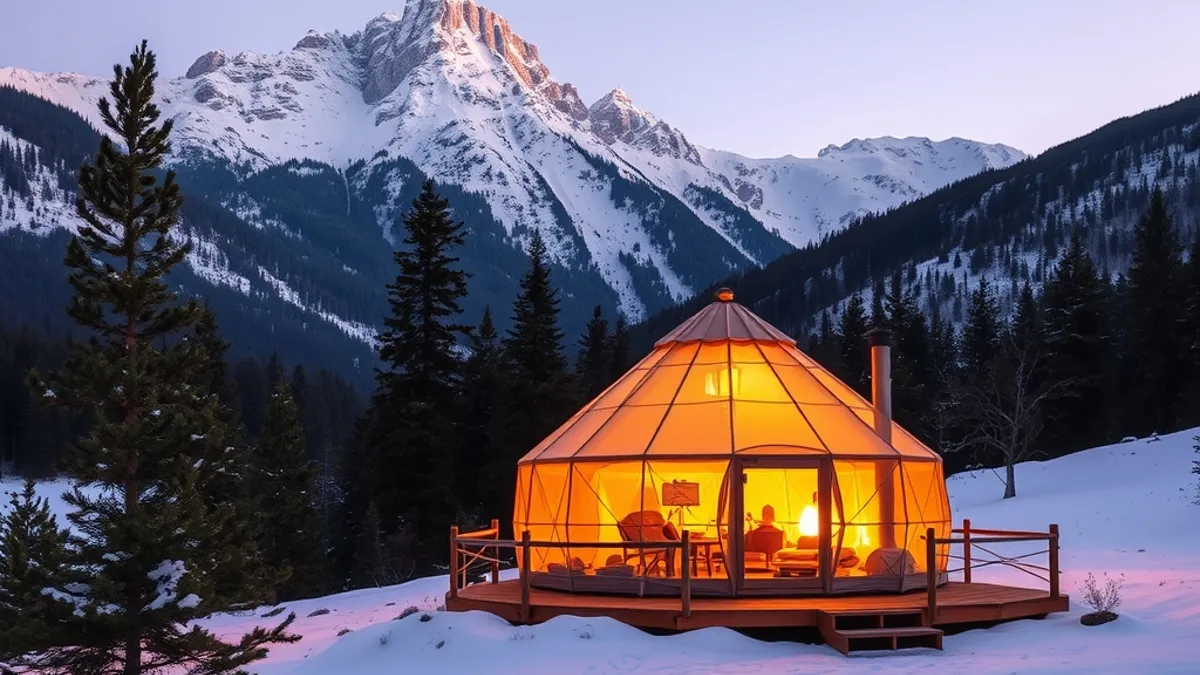
You’ve seen the photos: a geodesic dome glowing at dusk, jagged Dolomite peaks behind it, and you’re wondering whether you could actually sleep there. Dome glamping in the Dolomites is absolutely doable, but two questions trip up most travelers before they book. When should you go? And which valley should you use as your base? Pick the wrong season and you might find sites closed; pick the wrong valley and you’ll spend hours driving to trailheads.
This guide sorts it out for you. We’ll explain what makes dome glamping here different from regular alpine camping, break down the seasons from the busy summer months to the quieter shoulder windows and limited winter stays, and compare the main base valleys, including Val Gardena, Alta Badia and Alta Pusteria, plus a look at Cortina d’Ampezzo and the southern approach. You’ll also get practical advice on choosing and booking your dome, what to expect price-wise, and how to get there and around.
Why Dome Glamping in the Dolomites Is Different From Alpine Camping
Dome glamping sits in a sweet spot between a hotel room and a tent pitch. The geodesic structures are engineered for mountain weather: the insulated shell holds warmth through nights that regularly drop near freezing at 1,000-2,000 meters, where a regular tent would leave you shivering in a sleeping bag. You get a real bed, solid flooring and a roof that doesn’t flap in the wind, while the site around you stays raw alpine meadow.
The other big difference is the view. Most domes are built with large panoramic windows, so you can lie in bed and watch first light hit the Sella massif or the jagged Odle ranges without stepping outside. In a conventional campsite you’d have to unzip a frozen tent flap for the same reward, and even then you’d be looking between neighboring tents rather than straight at the peaks.
Small sites, tighter availability
Dome operations are tiny compared to ordinary campgrounds. A typical site has somewhere between 3 and 10 units, sometimes on a farmstead or a meadow beside a mountain hut. That intimacy is part of the appeal — quiet nights, no carousels of campervans — but it also means capacity is limited. Where a large campsite can absorb walk-ins, a dome site with six units can sell out months ahead, so treat availability as the first thing you check rather than an afterthought.
Best Seasons for Dome Glamping in the Dolomites
If you want the classic dome glamping experience in the Dolomites, aim for June to September. Trails are snow-free, cable cars and mountain lifts are running on their summer schedules, and nights stay mild enough that you can actually enjoy stargazing from your dome’s panoramic window instead of huddling under every blanket provided.
July and August bring the warmest conditions of the year, with daytime highs around 20-25°C, but they come with trade-offs. Afternoon thunderstorms build up quickly over the peaks, so plan hikes for early starts and be back near your dome by mid-afternoon. This is also peak season, when rates sit at the top of the usual range and small dome sites fill up fast.
Late September is the sweet spot many regulars keep to themselves. The larches turn a brilliant gold across the valleys, the paths empty out, and the light is softer for photography. Nights cool down to around 0-5°C, so pack proper sleepwear, but most domes handle this comfortably.
Winter dome stays are a different story. A handful of sites do operate from December to March, offering snow-covered peaks right outside the glass, but winter domes are rare and many sites simply close for the cold months. Before booking any winter date, confirm two things directly with the operator:
- Heating capacity: ask whether the dome has a permanent heating system (not just a portable heater) and what indoor temperature it maintains overnight in deep winter.
- Road access: mountain roads at altitude can require snow chains or winter tires in Italian alpine regions, so check whether the site’s access road is plowed regularly and whether you need a four-wheel-drive or shuttle transfer.
- On-site services: some winter domes run with reduced staffing, meaning no daily breakfast or limited reception hours, which matters more when you can’t easily walk to a village restaurant.
For a closer look at what a well-run dome stay actually feels like, this Laghi Nabi review from Castel Volturno gives a useful real-world picture of the format.
Where to Base Yourself: Val Gardena vs Alta Badia vs Alta Pusteria
Choosing your base valley shapes your whole trip. The good news is that Val Gardena, Alta Badia, Val di Funes and Alta Pusteria all sit within about 30-60 minutes of major trailheads, so there is no truly wrong answer. The right answer depends on whether your days will be spent hiking, eating, swimming or waiting for the perfect light with a camera.
Val Gardena is the hiker’s valley. The Odle ridges tower directly above it, and the Sella Ronda loop is effectively on the doorstep, with lift systems linking you into the circuit without a long drive. If your itinerary is built around big walking days and you want minimal time in the car, base yourself here.
Alta Badia is where food-focused travelers should look. The mountain huts here are famous for serving proper Ladin cuisine, and many sit within walking distance of the lifts, so you can hike to lunch and ride back down. Book huts ahead in July and August, when tables fill fast.
Alta Pusteria, in the northeast, is the family and lake pick. Lago di Braies and the access points for Tre Cime are close by, and the valley floor is gentler, which makes logistics easier with children or anyone who prefers flat walks to steep scrambles.
Val di Funes is the quiet option. Photographers come for the famous view of a lone church framed against the Odle peaks, and the valley stays noticeably calmer than its busier neighbors.
- Val Gardena: lift-served access means you can start high-altitude hikes straight from the village, saving your legs for the ridgelines rather than the climb.
- Alta Badia: look for domes near the lift stations so you can reach the higher huts for dinner without driving mountain roads after dark.
- Alta Pusteria: arrive at Lago di Braies early in the morning or late in the day; midday crowds around the shore can be heavy in summer.
- Val di Funes: the classic church-and-peaks viewpoint is best at sunrise or sunset, so a dome with a valley-facing position pays off for photographers.
Cortina d’Ampezzo and the Southern Approach
Cortina d’Ampezzo works best if you plan to arrive by car. The town sits roughly 2 hours by car from Venice and about 1.5 hours from Bolzano, which makes it one of the easiest Dolomites bases to reach on a self-drive itinerary. The road up through the Boite valley is well maintained, and parking around town is manageable outside the busiest midday hours.
Viewpoints on your doorstep
The area around Cortina gives you quick access to two of the range’s most photographed landmarks: Tre Cime di Lavaredo and the Cinque Torri viewpoints. Both are reachable by a combination of short drives, lifts and walking trails, so you can plan half-day outings rather than committing to full-day expeditions. If you stay in a dome near Cortina, ask the site about the easiest route to each viewpoint before you set out, as access roads and lift operations vary through the year.
The southern alternative: Val di Fassa
If Cortina’s rates feel steep, look at the southern valleys instead. Val di Fassa typically offers slightly lower prices and easier road access from Trento, which is convenient if you are driving up from the south. You trade some of Cortina’s glamour for quieter villages and a shorter, simpler drive, and the Sella massif is still within easy reach. Check current driving times and road conditions before you travel, since mountain passes can affect your route.
How to Choose and Book Your Dome
A dome night in the Dolomites is a small-scale operation, and the best sites fill early. Unlike large campsites with hundreds of pitches, dome sites often run just a handful of units, so one busy weekend can wipe out availability for an entire valley. Booking well ahead matters more here than anywhere else in the alpine camping world, and knowing exactly what to check before you pay will save you from cold surprises and unexpected costs. The steps below cover the essentials.
- Reserve far ahead for peak dates. For general summer dates, book 3-6 months ahead. For August and the Christmas weeks, push that to 6-9 months, because small sites with only a handful of domes sell out first.
- Confirm heating, bathroom and breakfast. Ask specifically whether the dome has real heating, a private bathroom and breakfast included. Cheaper domes often skip all three, and a dome without proper heating is a very different experience at altitude, especially outside the warmest weeks.
- Budget realistically. Expect roughly €120-€300 per night for two people, with prices rising in July and August. Compare what is included in that rate rather than choosing on price alone.
- Check minimum-stay rules. Many sites require 2-3 nights in peak season. Confirm this before planning a short stopover, or you may find your preferred dates are only available as part of a longer stay.
It also pays to ask about arrival logistics before you commit. Some dome sites sit above the valley floors at the end of unpaved roads, so confirm parking arrangements and whether luggage help is offered, particularly if you plan to arrive after dark. If you are traveling without a car, check shuttle options at the time of booking rather than assuming a bus stop is nearby.
Finally, get the key details in writing. A short email confirming heating, bathroom access and breakfast protects both sides and gives you something to reference if anything differs on arrival. If your travel style leans toward slower, quieter trips, the same booking discipline applies elsewhere in Europe. This guide to Masurian lake glamping for slow travel shows how a similar advance-planning approach works in a completely different landscape. Whichever destination you choose, get the heating and bathroom details in writing before you pay the deposit, and reconfirm your arrival time a day or two before you travel.
Getting There and Getting Around
Getting to a dome in the Dolomites usually starts with a flight. The most practical airports are Venice, Verona or Innsbruck, all within reasonable driving distance of the main valleys. From there you have two realistic options: rent a car at the airport, or take regional trains toward Bolzano or Brunico and continue from the valley floor.
Do you need a car?
It depends entirely on where your dome sits. Local buses cover the main valley routes, and the Mobilcard is a practical way to handle valley transport if you are staying near a village with regular service. However, many dome sites sit outside the villages on meadows or hillsides, and those locations usually need a car or a shuttle arranged with the site. Before booking, ask the operator exactly how you would reach the dome from the nearest bus stop or train station, and whether they can collect you.
Packing for altitude
Whatever the season, pack layers. Even in August, nights at altitude can fall below 10°C, and a warm evening in the valley tells you little about conditions at 1,500 meters. A fleece, a proper jacket and warm sleepwear belong in your bag year-round, alongside the usual hiking gear. If you are visiting in the shoulder months, add a hat and gloves, since clear mountain nights get cold quickly once the sun drops behind the ridges.
Wrapping Up Your Dolomites Dome Trip
So, when should you go and where should you stay? On timing, June to September is the safest window: trails are open, lifts are running and nights are manageable. July and August bring the warmest days but also the biggest crowds and peak prices, while late September offers golden larches and the quietest paths if you don’t mind cooler nights.
On location, it comes down to what your trip is about. Val Gardena works best for hikers, Alta Badia for food lovers, Alta Pusteria for families and lake days, and Val di Funes for photographers after that classic church-and-peaks view. Whichever valley you pick, book 3-6 months ahead for summer dates and verify that your dome has real heating and a private bathroom before you pay. If this helped you plan your Dolomites dome trip, leave a comment or share the article with a fellow traveler.