Two lodges sit ten minutes apart, both with beautiful photos, similar ratings, and prices within a few dollars of each other. Your dates are set, your group is excited, and yet you still cannot tell which one will actually fit your trip. Knowing how to compare two lodges properly means looking past the listing photos at the details that shape your stay: real location, total cost, room setups, and what past guests actually say.
This guide walks you through a practical comparison process, step by step. You will learn how to factor in your travel season, judge true distance from the main attraction, break down the full price of your stay, and match amenities to your group. We will also cover how to read reviews with a comparison mindset and when to book. By the end, you will have a clear framework for choosing the lodge that suits your trip, not just the one with the prettiest pictures.
Start With Your Trip Dates and Season
Before you compare anything else, lock in your travel dates. Lodge pricing and availability swing dramatically between peak and shoulder seasons, with peak-season rates often running 30-60% higher than shoulder-season rates in the same area. The same room can cost far less in early June than in mid-July, so a comparison made without fixed dates is basically meaningless.
Shoulder seasons, typically May-June and September-October, usually offer the best price-to-experience ratio. If your schedule has any flexibility, shifting your trip by a few weeks can change which lodge comes out ahead, since one may discount heavily in those months while the other holds its rates.
Check if both lodges are even open
Not every lodge operates year-round. Some mountain lodges close entirely during the low season, often shutting from November to April when demand drops and conditions get difficult. A lodge that looks cheaper and quieter in winter listings may simply not be taking guests at all. Check each lodge’s operating season on its website before you build any comparison around it.
Match activities to your exact month
Season affects more than price, it affects what you can actually do. If you want skiing, confirm which lodge has winter access to slopes or lifts in your specific month. If hiking is the goal, check that trails near each lodge are open and snow-free when you plan to visit. Two lodges can offer very different experiences in the same area depending on the season, so note which one delivers the activities you want during your exact travel window.
Compare Real Location, Not Just Distance
Two lodges can sit “five minutes from the park entrance” on a map and still feel worlds apart once you’re behind the wheel. Straight-line distance tells you almost nothing about how long it actually takes to reach the main attraction, especially in mountain or canyon country where roads curve, climb, or funnel through a single gate. Before you book, open a mapping app and check the real driving time from each lodge to the trailhead, viewpoint, or visitor center you’ll visit most. That’s often the difference between rolling out of bed and onto the trail, or spending an hour of every morning in the car.
The payoff for looking past the headline distance can be significant. A lodge 10-15 minutes farther from the main attraction can cost 20-40% less than the one right at the gate. If you’re staying several nights, that trade-off adds up to real money for a modest daily drive.
Check road access for your season
Driving time also depends on the road itself, not just the route. Mountain roads can require tire chains after snowfall, and some close entirely in winter conditions, which can turn a short drive into a detour or shut it down altogether. Look at the route’s elevation, whether it’s a paved highway or a gravel forest road, and check current road status with the park or local transportation authority close to your travel dates. A lodge that looks convenient in July can be a very different proposition in a snow month.
What can you reach on foot?
Finally, walk the map around each lodge. If one has restaurants, a trailhead, or a shuttle stop within walking distance and the other doesn’t, the walkable lodge lets you leave the car parked for part of your stay. That matters in busy parks where parking at popular trailheads fills early. For example, lodges in the Moran area of Grand Teton National Park vary in how close they sit to trailheads and shuttle points, which changes how much you drive day to day — you can see how this plays out in practice in this review of a lodge in Moran, Wyoming. Add up those small daily conveniences, and the “farther” lodge sometimes wins on location after all.
Break Down the Total Price for Your Stay
Two lodges can show nearly identical nightly rates and still end up hundreds of dollars apart by checkout. The fix is simple: ask each lodge for the total price for your exact nights, not the advertised rate. Many lodges enforce 3-5 night minimums during busy periods, which means the “per night” figure you saw online may not even apply to your dates. Weekend surcharges can also inflate a Friday and Saturday stay well beyond what a midweek quote suggests.
Then look at what sits outside the base rate. Breakfast, airport or trailhead shuttles, parking, and gear rental are often charged separately, and together they can add $20-60 per person per day if you pay for them a la carte. A lodge that looks pricier at first glance may actually be the cheaper option once meals and transfers are counted. If you want to see how this plays out in practice, this detailed review of Morino Lodge in Hakuba, Japan breaks down what a lodge stay really includes beyond the room rate.
Finally, put the cancellation terms side by side before you commit. Flexible rates typically allow free cancellation 7-14 days before arrival, while cheaper prepaid rates can be far stricter. A slightly higher refundable rate is often the smarter buy when your plans still have any wiggle room in them.
- Ask for an itemized quote: request a breakdown showing room rate, taxes, service charges and any mandatory fees, so you can see exactly where the two totals diverge.
- Price the extras you will actually use: if one lodge includes breakfast and the other charges for it, multiply that cost across every traveler and every morning of your stay.
- Check payment timing: some lodges require a deposit at booking or full payment weeks in advance, which affects your cash flow if plans change.
- Note children’s pricing rules: age cutoffs for kids’ rates and extra-bed charges vary between lodges and can swing a family total significantly.
Match Room Types and Amenities to Your Group
Star ratings tell you surprisingly little when two lodges sit in the same price band. A “cabin suite” at one lodge might mean a spacious two-room unit with a private deck and a mountain view, while at the other it could be a compact studio with a parking-lot outlook. Pull up the actual room category pages, look at floor plans and photos, and note the square footage or bed configuration for the exact rooms you would book.
Your group shape matters just as much as the room itself. A couple traveling solo has very different needs from a family of five or a group with a dog in tow. Check whether each lodge offers connecting or family rooms, what its pet policy actually allows (some charge fees or restrict pets to certain room types), and whether accessible rooms are genuinely available in the category you want rather than only in one budget room.
Score the amenities you will really use
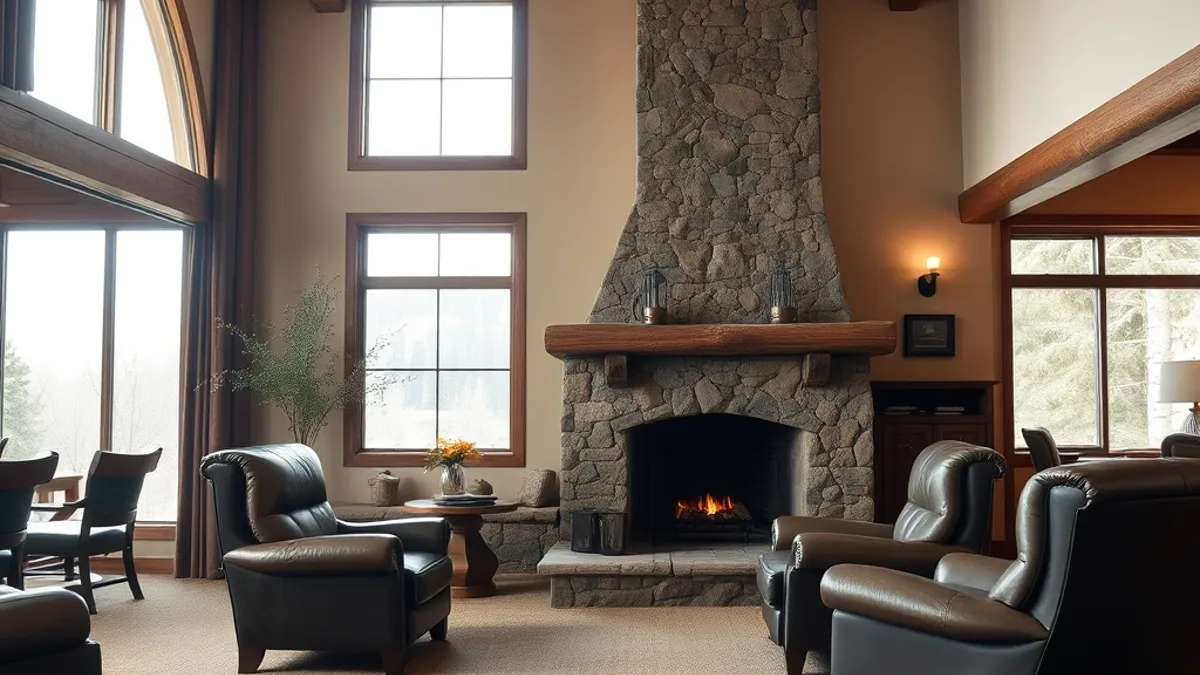
Make a short list of the amenities that will shape your stay: a heated pool after a day on the trails, a spa for a rest day, a fireplace lounge for evening wind-downs, or on-site dining so nobody has to drive back from town after dinner. Then score both lodges on that list. A lodge with a great pool but no restaurant may lose to a simpler property with excellent dining when you picture your actual evenings. Be honest about what you will use; paying for a spa you never visit is wasted money, while a missing breakfast can quietly add cost to every morning.
Read Reviews With a Comparison Lens
Reviews are only useful if you read them the way you will actually travel. A lodge can be excellent in summer and mediocre in winter, so filter for recent reviews from the same season as your trip. A winter guest’s comments about heating, snowy parking and early sunsets will tell you far more about your February stay than a July review praising the pool.
Look for patterns, not one-off complaints
Single complaints happen at every lodge, even good ones. What matters is repetition. If three or four recent guests independently mention slow service at breakfast, thin walls, or lukewarm food, treat that as a real pattern rather than bad luck. Focus especially on noise levels, heating, service speed and food quality, since these are the things that affect you daily and are hard to fix once you have checked in.
Also pay attention to how management responds to negative reviews. A fast, specific reply that addresses the issue and offers a fix usually signals an attentive on-site team; a defensive or copy-pasted response suggests problems get ignored. Reading a detailed, season-matched write-up can help too — for example, this honest review of a lodge near Yosemite shows the kind of specific, practical detail that is far more useful than a star rating alone.
Book the Right Lodge at the Right Time
Once your comparison is done, timing your booking becomes the last piece of the puzzle. The two lodges may follow very different booking rhythms: one might be a popular national-park lodge that fills up the day reservations open, while the other may still have rooms a few weeks out. The lodge that looks available today can be gone tomorrow, so it helps to know which booking pattern applies to each of your finalists before you commit.
- Book early for peak season. For peak-season national-park lodges, reservations often open far in advance and fill quickly, so plan to book 6-12 months ahead if you want a specific room category or view. Put the reservation opening date in your calendar rather than relying on memory.
- Wait for shoulder season. Shoulder-season stays can often be booked 1-3 months out, which gives you time to watch rates, watch for cancellations, and pick between your two finalists with more confidence.
- Use flexible cancellation as a hold. Choose a flexible-cancellation rate to reserve your preferred lodge early, then finalize your decision once your travel plans are set. Just note the cancellation window, since flexible rates often allow free cancellation only 7-14 days before arrival. Set a reminder a few days before that deadline so you can change course without penalty.
- Book direct when the rates match. If the lodge’s own website matches the third-party price, book directly. Direct bookings often come with perks such as room upgrades when available, or easier changes if your dates shift.
Whichever lodge wins your comparison, the combination of early booking and flexible terms means you keep your preferred option without being locked in if plans change. It also frees you from rate-watching anxiety, since your room is secured at a price you already accepted as fair. That peace of mind is worth a few minutes of planning.
Wrapping Up Your Lodge Comparison
Two lodges a few minutes apart can look nearly identical online, with similar photos, matching prices and glowing descriptions. The difference only becomes clear once you line them up side by side: your exact dates, the true driving time to the attraction, the total cost for your stay, how well the rooms fit your group and reviews from the same season you plan to visit.
Once you run that simple checklist, the better choice usually stands out quickly. Book early with flexible terms so you hold your preferred lodge without locking yourself in, and adjust later if plans change. What felt like a coin flip at the start becomes a quick, confident decision. If this checklist helped you compare two lodges for an upcoming trip, leave a comment or share this article with a fellow traveler.