You booked a dreamy canvas tent months ahead, the photos looked perfect, and then the forecast shows a wall of rain heading straight for your dates. It’s the classic glamping bad weather dilemma: unlike a hotel, where a storm is an inconvenience, a thin-walled tent or dome can turn a wet weekend into a genuinely miserable one — or the site may close entirely for safety. So what actually happens to your money?
This guide walks through how glamping sites typically handle weather disruptions. We’ll look at why tents and domes are more exposed than hotel rooms, the refund and credit policies most sites actually use, and how to check a site’s weather policy before you pay. You’ll also find booking strategies that reduce your risk, how travel insurance and credit card coverage fit in, and what to do if a storm hits mid-stay. A few minutes of preparation makes a big difference when the clouds roll in.
Why Glamping and Bad Weather Collide More Than Hotel Stays
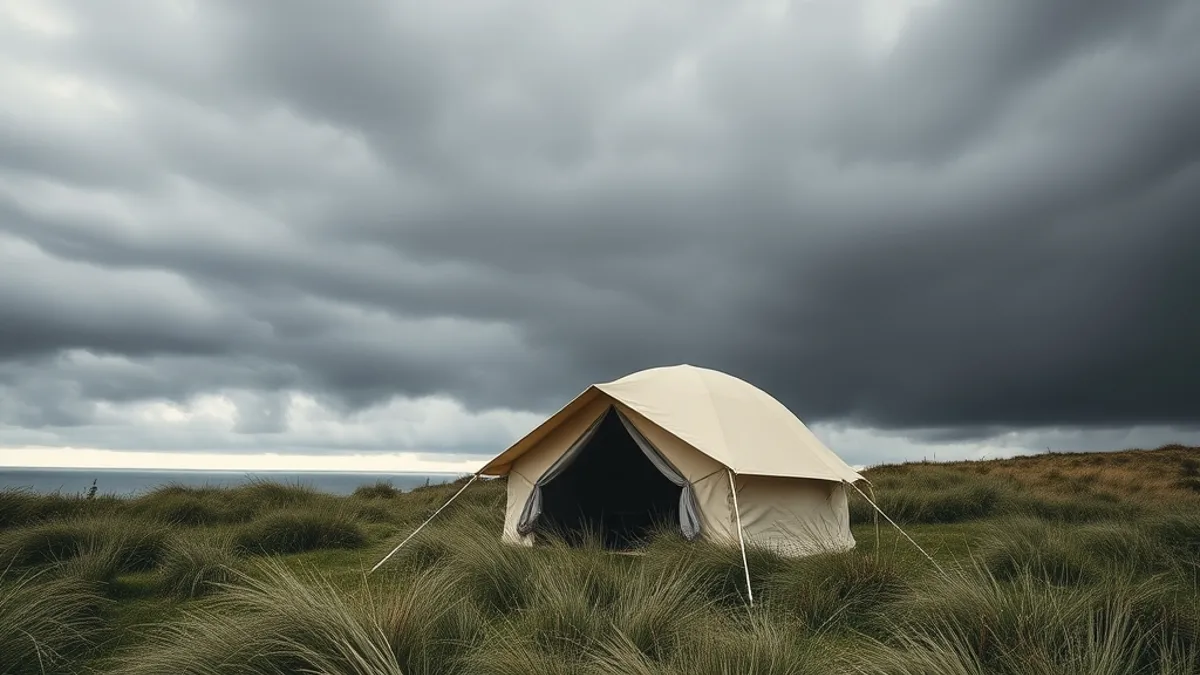
Glamping trades solid walls for canvas, and that changes everything about how weather affects your stay. A canvas tent, geodesic dome or safari lodge is a thin-walled structure: wind rattles the fabric, heavy rain drums loudly overhead, and temperature swings are felt far more than in an insulated hotel room. A storm that would barely register from a hotel bed can make a tent feel loud, damp and drafty all night.
Closure is a real possibility
Here’s the part many first-time glampers don’t expect: many sites close entirely in high winds or electrical storms for safety reasons. A tall tent or dome in a storm is a genuine hazard, so operators will sometimes cancel stays outright rather than let guests ride it out. That means your soggy weekend can become a cancelled one — which is better for safety, but it raises the question of whether you get your money back.
Timing matters too, because rainy seasons vary a lot by region. Sites in Mediterranean climates are most exposed to autumn storms, when the dry summer ends abruptly and wet fronts move in. Temperate regions face a longer stretch: rain from October through April is simply part of the deal, so off-season bookings there carry more weather risk than a July stay.
The Refund Policies Most Glamping Sites Actually Use
Most glamping sites use tiered cancellation policies that look a lot like standard vacation rental terms. Cancel well in advance and you’ll usually get most of your money back; cancel close to arrival and the site keeps nearly everything, because they’ve had little chance to resell your tent. The typical tiers break down roughly like this: a full refund minus a fee if you cancel 30 or more days out, a 50% credit at 14 to 30 days, and little or nothing inside 14 days.
Weather complicates this picture, because there are two very different scenarios. If you cancel because the forecast looks grim, the normal tiers apply and you’ll likely lose money. But if the site itself closes for weather — say, high winds make the tents unsafe — expect a rebooking credit or a date change far more often than cash back. Full refunds for weather closures are rare; credit or rebooking is the most common outcome. Some sites spell out the distinction clearly: rain alone means no compensation, while an official closure triggers a credit or refund. Read which trigger applies before you book, because the wording is everything.
- Platform bookings follow the host’s policy. If you book through a booking site, the host’s own cancellation terms usually govern, not the platform’s generic policy — so the listing page is the binding document, not the marketing site.
- Weather closures often come with flexibility you won’t get for a personal cancellation. Hosts who would keep your deposit if you cancel may happily move your dates for free if they shut the site themselves, since they’d rather keep you as a guest.
- Some operators offer a weather guarantee as a selling point. A few sites advertise a written promise — for example, a credit toward a future stay if they close for weather — and those are the listings worth prioritizing.
- Partial refunds for early departure are handled case by case. If a storm cuts your stay short, what you recover depends heavily on the host’s goodwill and how the policy is worded, which is why documentation matters (more on that later in this guide).
If you want to see how a well-run glamping operation presents its terms, our review of a lakeside glamping stay in Castel Volturno, Italy shows what to look for in a listing before you commit.
How to Check a Site’s Weather Policy Before You Book
Checking a site’s weather policy takes about ten minutes and can save you the cost of an entire stay. The key is to do it before you pay, while you still have leverage — once your money is transferred, you’re negotiating from a much weaker position. Treat it as part of your booking routine, the same way you’d check photos or reviews. It’s especially worth doing for glamping, where a single storm can turn a dreamy canvas tent into a noisy, leaky ordeal and leave you arguing about refunds instead of relaxing.
- Search the listing and confirmation email for key words. Use your browser’s find function and search for “weather”, “closure” and “force majeure”. If the listing mentions none of these, that silence is itself useful information: the standard cancellation tiers will apply even when weather is the culprit. Pay attention to whether the site distinguishes between rain (usually no compensation) and an actual closure (often credit or rebooking), since that wording determines what you’re entitled to.
- Email the host and ask two specific questions. First: what happens if you close the site for weather before or during my stay? Second: what happens if I cancel because the forecast looks bad? These are different scenarios with very different outcomes, and a host’s answers will tell you which one they’ve actually thought about.
- Get the answer in writing. A screenshot of the host’s reply is your best evidence if a dispute arises later. Verbal assurances over the phone are nearly impossible to prove, so politely ask them to confirm the arrangement by message or email. If you ever need to file an insurance claim, that written confirmation becomes even more valuable.
- Compare how different sites handle it. A site that publishes a written weather clause — even a short one — is showing you they’ve planned for storms. A listing that only says “contact us” puts all the discretion on the host’s side of the table, and you’ll have no idea whether you’ll get a credit, a date change or nothing at all.
Favor the sites that put their weather terms in writing. Operators who have thought through closures tend to handle them smoothly, and you’ll know exactly where you stand before a single drop of rain falls. A few extra minutes of reading now beats a frustrating back-and-forth later.
Booking Strategies That Reduce Your Weather Risk
Weather risk at a glamping site starts with when you book, not just where. The cheapest rate on a peak summer weekend is usually the one with the least wiggle room when a storm rolls in. Hosts price those dates knowing demand is high, so they have little incentive to bend the rules when the forecast turns ugly. A few simple timing choices can save you both money and stress, and they cost nothing except a bit of planning.
Shoulder season is the easiest win. In April-May and September-October, rates often run 20-40% below peak summer prices, and hosts are far more willing to move your dates when the site is not fully booked. If a cold front sweeps through, rescheduling costs them little and costs you nothing. For lake destinations, a quieter season can also mean calmer water and more peaceful mornings — this is exactly the appeal of slow glamping on the Masurian lakes. You also get softer light, emptier trails and a better chance of chatting with the host about the best local spots.
- Book peak summer weekends 3-6 months ahead. Early booking gives you time to cancel within the friendlier tiers of the policy, while last-minute summer bookings leave you stuck with the strictest conditions.
- Choose a rate with free date changes over the absolute cheapest option. Many sites allow free changes if you request them 7+ days before arrival, which is often worth more than a small upfront discount.
- Keep trips short when the forecast is uncertain. A 2-night stay is much easier to move to another weekend than a week-long booking, and it costs less to lose if plans fall apart.
- Aim for midweek dates in shoulder season. Hosts with empty midweek slots will often accommodate a date change request that they would refuse on a packed Saturday night.
None of these strategies guarantees dry weather, but together they turn a washed-out weekend into a rescheduled one instead of a lost payment. Think of timing as your first line of defense: pick dates and rates that leave room to maneuver, and the weather becomes an inconvenience rather than a financial hit.
Travel Insurance and Credit Card Coverage for Weather Cancellations
Glamping sites rarely hand out cash refunds just because it rained, which is why travel insurance earns its keep here. A standard policy typically costs 4-8% of the trip price and can cover cancellation when your accommodation becomes uninhabitable — a flooded tent or a storm-damaged dome usually qualifies in a way that a gloomy forecast does not.
Read the trigger wording carefully
The detail that matters most is whether the policy covers adverse weather at your destination, or only disruptions to your departure, such as a cancelled flight. If your train runs fine but the site closes its tents for safety, a departure-only policy may leave you with nothing. Ask the insurer directly how they define a covered weather event before you buy.
Check your credit card first
Some credit cards include trip cancellation protection when you pay the full amount with the card. Coverage varies widely between issuers and card tiers, so confirm the terms in writing before relying on it — some cards exclude weather entirely, others require the operator to formally cancel.
One honest warning: insurance rarely covers “the forecast looks bad.” If you cancel because rain is predicted but the site stays open, most policies will not pay out. Coverage is triggered by actual closures, declared weather events, or accommodation that is genuinely uninhabitable — so keep any written confirmation from the host, because that document is what your insurer will ask for.
What to Do When a Storm Hits During Your Stay
Even a well-planned trip can meet a storm, and how you handle the first hours matters more than anything you do afterward. Sites in exposed locations, such as the lakeside tents featured in this Under Canvas Lake Powell review, can face sudden wind and water events that cut a stay short. When that happens, it is tempting to pack up, drive home and deal with the paperwork later, but that is exactly the wrong order. The actions you take on site, in the moment, determine whether you recover anything at all. Hosts and insurers both rely on evidence and timing, and neither is sympathetic to a claim that arrives days after the fact with nothing to back it up. Here is the sequence that protects your money.
- Document conditions as they happen. Take photos with timestamps enabled, showing water ingress, damage, or unsafe conditions. Shoot short video too, since moving footage of rain coming through a seam or a guyline snapping in wind is harder to dispute than a still image. If you leave early and want a partial refund, this evidence is what separates a fair claim from a he-said-she-said dispute.
- Contact the host immediately, not after checkout. Most disputes are settled faster with same-day communication. A host who knows you are leaving at 9 p.m. can note the closure or offer a solution on the spot; one who hears about it three days later has no reason to be generous. Call or message through the booking platform so there is a timestamped record of the conversation.
- Ask for a pro-rata credit toward a future stay. Hosts grant credits far more readily than cash refunds, because it keeps the revenue with them. A credit for the unused nights is a realistic outcome even when a refund is not, and asking for it calmly on site makes approval far more likely.
- Get written confirmation if the site closed mid-stay. A short email or message stating that the operator closed the site for weather reasons is essential for any insurance claim. Verbal assurances from staff, however sincere, will not satisfy an insurer reviewing your file weeks later.
Handled this way, even a storm-shortened trip usually ends with something back in your pocket or a future stay at a discount. The travelers who lose out entirely are the ones who pack up, drive home, and only then start the conversation. Ten minutes of photos and one firm, friendly message sent before you leave the site can be the difference between a recovered booking and money simply gone.
The Takeaway on Glamping Bad Weather Policies
So what happens to your money when a storm rolls in? In most cases, you will not get cash back. When weather disrupts a stay, glamping sites typically offer credits or rebooking rather than refunds, and an outright cash refund for a weather closure is the exception rather than the rule. Your protection depends less on luck and more on what was written down before you paid.
Your best defenses are simple: look for a written weather clause before booking, favor shoulder-season dates and flexible rates over the cheapest non-refundable option, and remember that insurance covers actual closures, not bad forecasts. Verify the trigger wording before you pay, and get any host promises in writing. Have you had a glamping trip ruined by weather? Share your story or leave a comment below.